Portuguese Pantry15 Staples and What Each One Makes
A Portuguese pantry in 15 staples, from olive oil, bacalhau and tinned fish to carolino rice, Maria biscuits and port, with the dishes each one unlocks.
 By Mesa de Portugal Kitchen · Updated · 7 min read
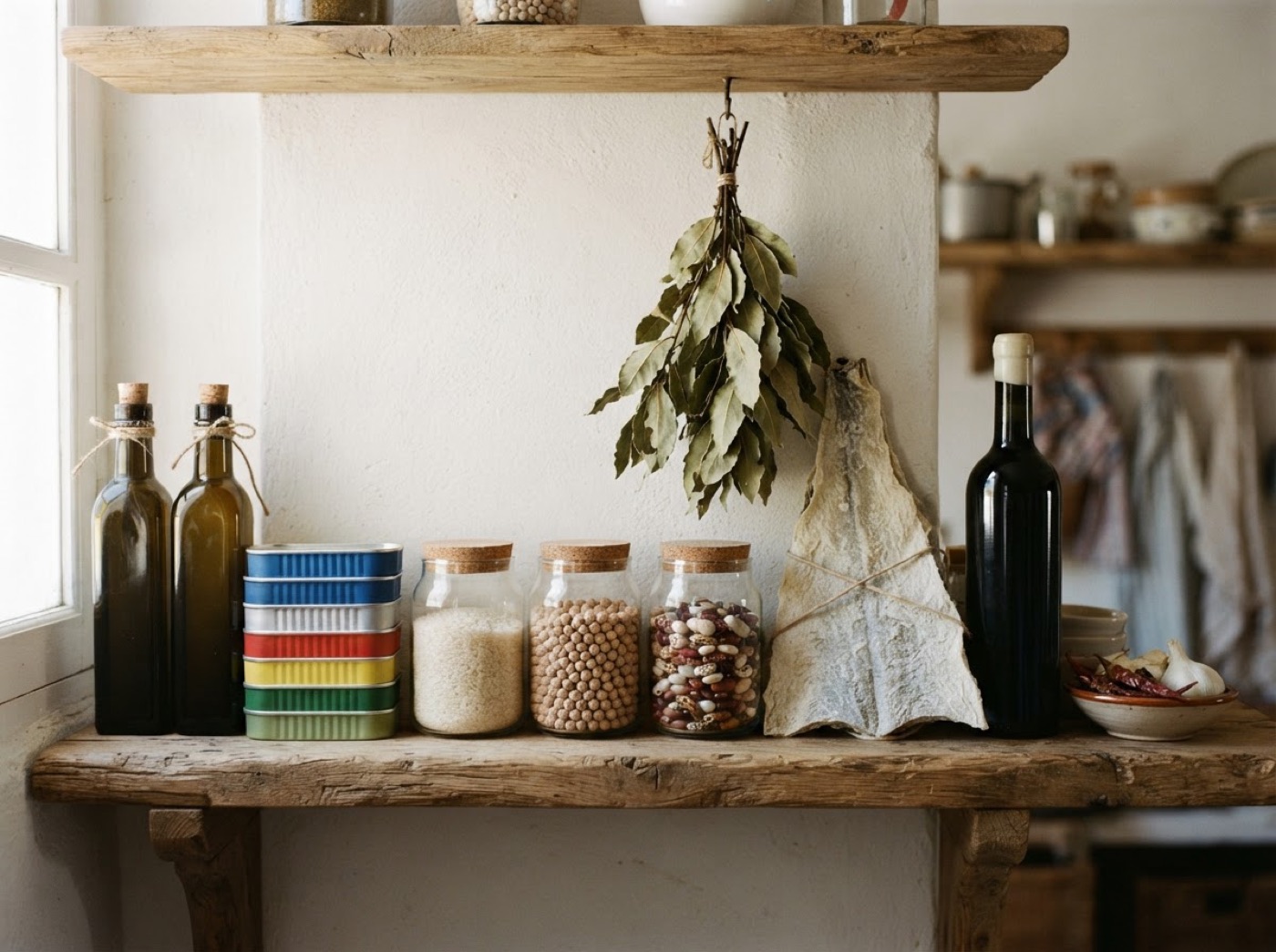
A Portuguese pantry is built on a short list: olive oil, salt cod, tinned fish, chouriço, carolino rice, chickpeas and beans, bay leaves, sweet paprika, piri-piri, coarse sea salt, Maria biscuits, port, dry white wine and a loaf of broa. With those 15 staples in the cupboard you can cook most of the recipes on this site on a weeknight.
This list is about ingredients. For pans, clay pots and cataplanas, see our Portuguese kitchen essentials instead.
The oils, salts and seasonings
1. Olive oil (azeite)
The one staple that matters most. Keep two bottles: an everyday oil for cooking and a better extra virgin for pouring over fish, potatoes and greens at the table. Portugal uses it the way other countries use butter.
Makes: almost everything, but especially polvo à lagareiro, bacalhau assado and batatas a murro. Our olive oil guide explains the regions and labels.
2. Coarse sea salt and flor de sal
Sal grosso (coarse salt) for grilling sardines, salting meat and curing peppers. Flor de sal, the delicate crystals skimmed from the top of the salt pans, for finishing. Portuguese salt comes from the Algarve and Aveiro among other places.
Makes: grilled sardines, punched potatoes, massa de pimentão.
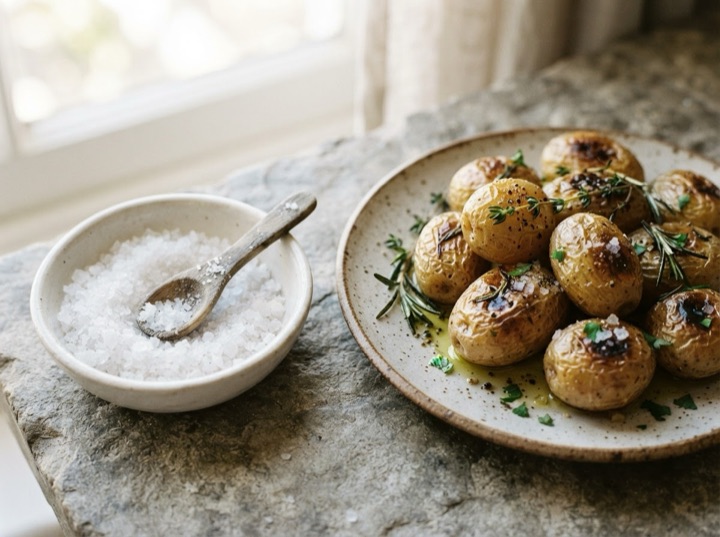
Algarve sea salt
Sea salt from the Algarve salt pans, for coarse-salt roasting batatas a murro and for finishing grilled fish.
Tip: A little goes a long way. Use it for finishing, not boiling water.
3. Bay leaves (louro)
Dried bay leaves last for months and go into stews, rice, marinades and soups. One or two per pot.
Makes: feijoada, arroz de pato, vinha d'alhos pork, caldo verde stock.
4. Sweet paprika (colorau)
Unsmoked ground sweet pepper. It colours rice, marinades and octopus, and seasons chouriço. Don't swap in Spanish smoked paprika.
Makes: piri-piri chicken, roast chicken, bitoque marinades, rice dishes.
5. Piri-piri chillies
Small, very hot dried chillies. Keep them whole and crush as needed, or steep them in oil for the bottle on the table.
Makes: frango piri-piri, piri-piri oil, spicy prawns. Our piri-piri sauce guide has the recipe.
For how these five combine, see our Portuguese spices guide.
Fish that keeps
6. Bacalhau (dried salt cod)
The national staple, bought dry and salted, then soaked for one to three days before cooking. A whole side or a few thick loins keep for months in a cool, dry place. Buy pre-soaked frozen bacalhau if you want to skip the soaking.
Makes: bacalhau à Brás, bacalhau com natas, pastéis de bacalhau, bacalhau assado. Start with how to soak bacalhau.
7. Tinned fish (conservas)
Sardines, mackerel, tuna and octopus in olive oil. They keep for years and are a meal in themselves with bread and a salad.
Makes: quick petiscos, pasta with sardines, tuna and chickpea salad, an emergency dinner.
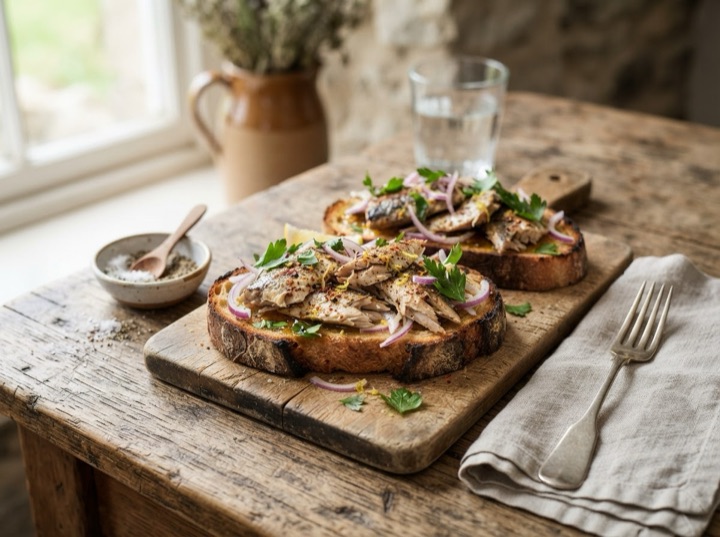
Nuri spiced mackerel in olive oil, 4 pack
From the Pinhais cannery in Matosinhos, where much of the work is still done by hand. Meaty mackerel with a gentle spice.
Tip: On toast with lemon, or folded through warm potatoes.
Grains, pulses and bread
8. Carolino rice
Portugal's own medium-grain rice, grown along the Tejo and Sado rivers. It absorbs a lot of liquid and stays creamy, which suits Portugal's soupy rice dishes. If you can't find it, a risotto rice like arborio is the closest swap. Avoid long-grain for wet rice dishes.
Makes: arroz de pato, arroz doce, arroz de marisco, arroz de tomate. Our rice dishes guide goes further.
9. Chickpeas (grão-de-bico)
Dried or in jars. Portuguese supermarkets sell cooked chickpeas in glass jars, which saves an overnight soak.
Makes: salt cod and chickpea salad, chickpea and spinach soup, a side for bacalhau on Christmas Eve.
10. Dried beans (feijão)
Red kidney beans and white beans, dried or jarred. Beans are the base of the big northern stews.
Makes: feijoada à transmontana, bean and cabbage soups, rice with beans (arroz de feijão).
11. Broa (corn bread)
Dense, crusty maize and rye bread from the north. Strictly it isn't a pantry item, as it lasts only a few days, but it freezes well in slices. Day-old broa makes crumbs for topping bacalhau.
Makes: the classic side for caldo verde, bacalhau com broa, toast for sardines.
Meat that keeps
12. Chouriço
Cured, smoked pork sausage with paprika, garlic and wine. A whole chouriço keeps for weeks in the fridge and adds flavour to anything it's sliced into.
Makes: chouriço assado, caldo verde, feijoada, pão com chouriço. Not the same as Spanish chorizo: see chouriço vs chorizo.
Sweet and drinks
13. Maria biscuits (bolacha Maria)
Plain, round, lightly sweet biscuits. Every Portuguese family has a packet. Eaten with coffee, crushed into desserts, and soaked in coffee for layered cakes.
Makes: bolo de bolacha, serradura (a crumbled biscuit and cream pudding), a quick base for cheesecakes.
14. Dry white wine (vinho branco)
Cheap, dry and unoaked. It's an ingredient here more than a drink: marinades, clams, stews and pork all start with a glass of it.
Makes: amêijoas à Bulhão Pato, bifanas, carne de porco à alentejana, vinha d'alhos.
15. Port (vinho do Porto)
A bottle of ruby or tawny keeps for a few weeks once opened. Drink it, but also cook with it: a splash in a pan sauce for steak or duck, or in a fruit dessert.
Makes: sauces for bife and duck, poached pears, an after-dinner glass with cheese.
What to buy first
If you're starting from nothing, buy in this order: olive oil, coarse salt, bay leaves, sweet paprika, a tin or two of sardines, a bag of carolino or arborio rice, and a bottle of dry white wine. That's enough for caldo verde, rice dishes, piri-piri chicken and a petiscos supper. Add bacalhau, chouriço and beans once you're cooking Portuguese food every week.
What you’ll need
Links go to Amazon, where you can check today’s price. If you buy, we earn a small commission at no extra cost to you.
Nuri spiced mackerel in olive oil, 4 pack
From the Pinhais cannery in Matosinhos, where much of the work is still done by hand. Meaty mackerel with a gentle spice.
Tip: On toast with lemon, or folded through warm potatoes.
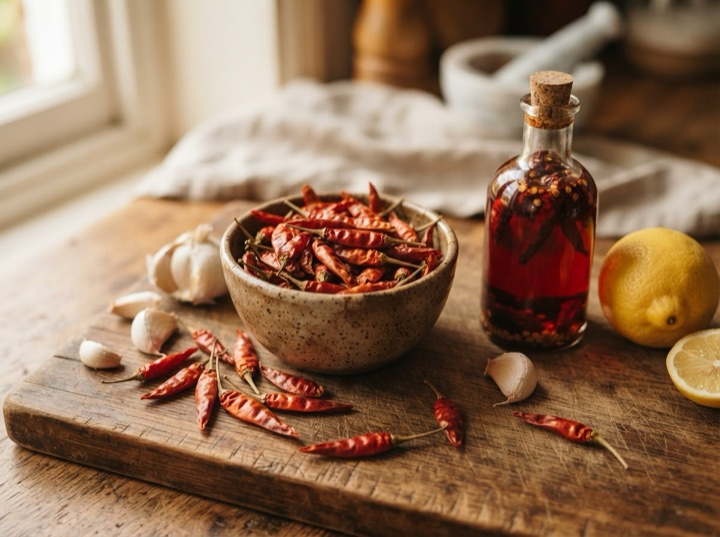
Piri-piri chillies from Portugal
Whole dried bird's-eye chillies, the heat behind frango piri-piri and the bottle of chilli oil on every Portuguese table.
Tip: Two packs last a year. Crush them as you need them.
Algarve sea salt
Sea salt from the Algarve salt pans, for coarse-salt roasting batatas a murro and for finishing grilled fish.
Tip: A little goes a long way. Use it for finishing, not boiling water.
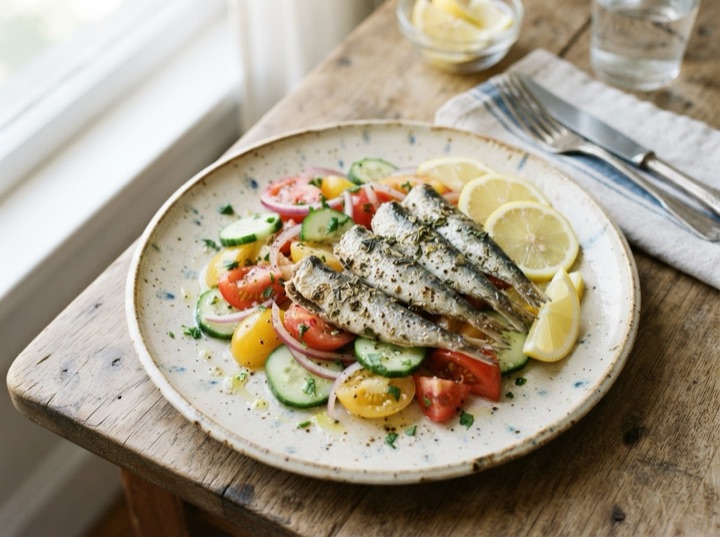
Comur sardines with lemon, 3 tins
Portuguese sardines with lemon in Comur's beautiful retro tins. A gift that's also a quick lunch.
Tip: Good on toast with black pepper.
Frequently asked
What are the basic ingredients of Portuguese cooking?
What rice do Portuguese people use?
Can I keep bacalhau in the pantry?
What are Maria biscuits used for?
Where can I buy Portuguese groceries abroad?
Recipes from this story
 Food culture
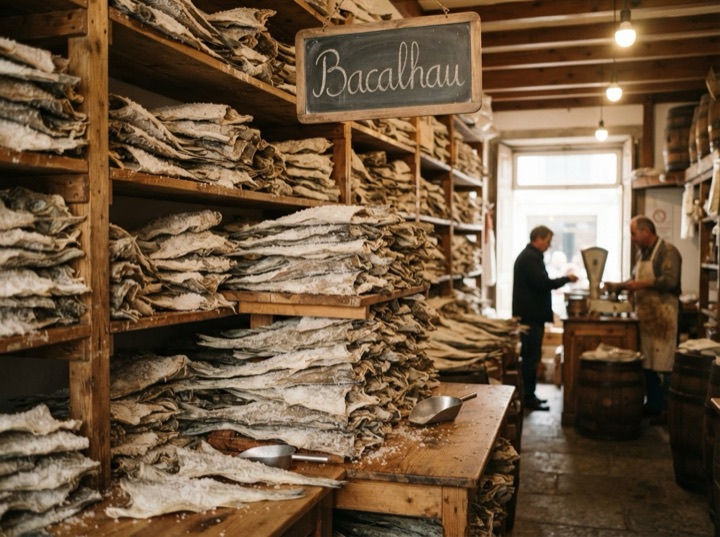
Why Do Portuguese Eat BacalhauThe Story of the Faithful Friend
Why do Portuguese eat bacalhau when no cod swims off Portugal? Salt, Catholic fasting, Newfoundland fleets and the Estado Novo, explained simply.
 Eat like a local
What to Eat in SintraTravesseiros, Queijadas and the Coast
What to eat in Sintra: travesseiros and queijadas, Colares wine, and grilled fish on the nearby coast, plus tips to eat well on a Sintra day trip.
 Eat like a local
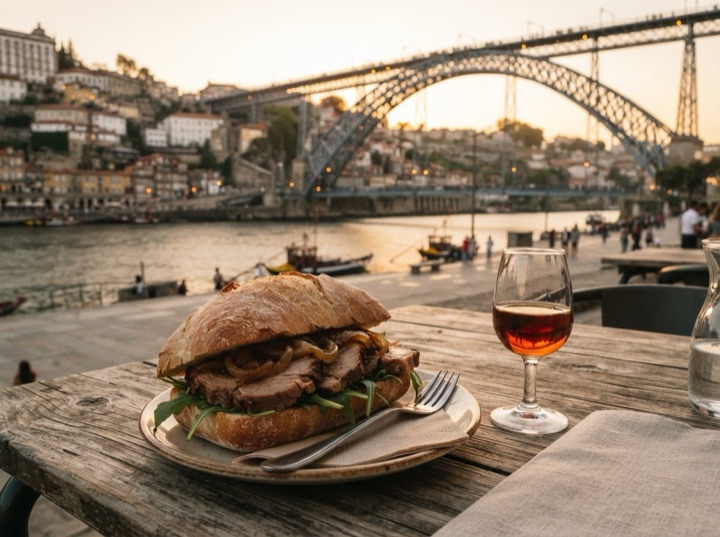
What to Eat in Porto12 Local Dishes and How to Order
What to eat in Porto, dish by dish: francesinha, tripas, bifanas, sandes de pernil, bolinhos de bacalhau and port, with tips on how locals order.