Portuguese RiceArroz Malandrinho and the Classic Dishes
Portuguese rice dishes explained: the wet malandrinho style, arroz de marisco, de pato, de tamboril, de cabidela and de tomate, and which rice to buy.
 By Mesa de Portugal Kitchen · Updated · 7 min read
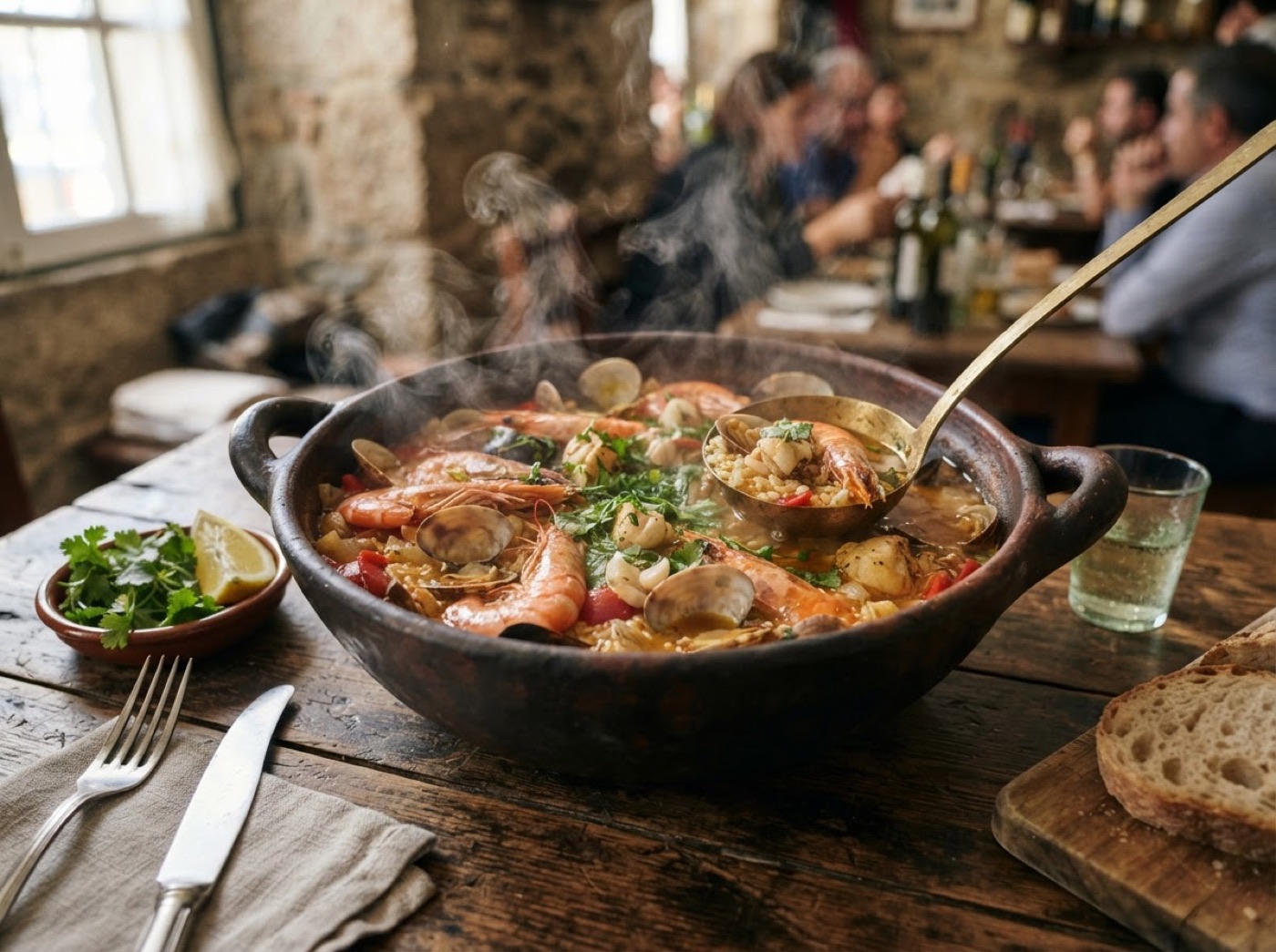
Portuguese rice is usually cooked malandrinho: soupy, loose and served straight from the pot with plenty of broth, somewhere between a risotto and a stew. The classics are arroz de marisco (seafood), arroz de pato (baked duck rice), arroz de tamboril (monkfish), arroz de polvo (octopus) and arroz de tomate. Most are made with carolino, a Portuguese medium-grain rice that soaks up flavour.
Rice matters in Portugal more than most visitors realise. The Portuguese eat more rice per person than anyone else in Europe, around 15–18 kg a year by most estimates, and it turns up as a side with almost everything.
What does "malandrinho" mean?
Malandro means rascal or scoundrel, and malandrinho is the affectionate "little rascal". Applied to rice, it describes a dish that's a bit unruly: wet, runny and spreading across the plate instead of sitting in a neat heap.
A good arroz malandrinho has:
- Grains that are cooked but still hold their shape, with a slight bite.
- Plenty of loose, flavourful broth, enough to need a spoon.
- A short life. It must be eaten the moment it's ready, because the rice keeps drinking the liquid. Restaurants often warn you that it takes 20–30 minutes to prepare, and some only make it for two or more people.
That's the big difference from Spanish paella, which is dry with a crisp base, and from Italian risotto, which is creamy and stirred.
Arroz de marisco
The great seafood rice. Prawns, clams, mussels and sometimes crab or lobster are cooked in a tomato, onion, garlic and white wine base, with a stock made from the prawn shells. Fresh coriander and a little chilli go in at the end. It's served in the pot at the table, very soupy.
It's a weekend or celebration dish, and in seafood restaurants it's usually priced for two. If you love it, also try the cataplana de marisco, its stew cousin from the Algarve.
Arroz de tamboril
Monkfish rice, often with prawns. Monkfish is firm enough to hold together in the broth, so you get meaty chunks rather than flakes. It's a little gentler and cheaper than arroz de marisco, and a common choice on coastal menus. Our Portuguese seafood guide covers monkfish and the other fish on menus.
Arroz de polvo
Octopus rice, cooked in the purple liquid left from boiling the octopus, with onion, garlic, tomato and parsley. It's deeply savoury and often served alongside fried or roasted octopus. Start with our guide on how to cook octopus and save the cooking water.
Arroz de pato
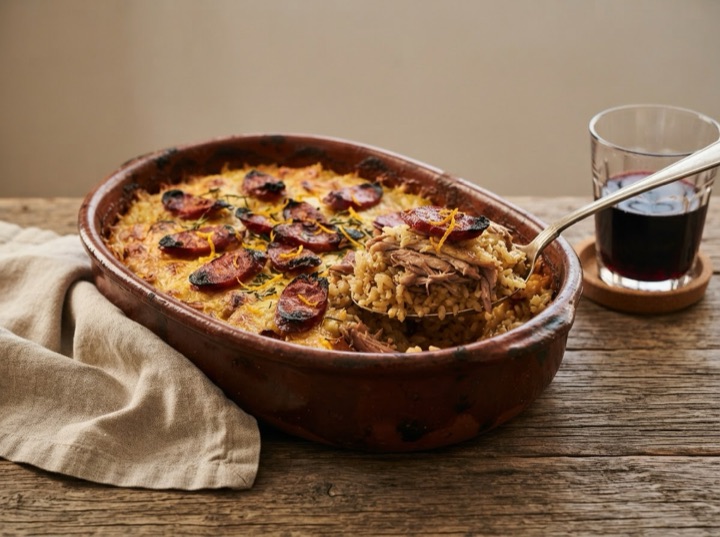
The exception to the wet rule. Duck rice is cooked in the duck's broth, then baked in the oven with shredded duck, slices of chouriço and bacon on top until the crust is golden. It comes out moist but not soupy. It's a classic Sunday lunch, especially in the north. Our arroz de pato recipe.
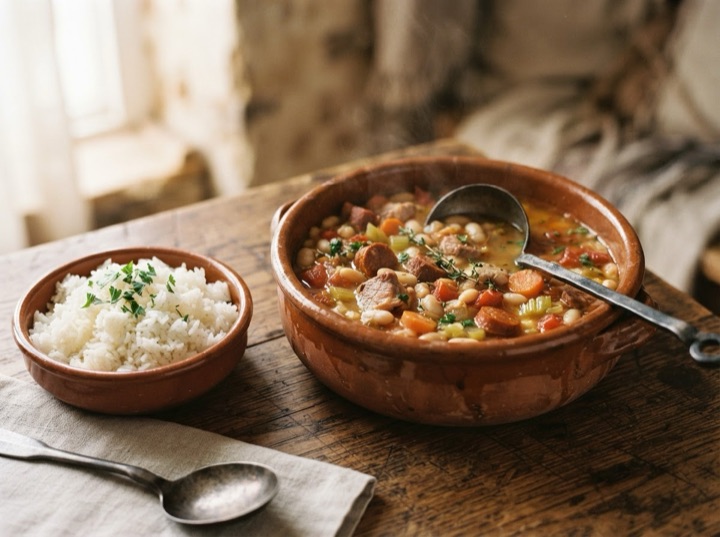
Hand-painted Portuguese clay cazuela
A hand-painted terracotta pot from a Portuguese pottery, for rice dishes, stews and serving.
Tip: Check the listing for stovetop use, and use a heat diffuser.
Arroz de cabidela
The one that surprises visitors. Arroz de cabidela is chicken (or sometimes rabbit) and rice cooked in a sauce made with the animal's own blood, mixed with vinegar to keep it from clotting. The result is dark brown, rich and slightly sour, with a deep, iron-like flavour.
It's a traditional dish of the Minho and the north, from a time when nothing from the animal was wasted. Many Portuguese people love it, and others won't touch it. If you see it on a menu, now you know what you're ordering. Traditionally it's made with free-range chicken (galinha do campo), and the blood comes from the same bird, which is why it's rarely made at home outside rural families today.
Arroz de tomate
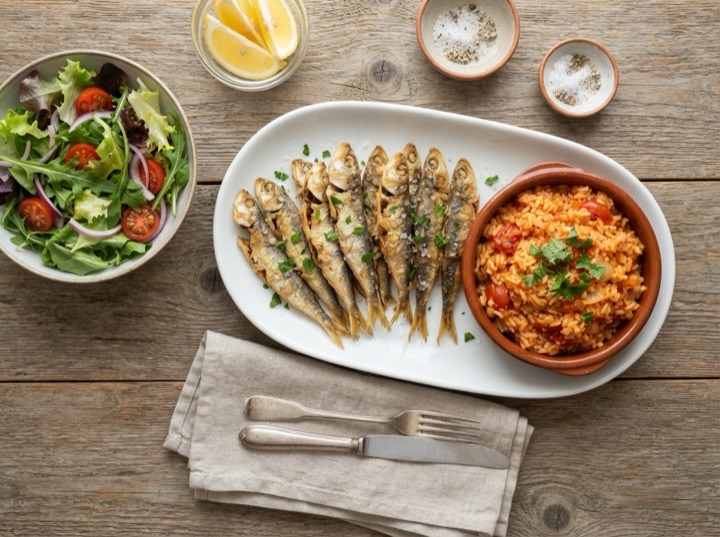
Tomato rice, the comfort side dish. Rice is cooked loose in a base of onion, garlic, olive oil and ripe tomatoes, finished with parsley or coriander. It's the classic partner for fried fish like carapaus fritos, fried hake or pataniscas de bacalhau. Our bacalhau recipes hub has the pataniscas.
Other Portuguese rice dishes to know
- Arroz de feijão: rice with red beans, the usual partner for pataniscas.
- Arroz de grelos: rice with turnip greens, served with fried fish or roast meat.
- Arroz de lingueirão: razor clam rice, a coastal speciality.
- Arroz de enchidos: rice with chunks of chouriço and other cured sausages.
- Arroz doce: sweet rice pudding with lemon and cinnamon, the dessert. Our arroz doce recipe.
Which rice should I buy for Portuguese dishes?
Use carolino for anything wet or baked. It's a medium-to-long grain of the japonica type, grown in the river valleys of the Tejo, Sado and Mondego. It absorbs a lot of liquid while staying firm on the outside, which is exactly what malandrinho rice needs. Look for "Arroz Carolino" on the packet. The Arroz Carolino das Lezírias Ribatejanas has protected geographical status.
Portuguese supermarkets also sell agulha ("needle") rice. It's a long-grain rice that stays separate and fluffy, and it's used for plain side rice, not for soupy dishes.
Outside Portugal, carolino can be hard to find. The best substitutes:
- Spanish bomba or calasparra rice, which absorbs liquid well.
- Italian arborio or carnaroli, but don't stir it, or it turns creamy.
- Any medium-grain rice. Avoid basmati and jasmine, which are too delicate.
Our Portuguese ingredient substitutes guide has more swaps.
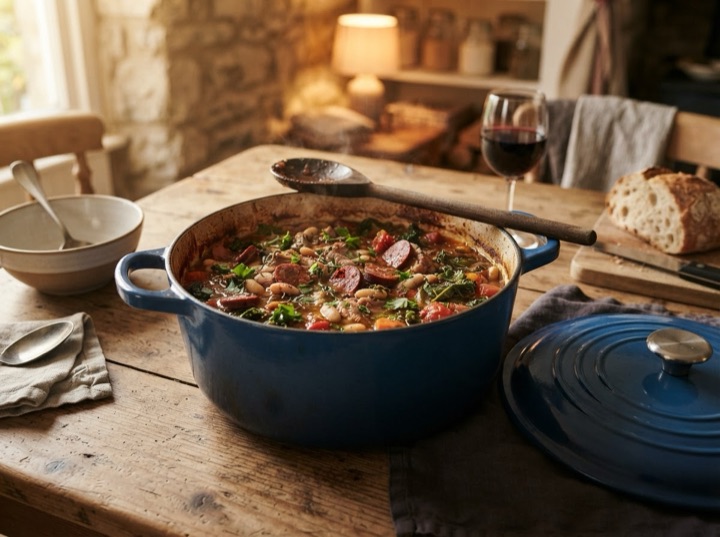
Lodge enamel cast iron dutch oven, 6 qt
A best seller for slow cooking: feijoada, arroz de pato broth and Sunday stews.
Tip: Enamelled, so no seasoning needed.
Tips for wet Portuguese rice at home
- Use more liquid than you think. About 3–4 parts stock to 1 part rice, depending on how soupy you want it.
- Make a proper base. Most dishes start with a refogado: onion and garlic softened slowly in olive oil, often with tomato and bay leaf.
- Don't stir like risotto. Stir once or twice to stop it sticking.
- Pull it off the heat early. Take it off while it still looks too wet. It keeps absorbing liquid on the way to the table.
- Serve it in the pot and eat immediately.
What you’ll need
Links go to Amazon, where you can check today’s price. If you buy, we earn a small commission at no extra cost to you.
Lodge enamel cast iron dutch oven, 6 qt
A best seller for slow cooking: feijoada, arroz de pato broth and Sunday stews.
Tip: Enamelled, so no seasoning needed.
Hand-painted Portuguese clay cazuela
A hand-painted terracotta pot from a Portuguese pottery, for rice dishes, stews and serving.
Tip: Check the listing for stovetop use, and use a heat diffuser.
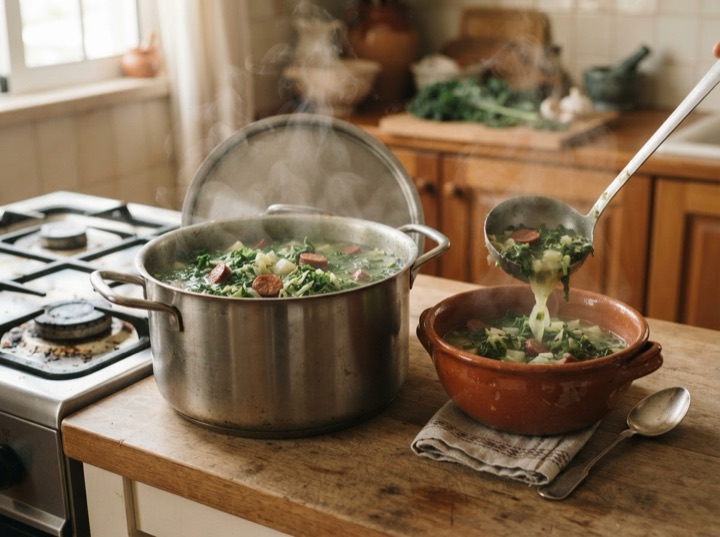
Farberware 6-quart stainless stockpot
A best-selling stockpot for caldo verde, octopus and cooking bacalhau.
Tip: Works on all hobs, including induction.
Frequently asked
What is the national rice dish of Portugal?
What kind of rice do Portuguese people use?
What is arroz de cabidela made of?
Is Portuguese seafood rice the same as paella?
Recipes from this story
 Traditional
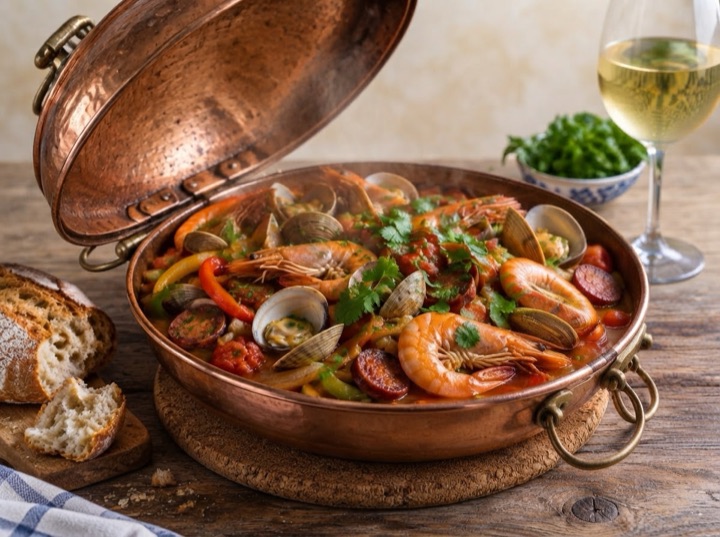
Cataplana de MariscoAlgarve Seafood Stew
The Algarve's famous seafood stew, steamed shut in a cataplana: clams, prawns and chouriço in a tomato, wine and coriander broth. Ready in 40 minutes.
 Traditional
Arroz de PatoPortuguese Duck Rice
Slow-cooked duck, rice simmered in its rich broth, chouriço and a crisp golden top from the oven. The Sunday-lunch dish of northern Portugal.
 Air Fryer
Carapaus Fritos in the Air FryerCrispy Horse Mackerel
Small Portuguese horse mackerel, salted, floured and crisped in the air fryer. Served with tomato rice or açorda, it's a real Portuguese weeknight fish supper.