How to Cook OctopusTender Every Time, the Portuguese Way
How to cook octopus so it's tender: freeze it first, simmer it slowly by weight, test with a skewer, then grill or roast it the Portuguese way.
 By Mesa de Portugal Kitchen · Updated · 7 min read
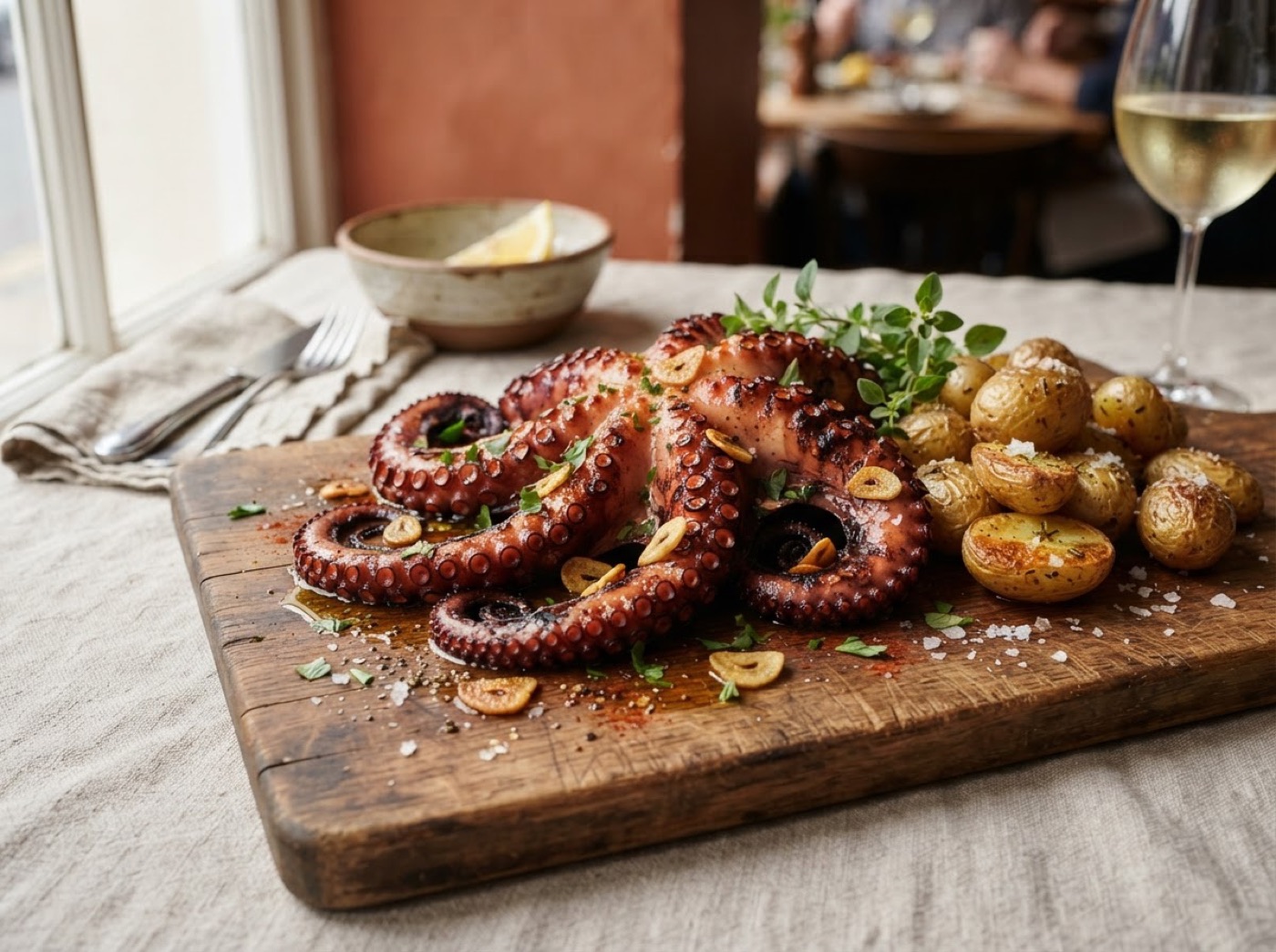
To cook octopus so it's tender, freeze it first (or buy it frozen), then simmer it gently in a covered pot with little or no water for about 40 to 60 minutes for a 1.5–2 kg octopus, until a skewer slides into the thickest tentacle like a cooked potato. Let it cool in its liquid, then grill or roast it for colour.
That's the whole secret. Portuguese cooks do it this way every week, and it turns a tough-looking animal into something soft enough to cut with a fork.
Why does octopus go tough?
Octopus is almost all muscle and connective tissue. Cook it fast and hot and the muscle tightens into rubber. Cook it slowly and the connective tissue melts into gelatine, which gives that soft, almost buttery texture.
There's a catch: the window between rubbery and tender is long, and the window between tender and mushy is short. That's why testing matters more than timing.
The freezing trick
Freezing breaks down the muscle fibres as ice crystals form, and it does much of the tenderising for you. In the past, fishermen in Portugal and Spain beat octopus against rocks to get the same effect.
- Buy frozen. Most octopus sold in Portuguese supermarkets is frozen, often from Morocco or Mauritania, and that's no bad thing.
- If it's fresh, clean it, put it in a freezer bag and freeze it for at least 48 hours.
- Thaw it slowly in the fridge overnight, in a bowl to catch the water.
Fresh octopus that has never been frozen can be tender too, but it's far less predictable.
How long to simmer octopus
Times depend on the size and on whether it was frozen. Use these as a starting point and always test:
- Under 1 kg: 25–35 minutes.
- 1–1.5 kg: 35–45 minutes.
- 1.5–2 kg: 45–60 minutes.
- 2–3 kg: 60–80 minutes.
- In a pressure cooker: about 15–20 minutes at pressure for a 1.5–2 kg octopus, then release naturally.
Octopus loses roughly half its weight as it cooks, so buy about 400–500 g raw weight per person for a main course.
Step by step: boiling octopus the Portuguese way
- Rinse the thawed octopus. If it isn't cleaned, cut out the beak (the hard mouth at the centre of the tentacles) and turn the head inside out to remove the insides.
- Use a large pot with a lid. Add a whole peeled onion, a bay leaf and a few peppercorns. Many Portuguese cooks add no water at all, because the octopus releases a lot of its own liquid. If you're nervous, add a glass of water.
- "Scare" the octopus. Hold it by the head and dip the tentacles into simmering water three times before lowering it in. The tentacles curl up neatly. It's a tradition rather than a tenderiser, but it looks better on the plate.
- Cover and simmer gently. Keep it at a lazy bubble, never a rolling boil.
- Don't add salt yet. The octopus is already salty from the sea, and the liquid reduces. Season at the end.
- Test with a skewer. Push it into the thickest part of a tentacle, near the head. It should slide in with little resistance, like a boiled potato.
- Rest it in the liquid. Turn off the heat and leave it in the pot for 10–15 minutes. This keeps the skin from peeling and the flesh juicy.
Keep the cooking liquid. It's purple, full of flavour and perfect for arroz de polvo.
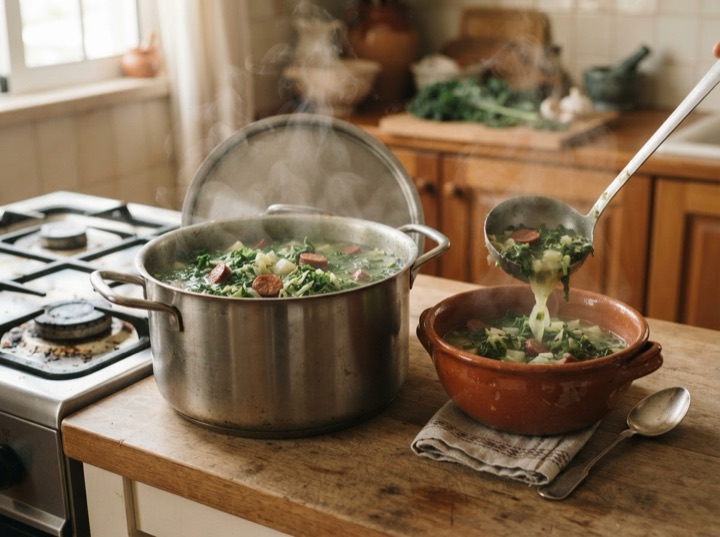
Farberware 6-quart stainless stockpot
A best-selling stockpot for caldo verde, octopus and cooking bacalhau.
Tip: Works on all hobs, including induction.
Does the onion make octopus tender?
No. You'll hear that the onion tenderises the octopus, and that the octopus is ready when the onion is soft. The onion adds sweetness and flavour, and it's a rough timer for small octopus. It has no effect on the texture of the meat.
The same goes for the old trick of putting a wine cork in the pot. There's no good evidence it does anything. Freezing and slow, gentle heat are what work.
How to grill octopus
Boiled octopus is good to eat as it is, but most Portuguese dishes finish it over a hot fire.
- Cut the cooked octopus into individual tentacles. Pat them dry with kitchen paper.
- Brush with olive oil.
- Grill over hot charcoal, or in a very hot cast-iron pan or griddle, for 2–4 minutes per side, until charred and crisp at the edges.
- Dress with plenty of olive oil, sliced garlic, parsley, a little coarse salt and black pepper.
You're only adding colour and crunch here. The octopus is already cooked, so don't leave it on too long.
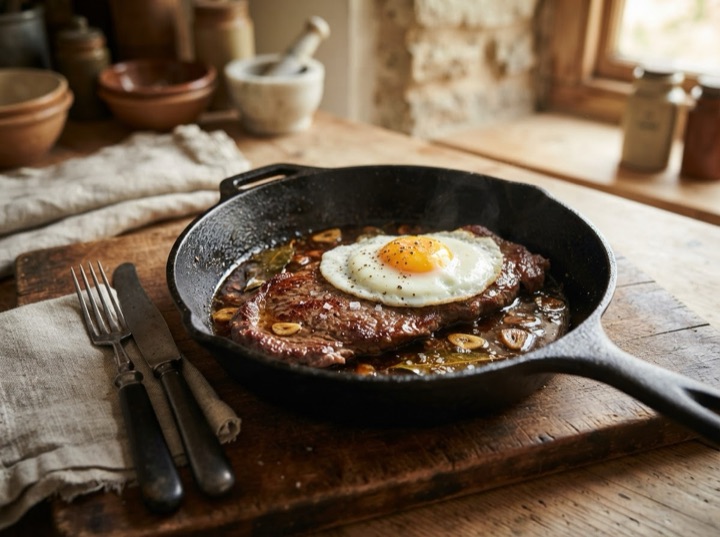
Lodge 12-inch cast iron skillet
One of Amazon's best-selling pans. Gets hot enough to sear bitoque steaks and blister sardines.
Tip: Season it and it lasts forever.
How to roast octopus (polvo à lagareiro)
Polvo à lagareiro is the most famous Portuguese octopus dish. The cooked tentacles are roasted with small potatoes, then drowned in hot olive oil infused with garlic.
- Roast at 200 °C (180 °C fan) for 20–25 minutes, with the tentacles on top of the potatoes.
- Heat a generous amount of olive oil with sliced garlic until the garlic is just golden, and pour it over at the table.
- Serve with batatas a murro, the punched potatoes.
Our full polvo à lagareiro recipe has quantities and timings. Good olive oil makes a big difference, and our Portuguese olive oil guide explains what to look for.
Other ways Portugal eats octopus
- Salada de polvo: cold boiled octopus with onion, peppers, parsley, olive oil and vinegar. A classic petisco for a petiscos night.
- Arroz de polvo: soupy octopus rice made with the cooking liquid.
- Polvo assado no forno: roasted whole with potatoes, onion and wine.
- Tinned octopus: a quick shortcut for salads. See our Portuguese tinned fish guide.
For the other fish and shellfish on Portuguese menus, see our Portuguese seafood guide.
What you’ll need
Links go to Amazon, where you can check today’s price. If you buy, we earn a small commission at no extra cost to you.
Farberware 6-quart stainless stockpot
A best-selling stockpot for caldo verde, octopus and cooking bacalhau.
Tip: Works on all hobs, including induction.
Lodge 12-inch cast iron skillet
One of Amazon's best-selling pans. Gets hot enough to sear bitoque steaks and blister sardines.
Tip: Season it and it lasts forever.
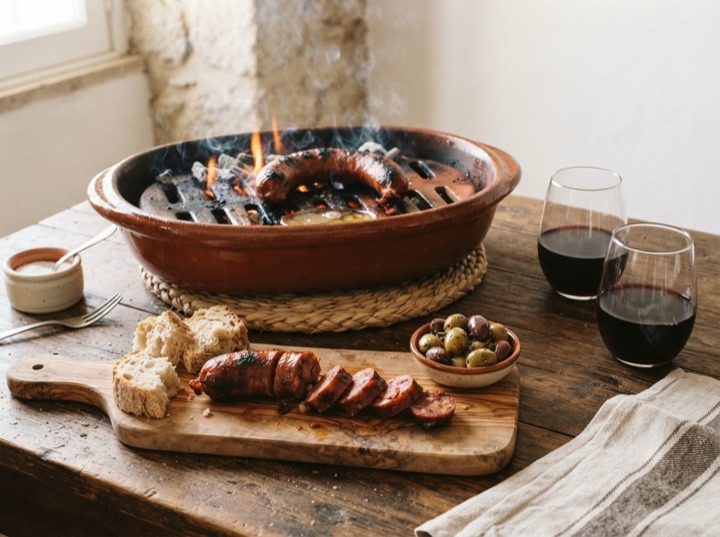
Portuguese clay chouriço roaster, large
The large size of the classic made-in-Portugal assador, for a full chouriço plus a few extra slices.
Tip: Use on a heatproof surface, away from anything flammable.
Frequently asked
How do you make octopus tender?
How long does it take to boil octopus?
Should you boil octopus before grilling?
Why is my octopus rubbery?
Do you add salt when cooking octopus?
Recipes from this story
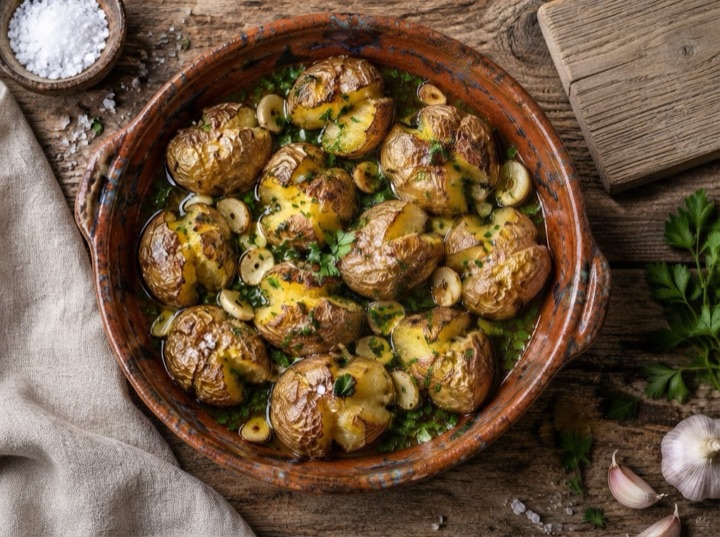 Air Fryer
Batatas a Murro in the Air Fryer (Punched Potatoes)
Portuguese punched potatoes made in the air fryer: salt-crusted skins, a fluffy middle and plenty of garlic olive oil. The classic partner for bacalhau.
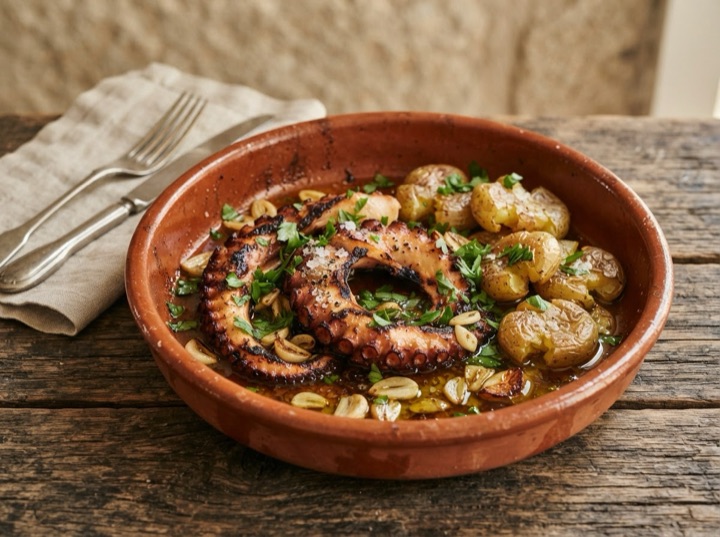 Traditional
Polvo à LagareiroRoast Octopus with Garlic Oil
Tender octopus roasted with plenty of olive oil and garlic, served with punched potatoes. Includes the freezing trick that makes octopus soft every time.
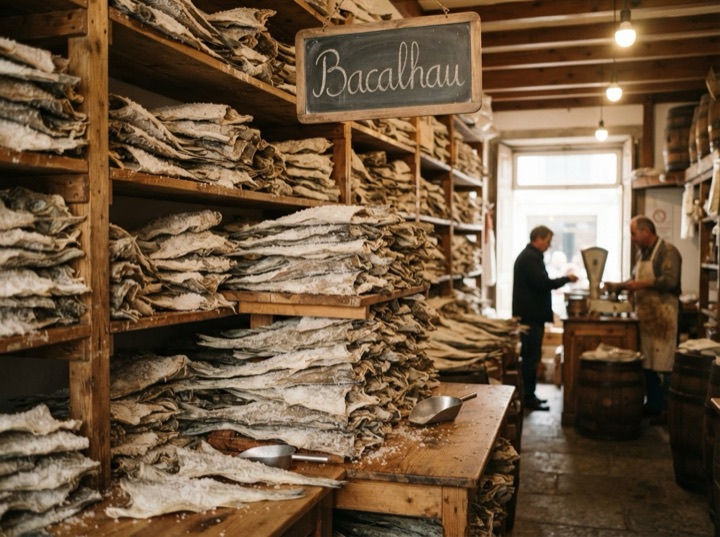 Food culture
Why Do Portuguese Eat BacalhauThe Story of the Faithful Friend
Why do Portuguese eat bacalhau when no cod swims off Portugal? Salt, Catholic fasting, Newfoundland fleets and the Estado Novo, explained simply.