How to Buy BacalhauSalt Cod Grades, Cuts and Labels
How to buy bacalhau: what the salt cod grades mean, which cut suits which dish, dry vs wet cure, ready-soaked frozen cod and where to find it abroad.
 By Mesa de Portugal Kitchen · Updated · 7 min read
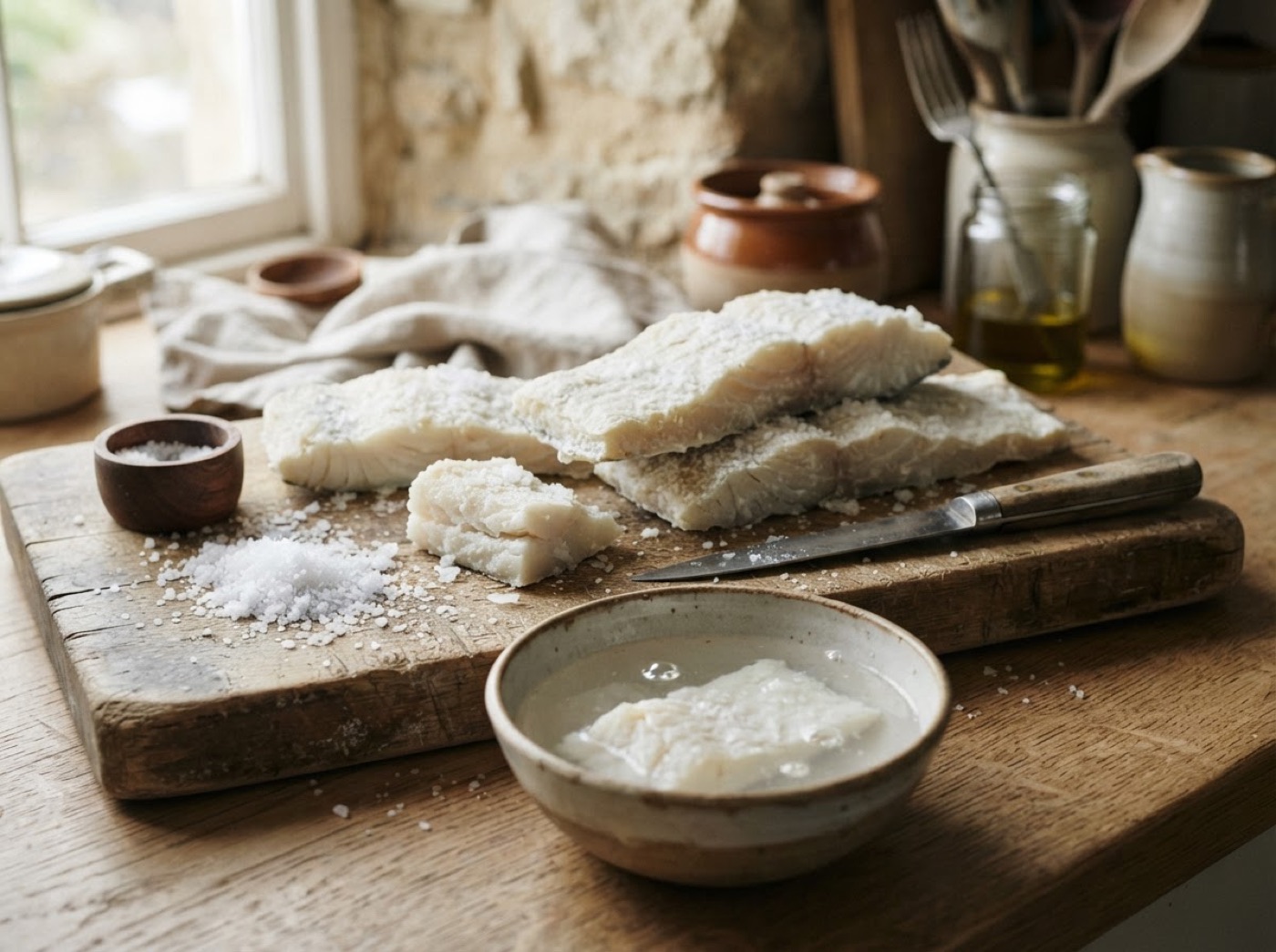
To buy good bacalhau, check three things on the label: the species (Gadus morhua, Atlantic cod, is the classic), the size grade (graúdo or especial for thick, juicy flakes) and the cut you need for your recipe. Thick loins are for roasting, shredded cod is for fritters and Brás. Pick the cut first, then the grade.
That's the short version. The rest of this guide explains what you'll see on a Portuguese supermarket counter, or on a packet in a Portuguese, Spanish or Brazilian shop abroad.
What do the salt cod grades mean?
In Portugal, whole dried salt cod is graded by the weight of the dried fish. The categories are set by law (Decreto-Lei 25/2005), so they mean the same thing in every shop:
- Especial: over 3 kg. The biggest fish, with the thickest loins.
- Graúdo: over 2 kg, up to 3 kg. The grade most cooks aim for.
- Crescido: over 1 kg, up to 2 kg. Good value for shredding and bakes.
- Corrente: over 0.5 kg, up to 1 kg. Thin, for flaking.
- Miúdo: 0.5 kg or less. Small fish, mostly for fritters and soups.
There's also sortido, for broken or damaged fish, sold cheaply. It's fine for anything that gets shredded.
Bigger fish give thicker, juicier flakes that separate in large "lascas" (flakes). If you want a loin that stands up on the plate, buy graúdo or especial. For bacalhau à Brás or pastéis de bacalhau, crescido is plenty.
Is all bacalhau the same fish?
No, and this is where buyers get caught out. Portuguese law allows three species to be sold simply as "bacalhau":
- Atlantic cod (Gadus morhua): the traditional choice, with large, pearly flakes.
- Pacific cod (Gadus macrocephalus): softer, with smaller flakes, and usually cheaper.
- Greenland cod (Gadus ogac): rarely seen.
Other related fish are salted and dried the same way and sold as cheaper alternatives. Look for escamudo (saithe, darker flesh), zarbo (tusk) and lingue (ling). They're labelled with their own names, and they're good for fritters and shredded dishes. For a Christmas Eve loin, check for Gadus morhua on the label.
Which cut should I buy?
Supermarkets in Portugal sell whole fish, but they'll cut it for you on the band saw at the counter. Packaged cuts are sold everywhere too.
- Lombo (loin): the thick back fillet. The best and most expensive part. Use it for roasting, grilling and bacalhau assado.
- Posta: a thick steak cut across the fish. The all-rounder for boiling and baking.
- Abas (belly flaps): thinner and fattier. Good for bakes like bacalhau com natas.
- Rabo (tail): thin pieces, cheaper. For flaking.
- Desfiado: ready-shredded cod. Fast to soak and perfect for fritters, Brás and salads.
- Caras (heads) and línguas (tongues): sold for stocks and regional dishes. Cod tongues, fried or stewed, are a northern speciality.
A whole graúdo fish gives you some of everything. Ask the counter to cut loins from the thick end and keep the tail and flaps for a weeknight bake.
Dry cure vs wet cure
Dried salt cod (seco) is the classic. It's salted, then dried until it's stiff as a board. The Portuguese traditional cure, often labelled cura tradicional portuguesa, is slower and gives a straw or ivory colour and a stronger, more mature flavour.
Wet-salted cod (verde) is salted but not dried. It's softer and paler, keeps for less time and needs less soaking. It's milder, and some cooks like it for that.
Either way, the flesh should look pale ivory to light straw, not grey or yellow-brown. It should smell clean, of salt and the sea, never of ammonia. Avoid pieces with dark patches, a red tinge or a soft, damp feel on dried fish.
Ready-soaked frozen cod
Portuguese supermarkets also sell bacalhau demolhado ultracongelado: cod that has been soaked and then frozen. It saves you two days of changing water. Defrost it in the fridge and it's ready to cook.
It's a good option for weeknights, and the quality is usually reliable. The trade-off is texture: it can be a little wetter than cod you soak yourself, so it's better in bakes and fritters than as a showpiece roasted loin. Check the weight on the bag, as some of it is water glaze.
If you buy dry cod, our guide on how to soak bacalhau gives soaking times by cut.
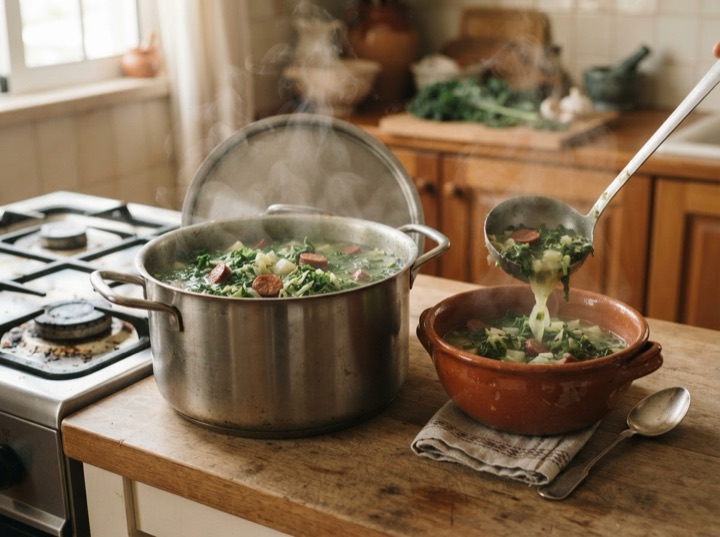
Farberware 6-quart stainless stockpot
A best-selling stockpot for caldo verde, octopus and cooking bacalhau.
Tip: Works on all hobs, including induction.
How much bacalhau do I need?
Dried cod gains weight when you soak it, so you need less than you'd think. As a rough guide:
- Loin or posta as a main: about 200–250 g dry weight per person.
- Shredded dishes (Brás, com natas): about 120–150 g dry weight per person.
- Fritters: about 250 g of dry desfiado makes a big batch for four to six people.
Where to buy bacalhau outside Portugal
You'll find it under several names, which helps when you search shops online:
- Portuguese and Brazilian grocers sell it as bacalhau, often whole and graded the Portuguese way.
- Spanish shops call it bacalao, often sold as desalted pieces.
- Italian delis sell it as baccalà. (Careful: stoccafisso is stockfish, dried without salt, a different product.)
- Caribbean and West African shops sell salt fish, which is often saithe or pollock rather than cod.
- Norwegian exporters call it klippfisk. Much of the cod sold in Portugal is Norwegian.
Abroad, labels may not show the Portuguese grades, so judge by thickness. Look for pieces at least 3 cm thick at the loin if you want to roast them. Buy for Christmas early: shops in Portuguese communities sell out of the best loins in December. Our Portuguese Christmas food guide explains what's eaten on the night.
For what to cook once you've bought it, see our bacalhau recipes hub. For why the whole country is so attached to it, read why Portugal loves bacalhau.
What you’ll need
Links go to Amazon, where you can check today’s price. If you buy, we earn a small commission at no extra cost to you.
Farberware 6-quart stainless stockpot
A best-selling stockpot for caldo verde, octopus and cooking bacalhau.
Tip: Works on all hobs, including induction.

Authentic Portuguese Cooking (cookbook)
Over 185 classic recipes from mainland Portugal, the Azores and Madeira. A highly rated home-cooking reference.
Tip: Good for family recipes you remember but never wrote down.
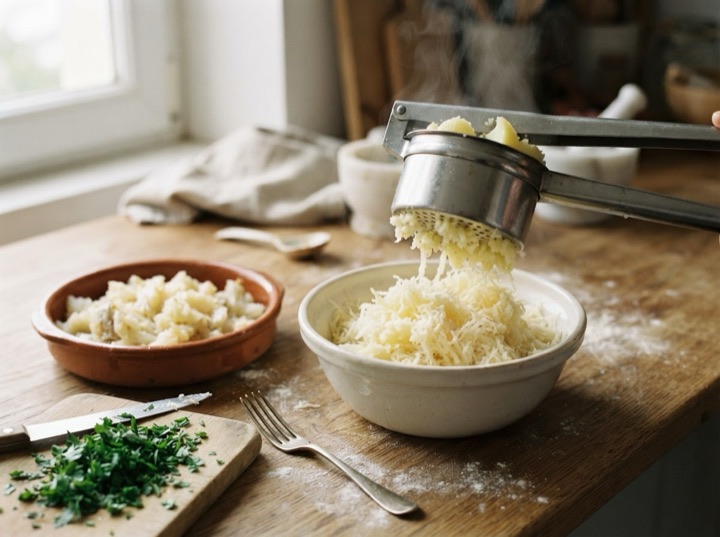
PriorityChef potato ricer
Gives pastéis de bacalhau a light, lump-free base. Mashers make the mix gluey.
Tip: Press the potatoes while they're still warm.
Frequently asked
What is the best grade of bacalhau to buy?
What is the difference between bacalhau and salt cod?
Is ready-soaked frozen bacalhau any good?
How do I know if bacalhau is good quality?
Can I buy bacalhau in the US or UK?
Recipes from this story
 Traditional
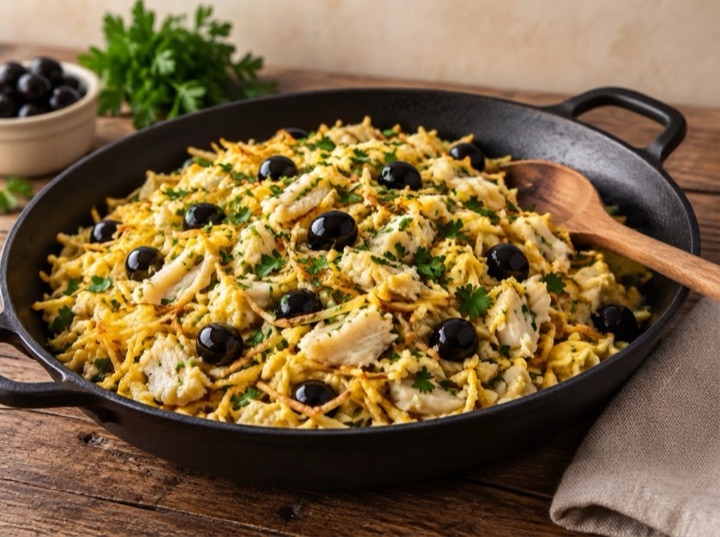
Bacalhau à BrásSalt Cod with Eggs and Potatoes
Lisbon's favourite salt cod dish: flaked bacalhau, matchstick potatoes and onions, bound with barely-set eggs and finished with olives and parsley.
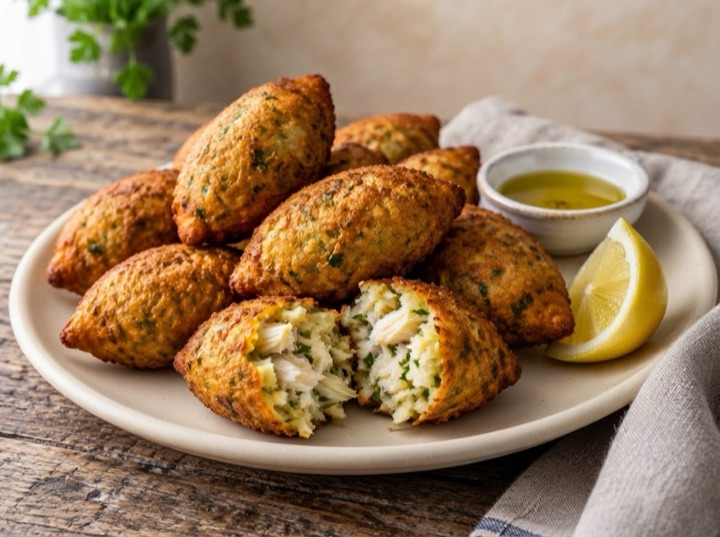 Air Fryer
Pastéis de Bacalhau in the Air Fryer
Portugal's favourite salt cod fritters made in the air fryer: crisp outside, fluffy inside, with no pot of hot oil. Includes how to soak the bacalhau.
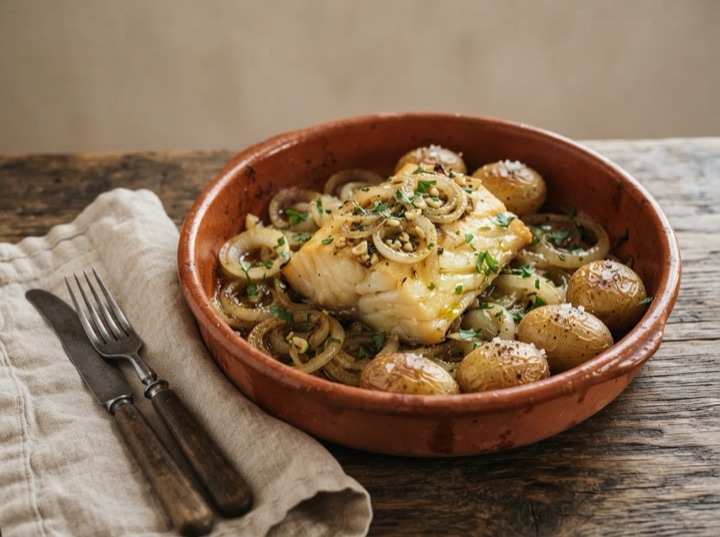 Air Fryer
Bacalhau Assado in the Air FryerRoast Salt Cod
A thick loin of salt cod roasted in the air fryer with olive oil, garlic and onions, served with punched potatoes. Christmas Eve's dish, made on any weeknight.