Portuguese Christmas FoodWhat's on the Table at Consoada
Salt cod on Christmas Eve, roupa velha on Christmas Day, bolo rei, rabanadas and filhós. A guide to the food of a Portuguese Christmas, and how to cook it.
 By Mesa de Portugal Kitchen · Updated · 3 min read

In Portugal, the big Christmas meal happens on Christmas Eve. It's called the Consoada, and families gather late on 24 December for a dinner that is simple, generous and almost always built around salt cod.
Christmas Eve: bacalhau
The classic Consoada plate is bacalhau cozido: thick pieces of boiled salt cod with boiled potatoes, boiled cabbage or Portuguese greens, and hard-boiled eggs, all drowned in olive oil and garlic at the table. It sounds plain, and that's the point. It's about the family around the table more than the food. In some northern homes, octopus takes the place of cod.
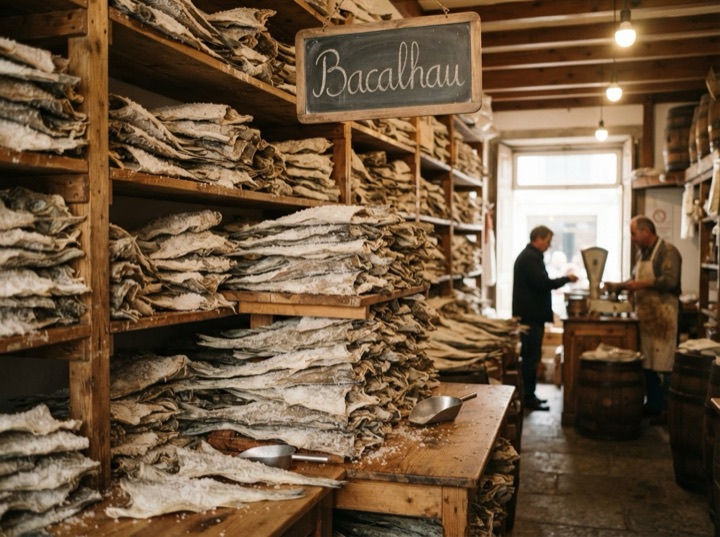
Start two days early with our guide to soaking bacalhau.
Christmas Day: roupa velha
Leftovers from the Consoada become roupa velha ("old clothes"): the cod, potatoes and greens chopped and fried together in olive oil and garlic, often with a little extra egg. Many people like it more than the original. The main Christmas Day meal is often roast turkey, roast kid (cabrito) or roast bacalhau.
The sweets
A Portuguese Christmas table always has more desserts than seems reasonable:
- Bolo rei: a ring-shaped bread studded with crystallised fruit and nuts, made since the 19th century. Traditionally, a dried broad bean (fava) was hidden inside, and whoever found it paid for next year's cake.
- Rabanadas: Portugal's answer to French toast, made with day-old bread soaked in milk or wine, fried and dusted with cinnamon sugar.
- Filhós and sonhos: fried doughs, sometimes made with pumpkin, dusted with sugar or drizzled with syrup.
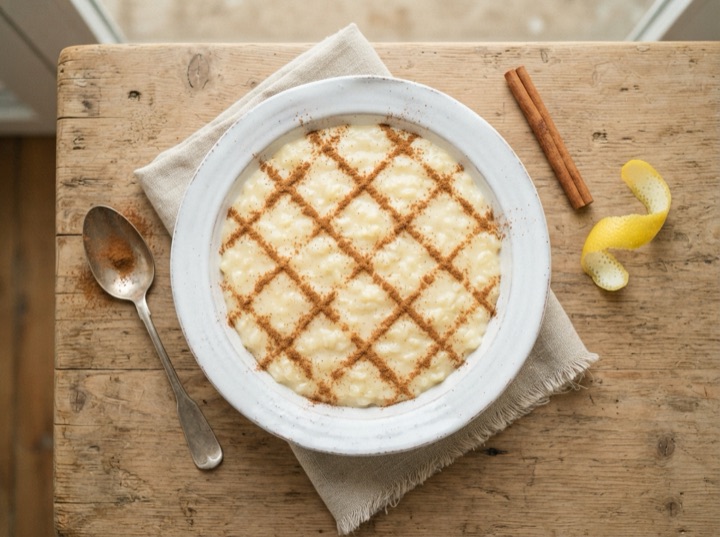
- Aletria and arroz doce: creamy vermicelli or rice pudding, decorated with cinnamon.
Setting the table
A Portuguese Christmas table is generous and a little old-fashioned: good plates, a big dish of cod in the middle, bottles of olive oil and wine within reach of everyone. Bordallo Pinheiro's cabbage plates are a popular gift and a fitting centrepiece.
Bordallo Pinheiro cabbage dinner plates, set of 2
The famous green cabbage-leaf plates, handmade in Caldas da Rainha. They turn a weeknight bacalhau into a feast.
Tip: Handwash to keep the glaze bright for decades.
What you’ll need
Links go to Amazon, where you can check today’s price. If you buy, we earn a small commission at no extra cost to you.
Authentic Portuguese Cooking (cookbook)
Over 185 classic recipes from mainland Portugal, the Azores and Madeira. A highly rated home-cooking reference.
Tip: Good for family recipes you remember but never wrote down.
Bordallo Pinheiro cabbage dinner plates, set of 2
The famous green cabbage-leaf plates, handmade in Caldas da Rainha. They turn a weeknight bacalhau into a feast.
Tip: Handwash to keep the glaze bright for decades.
Costa Nova oval baker, 30 cm
An oven-to-table baking dish, the right size for bacalhau com natas or arroz de pato for four to six.
Tip: Oven-, microwave- and dishwasher-safe stoneware.
Frequently asked
What do Portuguese people eat on Christmas Eve?
What is the Consoada?
What is bolo rei?
What is roupa velha?
What are rabanadas?
Recipes from this story
 Air Fryer
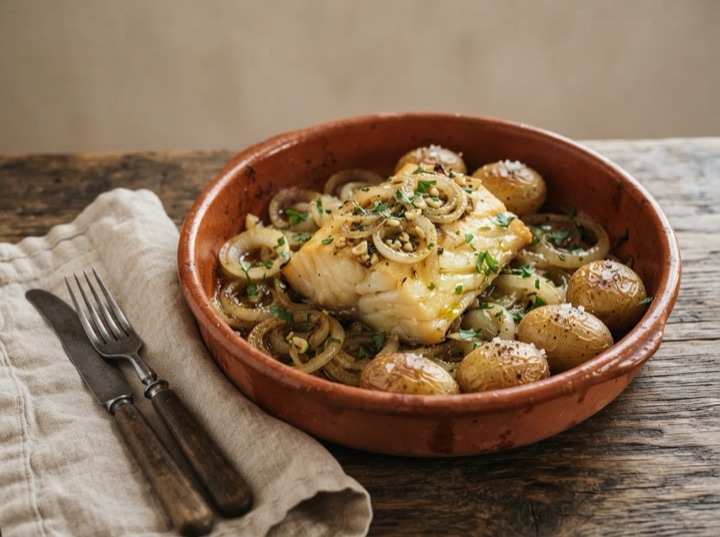
Bacalhau Assado in the Air FryerRoast Salt Cod
A thick loin of salt cod roasted in the air fryer with olive oil, garlic and onions, served with punched potatoes. Christmas Eve's dish, made on any weeknight.
 Traditional
Arroz DocePortuguese Rice Pudding
Creamy Portuguese rice pudding with lemon peel and cinnamon, finished with egg yolks and the classic cinnamon lattice on top. Served cold, at every celebration.
 Food culture
Why Do Portuguese Eat BacalhauThe Story of the Faithful Friend
Why do Portuguese eat bacalhau when no cod swims off Portugal? Salt, Catholic fasting, Newfoundland fleets and the Estado Novo, explained simply.