Why Do Portuguese Eat BacalhauThe Story of the Faithful Friend
Why do Portuguese eat bacalhau when no cod swims off Portugal? Salt, Catholic fasting, Newfoundland fleets and the Estado Novo, explained simply.
 By Mesa de Portugal Kitchen · Updated · 7 min read
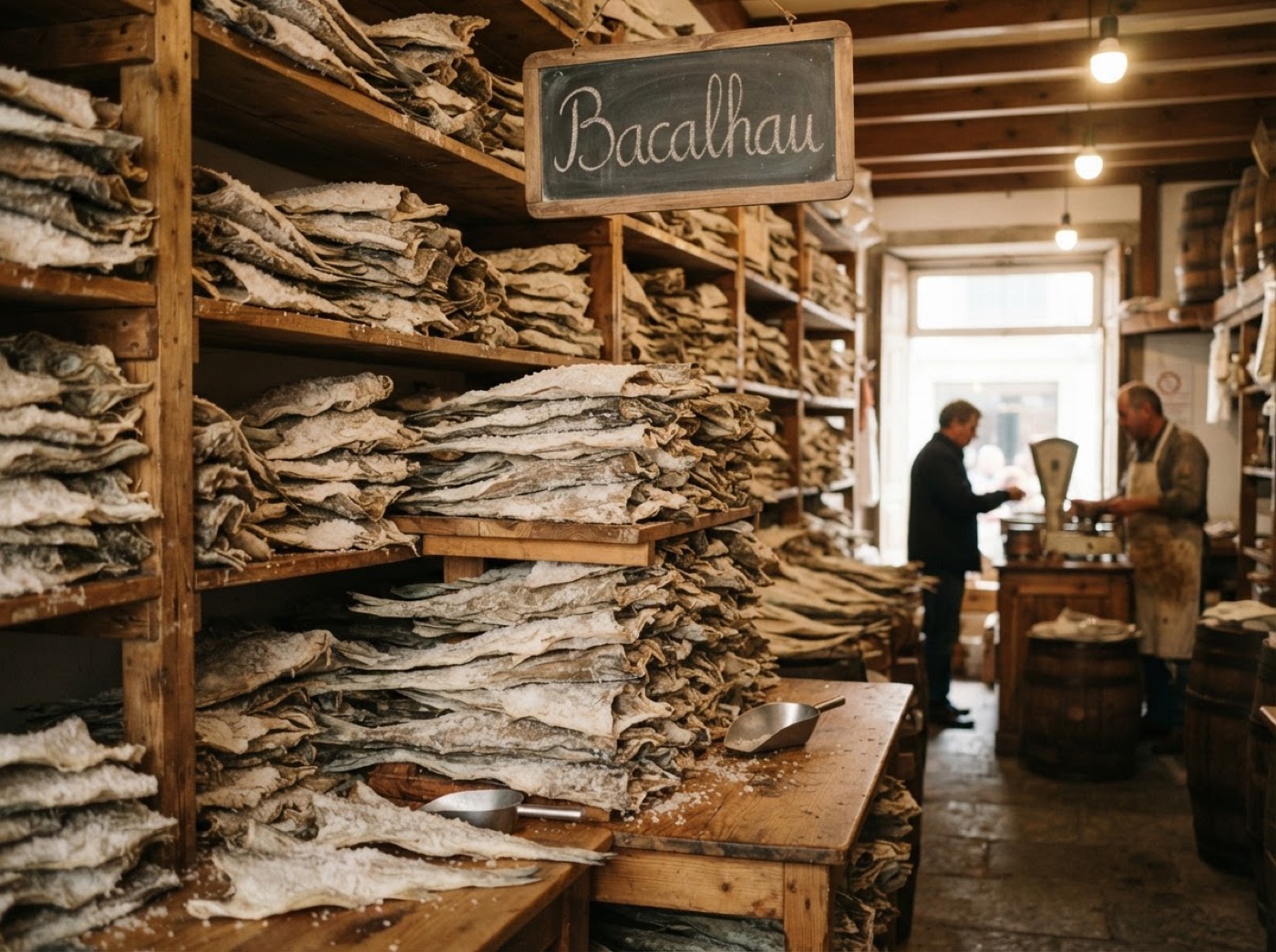
Portuguese people eat bacalhau because, for five centuries, salted dried cod was the one protein that could survive a long sea voyage, a hot summer and a meatless Church calendar. Portugal had plenty of sea salt and sailors who reached the cod banks off Newfoundland. A 20th-century dictatorship then made cod a national project. The habit stuck.
The odd part is that cod does not live in Portuguese waters. The fish comes from the cold North Atlantic, today mostly from Norway and Iceland. Yet Portugal is often said to eat around a fifth of the world's cod, and estimates put each person at somewhere between 6 and 10 kg a year. No other country comes close per head.
What does "fiel amigo" mean?
Bacalhau's nickname is o fiel amigo, "the faithful friend". It's faithful because it never lets you down: it keeps for months without a fridge, it's always in the cupboard, and it works in hundreds of dishes. For poor rural families for most of the last century, it was the friend that turned potatoes, onions and olive oil into a proper meal.
You'll also hear that there are 365 ways to cook bacalhau, one for every day of the year. Some people raise the number to 1,001. Nobody has counted them, and that's the point. It's a saying about how central the fish is, not a recipe count.
Salt, ships and the age of discovery
The story starts with two things Portugal had in abundance: sailors and salt.
Fishermen from northern Europe were salting and drying cod long before the Portuguese. What Portugal added was the salt pans of Aveiro, Setúbal and the Algarve, which produced the large quantities of sea salt needed to cure fish at sea. (Our flor de sal guide covers those salt pans today.)
Around 1500, Portuguese navigators were exploring the coast of what is now Newfoundland. The waters off it, the Grand Banks, were teeming with cod. Over the 16th century, Portuguese boats joined Basque, French and English ships fishing there. They salted the catch on board and sailed home with a cargo that would not rot.
Why Lent made cod essential
The Catholic Church once had a long list of days when eating meat was forbidden: Fridays, Lent, the eves of major feasts. Added up, it came to a large part of the year. Fresh fish was expensive and spoiled within a day, especially inland. Salted cod was cheap, kept for months and could be carried by mule to any village in Trás-os-Montes or the Alentejo.
That is why bacalhau still rules the religious calendar. It's the centrepiece of Christmas Eve, when families eat bacalhau cozido com todos (boiled cod "with everything": potatoes, cabbage, eggs and chickpeas, drowned in olive oil). It also appears on Good Friday tables across the country. Our Portuguese Christmas food guide covers the Christmas Eve table.
The Estado Novo and the White Fleet
The modern obsession owes a lot to politics. In the 1930s the Estado Novo, the authoritarian regime led by António de Oliveira Salazar, set out to make Portugal self-sufficient in cod. From 1934 the state took control of the cod trade, regulated imports and prices, and backed a national fishing fleet with credit and incentives. This became known as the Campanha do Bacalhau, the Cod Campaign.
Every spring a fleet left Lisbon and the northern ports for the Grand Banks and, later, Greenland. Many of the ships were sailing vessels that carried small one-man rowing boats called dóris. Each fisherman rowed out alone, fished with hand lines all day, then rowed back to the mother ship to gut and salt his catch. It was brutal, dangerous work, and the campaigns lasted around six months.
During the Second World War, Portugal was neutral, and its cod ships were painted white so they could cross the Atlantic safely. They became known as the Frota Branca, the White Fleet. A hospital ship, the Gil Eannes, sailed with the fleet to treat the fishermen. The second ship of that name is now a museum in Viana do Castelo.
The last Portuguese fleet sailed to Newfoundland in 1974, the year the dictatorship fell. Fishing limits, the end of state support and new ways of fishing ended the old campaigns. Portugal kept eating cod, but now buys most of it from Norway.
Why bacalhau still tastes of Portugal
Salting and drying does more than preserve the fish. It changes the texture. Properly soaked bacalhau is firmer and flakier than fresh cod, and it has a deeper, savoury flavour. Fresh cod falls apart in a pan of potatoes, onions and eggs. Salt cod holds together. That's why recipes like bacalhau à Brás don't work with fresh fish.
It also explains a very Portuguese rule: bacalhau is not "cheap fish" anymore. A good thick loin can cost more per kilo than beef. People still buy it for Christmas the way others buy a turkey, and a whole dried fish hanging in a supermarket is a normal sight from October onwards.
Where to see the history in Portugal
- Ílhavo, near Aveiro. The Museu Marítimo de Ílhavo is dedicated to the cod fishermen, with a full-size cod ship section and an aquarium of live cod.
- Viana do Castelo. The hospital ship Gil Eannes is moored in the harbour and open to visitors.
- Lisbon. The Centro Interpretativo da História do Bacalhau on Praça do Comércio tells the story of the fish and the fleets.
- Any supermarket. Walk to the cod counter and look at the stacks of whole dried fish sorted by size. It's a museum of its own. Our guide to buying bacalhau explains what the labels mean.

Authentic Portuguese Cooking (cookbook)
Over 185 classic recipes from mainland Portugal, the Azores and Madeira. A highly rated home-cooking reference.
Tip: Good for family recipes you remember but never wrote down.
How to start cooking it at home
Begin with the soaking, because every recipe depends on it. Our step-by-step soaking guide gives the times for each cut. Then try one of the comfort classics:
- Bacalhau à Brás: shredded cod, matchstick potatoes and soft eggs.
- Bacalhau com natas: a creamy bake for a crowd.
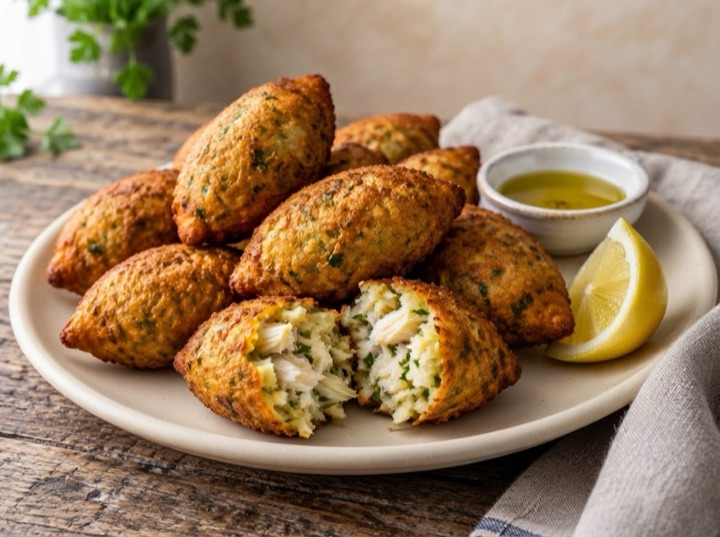
- Pastéis de bacalhau: the cod and potato fritters sold in every café.
For the full list of classic dishes, see our bacalhau recipes hub.
What you’ll need
Links go to Amazon, where you can check today’s price. If you buy, we earn a small commission at no extra cost to you.
Authentic Portuguese Cooking (cookbook)
Over 185 classic recipes from mainland Portugal, the Azores and Madeira. A highly rated home-cooking reference.
Tip: Good for family recipes you remember but never wrote down.

Lisboeta by Nuno Mendes
Lisbon's food in a beautiful hardback by Portuguese chef Nuno Mendes: tascas, petiscos and city classics.
Tip: A lovely gift for anyone who fell for Lisbon.
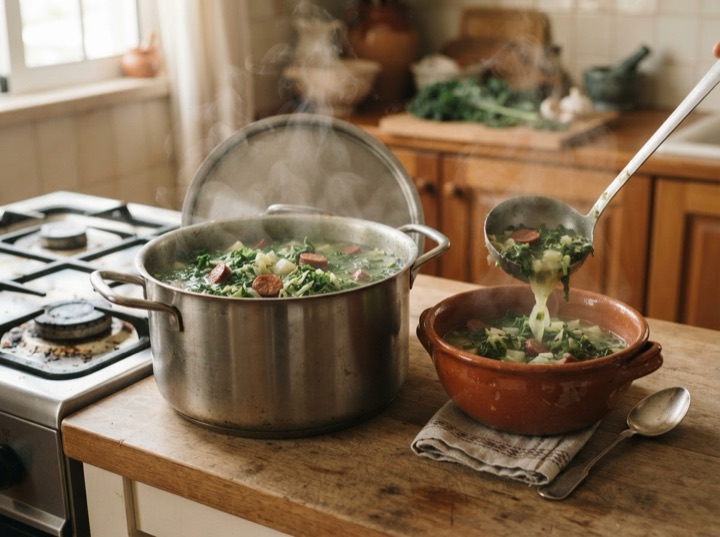
Farberware 6-quart stainless stockpot
A best-selling stockpot for caldo verde, octopus and cooking bacalhau.
Tip: Works on all hobs, including induction.
Frequently asked
Why is bacalhau so popular in Portugal?
Does cod live in Portuguese waters?
Is it true there are 365 bacalhau recipes?
When do Portuguese people eat bacalhau?
Recipes from this story
 Traditional
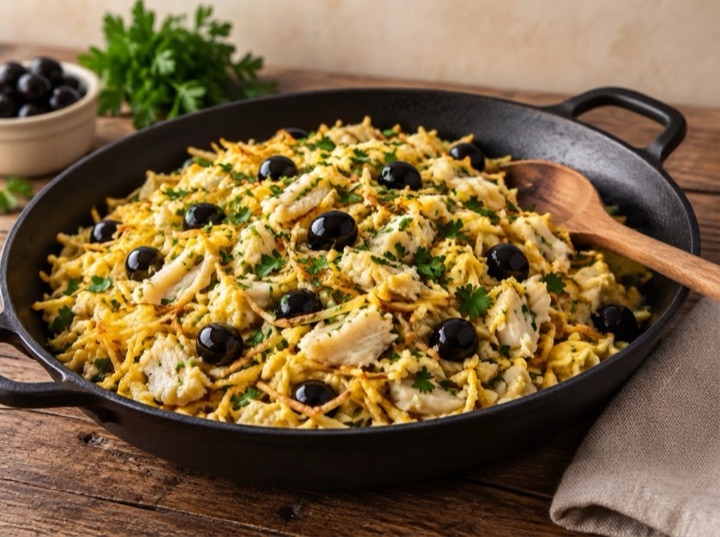
Bacalhau à BrásSalt Cod with Eggs and Potatoes
Lisbon's favourite salt cod dish: flaked bacalhau, matchstick potatoes and onions, bound with barely-set eggs and finished with olives and parsley.
 Traditional
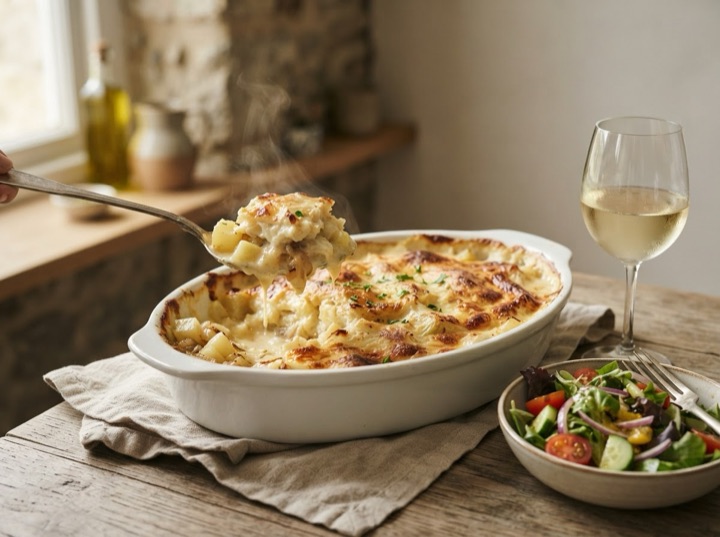
Bacalhau com NatasCreamy Baked Salt Cod
Flaked salt cod, golden potatoes and onions baked in a creamy sauce until bubbling. The comforting bacalhau dish of Portuguese family lunches.
 Air Fryer
Pastéis de Bacalhau in the Air Fryer
Portugal's favourite salt cod fritters made in the air fryer: crisp outside, fluffy inside, with no pot of hot oil. Includes how to soak the bacalhau.