Flor de SalPortugal's Hand-Harvested Finishing Salt
What flor de sal is, how it's harvested in the Algarve and Aveiro salt pans, and how to use it compared with coarse salt in Portuguese cooking.
 By Mesa de Portugal Kitchen · Updated · 7 min read
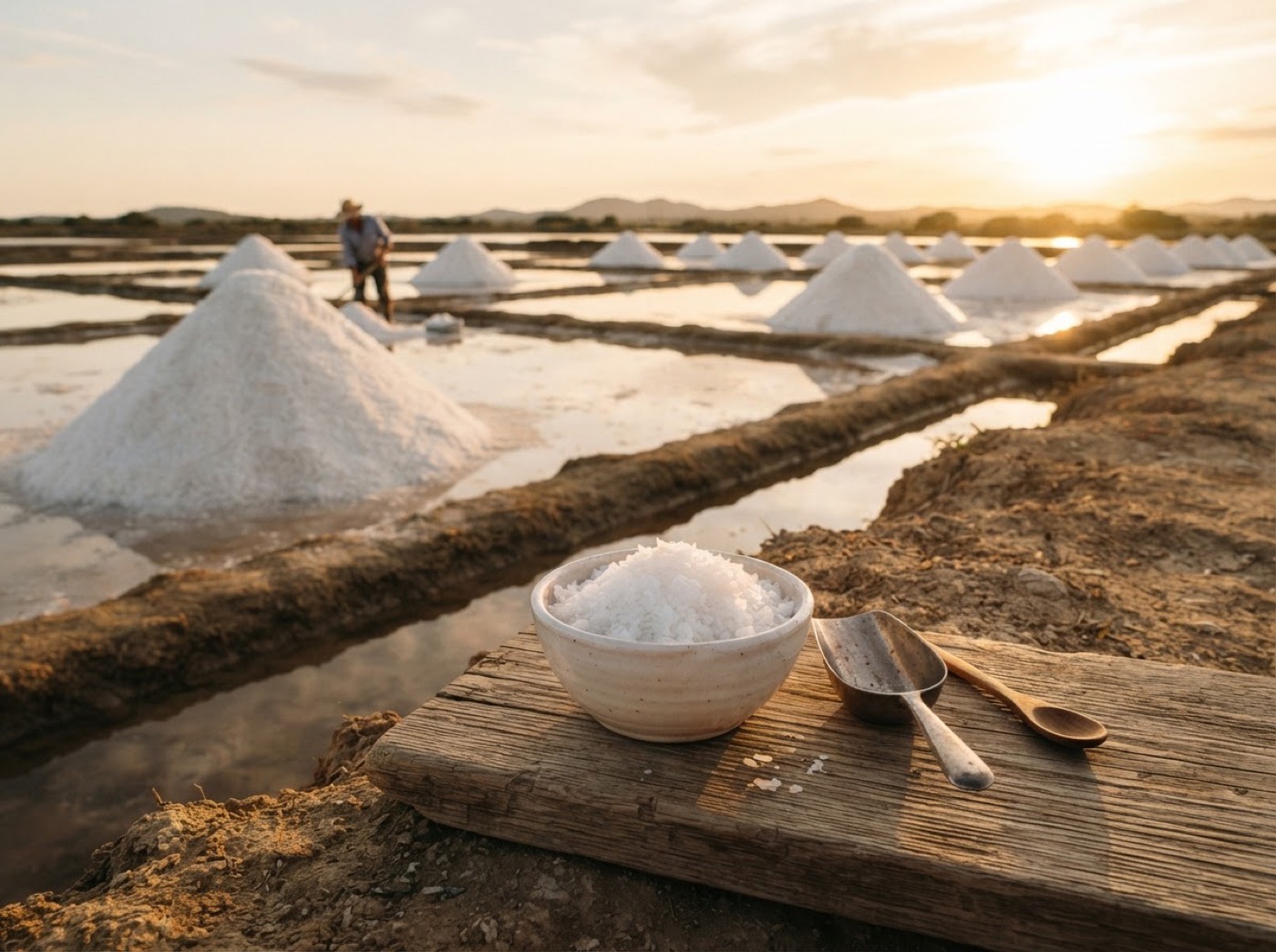
Flor de sal ("flower of salt") is the thin layer of delicate salt crystals that forms on the surface of seawater in salt pans on hot, still summer days. Salt workers skim it off by hand before it sinks. It's flaky, slightly moist and mild, and it's used to finish food at the table, not to cook with. It's the Portuguese equivalent of French fleur de sel.
Portugal has made salt for centuries, and for most of that time salt was a serious business, not a gourmet extra. It preserved the bacalhau that fed the country. Our story of why Portugal loves bacalhau starts in the salt pans. Today the small traditional producers have survived largely thanks to flor de sal.
How is flor de sal made?
Traditional Portuguese salt pans (salinas) are shallow clay basins near the sea or a lagoon. Seawater flows slowly through a series of pans, getting saltier as the sun and wind evaporate it.
- The water concentrates as it moves from the deeper pans to the final, shallow crystallising pans.
- On hot, dry days with little wind, a fragile film of crystals forms on the surface. That's the flor de sal.
- Salt workers skim it by hand with a wide, fine skimmer, usually in the late afternoon, before it gets heavy and sinks.
- It's dried in the sun, without washing or refining.
- The salt that crystallises on the bottom of the pans is raked later. That's the coarse sea salt, sal marinho tradicional or sal grosso.
Only a small part of each pan's yield is flor de sal, and it can only be harvested in good weather, roughly June to September. That's why it costs much more than ordinary sea salt.
Where is flor de sal made in Portugal?
The Algarve: Ria Formosa and Castro Marim
Most of Portugal's flor de sal comes from the eastern Algarve.
- Ria Formosa (Tavira, Olhão, Faro). The lagoon behind the barrier islands is lined with salt pans. Sal de Tavira and Flor de Sal de Tavira have held EU Protected Designation of Origin (PDO, or DOP in Portuguese) status since 2013. It has to be harvested by hand in the defined area.
- Castro Marim. On the Guadiana river, next to the Spanish border, salt pans sit inside the Castro Marim and Vila Real de Santo António marsh nature reserve. Castro Marim's producers have also sought protection for their own salt name.
The white mounds of salt along the road between Tavira and Castro Marim are one of the Algarve's sights in late summer. Read what to eat in the Algarve for the rest of the region's food.
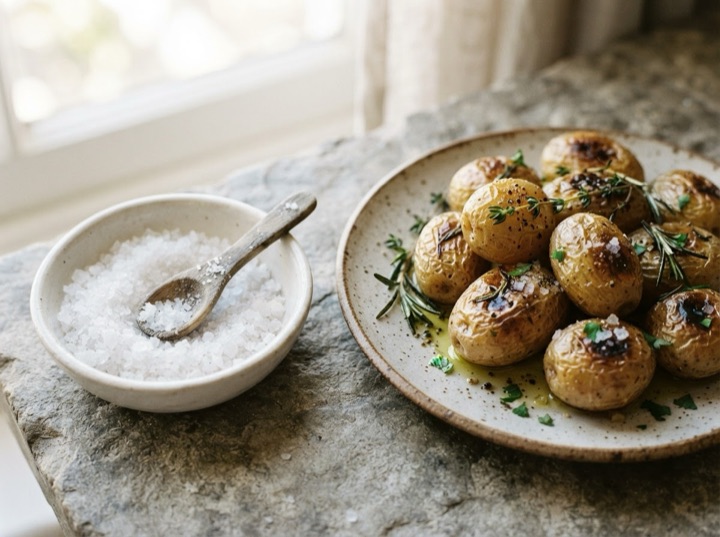
Algarve sea salt
Sea salt from the Algarve salt pans, for coarse-salt roasting batatas a murro and for finishing grilled fish.
Tip: A little goes a long way. Use it for finishing, not boiling water.
Aveiro
In central Portugal, the Aveiro lagoon (Ria de Aveiro) was once covered in salt pans. Far fewer work today, but some still produce sea salt and flor de sal the traditional way. The Ecomuseu Marinha da Troncalhada, a working salt pan in the city, is open to visitors.
Rio Maior, the inland salt
The salt pans at Rio Maior, about 30 km from the sea, are a curiosity: the brine comes from a well fed by an underground salt deposit, not from the ocean. The salt is evaporated in pans in the same way, and the old wooden salt huts make a good stop on a drive north of Lisbon.
What does flor de sal taste like?
Flor de sal is less sharp than table salt. It tastes clean and mineral, with a gentle saltiness that doesn't hit the tongue all at once. Its thin, flaky crystals crunch and then dissolve, which gives food a little texture.
It's also slightly damp, because it's unrefined and naturally holds moisture. It may clump in the jar. That's normal.
Flor de sal vs coarse salt: which to use when
The simple rule: coarse salt for cooking, flor de sal for finishing.
Use coarse sea salt (sal grosso) for:
- Salting sardines and fish before grilling. See how to grill sardines.
- Batatas a murro, the potatoes roasted on a bed of salt. Our recipe.
- Fish baked in a salt crust (peixe ao sal).
- Boiling water for potatoes, vegetables and pasta.
- Brines and curing.
Use flor de sal for:
- Grilled fish and meat, a pinch just before serving.
- Tomatoes, salads and raw vegetables, with good olive oil. Our Portuguese olive oil guide explains what to buy.
- Roasted octopus, like polvo à lagareiro.
- Eggs, avocado and bread with butter or olive oil.
- Sweet things: caramel, chocolate, even the top of a cake.
Never cook with flor de sal. Heat and liquid destroy the delicate crystals, and you've paid for texture you'll never notice.
Flavoured flor de sal
Portuguese producers sell flor de sal mixed with herbs, lemon, garlic, piri-piri, seaweed or even orange. They're good gifts and handy with grilled fish or chicken. For heat, a little piri-piri goes a long way. See our piri-piri sauce guide.
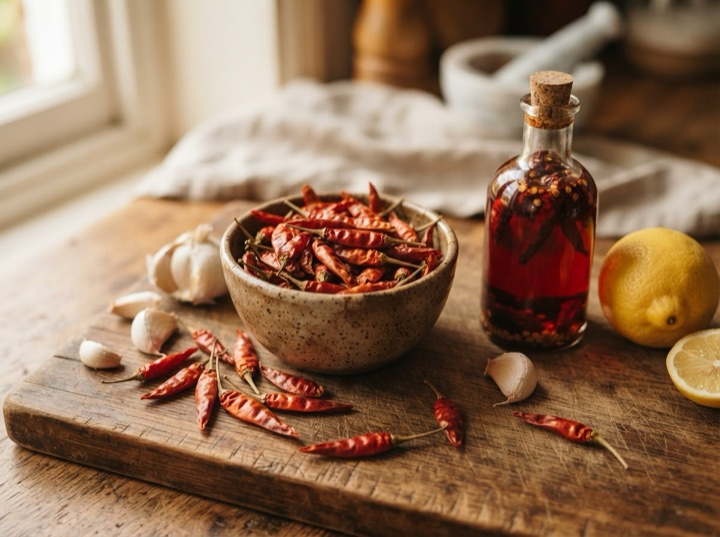
Piri-piri chillies from Portugal
Whole dried bird's-eye chillies, the heat behind frango piri-piri and the bottle of chilli oil on every Portuguese table.
Tip: Two packs last a year. Crush them as you need them.
How to buy and store flor de sal
- Check the label for "flor de sal". Plain sal marinho is coarse or ground sea salt, not the same thing.
- Look for the producer and place. Many small salinas print the salt pan and harvest year on the jar.
- The PDO seal for Tavira guarantees hand harvesting in the Ria Formosa.
- Colour: bright white to very slightly grey. A little natural moisture is fine.
- Store it in a dry, airtight jar or a lidded ceramic salt pot, away from the stove. Don't keep it in the fridge.
A jar of Algarve flor de sal is one of the easiest Portuguese food gifts to pack. Our Portuguese food gifts guide has more ideas.
What you’ll need
Links go to Amazon, where you can check today’s price. If you buy, we earn a small commission at no extra cost to you.
Algarve sea salt
Sea salt from the Algarve salt pans, for coarse-salt roasting batatas a murro and for finishing grilled fish.
Tip: A little goes a long way. Use it for finishing, not boiling water.
Piri-piri chillies from Portugal
Whole dried bird's-eye chillies, the heat behind frango piri-piri and the bottle of chilli oil on every Portuguese table.
Tip: Two packs last a year. Crush them as you need them.
José Gourmet ceramic fish dish
A fish-shaped ceramic dish from José Gourmet, one of Portugal's best-known tinned fish brands. Made for serving conservas at the table.
Tip: Pair it with a few tins for a ready-made gift.
Frequently asked
What is flor de sal?
What is the difference between flor de sal and fleur de sel?
Is flor de sal healthier than regular salt?
Can you cook with flor de sal?
Where does the best flor de sal in Portugal come from?
Recipes from this story
 Air Fryer
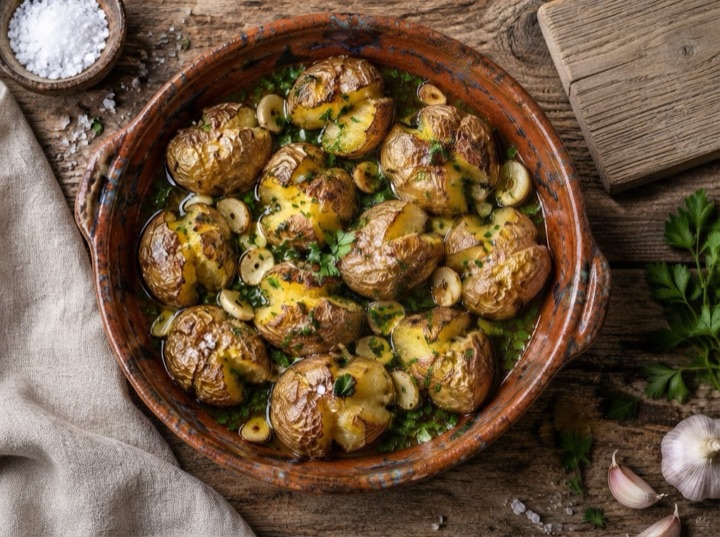
Batatas a Murro in the Air Fryer (Punched Potatoes)
Portuguese punched potatoes made in the air fryer: salt-crusted skins, a fluffy middle and plenty of garlic olive oil. The classic partner for bacalhau.
 Traditional
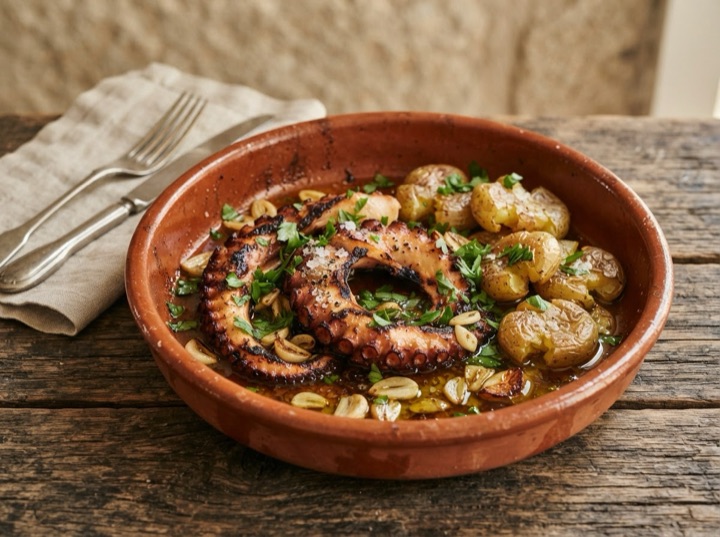
Polvo à LagareiroRoast Octopus with Garlic Oil
Tender octopus roasted with plenty of olive oil and garlic, served with punched potatoes. Includes the freezing trick that makes octopus soft every time.
 Food culture
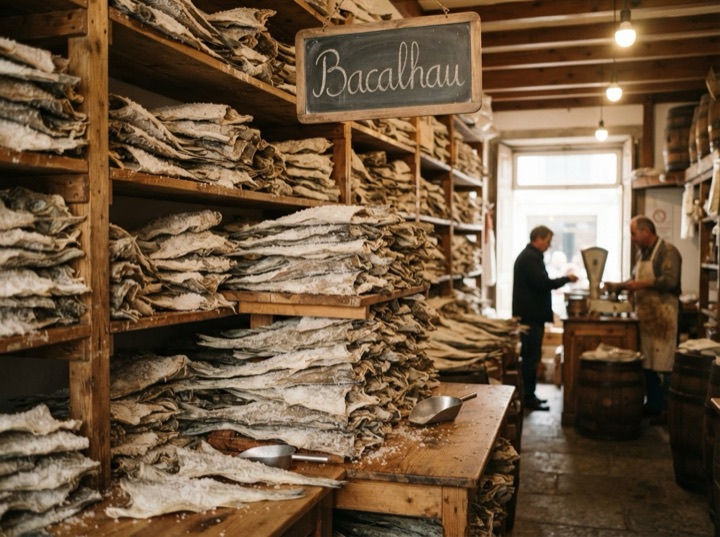
Why Do Portuguese Eat BacalhauThe Story of the Faithful Friend
Why do Portuguese eat bacalhau when no cod swims off Portugal? Salt, Catholic fasting, Newfoundland fleets and the Estado Novo, explained simply.