Food Markets in PortugalHow to Shop Like a Local
Food markets in Portugal explained: what to expect at a mercado municipal, how buying fish and produce works, famous markets to visit, and useful words.
 By Mesa de Portugal Kitchen · Updated · 8 min read
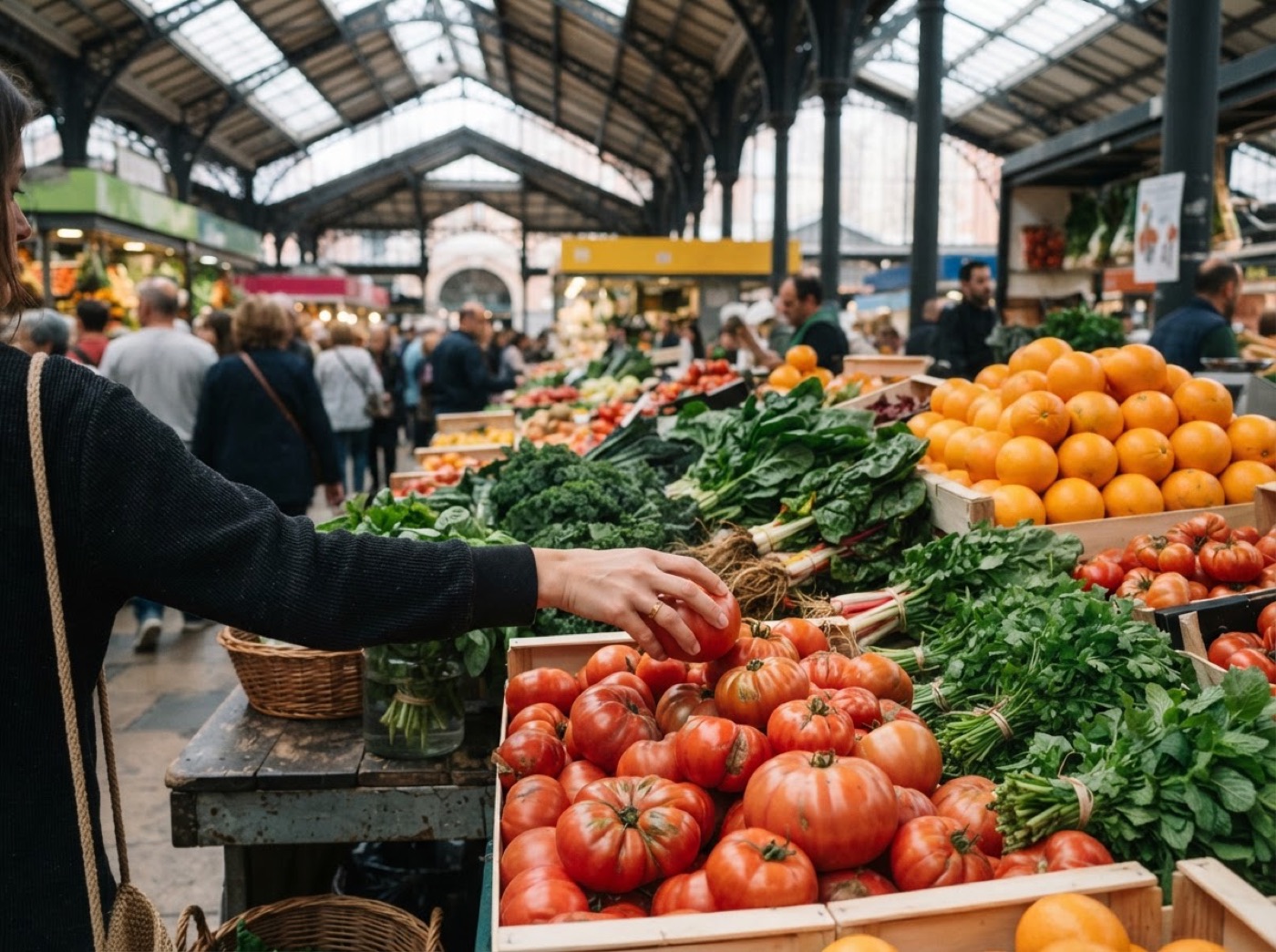
Portuguese food markets are covered municipal halls (mercados municipais) where local producers and fishmongers sell fruit, vegetables, fish, meat, cheese, bread and flowers, mostly in the morning from Monday to Saturday. Go early, ideally on a Saturday, bring cash and a bag, and expect prices by the kilo. Famous ones include Bolhão in Porto, Ribeira in Lisbon, Lavradores in Funchal and Loulé in the Algarve.
Every Portuguese town of any size has a market, and for many people it's still where the week's fish and vegetables come from. For a visitor, it's the fastest way to see what's in season and what locals actually eat.
What to expect at a mercado municipal
Most markets follow the same layout:
- Fruit and vegetables (frutas e legumes): stalls run by growers and resellers, often with handwritten price cards. Small producers sometimes sit at the edges with a few crates from their own land.
- Fish hall (peixaria): marble counters with the morning's catch on ice: sardines, horse mackerel, sea bream, octopus, clams, and whole salt cod nearby.
- Butchers (talhos): pork, beef, chicken and rabbit, plus sausages and smoked meats.
- Cheese and charcuterie: regional cheeses, presunto (cured ham) and chouriço.
- Bread and sweets: local loaves, corn bread and regional cakes.
- Flowers, plants and household goods around the edges.
Some bigger markets now also have cafés, wine bars or food courts, but the core is still a working market.
When to go
- Morning is everything. Many markets open around 7:00 or 8:00, and the fish hall can be winding down by late morning. Some markets close at lunchtime.
- Saturday is the big day. More stalls, more producers, more life. Many towns also hold an outdoor farmers' market nearby on Saturdays.
- Sunday: most municipal markets are closed.
- Monday: fish choice is often thinner, since many boats don't go out on Sunday.
Opening hours vary from town to town and change over time, so check the local câmara municipal (town council) website before travelling.
How buying works
- Look first, then ask. Don't pick up or squeeze produce without asking. The seller will usually choose and weigh it for you.
- Prices are per kilo (ao quilo) unless marked à unidade (each) or ao molho (per bunch).
- Ask for small amounts. Meio quilo (half a kilo) or a specific number is perfectly normal.
- Fish is cleaned for free. Fishmongers will gut, scale and cut fish for you. Ask them to amanhar it. Our guides on how to grill sardines and the Portuguese seafood guide help you choose.
- Bring cash and a bag. Many stalls take cards now, but not all, and small change is welcome.
- Taste when offered. Cheese and fruit sellers often offer a sliver. Accepting doesn't oblige you to buy, but it's polite to say thanks.
Famous food markets to visit
Mercado do Bolhão, Porto
Porto's grand 19th and early 20th-century market hall reopened in 2022 after a long restoration. It's arranged over two levels around an open central space, with fish, meat, produce, flowers, cheese and small food stalls. It's in the city centre, close to Rua de Santa Catarina. Pair a visit with our guide on what to eat in Porto.
Mercado da Ribeira and Time Out Market, Lisbon
At Cais do Sodré, the old Mercado da Ribeira is split in two. One side has, since 2014, been the Time Out Market, a busy food hall with counters from well-known chefs and restaurants, open into the evening. The other side remains a traditional morning market with fish, fruit and flowers. Come in the morning for the real market, later for the food hall. Lisbon's neighbourhood markets, such as Campo de Ourique and Arroios, are quieter alternatives. See what to eat in Lisbon.
Mercado dos Lavradores, Funchal (Madeira)
Funchal's farmers' market opened in 1940 in an Art Deco building decorated with tile panels. It's known for its tropical and subtropical fruit, its fish hall with black scabbardfish (espada) and tuna, and its flower sellers. Fruit stalls aimed at tourists can be expensive, so ask the price per kilo before you accept a tasting plate. More in our guide on what to eat in Madeira.
Mercado de Loulé, Algarve
Loulé's market hall, over a century old, is recognisable by its Moorish-style domes. Inside you'll find fish, produce, cheese, honey, dried figs and almonds. On Saturdays the streets around it fill with a large outdoor market, making it one of the best market mornings in the Algarve. Our guide on what to eat in the Algarve covers the region's food.
Other markets worth a detour
- Olhão, Algarve: two red-brick market halls on the waterfront, one for fish and one for fruit and vegetables, with a big Saturday market outside.
- Barcelos, Minho: a large weekly outdoor market on Thursdays. See our Minho food guide.
What to buy at a Portuguese market
- Seasonal fruit: cherries from Fundão in early summer, Algarve oranges in winter.
- Regional cheese: ask for a local sheep's or goat's cheese. Our Portuguese cheese guide explains the main ones.
- Olives and olive oil from small producers.
- Sea salt and flor de sal in coastal towns. Our flor de sal guide explains how to use it.
- Dried fruit and nuts: figs, almonds and carob products, especially in the Algarve.
- Salt cod: sold whole or in pieces. See our guide to buying bacalhau.
If you can't bring salt home, Portuguese sea salt is easy to find abroad.
Algarve sea salt
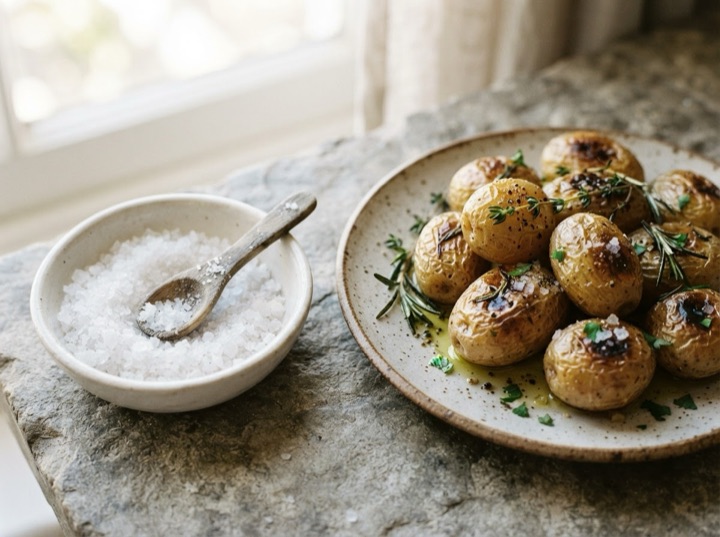
Sea salt from the Algarve salt pans, for coarse-salt roasting batatas a murro and for finishing grilled fish.
Tip: A little goes a long way. Use it for finishing, not boiling water.
Useful market words and phrases
These are European Portuguese, with a rough English pronunciation guide.
- Bom dia (bohm DEE-ah): good morning. Always start with it.
- Quanto custa? (KWAHN-too KOOSH-tah): how much is it?
- Quanto é o quilo? (KWAHN-too eh oo KEE-loo): how much per kilo?
- Queria meio quilo de tomates (keh-REE-ah MAY-oo KEE-loo deh too-MAH-tesh): I'd like half a kilo of tomatoes.
- Posso provar? (POH-soo proo-VAHR): can I taste?
- Pode amanhar o peixe? (POH-deh ah-mah-NYAHR oo PAY-sheh): can you clean the fish?
- É da época? (eh dah EH-poo-kah): is it in season?
- É tudo, obrigado / obrigada (eh TOO-doo, oh-bree-GAH-doo / oh-bree-GAH-dah): that's all, thank you. Men say obrigado, women say obrigada.
- Um saco, por favor (oong SAH-koo, poor fah-VOHR): a bag, please.
More menu and shopping vocabulary is in our Portuguese food words list.
Cooking your market haul
Back in the kitchen, the simplest market dishes are the best: grilled sardines, clams in garlic, or a pot of soup. Try our amêijoas à Bulhão Pato, caldo verde or air fryer sardinhas assadas. For more home-style ideas, a family cookbook is a good companion.

At My Portuguese Table by Maria Lawton
The follow-up to Azorean Cooking, with more family recipes from the islands and the mainland.
Tip: Paperback, easy to cook from.
What you’ll need
Links go to Amazon, where you can check today’s price. If you buy, we earn a small commission at no extra cost to you.
Algarve sea salt
Sea salt from the Algarve salt pans, for coarse-salt roasting batatas a murro and for finishing grilled fish.
Tip: A little goes a long way. Use it for finishing, not boiling water.
At My Portuguese Table by Maria Lawton
The follow-up to Azorean Cooking, with more family recipes from the islands and the mainland.
Tip: Paperback, easy to cook from.
Frequently asked
What is the most famous market in Portugal?
What days are Portuguese markets open?
Can you pay by card at Portuguese markets?
Is the Time Out Market in Lisbon a real market?
Recipes from this story
 Traditional
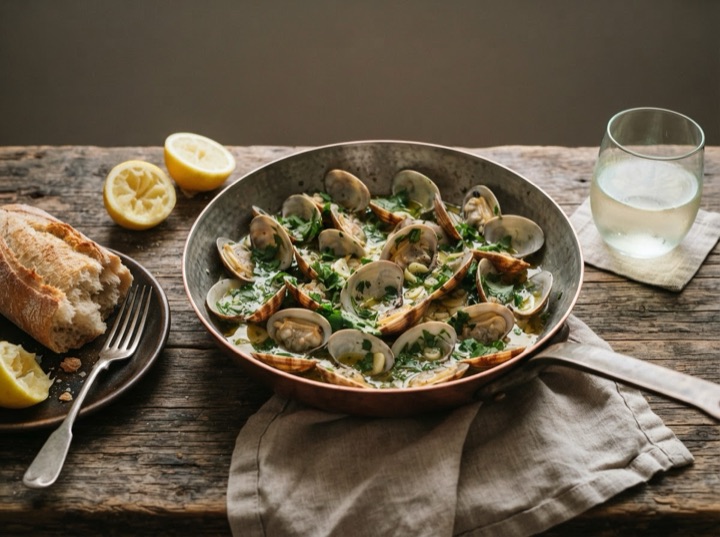
Amêijoas à Bulhão PatoClams with Garlic and Coriander
Clams steamed open in olive oil, garlic, coriander and a squeeze of lemon. Lisbon's favourite seafood petisco, ready in 10 minutes once the clams are clean.
 Food culture
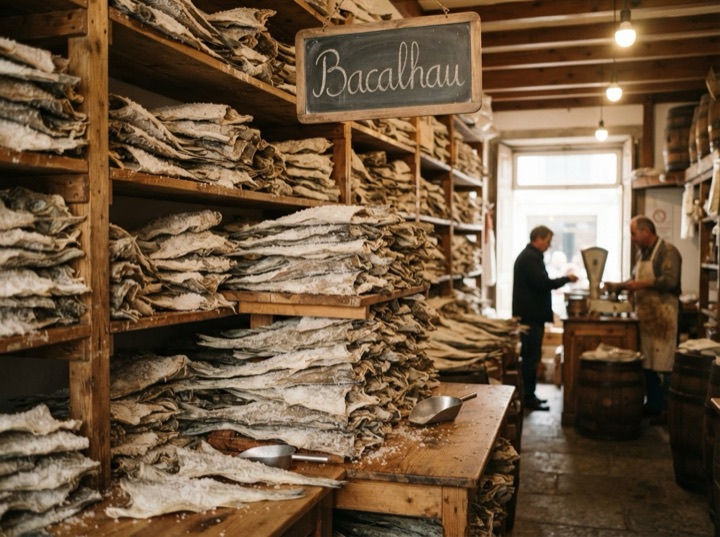
Why Do Portuguese Eat BacalhauThe Story of the Faithful Friend
Why do Portuguese eat bacalhau when no cod swims off Portugal? Salt, Catholic fasting, Newfoundland fleets and the Estado Novo, explained simply.
 Eat like a local
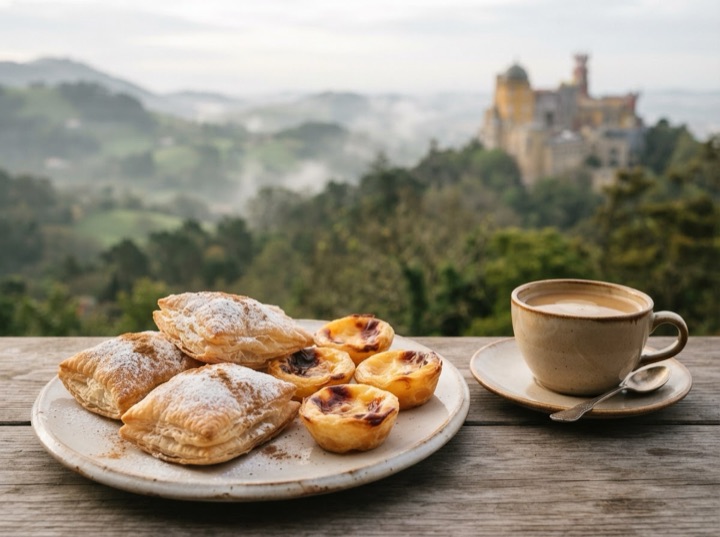
What to Eat in SintraTravesseiros, Queijadas and the Coast
What to eat in Sintra: travesseiros and queijadas, Colares wine, and grilled fish on the nearby coast, plus tips to eat well on a Sintra day trip.