FrancesinhaPorto's Famous Sandwich Explained
What a francesinha is, what goes in the beer and tomato sauce, where it came from, how to eat one in Porto, and how to make a francesinha at home.
 By Mesa de Portugal Kitchen · Updated · 7 min read
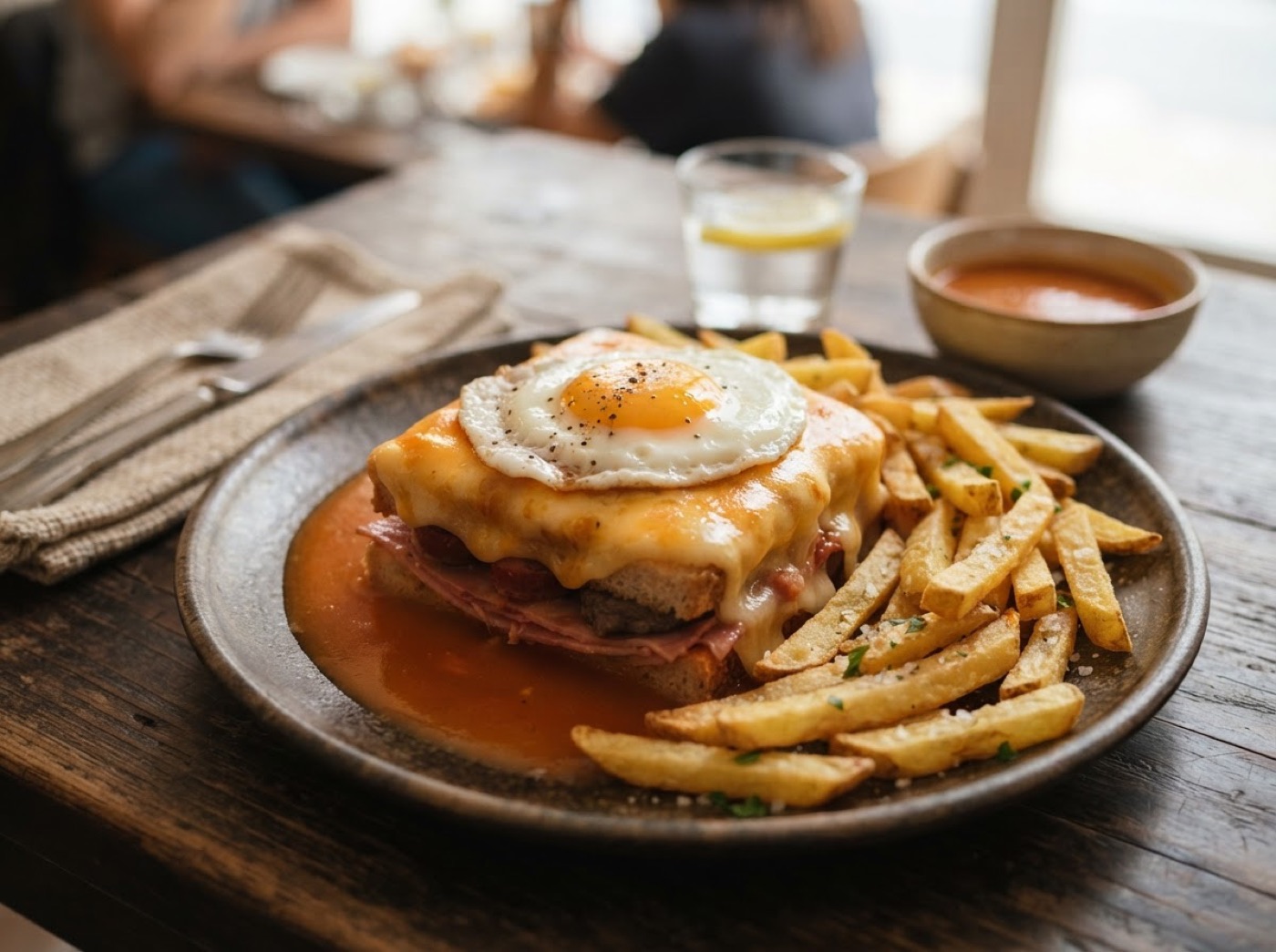
A francesinha (literally "little Frenchie") is Porto's famous sandwich: two or three slices of bread layered with ham, linguiça (thin smoked sausage), fresh sausage and a thin steak, covered in melted cheese and drowned in a hot, slightly spicy sauce made with beer, tomato and stock. It's usually topped with a fried egg and served with chips. One is a full meal.
It's the dish that people who visit Porto talk about afterwards, and the one locals argue about most, mainly over whose sauce is best.
What's inside a francesinha
The build is fairly standard across Porto, though every café has its own version:
- Bread: thick slices of soft white sandwich bread (pão de forma), sometimes toasted.
- Fiambre: cooked ham.
- Linguiça: a thin, smoky pork sausage, split lengthways.
- Salsicha fresca: fresh pork sausage, grilled and split.
- Bife: a thin beef or pork steak, quickly seared.
- Queijo: sliced mild melting cheese, laid over the top so it drapes down the sides and melts under the grill.
- Ovo: an optional fried egg on top. Ask for com ovo (with egg).
- Batatas fritas: chips, often served in the sauce or beside it so you can dip them.
Some places add mortadella, bacon or chouriço. A francesinha especial usually means extra fillings or the egg, but it varies, so ask.
What is francesinha sauce made of?
The sauce is the whole point, and the recipes are guarded. Almost all of them share a base of:
- Beer, usually a light lager.
- Tomato, as passata, purée or concentrate.
- Stock, often made with beef, sometimes with the sausage trimmings.
- Something fortified or strong: port, brandy or whisky, depending on the cook.
- Chilli: piri-piri or chilli flakes, to give it heat.
- Thickener: a little cornflour or flour, so it coats rather than runs.
The finished sauce is orange-red, glossy and thick enough to cling to the cheese. It should taste savoury and beery first, with heat building at the end. Many cafés offer it picante (spicy) or normal.
Where did the francesinha come from?
The usual story credits Daniel David da Silva, a Portuguese man who had lived in France, with creating it at the restaurant A Regaleira on Rua do Bonjardim in Porto. He is said to have adapted the French croque-monsieur using Portuguese meats and a spicy sauce of his own invention. Sources disagree on the year, giving dates between 1950 and 1953.
The name is also debated. The most common explanation is simply that it was a "little French" sandwich. Treat the more colourful versions you'll hear in bars as legend.
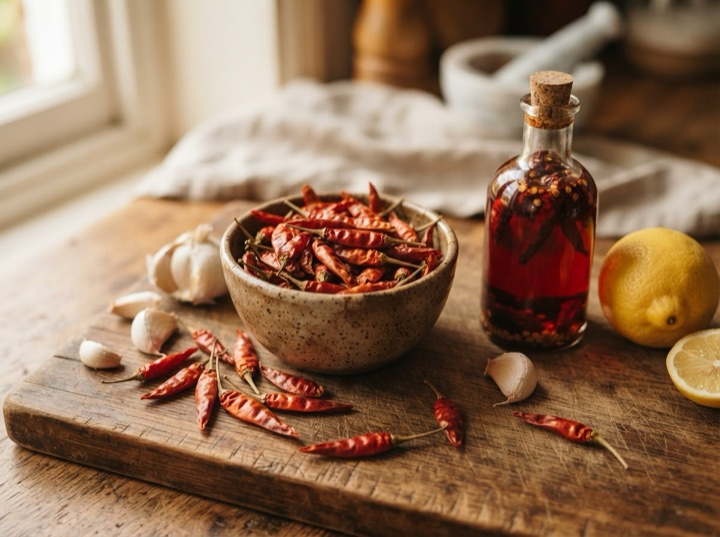
Piri-piri chillies from Portugal
Whole dried bird's-eye chillies, the heat behind frango piri-piri and the bottle of chilli oil on every Portuguese table.
Tip: Two packs last a year. Crush them as you need them.
How to eat a francesinha
Use a knife and fork. It is not a hand-held sandwich, whatever its name suggests. Cut from the corner, through all the layers, and drag each piece through the sauce. Dip the chips as you go.
A few practical tips:
- Order it at lunch. It's heavy, and a late dinner francesinha makes for a long night.
- Share if you're unsure. One francesinha with chips can feed two light eaters, especially with a soup first.
- Drink beer. A cold fino (small draught beer) is the usual partner. A young red wine works too.
- Expect to wait a little. A good one is assembled and grilled to order.
- Budget roughly €10-15 with chips in a normal Porto café, more in tourist spots.
Where to try a francesinha in Portugal
Porto is the place, and you'll find it on menus all over the city, from snack bars to sit-down restaurants. It has spread across the north and down to Lisbon, though many Porto natives will tell you it's never quite the same outside the city. Our guide to what to eat in Porto covers what to order alongside it.
How to make a francesinha at home
This is an outline rather than a precise recipe, so you can adapt it to what you can buy. It serves two.
For the sauce
- Fry a chopped onion and two garlic cloves in olive oil until soft.
- Add any sausage or steak trimmings and brown them.
- Pour in 330 ml of lager and 250 ml of beef stock. Add 3 tablespoons of tomato purée, a bay leaf, a splash of port or brandy, and a pinch of chilli.
- Simmer for 20-30 minutes, remove the bay leaf and any meat pieces, then blend until smooth.
- Thicken with a teaspoon of cornflour mixed in a little cold water. Season with salt, and add more chilli if you like heat.
A hand blender makes the last step much easier, straight in the pan.
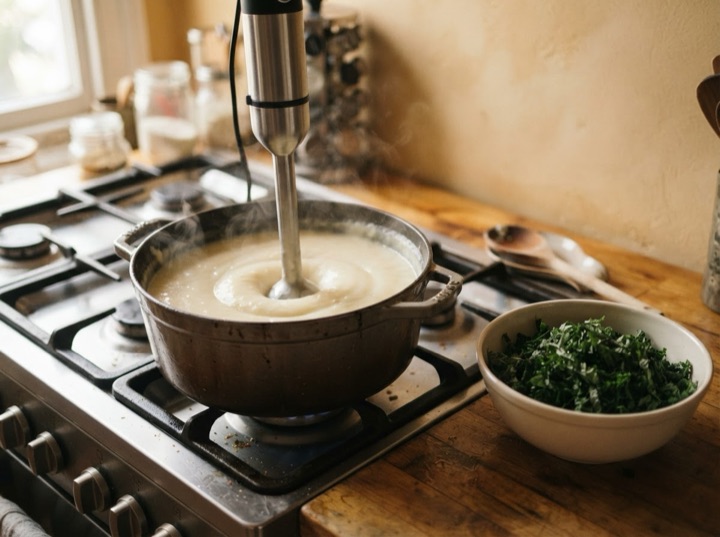
Cuisinart Smart Stick hand blender
Caldo verde's base has to be completely smooth before the greens go in. Blending in the pot means less washing up.
Tip: Take the pot off the heat before you blend to avoid splashes.
For the sandwich
- Grill or pan-fry the sausages and split them. Sear thin steaks for a minute a side.
- Toast four slices of thick white bread.
- Layer: bread, ham, linguiça, sausage, steak, ham, bread.
- Cover the top and sides with cheese slices and grill or bake at 200 °C until the cheese melts and blisters.
- Fry an egg, place it on top, then pour hot sauce around and over.
A heavy pan that can go from hob to oven is useful for searing the meats and melting the cheese.
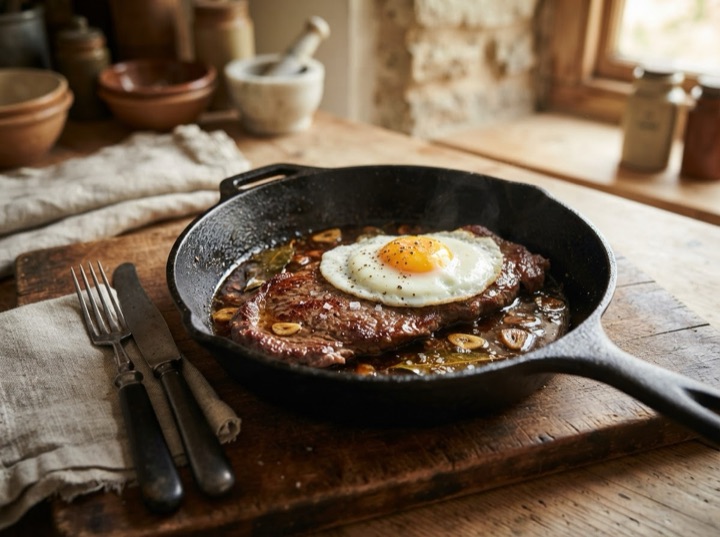
Lodge 12-inch cast iron skillet
One of Amazon's best-selling pans. Gets hot enough to sear bitoque steaks and blister sardines.
Tip: Season it and it lasts forever.
Substitutes outside Portugal
Linguiça can be hard to find. A thin smoked sausage or a mild smoked chouriço works. Our Portuguese sausages guide explains what each one is, and chouriço vs chorizo explains why Spanish chorizo is not a straight swap. For cheese, any mild slice that melts well will do. More swaps are in our Portuguese ingredient substitutes guide.
Serve it with chips from the air fryer, or roast potatoes like our batatas a murro. If you want a lighter northern classic for another night, try caldo verde.
What you’ll need
Links go to Amazon, where you can check today’s price. If you buy, we earn a small commission at no extra cost to you.
Cuisinart Smart Stick hand blender
Caldo verde's base has to be completely smooth before the greens go in. Blending in the pot means less washing up.
Tip: Take the pot off the heat before you blend to avoid splashes.
Lodge 12-inch cast iron skillet
One of Amazon's best-selling pans. Gets hot enough to sear bitoque steaks and blister sardines.
Tip: Season it and it lasts forever.
Piri-piri chillies from Portugal
Whole dried bird's-eye chillies, the heat behind frango piri-piri and the bottle of chilli oil on every Portuguese table.
Tip: Two packs last a year. Crush them as you need them.
Frequently asked
What does francesinha mean?
What does francesinha taste like?
Is francesinha spicy?
How many calories are in a francesinha?
Can you get a vegetarian francesinha?
Recipes from this story
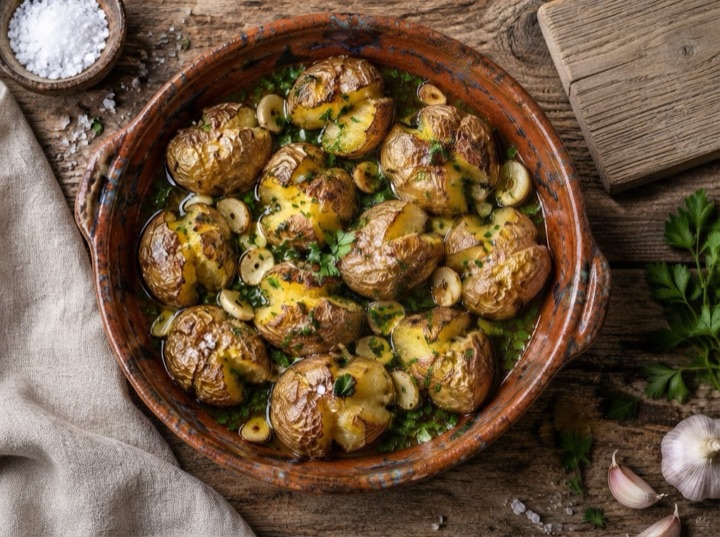 Air Fryer
Batatas a Murro in the Air Fryer (Punched Potatoes)
Portuguese punched potatoes made in the air fryer: salt-crusted skins, a fluffy middle and plenty of garlic olive oil. The classic partner for bacalhau.
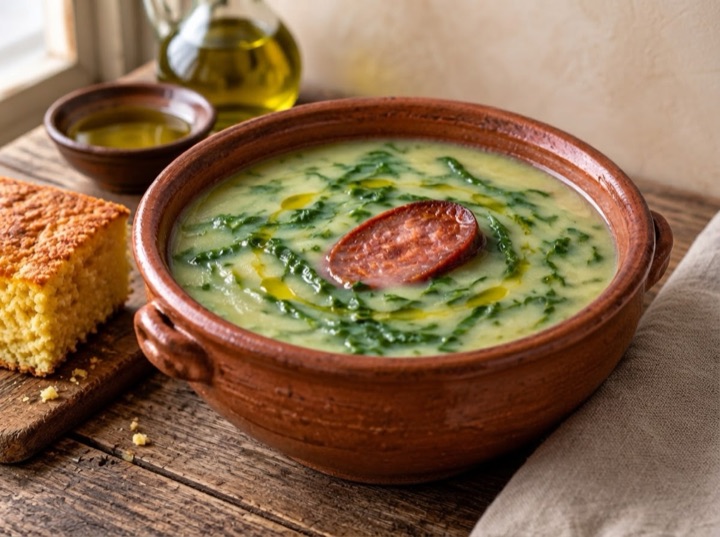 Traditional
Caldo VerdePortuguese Green Soup
Portugal's national soup: a silky potato base, ribbons of finely shredded greens and a slice of chouriço on top. Simple, cheap and done in 40 minutes.
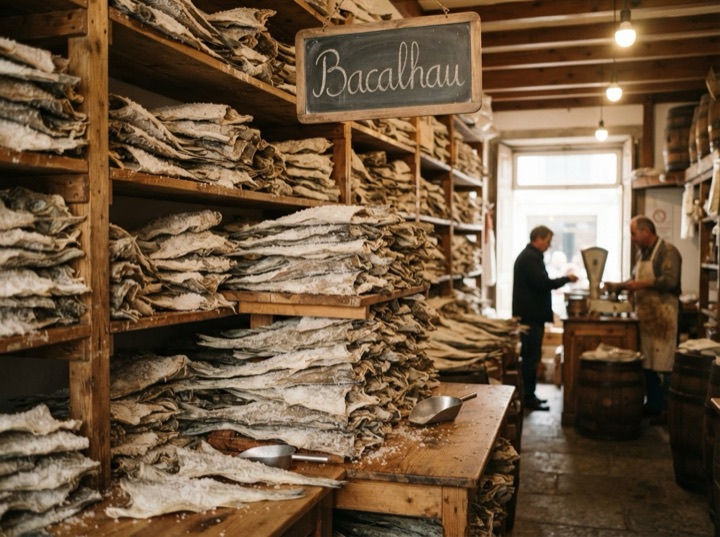 Food culture
Why Do Portuguese Eat BacalhauThe Story of the Faithful Friend
Why do Portuguese eat bacalhau when no cod swims off Portugal? Salt, Catholic fasting, Newfoundland fleets and the Estado Novo, explained simply.