Vegetarian PortugalWhat to Eat and How to Ask
Vegetarian Portugal, honestly: which traditional dishes are meat-free, where meat hides, the Portuguese words to ask with, and where it gets easy.
 By Mesa de Portugal Kitchen · Updated · 7 min read
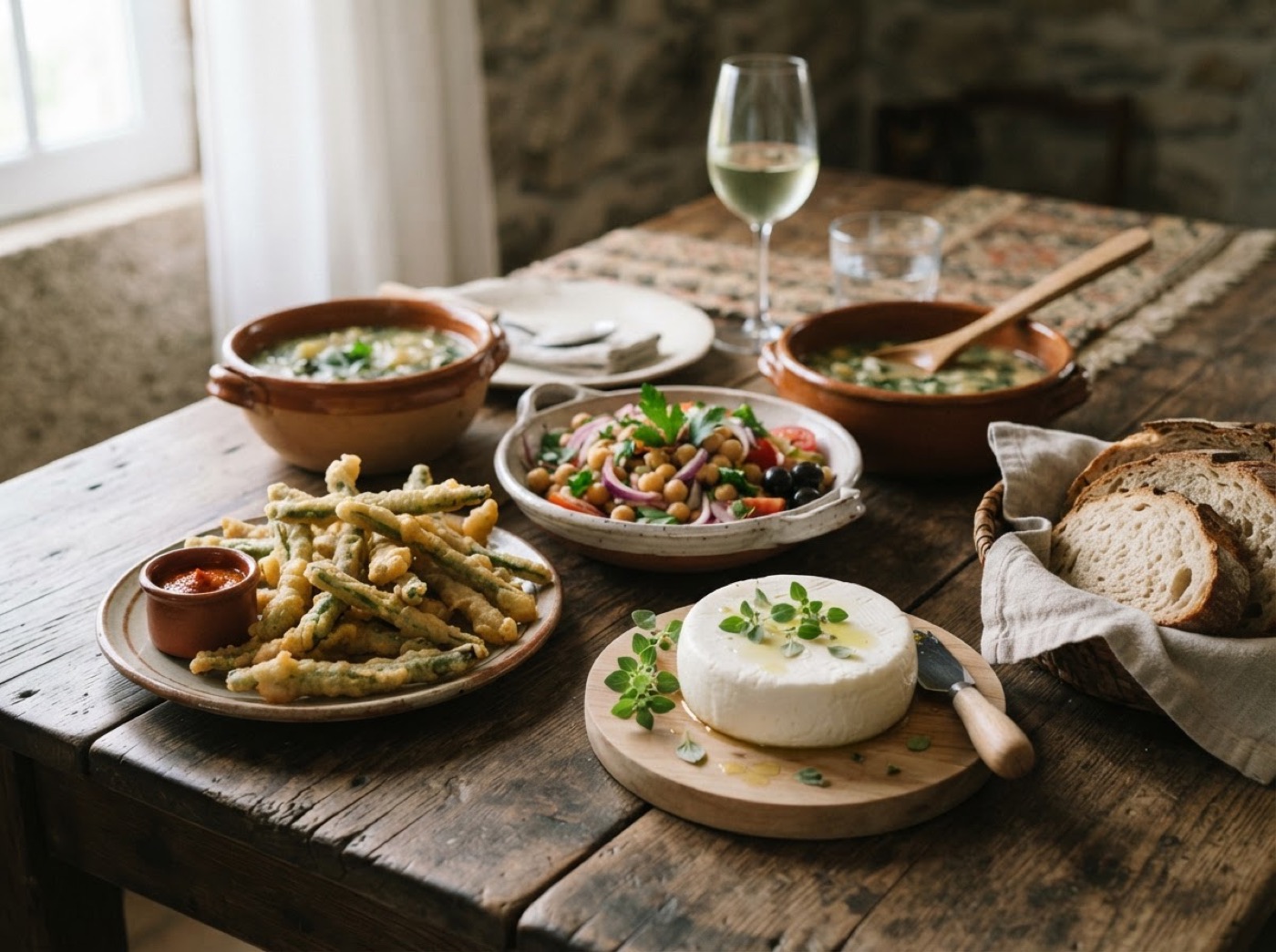
Vegetarian Portugal is easier than it used to be, but traditional menus are built on pork, bacalhau and grilled fish. In Lisbon and Porto you'll find plenty of vegetarian and vegan restaurants. In small towns, you'll eat well on soups, eggs, cheese, bread, beans, salads and pastries, as long as you know which dishes hide meat and how to ask.
Here's the honest picture, the dishes that are (or can be) meat-free, and the exact Portuguese words to use.
Is Portugal vegetarian friendly?
In the big cities, yes. Lisbon, Porto and the Algarve's tourist towns have dedicated vegetarian and vegan places, and most modern restaurants have at least one vegetariano option marked on the menu. Supermarkets stock plant milks, tofu, seitan and veggie burgers.
Outside the cities it's harder. A traditional tasca menu may have no meat-free main at all. Two things catch visitors out:
- Fish isn't always seen as "meat". Ask for something "sem carne" (without meat) and you may be offered tuna or bacalhau.
- Pork gets everywhere. Chouriço in the soup, toucinho (pork fat) in the beans, lard (banha) in pastry, and meat stock in the rice.
Neither is meant badly. A cook may simply not think of a slice of chouriço as making a soup "meat". Be specific and you'll be fine.
Traditional dishes that are, or can be, vegetarian
Sopa de legumes
Sopa de legumes (vegetable soup) is served almost everywhere at lunch: a smooth purée of potato, carrot, onion, pumpkin and greens with olive oil. It's usually vegetarian, but not always. Some kitchens use a meat or chicken stock, or cook a piece of bacon or chouriço in the pot. Ask: "A sopa é feita com caldo de carne?" (ah SOH-pah eh FAY-tah kohn KAHL-doo d' KAR-n'), meaning "Is the soup made with meat stock?"
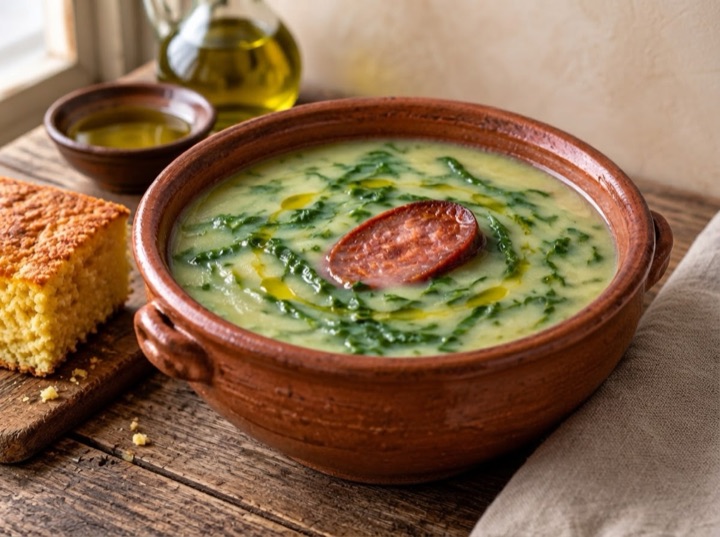
Caldo verde is vegetarian at the base, but it's normally served with a slice of chouriço. Ask for it "sem chouriço". See our Portuguese soups guide for the others worth trying.
Açorda
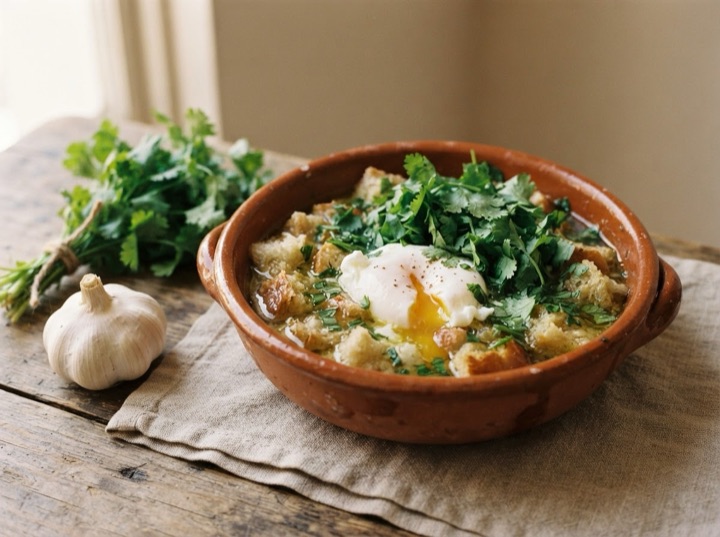
Açorda alentejana is bread soup: garlic, coriander, olive oil and salt pounded together, hot water poured over, stale bread added and a poached egg on top. The classic Alentejo version is meat-free, although some restaurants add bacalhau. Lisbon-style açorda is often made with prawns. Try our açorda alentejana recipe at home.
Migas
Migas are bread or cornbread fried with garlic and olive oil, sometimes mixed with greens or beans. Often they come next to pork, or are fried in pork fat, so this one needs asking. Migas with grelos (turnip greens) or asparagus can be fully vegetarian.
Grão and feijão
Chickpeas (grão) and beans (feijão) are everywhere. Salada de grão, chickpea salad with onion, parsley, olive oil and vinegar, is often vegetarian (check for tuna or bacalhau). Bean stews, though, are usually cooked with pork. Ask before ordering anything "à transmontana" or "com feijão".
Peixinhos da horta
The name means "little fish from the garden", but there's no fish: peixinhos da horta are green beans in a light batter, fried until crisp. A classic petisco and one of the best vegetarian things on any menu. Check the oil isn't shared with fish if that matters to you.
Other safe bets
- Ovos mexidos com espargos: scrambled eggs with wild asparagus, a spring dish.
- Omelete: cheese or mushroom omelettes are a standard fallback in any café.
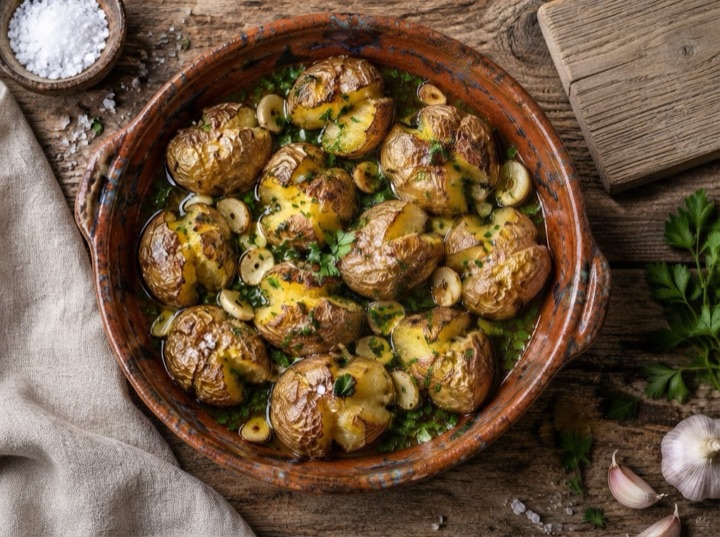
- Batatas a murro: roasted, "punched" potatoes with garlic and olive oil. Recipe here.
- Salada de pimentos: roasted red peppers with garlic and olive oil.
- Tosta mista without ham: ask for a "tosta de queijo", a toasted cheese sandwich.
- Esparregado: a garlicky purée of greens, served as a side.
Cheese, bread and pastries
Portugal's cheese is a vegetarian's friend, and the bread is excellent. One note for strict vegetarians: many cheeses use animal rennet, but some famous ones, including Serra da Estrela, Azeitão and Serpa, are traditionally made with thistle flower (cardo) instead. Our Portuguese cheese guide covers them.
Pastries are mostly vegetarian, built on eggs, sugar and flour. The catch is fat: some traditional pastry and biscuits use lard. If you avoid it, ask "Leva banha?" (LEH-vah BAH-nyah), "Does it have lard?" The pastel de nata uses a laminated dough whose fat varies by bakery.
Words to ask with
Learn these and you'll get through any menu:
- Sou vegetariano / vegetariana (soh veh-zheh-tah-ree-AH-noo / -nah): I'm vegetarian (man / woman).
- Não como carne nem peixe (nown KOH-moo KAR-n' nayn PAY-sh'): I don't eat meat or fish.
- Tem pratos vegetarianos? (tayn PRAH-toosh veh-zheh-tah-ree-AH-noosh): Do you have vegetarian dishes?
- Isto leva carne ou peixe? (EESH-too LEH-vah KAR-n' oh PAY-sh'): Does this have meat or fish in it?
- Sem chouriço / sem presunto (sayn shoh-REE-soo / sayn preh-ZOON-too): without chouriço / without ham.
- Caldo de carne (KAHL-doo d' KAR-n'): meat stock.
- Toucinho / banha (toh-SEE-nyoo / BAH-nyah): pork fat / lard.
Other words worth knowing: fiambre (cooked ham), presunto (cured ham), atum (tuna), marisco (shellfish). Our Portuguese food words glossary has the full list.
Practical tips for eating vegetarian in Portugal
- Eat your main meal at lunch in the cities. Vegetarian restaurants often do a cheap set lunch, and many close in the evening or at weekends.
- Use the couvert. Bread, olives and cheese at the start of the meal go a long way. Just remember you pay for what you eat.
- Build a meal from sides. Rice, salad, chips, grilled vegetables and fried eggs can all be ordered separately in most tascas.
- Look for Indian, Nepali and Italian restaurants in small towns. They're common in Portugal and reliably have vegetarian dishes.
- Shop the markets. Fruit, cheese, bread and olives from a municipal market make a great picnic. See our Portuguese food markets guide.
Cooking vegetarian Portuguese food at home
Many classic dishes adapt easily: caldo verde without chouriço, açorda without the bacalhau, chickpea stews with smoked paprika instead of pork. A good general Portuguese cookbook gives you the base recipes to adapt.

Authentic Portuguese Cooking (cookbook)
Over 185 classic recipes from mainland Portugal, the Azores and Madeira. A highly rated home-cooking reference.
Tip: Good for family recipes you remember but never wrote down.
What you’ll need
Links go to Amazon, where you can check today’s price. If you buy, we earn a small commission at no extra cost to you.
Authentic Portuguese Cooking (cookbook)
Over 185 classic recipes from mainland Portugal, the Azores and Madeira. A highly rated home-cooking reference.
Tip: Good for family recipes you remember but never wrote down.

Costa Nova Brisa stoneware bowl
Portuguese stoneware that's microwave- and dishwasher-safe. The right depth for caldo verde or açorda.
Tip: The Brisa range comes in several colours, so you can mix and match.
Frequently asked
Is it hard to be vegetarian in Portugal?
Is Portuguese vegetable soup vegetarian?
What traditional Portuguese dishes are vegetarian?
How do you say "I'm vegetarian" in Portuguese?
Are pastéis de nata vegetarian?
Recipes from this story
 Traditional
Caldo VerdePortuguese Green Soup
Portugal's national soup: a silky potato base, ribbons of finely shredded greens and a slice of chouriço on top. Simple, cheap and done in 40 minutes.
 Traditional
Açorda AlentejanaGarlic and Coriander Bread Soup
The Alentejo's famous bread soup: garlic, coriander and olive oil, boiling water, stale bread and a poached egg. Ready in 20 minutes from pantry staples.
 Air Fryer
Batatas a Murro in the Air Fryer (Punched Potatoes)
Portuguese punched potatoes made in the air fryer: salt-crusted skins, a fluffy middle and plenty of garlic olive oil. The classic partner for bacalhau.