São Martinho PortugalChestnuts, New Wine and the Legend
São Martinho in Portugal on 11 November: roast chestnuts, água-pé, jeropiga, the cloak legend, St Martin's summer and how to roast chestnuts at home.
 By Mesa de Portugal Kitchen · Updated · 6 min read
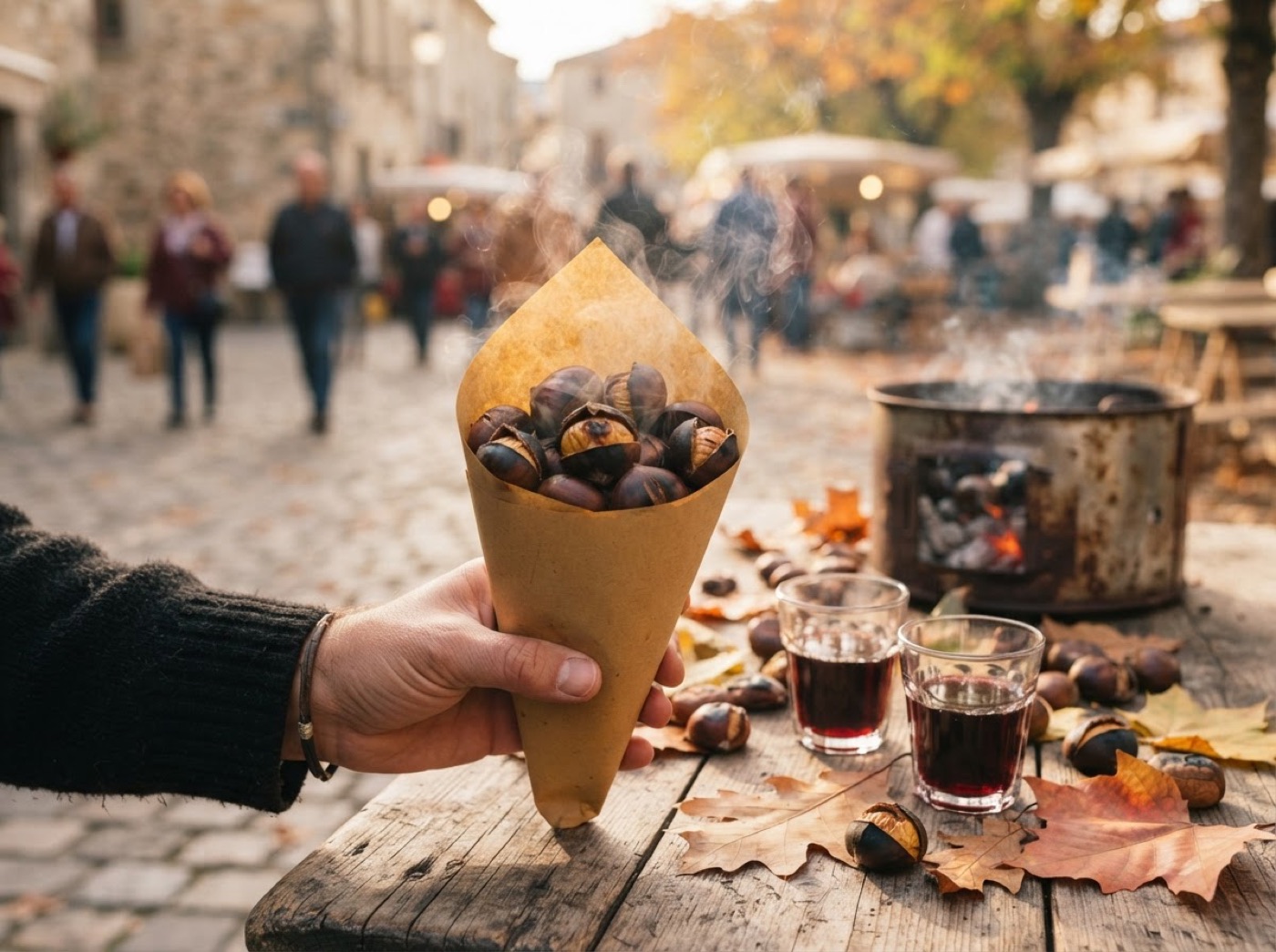
São Martinho is celebrated in Portugal on 11 November, St Martin's Day. It's the day for castanhas assadas (roast chestnuts) and for tasting the year's new wine, often with água-pé or jeropiga, two sweet, light drinks made around the grape harvest. Families, schools and villages hold a magusto, an outdoor chestnut roast around a fire.
It isn't a public holiday, but you'll feel it everywhere. Chestnut sellers appear on street corners in October, schools roast chestnuts in the playground, and tascas put new wine on the counter. As the old saying goes, no dia de São Martinho, lume, castanhas e vinho: "on St Martin's Day, fire, chestnuts and wine".
The legend of São Martinho
Martin of Tours was a Roman soldier in the 4th century who later became a bishop. According to the legend told in Portugal, he was riding home on a cold, stormy day when he met a beggar shivering by the road. Martin cut his military cloak in half with his sword and gave one half to the man. At that moment the rain stopped, the clouds opened and the sun came out, warming them both.
That's the origin of the verão de São Martinho ("St Martin's summer"): a short spell of mild, sunny weather that, by tradition, arrives around 11 November, just as autumn turns cold. It doesn't happen every year, but when it does, everyone mentions it. It's roughly what English speakers call an Indian summer.
What is a magusto?
A magusto is the gathering itself: a bonfire, chestnuts roasting in the embers or in a pierced pan, and wine. Traditionally, people blacken their faces with soot from the burnt chestnut shells, a game that children still love. Schools, parishes, scout groups and villages all hold one in the week around 11 November, especially in the chestnut-growing north and centre.
Portugal is a big chestnut producer. Most come from Trás-os-Montes and the Beira interior, and the Terra Fria Transmontana area has protected chestnuts under the Castanha da Terra Fria name. Our Alentejo and Minho food guides cover other autumn specialities.
Água-pé and jeropiga: what to drink
São Martinho is when the year's wine is first opened. "Vai à adega e prova o vinho" (go to the cellar and taste the wine) is part of another version of the saying. Two traditional drinks go with chestnuts:
- Água-pé ("foot water"): a light, low-alcohol drink made by adding water to the grape skins left after pressing and letting it ferment briefly. Slightly sweet, slightly fizzy and cloudy. Rare in shops, more common in villages and at country fairs.
- Jeropiga: grape must (fresh juice) stopped from fermenting with aguardente (grape brandy). The result is sweet, strong and served in small glasses. Think of it as a rustic cousin of port. If you like it, our port wine guide is the next step.
Many people simply drink the new red or a young wine from the local cooperative. For more, see the Portuguese drinks guide.
Where to celebrate São Martinho in Portugal
- Golegã (Ribatejo) holds the Feira Nacional do Cavalo, the national horse fair, around São Martinho each November. Horses, riders, roast chestnuts and jeropiga fill the town.
- Villages in Trás-os-Montes and the Beiras hold the most traditional magustos, often with chestnut fairs.
- Lisbon and Porto have the street sellers, plus tascas that put on chestnuts and wine for the day.
How to roast chestnuts at home
Portuguese roast chestnuts are soft, sweet and slightly smoky, with a little coarse salt clinging to the shell. Here's how to get close at home.
Choose and prepare
- Pick heavy, glossy chestnuts with tight shells. Avoid any that rattle, feel light or have small holes.
- Cut a slit. Lay each chestnut flat side down and cut a cross or a long slash through the shell with a sharp knife. Skip this and they will explode.
- Soak for 20 to 30 minutes in warm water. This creates steam inside the shell and makes peeling much easier.
- Drain and dry, then toss with a pinch of coarse sea salt.
In the oven
- Preheat to 200 °C (180 °C fan).
- Spread the chestnuts cut side up on a tray in one layer.
- Roast for 20 to 30 minutes, shaking the tray halfway, until the cuts curl open and the flesh is golden.
In the air fryer
- Preheat to 200 °C.
- Cook in a single layer for 12 to 18 minutes, shaking the basket every 5 minutes.
- Smaller chestnuts are done sooner, so check one at 12 minutes.
An air fryer suits chestnuts because the circulating heat dries and crisps the shell quickly. A larger basket lets you do a full kilo in two batches.
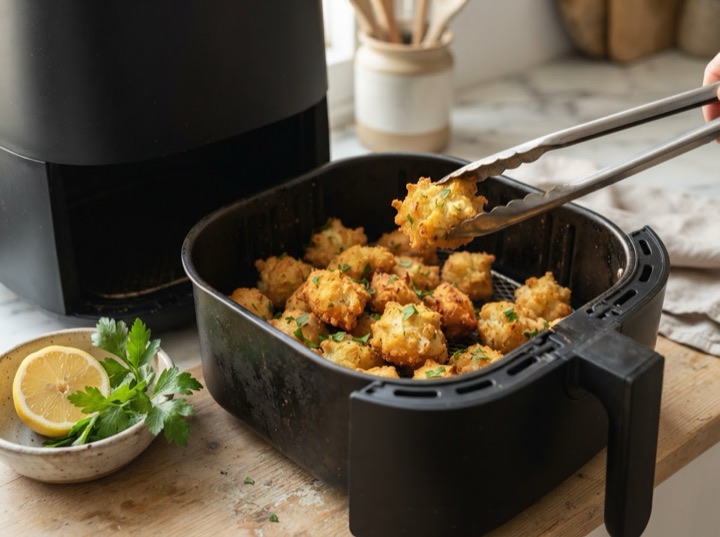
Cosori TurboBlaze 6 Qt Air Fryer
One of Amazon's best-selling air fryers. The 6 Qt basket fits a batch of pastéis de bacalhau or chicken thighs for four, and the ceramic coating is PFAS-free.
Tip: Size is what matters for Portuguese cooking: 5.5–6 Qt feeds 2–4 people in one batch.
Peel while warm
Wrap the roasted chestnuts in a clean tea towel for 5 minutes. The steam loosens the inner skin. Peel them while they're still warm; once cold, the thin papery skin sticks again.
Portuguese sellers roast chestnuts with a coarse salt that leaves a white crust on the shells. A good sea salt gives the same effect at home.
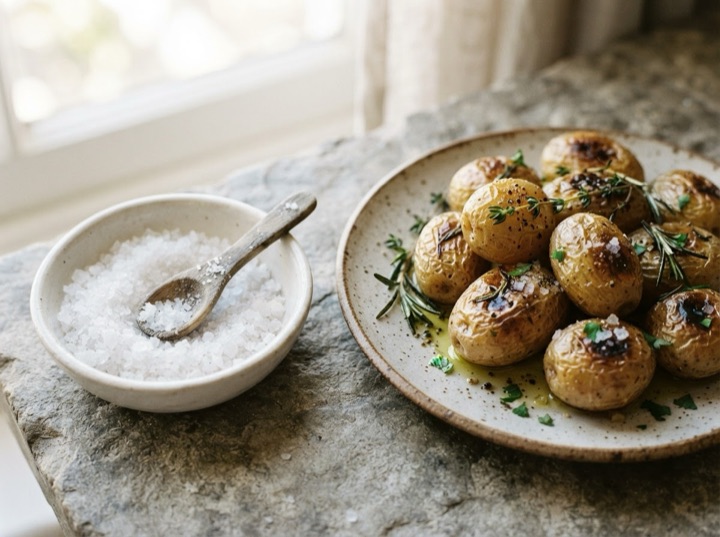
Algarve sea salt
Sea salt from the Algarve salt pans, for coarse-salt roasting batatas a murro and for finishing grilled fish.
Tip: A little goes a long way. Use it for finishing, not boiling water.
Using leftover chestnuts
Chestnuts are an old Portuguese staple, eaten long before potatoes arrived. Leftovers go well in soups (our Portuguese soups guide has ideas), in a stuffing for roast pork, or simply sautéed with chouriço. For more air fryer ideas for the season, see our Portuguese air fryer recipes.
What you’ll need
Links go to Amazon, where you can check today’s price. If you buy, we earn a small commission at no extra cost to you.
Cosori TurboBlaze 6 Qt Air Fryer
One of Amazon's best-selling air fryers. The 6 Qt basket fits a batch of pastéis de bacalhau or chicken thighs for four, and the ceramic coating is PFAS-free.
Tip: Size is what matters for Portuguese cooking: 5.5–6 Qt feeds 2–4 people in one batch.
Algarve sea salt
Sea salt from the Algarve salt pans, for coarse-salt roasting batatas a murro and for finishing grilled fish.
Tip: A little goes a long way. Use it for finishing, not boiling water.
Frequently asked
When is São Martinho in Portugal?
What do Portuguese people eat on São Martinho?
What is the verão de São Martinho?
What is jeropiga?
How long do you roast chestnuts in an air fryer?
Recipes from this story
 Food culture
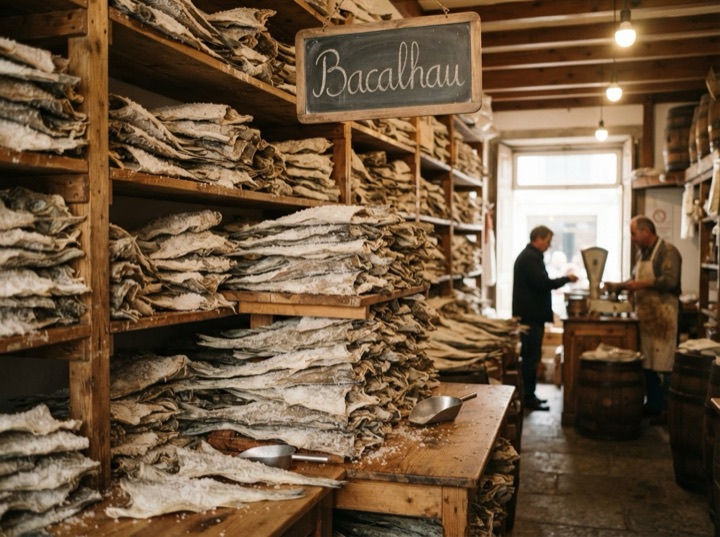
Why Do Portuguese Eat BacalhauThe Story of the Faithful Friend
Why do Portuguese eat bacalhau when no cod swims off Portugal? Salt, Catholic fasting, Newfoundland fleets and the Estado Novo, explained simply.
 Eat like a local
What to Eat in SintraTravesseiros, Queijadas and the Coast
What to eat in Sintra: travesseiros and queijadas, Colares wine, and grilled fish on the nearby coast, plus tips to eat well on a Sintra day trip.
 Eat like a local
What to Eat in Porto12 Local Dishes and How to Order
What to eat in Porto, dish by dish: francesinha, tripas, bifanas, sandes de pernil, bolinhos de bacalhau and port, with tips on how locals order.