Portuguese Soup10 Classics and Why Every Meal Starts With Sopa
Portuguese soup explained: why meals start with sopa, 10 classic soups from caldo verde to sopa da pedra, and a simple everyday sopa de legumes recipe.
 By Mesa de Portugal Kitchen · Updated · 6 min read
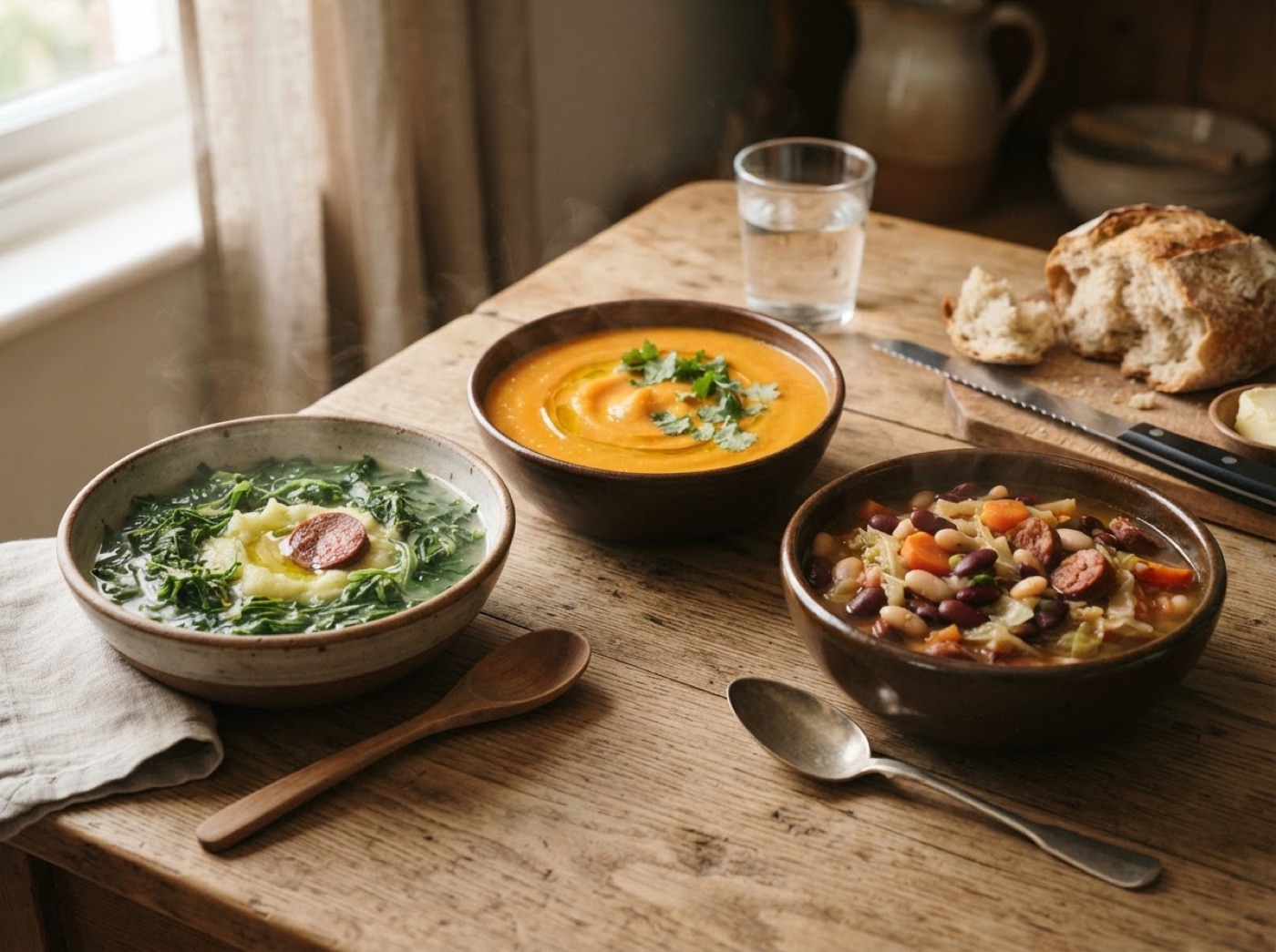
In Portugal, soup is not a starter you choose. It is how lunch and dinner begin. The everyday Portuguese soup is a smooth, thick vegetable purée, sopa de legumes, made from potatoes, carrots, onion and whatever greens are in season, finished with olive oil. The famous ones, like caldo verde, sopa da pedra and canja, build on that same simple idea.
Most Portuguese restaurants have a soup of the day for a euro or two, and many households make a big pot every few days.
Why do Portuguese people eat soup before every meal?
Partly habit, partly economy. Soup was the way rural families stretched vegetables, beans and a little meat to feed everyone, and the habit stuck. Today it's also seen as the easy way to get vegetables into the day, especially for children. Ask Portuguese people about it and many will tell you a meal without soup feels incomplete.
A few things are typical of the Portuguese style:
- Smooth, not chunky. Most everyday soups are blended until completely smooth. Pieces of greens or beans may be added after blending.
- Potato as the thickener. No cream or flour. A couple of potatoes give body.
- Olive oil at the end. Stirred in raw after cooking, or drizzled on top.
- Light on stock. Many soups use water, letting the vegetables do the work.
10 Portuguese soups to know
1. Caldo verde
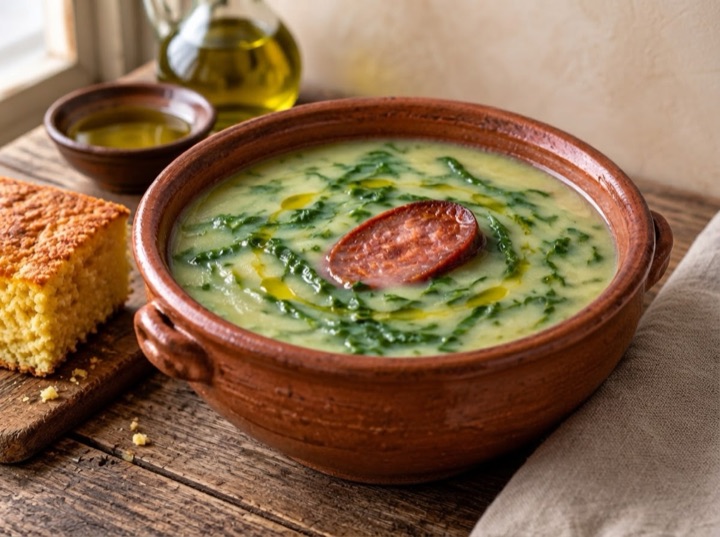
The national soup. A smooth potato and onion base with very thin ribbons of couve galega (Portuguese collard greens) and a slice of chouriço on top. From the Minho, now everywhere, and essential at the June street festivals. Our caldo verde recipe.
2. Sopa da pedra
"Stone soup" from Almeirim in the Ribatejo. According to legend, a hungry friar claimed he could make soup from a stone, then talked the villagers into adding beans, sausages, pork and potatoes. The result is a hearty bean and meat soup, served in Almeirim with a clean stone at the bottom of the pot.
3. Canja de galinha
Chicken broth with rice, shreds of chicken and sometimes a few mint leaves. It is what Portuguese parents make for anyone who feels unwell, and what many families serve on cold evenings.
4. Açorda alentejana
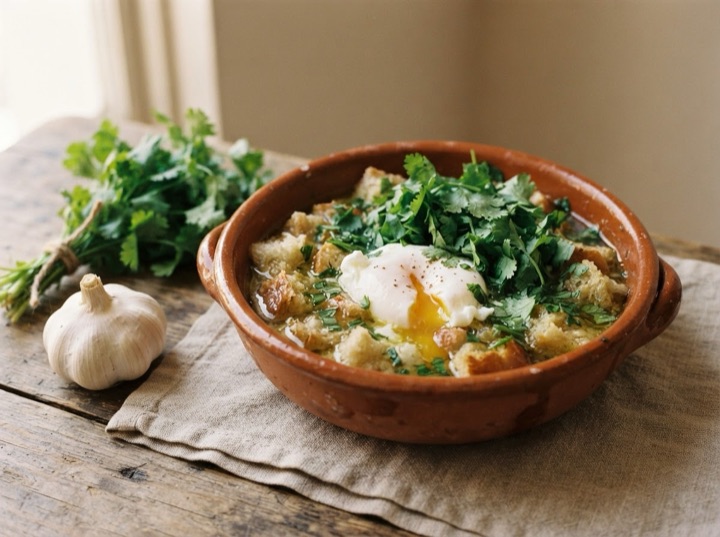
Garlic, coriander, salt and olive oil pounded together, covered with boiling water and poured over stale bread, with a poached egg on top. Ready in 20 minutes. Açorda alentejana recipe.
5. Creme de legumes
The everyday blended vegetable soup, often called simply sopa. Carrot, pumpkin, courgette, leek or spinach, with potato and onion. The recipe is below.
6. Sopa de feijão verde
A smooth potato and carrot base with finely sliced green beans cooked in at the end. A household standard.
7. Sopa de grão
Chickpea soup, often with spinach or other greens. Thick, cheap and filling.
8. Sopa de peixe
Fish soup, made from fish heads and bones, tomato, onion and peppers, sometimes thickened with bread or with small pasta added. Recipes change along the coast.
9. Sopa de tomate à alentejana
Tomatoes, onions and peppers cooked down with olive oil, poured over bread, with a poached egg and sometimes slices of chouriço. A summer soup from the Alentejo.
10. Sopa de cação
Another Alentejo classic, made with cação (dogfish, a small shark), garlic, coriander and vinegar, poured over bread. Sharp, garlicky and unusual.
For bread soups and why stale bread matters so much, see our Portuguese bread guide.
How to make a basic Portuguese sopa de legumes
This is the soup on every Portuguese table. Serves 6, about 40 minutes.
Ingredients
- 1 large onion, chopped
- 2 cloves garlic
- 2 medium floury potatoes, peeled and chopped
- 3 carrots, sliced
- 300 g pumpkin or butternut squash, peeled and chopped
- 1 courgette, chopped
- 1 leek, white part, sliced (optional)
- 1.6 litres water
- 1 tsp salt
- 4 tbsp extra virgin olive oil
- A handful of spinach or finely sliced green beans (optional)
Method
- Put everything except the olive oil and the spinach or green beans in a large pot. Bring to the boil, then simmer for 25 minutes, until the potatoes and carrots are soft.
- Blend until completely smooth with a stick blender. Add a little water if it's too thick. It should coat a spoon but still pour.
- Stir in the olive oil.
- If you're adding greens, bring it back to a simmer, add the spinach or green beans and cook for 3 to 5 minutes.
- Taste for salt and serve with a drizzle of olive oil.
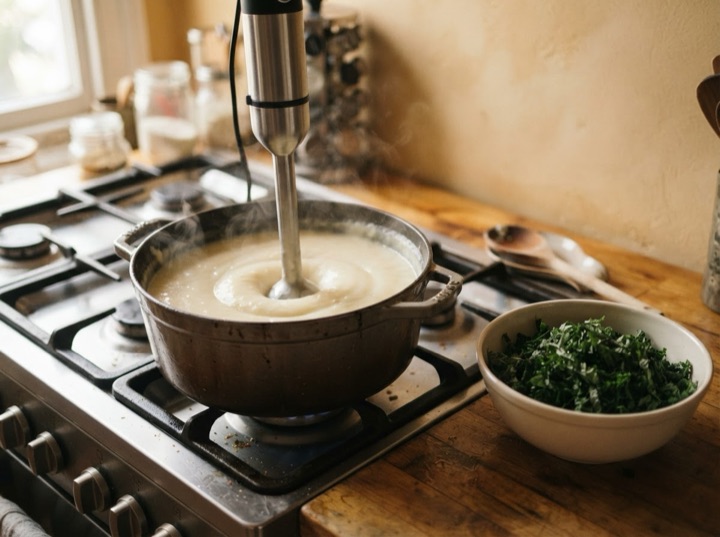
Cuisinart Smart Stick hand blender
Caldo verde's base has to be completely smooth before the greens go in. Blending in the pot means less washing up.
Tip: Take the pot off the heat before you blend to avoid splashes.
Variations
- Creme de cenoura: mostly carrots, plus potato and onion. A little orange zest at the end is nice.
- Creme de abóbora: mostly pumpkin. Sweet and silky.
- Creme de espinafres: blend the base, then stir in a large bag of chopped spinach.
- Caldo verde style: just potato, onion and garlic, blended, with shredded greens added after.
Tips for Portuguese soup at home
- Make a big pot. Portuguese soup is made for several days. It keeps for 3 to 4 days in the fridge.
- Freeze before adding greens. The blended base freezes well. Add fresh greens when you reheat.
- Use a big, heavy pot. A wide stockpot stops it catching on the bottom.
- Don't skip the raw olive oil. It adds flavour and body.
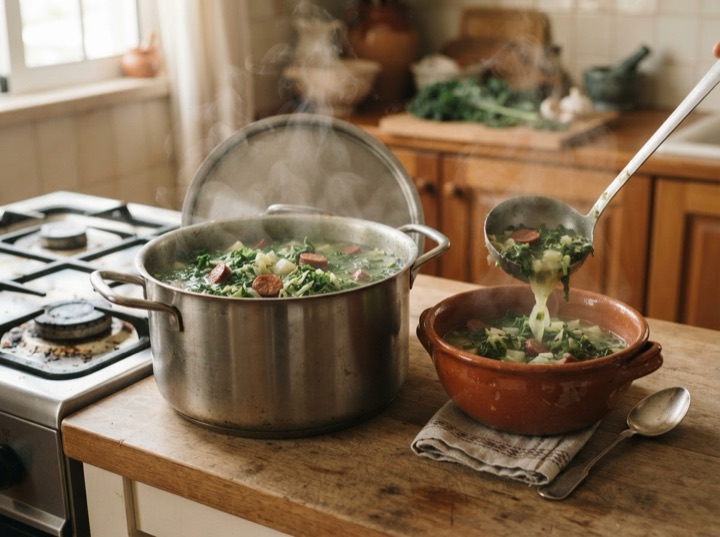
Farberware 6-quart stainless stockpot
A best-selling stockpot for caldo verde, octopus and cooking bacalhau.
Tip: Works on all hobs, including induction.
If you're putting soup on the week's menu, our Portuguese weeknight meal plan uses it as a starter. And for a wider look at the cuisine, start with what Portuguese food is.
What you’ll need
Links go to Amazon, where you can check today’s price. If you buy, we earn a small commission at no extra cost to you.
Farberware 6-quart stainless stockpot
A best-selling stockpot for caldo verde, octopus and cooking bacalhau.
Tip: Works on all hobs, including induction.
Cuisinart Smart Stick hand blender
Caldo verde's base has to be completely smooth before the greens go in. Blending in the pot means less washing up.
Tip: Take the pot off the heat before you blend to avoid splashes.

Costa Nova Brisa stoneware bowl
Portuguese stoneware that's microwave- and dishwasher-safe. The right depth for caldo verde or açorda.
Tip: The Brisa range comes in several colours, so you can mix and match.
Frequently asked
What is the most popular soup in Portugal?
Why do Portuguese people eat soup every day?
What is in caldo verde?
Is Portuguese vegetable soup vegetarian?
Recipes from this story
 Traditional
Caldo VerdePortuguese Green Soup
Portugal's national soup: a silky potato base, ribbons of finely shredded greens and a slice of chouriço on top. Simple, cheap and done in 40 minutes.
 Traditional
Açorda AlentejanaGarlic and Coriander Bread Soup
The Alentejo's famous bread soup: garlic, coriander and olive oil, boiling water, stale bread and a poached egg. Ready in 20 minutes from pantry staples.
 Food culture
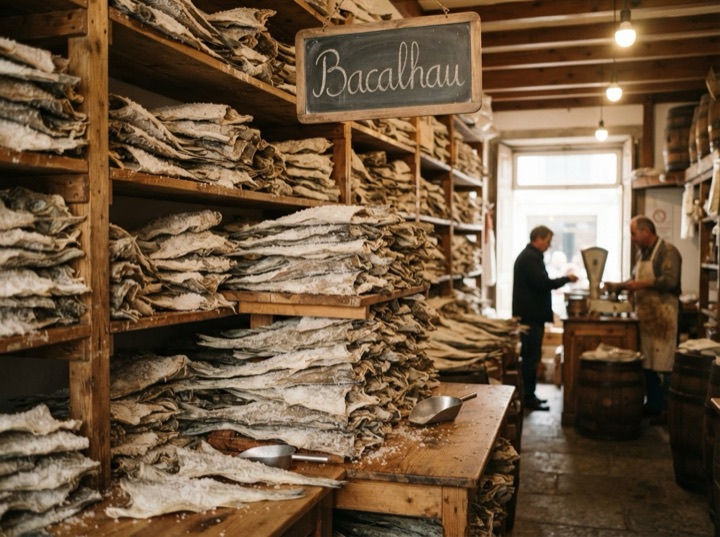
Why Do Portuguese Eat BacalhauThe Story of the Faithful Friend
Why do Portuguese eat bacalhau when no cod swims off Portugal? Salt, Catholic fasting, Newfoundland fleets and the Estado Novo, explained simply.