Portuguese Bread8 Loaves to Know and How Locals Use Them
Portuguese bread explained: broa de milho, pão alentejano, papo-seco, bolo do caco, regueifa and more, plus how stale bread becomes açorda and migas.
 By Mesa de Portugal Kitchen · Updated · 7 min read
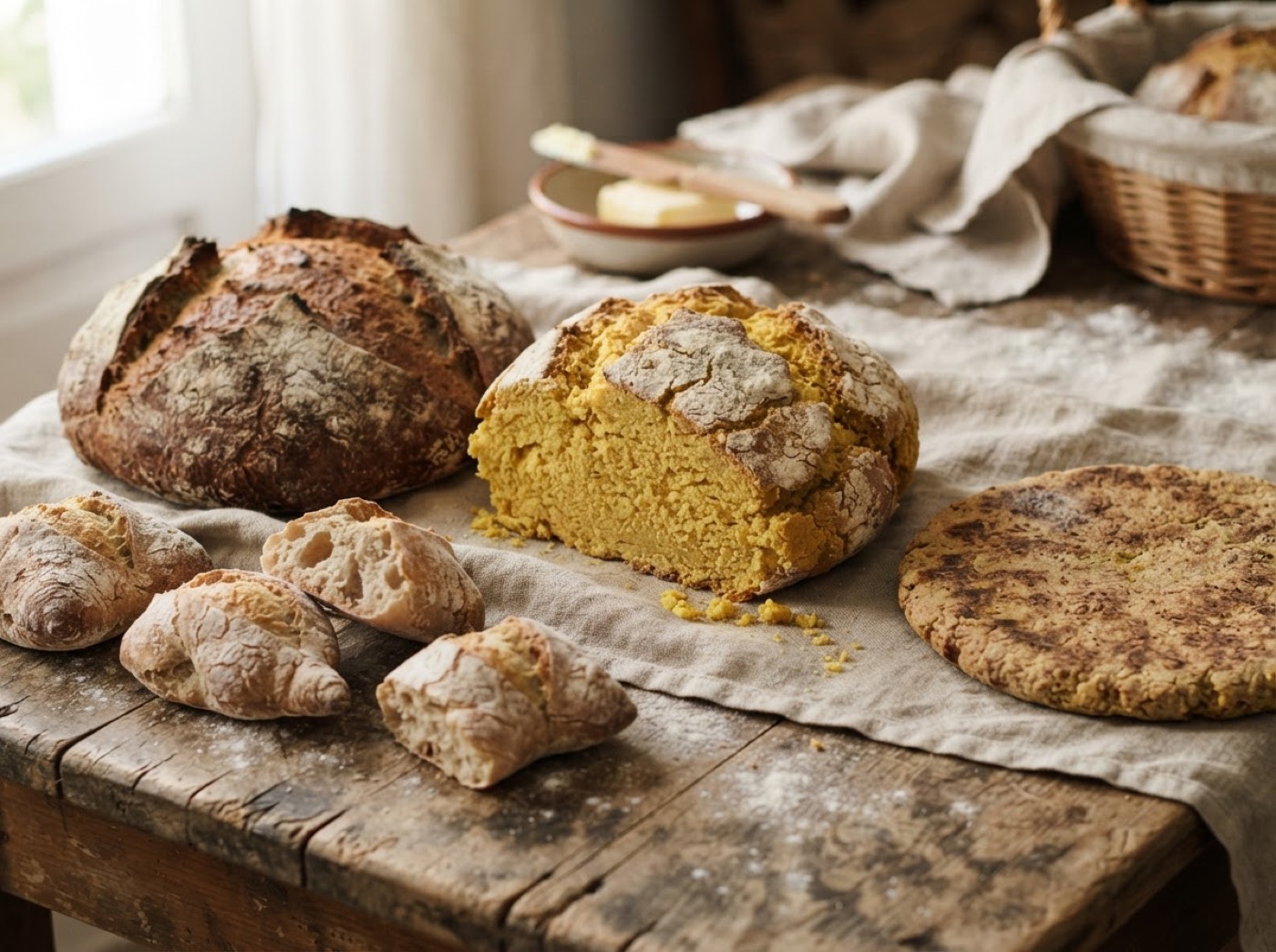
Portuguese bread is mostly crusty wheat bread, from small papo-seco rolls to big, dense Alentejo loaves, plus the maize cornbread of the north called broa. Every region has its own style, bread is on the table at almost every meal, and nothing is wasted: stale bread goes into soups like açorda and side dishes like migas.
Here are the breads worth knowing, what they taste like and how they're used.
The main types of Portuguese bread
Papo-seco (or carcaça)
The everyday roll. Small, crusty outside and soft and airy inside, with a split down the middle. In Lisbon it is often called carcaça. It's the roll for pão com manteiga at breakfast, for bifanas and pregos, and the one bakeries sell by the bag every morning. Try it in our bifana recipe.
Pão alentejano
The big, round wheat loaf of the Alentejo. Made with a sourdough starter, it has a thick crust and a dense, close crumb that stays good for days. It is the backbone of Alentejo cooking. When it goes stale, it becomes açorda, migas and bread soups. It is also excellent simply sliced with olive oil and cheese.
Broa de milho
Cornbread from the north and centre, made with maize flour mixed with some wheat or rye. It is dense, slightly sweet and moist, with a hard, cracked, floury crust. Broa is eaten with caldo verde, grilled sardines, cheese and chouriço, and crumbled into dishes like bacalhau com broa (salt cod baked under a cornbread crust). Broa de Avintes, from near Porto, is a darker, heavier version made with maize and rye.
Pão de Mafra
A rustic wheat loaf from Mafra, north of Lisbon. It has a floury, crackly crust and an open, chewy crumb with big holes. It is popular across the country and many bakeries sell their own version.
Regueifa
A ring-shaped bread from the north, especially the Porto area and Valongo. Soft, slightly glossy and often eaten fresh. There are plain and sweet versions.
Bolo do caco
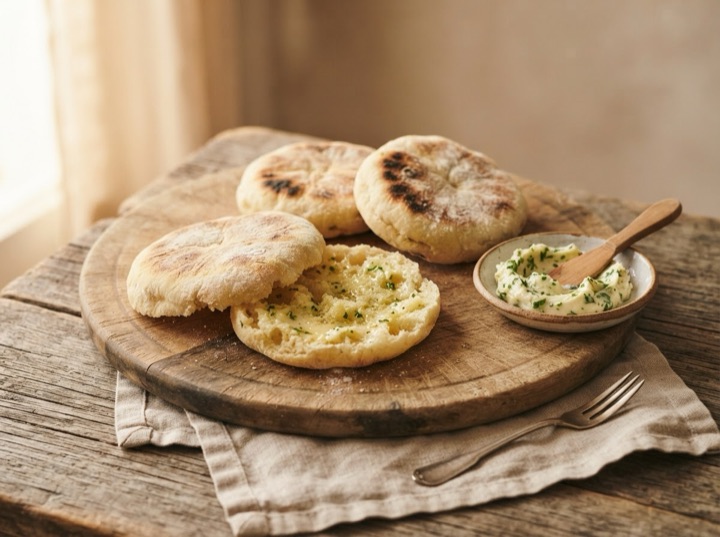
Madeira's flatbread, made with wheat flour and sweet potato and cooked on a hot flat stone or slab called a caco. It is split while warm and spread with garlic butter, or filled with steak as a sandwich. Make it at home with our air fryer bolo do caco.
Pão de centeio
Rye bread, traditional in the cold, mountainous north-east, in Trás-os-Montes. Darker and denser than wheat bread.
Pão com chouriço
Bread dough baked with slices of chouriço inside, so the fat soaks into the crumb. It is classic street-festival food, sold hot at the June Santos Populares and summer fairs. See our Santos Populares food guide.
How is bread eaten in Portugal?
Bread is on the table from the start of almost every meal.
- In the couvert. Restaurants bring bread, butter and olives as you sit down. It is charged if you eat it.
- With soup. A slice of broa or a roll on the side of a bowl of caldo verde.
- Under grilled sardines. Sardines are laid on a slice of bread, which soaks up the juices and is the best bite.
- For mopping. Clams, octopus in olive oil and pork with clams all leave sauce that bread is for. Try it with amêijoas à Bulhão Pato.
- At breakfast. Buttered rolls and thick toast. Our Portuguese breakfast guide explains how.
In some towns and villages, the baker still delivers fresh bread early in the morning in a cloth bag hung on the front door.
What do Portuguese people do with stale bread?
This is where Portuguese bread really shines. Old bread is an ingredient, not waste.
Açorda
Stale bread softened in a hot broth. The most famous is açorda alentejana: garlic, coriander and olive oil with boiling water poured over bread and a poached egg on top. In Lisbon, açorda de marisco is a thicker, porridge-like version with prawns and egg stirred through.
Migas
Stale bread fried with olive oil or pork fat and garlic until it forms a soft, crisp-edged mass. In the Alentejo, migas are served with fried pork. Other regions make them with greens, beans or asparagus.
Bread soups
Many Alentejo soups, like tomato soup and dogfish soup, are poured over slices of bread in the bowl. See our Portuguese soups guide.
Breadcrumbs and crusts
Broa crumbs make a crust for baked salt cod. Dried bread is ground for coating fish and croquettes.
How to find Portuguese bread outside Portugal
- Portuguese bakeries in areas with a Portuguese community, such as parts of London, New Jersey, Massachusetts and Toronto, often sell papo-secos, broa and pão de Mafra-style loaves.
- Substitutes: a crusty white roll for papo-seco, a dense sourdough for pão alentejano, a rustic loaf with big holes for pão de Mafra.
- Bake broa at home. It is one of the easiest to make.
A simple home broa de milho
A quick home version, not a bakery recipe. Makes one loaf.
- Put 300 g fine yellow maize flour (cornmeal, not coarse polenta) in a bowl and pour over 200 ml boiling water. Stir and leave until lukewarm.
- Mix 7 g dried yeast with 150 ml lukewarm water and add it to the bowl with 200 g strong white bread flour and 1 tsp salt.
- Mix into a sticky dough and knead for a few minutes with wet hands. It won't be smooth like wheat dough.
- Cover and leave in a warm place for 1 to 1½ hours, until it has risen a little and cracks appear.
- Heat the oven to 230 °C with a cast-iron pot inside. Shape the dough into a round, roll it in maize flour and drop it into the hot pot.
- Bake with the lid on for 15 minutes, then lid off at 210 °C for 25 to 30 minutes, until the crust is dark and cracked.
- Cool completely before slicing.
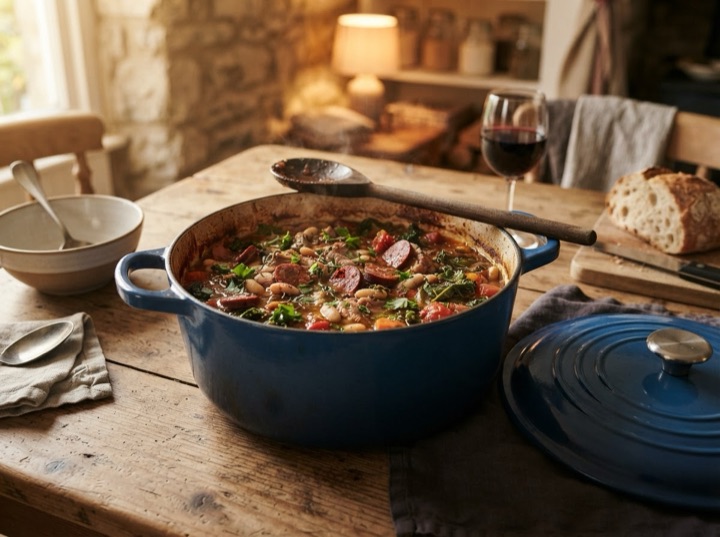
Lodge enamel cast iron dutch oven, 6 qt
A best seller for slow cooking: feijoada, arroz de pato broth and Sunday stews.
Tip: Enamelled, so no seasoning needed.
A heavy cast-iron pot traps steam and gives the crusty, cracked top you'd get from a wood-fired oven. For more regional breads and the dishes they go into, a broad Portuguese cookbook is the best next step.

Authentic Portuguese Cooking (cookbook)
Over 185 classic recipes from mainland Portugal, the Azores and Madeira. A highly rated home-cooking reference.
Tip: Good for family recipes you remember but never wrote down.
What you’ll need
Links go to Amazon, where you can check today’s price. If you buy, we earn a small commission at no extra cost to you.
Lodge enamel cast iron dutch oven, 6 qt
A best seller for slow cooking: feijoada, arroz de pato broth and Sunday stews.
Tip: Enamelled, so no seasoning needed.
Authentic Portuguese Cooking (cookbook)
Over 185 classic recipes from mainland Portugal, the Azores and Madeira. A highly rated home-cooking reference.
Tip: Good for family recipes you remember but never wrote down.
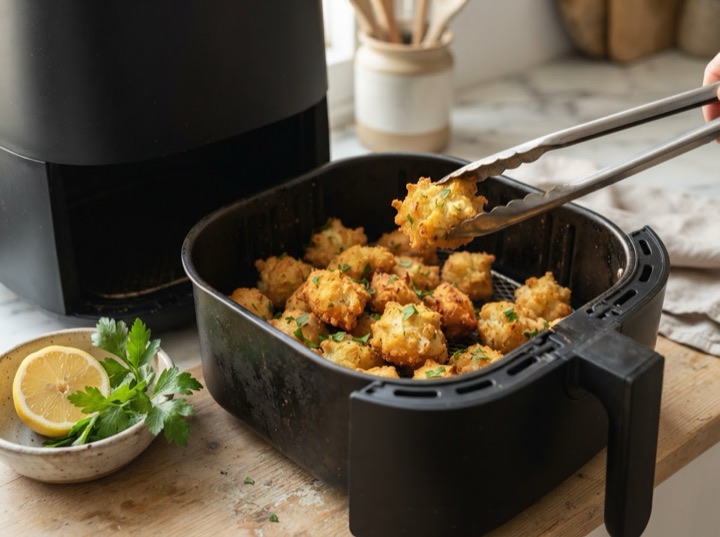
Cosori TurboBlaze 6 Qt Air Fryer
One of Amazon's best-selling air fryers. The 6 Qt basket fits a batch of pastéis de bacalhau or chicken thighs for four, and the ceramic coating is PFAS-free.
Tip: Size is what matters for Portuguese cooking: 5.5–6 Qt feeds 2–4 people in one batch.
Frequently asked
What is the most common bread in Portugal?
What is Portuguese cornbread called?
What is bolo do caco?
What is açorda?
Recipes from this story
 Air Fryer
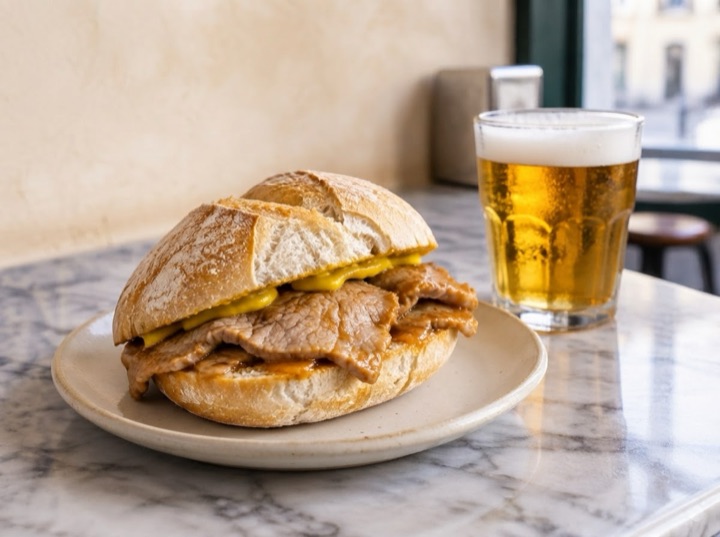
Bifanas with an Air Fryer Shortcut
The Portuguese garlic pork sandwich. Marinate the pork, air fry it fast, then dunk it in the reduced wine sauce, just like the snack bars in Lisbon.
 Air Fryer
Bolo do Caco in the Air FryerMadeira Garlic Bread
Madeira's soft sweet-potato flatbread, cooked in the air fryer and split open with melting garlic and parsley butter. The island's favourite street snack.
 Traditional
Caldo VerdePortuguese Green Soup
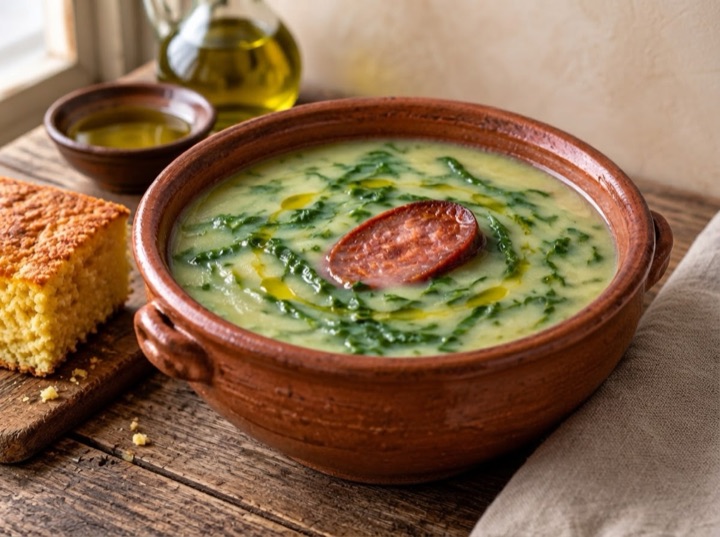
Portugal's national soup: a silky potato base, ribbons of finely shredded greens and a slice of chouriço on top. Simple, cheap and done in 40 minutes.