Portuguese BreakfastWhat Locals Really Eat and Order
What a Portuguese breakfast really is: a bica, buttered toast or a pastry at the café counter, plus the words to order it and how to make it at home.
 By Mesa de Portugal Kitchen · Updated · 7 min read
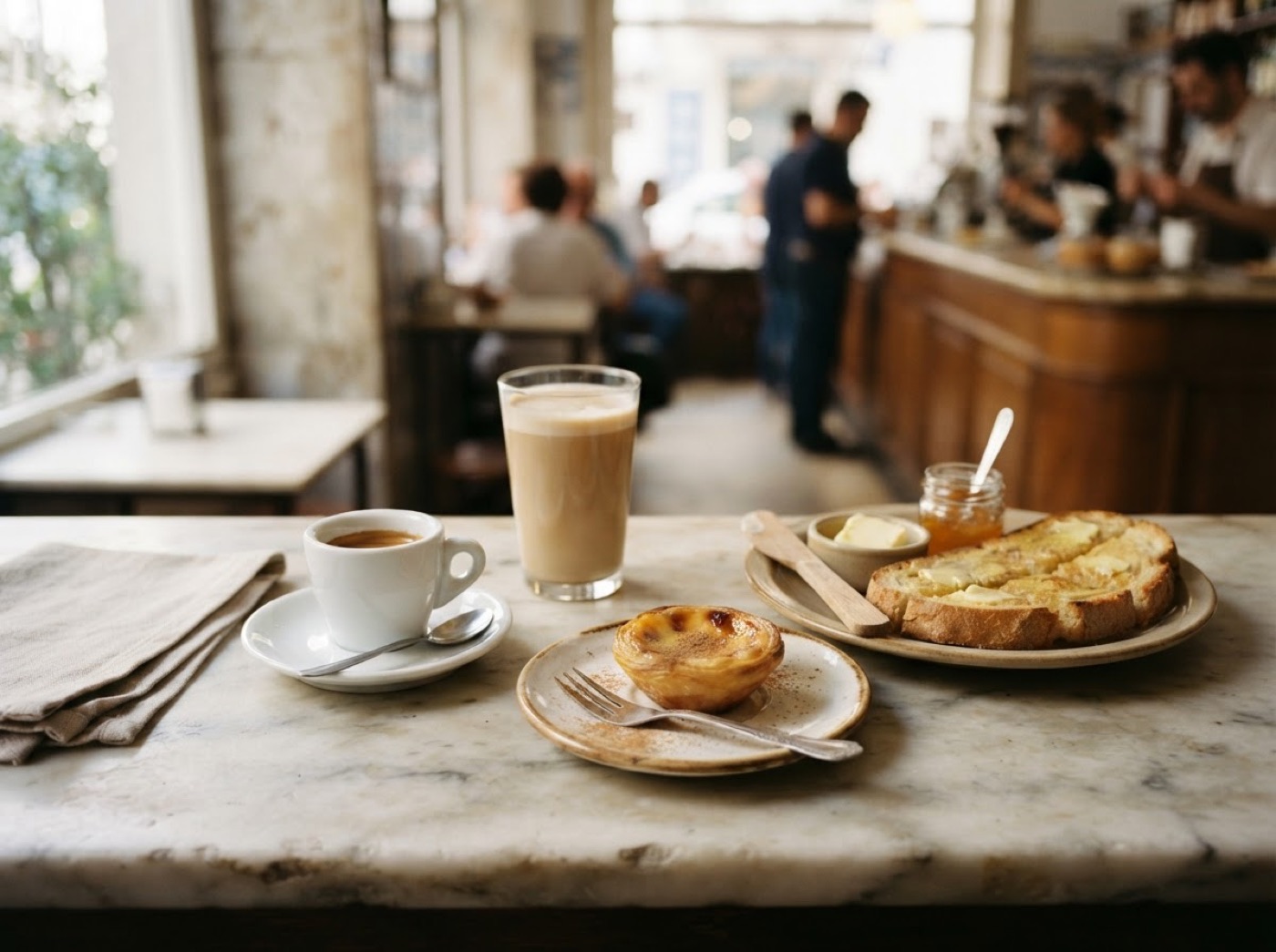
A typical Portuguese breakfast is small and quick: a coffee and something from the bakery, usually eaten standing at a café counter. That means a bica (espresso) or a galão (milky coffee in a glass), with torrada (thick buttered toast), a pão com manteiga (bread roll with butter) or a pastry such as a pastel de nata. Big cooked breakfasts are not part of daily life.
In Portuguese, breakfast is o pequeno-almoço (peh-KEH-noo ahl-MOH-soo), literally "the little lunch". It is the lightest meal of the day, because lunch is the big one.
What do Portuguese people eat for breakfast?
On a normal weekday, most people have breakfast in one of two places: at home, very quickly, or at the pastelaria (pastry café) or café on the way to work. The second is the one visitors notice.
At the café counter
The counter, o balcão, is where breakfast happens. People walk in, say good morning, order, eat in five minutes and leave. Sitting at a table, especially on a terrace (esplanada), can cost a little more. A bica at the counter usually costs around €0.80 to €1.20 outside the most touristy spots.
The usual choices:
- Torrada. Not the thin toast you know. Thick slices of soft white loaf (pão de forma), toasted, buttered generously while hot and cut into strips, sometimes with the crusts off. It comes on a small plate and is surprisingly filling.
- Pão com manteiga. A crusty roll, usually a papo-seco, split and buttered. Ask for it torrado if you want it toasted.
- Tosta mista. A toasted ham and cheese sandwich, pressed flat. Often eaten for breakfast or a mid-morning snack.
- Pão com fiambre or com queijo. A roll with ham or cheese.
- A pastry. Pastel de nata, croissant (in Portugal, a soft, sweet, brioche-like roll, often filled with ham and cheese as a croissant misto), bola de Berlim (a doughnut filled with egg custard) or pão de Deus (a sweet bun with a coconut topping). Our Portuguese pastries guide explains them all.
- Sumo de laranja natural. Freshly squeezed orange juice. Note sumo, not suco, in Portugal.
At home
Home breakfast is even simpler: coffee with milk, bread or toast with butter, sometimes jam or cheese, cereal for the children, fruit. Weekends might mean fresh rolls from the bakery and a slower pot of coffee.
How to order coffee at breakfast
Coffee is the heart of it, and there are many ways to ask for it. The main ones:
- Um café (oong kah-FEH) or uma bica (OO-mah BEE-kah). A short espresso. "Bica" is the Lisbon word. In Porto many people say cimbalino.
- Um galão (oong gah-LOWNG). A tall glass of hot milk with a shot of coffee. The classic breakfast coffee.
- Uma meia de leite (OO-mah MAY-ah deh LAY-tuh). Half coffee, half milk, in a cup.
- Um abatanado (oong ah-bah-tah-NAH-doo). A longer black coffee, close to an Americano.
- Um pingo or um pingado (oong PEENG-goo). An espresso with a drop of milk.
Read our Portuguese coffee guide for the full list.
Breakfast phrases that work
You only need a few words:
- Bom dia (bong DEE-ah). Good morning. Always say it first.
- Queria um galão e uma torrada, se faz favor (keh-REE-ah oong gah-LOWNG ee OO-mah too-RAH-dah, seh fahsh fah-VOR). I'd like a galão and a torrada, please.
- Um pão com manteiga, por favor (oong powng kong mun-TAY-gah, poor fah-VOR). A buttered roll, please.
- A conta, por favor (ah KONG-tah, poor fah-VOR). The bill, please. At the counter, you often just pay as you leave.
More useful words are in our Portuguese food words list and our guide to ordering in a Portuguese restaurant.
What Portuguese people don't eat for breakfast
- Cooked breakfasts. Eggs, bacon and sausages belong to hotel buffets, not Portuguese homes.
- Big bowls of fruit and yogurt are becoming more common, but they are not the tradition.
- Pastéis de nata every day. Plenty of people eat one with their morning coffee, but for many it is a treat, not a daily habit.
Breakfast's cousins: the mid-morning snack and the lanche
Because breakfast is light and lunch can be late, many people stop again mid-morning for another coffee and a small snack. In the afternoon comes the lanche (LAHNSH), around 16:00 to 17:00: coffee or tea with a pastry, a sandwich or toast. Children have it after school.
How to make a Portuguese breakfast at home
You can recreate the café experience in ten minutes.
- Get the bread right. For torrada, buy a thick-sliced soft white sandwich loaf, or slice an unsliced one about 2.5 cm thick. For pão com manteiga, find crusty white rolls with a soft middle. Our Portuguese bread guide explains papo-seco and the rest.
- Butter it hot. Toast the bread, then butter it immediately so it melts all the way in. Salted butter is the norm in Portugal. Cut into three or four strips.
- Make strong coffee. A short espresso, or a galão: warm about 200 ml of milk until steaming, pour it into a tall glass and add a shot of espresso. Portuguese supermarket coffee is a dark roast, so choose a dark espresso blend.
- Add a pastry if it's the weekend. Bake a batch of pastéis de nata and keep a few for the morning. Reheat them for 3 to 4 minutes at about 180 °C so the pastry crisps again. Our guide to reheating pastéis de nata has the details.
- Squeeze an orange. Fresh juice, no sugar.
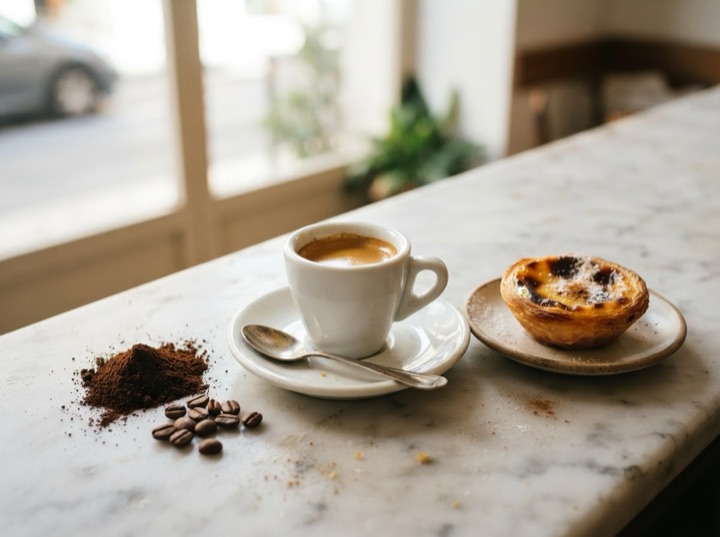
Delta Cafés ground coffee bundle
Portugal's best-known coffee brand, the one in most cafés. Brew it strong for a bica after dinner.
Tip: Ground coffee, so it works in a moka pot or filter.
If you drink a lot of espresso, a capsule machine from a Portuguese coffee brand gets you close to the café taste with no barista skills. A wide, sturdy mug or a heatproof glass is all you need for a galão.
Costa Nova stoneware mug
Simple Portuguese stoneware from the Costa Nova range, made for a big morning galão.
Tip: Microwave- and dishwasher-safe.
What you’ll need
Links go to Amazon, where you can check today’s price. If you buy, we earn a small commission at no extra cost to you.
Delta Cafés ground coffee bundle
Portugal's best-known coffee brand, the one in most cafés. Brew it strong for a bica after dinner.
Tip: Ground coffee, so it works in a moka pot or filter.
Delta Q Quick espresso machine
A compact capsule machine from Delta, Portugal's biggest coffee brand, for a bica at home.
Tip: Uses Delta Q capsules only.
Costa Nova stoneware mug
Simple Portuguese stoneware from the Costa Nova range, made for a big morning galão.
Tip: Microwave- and dishwasher-safe.
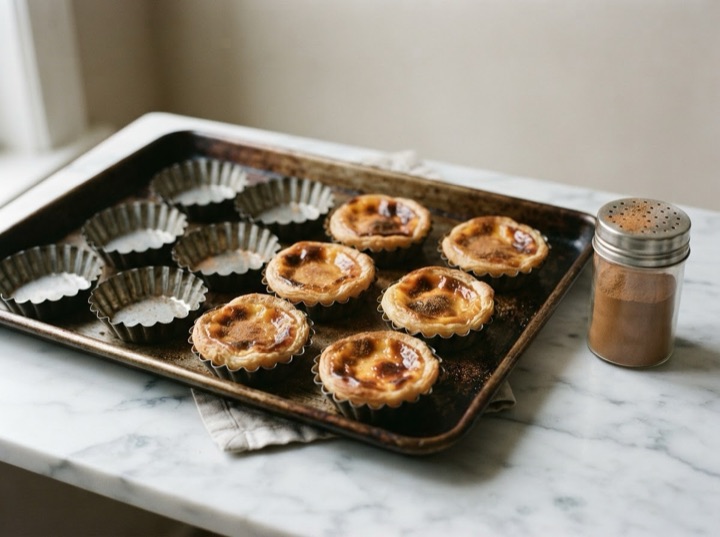
Pastel de nata tins, made in Portugal
The small fluted tins that give natas their thin, crisp base, made in Portugal like the ones pastelarias use.
Tip: Don't wash them in the dishwasher. Wipe them clean and they'll season over time.
Frequently asked
What is a typical Portuguese breakfast?
What is breakfast called in Portugal?
Do Portuguese people eat pastel de nata for breakfast?
What time is breakfast in Portugal?
What is a galão?
Recipes from this story
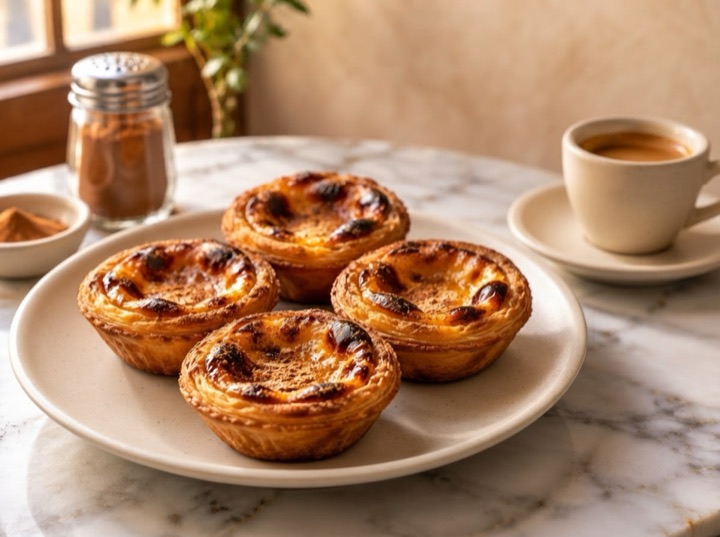 Air Fryer
Pastéis de Nata in the Air Fryer
Homemade Portuguese custard tarts with shop-bought puff pastry, baked in the air fryer. Honest tips on getting the blistered tops without a 300 °C oven.
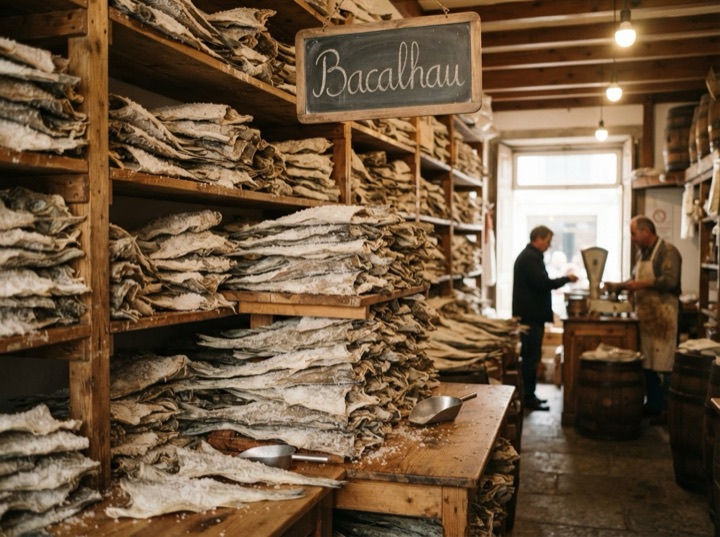 Food culture
Why Do Portuguese Eat BacalhauThe Story of the Faithful Friend
Why do Portuguese eat bacalhau when no cod swims off Portugal? Salt, Catholic fasting, Newfoundland fleets and the Estado Novo, explained simply.
 Eat like a local
What to Eat in SintraTravesseiros, Queijadas and the Coast
What to eat in Sintra: travesseiros and queijadas, Colares wine, and grilled fish on the nearby coast, plus tips to eat well on a Sintra day trip.