Portuguese CoffeeHow to Order Like a Local
Portuguese coffee explained: bica, galão, meia de leite, abatanado, pingo, garoto and Porto's cimbalino, counter prices and how to make it at home.
 By Mesa de Portugal Kitchen · Updated · 7 min read
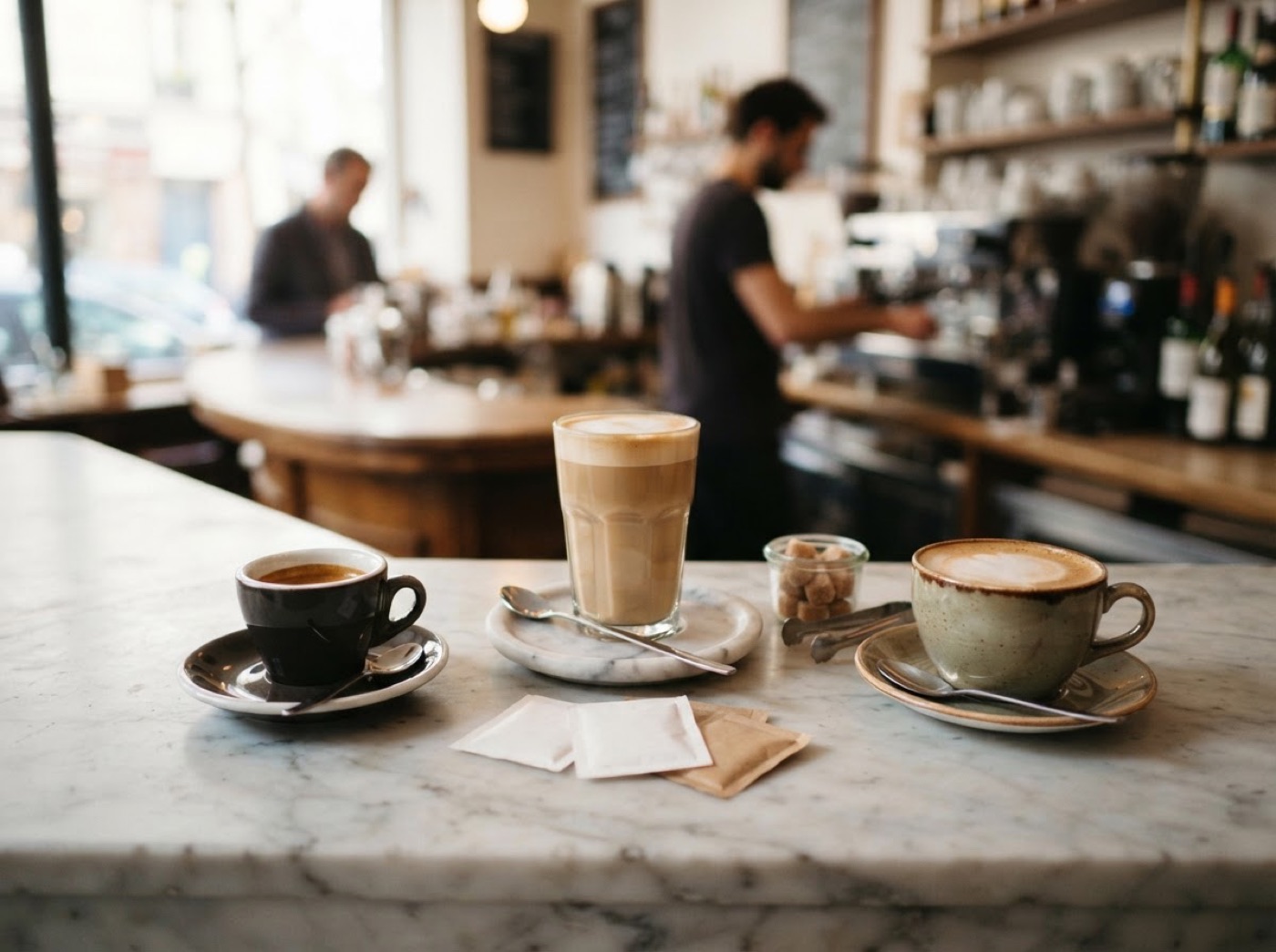
In Portugal, "um café" means a short, strong espresso, called a bica in Lisbon and a cimbalino in Porto. For milky coffee, order a galão (a tall glass, mostly milk) or a meia de leite (half coffee, half milk in a cup). At the counter, an espresso usually costs around €0.80 to €1.20, which is why most Portuguese people drink several a day.
Coffee in Portugal is quick, cheap and social. People stand at the counter, drink it in two sips, chat with the person behind the bar and leave. There's no takeaway culture to speak of and no giant cups. Here's every word on the menu, what you get, and how to recreate it at home.
Espresso drinks: the black coffees
Café / bica / cimbalino
The standard: a single espresso in a small, thick cup. Everywhere in Portugal you can simply ask for um café (oong kah-FEH). In Lisbon you'll hear bica (BEE-kah); in Porto and the north, older customers say cimbalino, after the Italian La Cimbali espresso machines that arrived in the city's cafés.
There's a popular story that bica comes from a sign reading "Beba Isto Com Açúcar" (drink this with sugar). It's a nice tale but almost certainly invented after the fact.
Café cheio and café curto
- Cheio ("full"): the same espresso, topped up a little more. Slightly longer and milder.
- Curto ("short"): extra short and intense, like a ristretto.
Abatanado
An espresso with extra hot water, served in a bigger cup. The closest thing to an Americano or long black. Ask for it if a standard café is too strong for you.
Carioca
A weaker, more diluted espresso, lighter in body and caffeine. Don't confuse it with carioca de limão, which isn't coffee at all: it's hot water with a strip of lemon peel, often ordered after a heavy lunch.
Café duplo
A double espresso, served in a slightly larger cup.
Descafeinado
Decaf. Usually available as an espresso, sometimes from a capsule machine.
Milky coffees
Pingo / café pingado
An espresso with a drop (pingo) of milk, in the small cup. Like a macchiato.
Garoto
A small cup that is mostly hot milk with a little coffee. Gentler than a pingo. Names shift by region: in Porto, pingo is often used for what Lisbon calls a garoto, so if you're unsure, describe what you want.
Meia de leite
"Half of milk": half coffee, half hot milk, in a normal-sized cup. The everyday breakfast coffee for many Portuguese, often with a torrada or a pastry.
Galão
A tall glass of hot milk with a shot of espresso, roughly a quarter coffee and three-quarters milk, served with a long spoon. The Portuguese answer to a latte. If you want it stronger, ask for a galão escuro (dark); weaker, a galão claro (light).
How much does coffee cost in Portugal?
Prices have risen since 2024, but coffee is still cheap by European standards. Typical counter prices:
- Café / bica: about €0.80 to €1.20.
- Pingo, garoto, abatanado: similar, sometimes 10 to 20 cents more.
- Meia de leite: about €1.20 to €1.80.
- Galão: about €1.30 to €2.
Expect to pay more if you sit at a table on a terrace, in a tourist hotspot or in a hotel. Standing at the counter (ao balcão) is always cheapest. You normally pay at the end, either at the counter or at the till.
How to order coffee in Portuguese
Short and simple is best:
- Um café, por favor. (oong kah-FEH, poor fah-VOR) One espresso, please.
- Uma bica, se faz favor. (OO-mah BEE-kah, seh fahsh fah-VOR) A polite Lisbon way to ask for an espresso.
- Um galão, por favor. (oong gah-LOWNG) A galão, please.
- Uma meia de leite. (OO-mah MAY-ah duh LAYT) A half coffee, half milk.
- A conta, por favor. (ah KOHN-tah) The bill, please.
Add a pastry from the counter and you've had the full Portuguese ritual. A pastel de nata is the obvious choice; our Portuguese pastries guide covers the rest.
When do Portuguese people drink coffee?
All day, in small doses:
- Breakfast: a galão or meia de leite with toast or a pastry.
- Mid-morning: a quick café at the counter.
- After lunch: almost always a café, often with the bill. It's considered the end of the meal.
- Afternoon: a café or galão with a snack, the lanche.
- After dinner: a café, sometimes followed by a small glass of brandy or ginjinha.
A milky coffee after a big lunch or dinner is unusual but nobody will mind if you order one.
Which coffee brands do Portuguese cafés use?
You'll see the same few names on café awnings, cups and sugar packets. Delta, founded in 1961 in Campo Maior in the Alentejo, is the most widespread. Nicola and Sical are other long-standing Portuguese roasters. Portuguese blends tend to be dark-roasted, often with some robusta in the mix, giving a strong, bitter cup with thick crema.
Making Portuguese coffee at home
The easiest way to get the taste is a Portuguese blend, either ground for a moka pot or espresso machine, or in capsules.
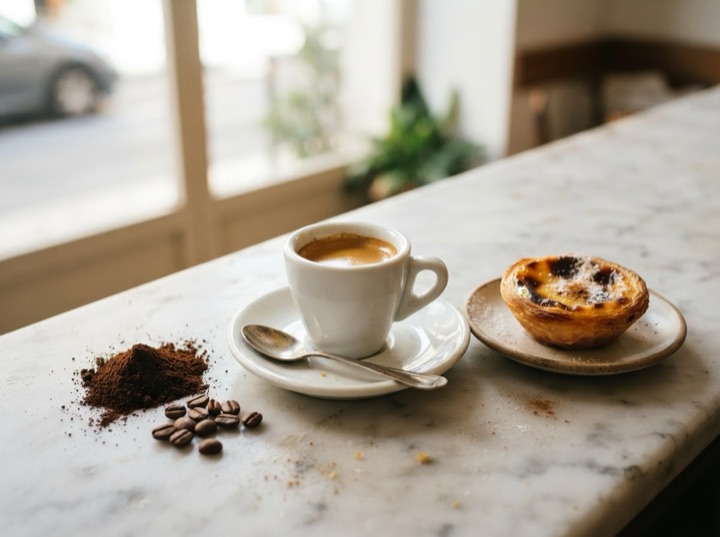
Delta Cafés ground coffee bundle
Portugal's best-known coffee brand, the one in most cafés. Brew it strong for a bica after dinner.
Tip: Ground coffee, so it works in a moka pot or filter.
If you drink a lot of espresso, Delta's own capsule system, Delta Q, is what many Portuguese households use. The machines are compact and make a short, strong café that tastes close to the café version.
Delta Q Quick espresso machine
A compact capsule machine from Delta, Portugal's biggest coffee brand, for a bica at home.
Tip: Uses Delta Q capsules only.
To make the classics at home:
- Bica: a single espresso of about 25 to 30 ml, in a small preheated cup.
- Abatanado: a single espresso topped with 60 to 90 ml of hot water.
- Meia de leite: an espresso plus the same amount of steamed milk, in a regular cup.
- Galão: a single espresso poured into a tall heatproof glass with about 150 to 200 ml of hot, frothed milk.
Serve with something sweet, such as a slice of bolo de bolacha, which uses coffee in the recipe too, or start the day the Portuguese way with our Portuguese breakfast guide.
What you’ll need
Links go to Amazon, where you can check today’s price. If you buy, we earn a small commission at no extra cost to you.
Delta Cafés ground coffee bundle
Portugal's best-known coffee brand, the one in most cafés. Brew it strong for a bica after dinner.
Tip: Ground coffee, so it works in a moka pot or filter.
Delta Q Quick espresso machine
A compact capsule machine from Delta, Portugal's biggest coffee brand, for a bica at home.
Tip: Uses Delta Q capsules only.
Costa Nova stoneware mug
Simple Portuguese stoneware from the Costa Nova range, made for a big morning galão.
Tip: Microwave- and dishwasher-safe.
Frequently asked
What is the most popular coffee in Portugal?
What is the difference between a galão and a meia de leite?
How much is a coffee in Portugal?
Why is coffee called bica in Lisbon?
Is Portuguese coffee strong?
Recipes from this story
 Traditional
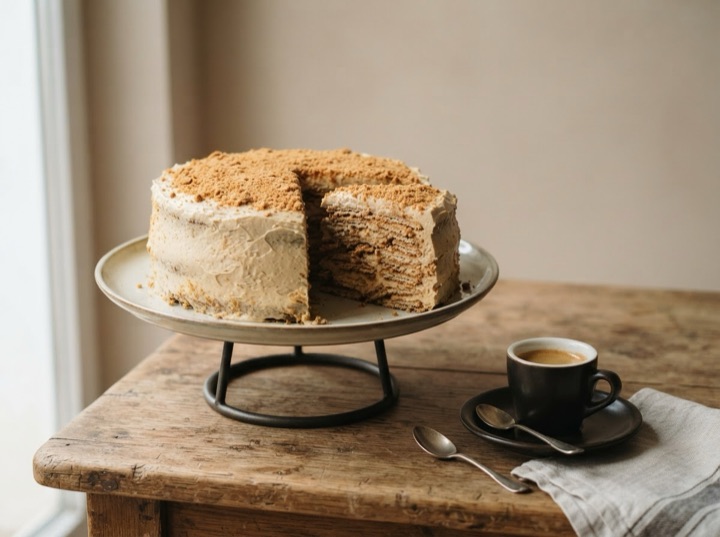
Bolo de BolachaNo-Bake Biscuit and Coffee Cake
Maria biscuits dipped in strong coffee and layered with buttercream. Portugal's favourite no-bake birthday cake, assembled in 30 minutes and chilled overnight.
 Food culture
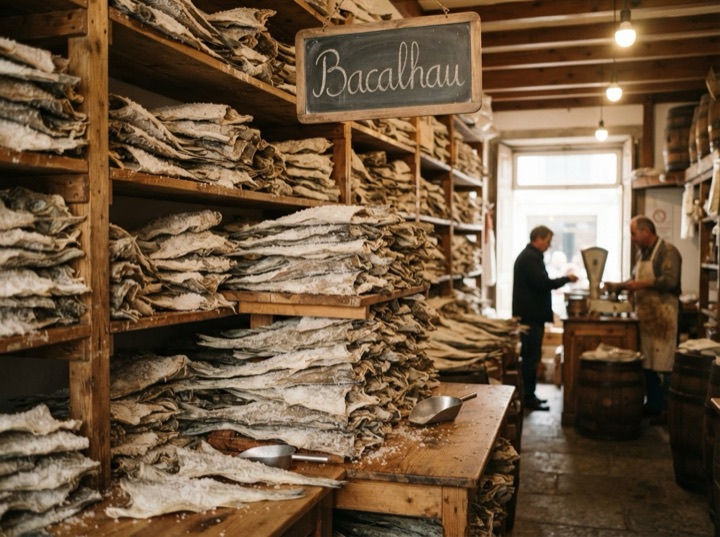
Why Do Portuguese Eat BacalhauThe Story of the Faithful Friend
Why do Portuguese eat bacalhau when no cod swims off Portugal? Salt, Catholic fasting, Newfoundland fleets and the Estado Novo, explained simply.
 Eat like a local
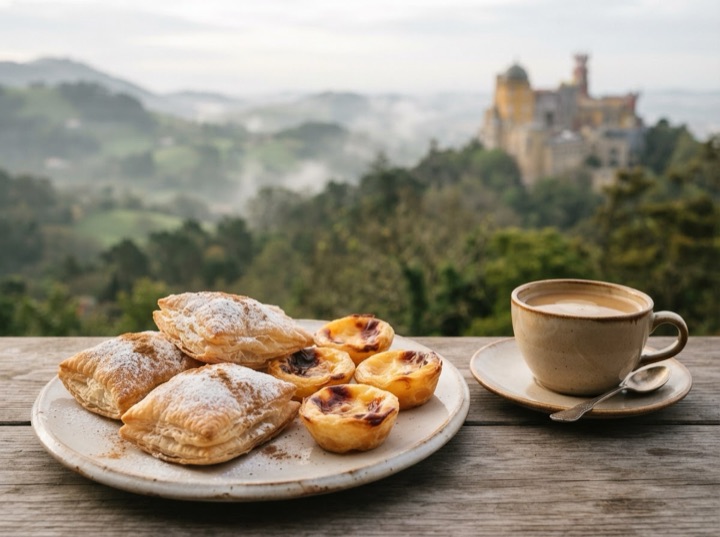
What to Eat in SintraTravesseiros, Queijadas and the Coast
What to eat in Sintra: travesseiros and queijadas, Colares wine, and grilled fish on the nearby coast, plus tips to eat well on a Sintra day trip.