Pastel de Nata HistoryFrom Belém Monks to the World
Pastel de nata history in plain English: the Jerónimos monks, the 1837 Belém bakery, the secret recipe story and how the tart spread to Macau and beyond.
 By Mesa de Portugal Kitchen · Updated · 8 min read

The pastel de nata began in Belém, just west of Lisbon, where monks at the Jerónimos Monastery are said to have made custard tarts from leftover egg yolks. When Portugal closed its monasteries in 1834, the recipe passed to a sugar refinery next door, which started baking and selling the tarts in 1837. That bakery still trades today as Pastéis de Belém.
Everything else, from the cinnamon on top to the queue outside, grew from that one story. Here is how it happened, which parts are documented and which parts are legend, and how a convent sweet ended up in bakeries from Macau to London.
Who invented the pastel de nata?
Nobody knows the name of the person who first made one. The tart belongs to a much older family of Portuguese doces conventuais (convent sweets), made by monks and nuns from egg yolks and sugar. Convents used huge quantities of egg whites to starch clothes and clarify wine, which left them with mountains of yolks. Sugar, shipped in from Madeira and later Brazil, was plentiful. Custards, sponges and egg-yolk sweets followed. Our guide to Portuguese convent sweets covers the wider family.
According to tradition, the monks of the Mosteiro dos Jerónimos in Belém made a custard tart in puff pastry and sold it to bring in money. That is the version told by the bakery itself and by Lisbon's tourist board. There is no surviving monastery document with the recipe on it, so treat the details as a well-loved origin story rather than proven history.
What happened in 1834 and 1837?
The dates are the solid part of the story.
- 1820. A liberal revolution changed how Portugal was governed and turned public opinion against the religious orders.
- 1834. The government closed the country's monasteries and convents. The monks of Jerónimos were sent away, along with the people who worked for them.
- Around the same time, someone from the monastery is said to have sold the sweet pastries in a shop attached to a sugar refinery nearby, to earn a living.
- 1837. The refinery's owners began baking the tarts commercially in buildings next to the refinery. That business is the Fábrica de Pastéis de Belém, still on the same street today.
Belém sits by the river, about 6 km west of central Lisbon. The monastery and the Torre de Belém already drew visitors, and over time the tarts became part of the trip.
The secret recipe story
The bakery says its recipe is the original one from the monastery, and that it is known only to a few master pastry cooks who work in a closed room, the oficina do segredo (the secret workshop). The name Pastéis de Belém is registered, which is why every other bakery in Portugal calls its version a pastel de nata (custard tart; plural pastéis de nata).
What we can say honestly: nobody outside that room knows exactly what is in the Belém version, and the bakery has every reason to keep the mystery alive. What we can also say is that the basic method is no secret. A pastel de nata is laminated pastry pressed into a small tin, filled with a custard of egg yolks, milk, sugar and a little flour, flavoured with lemon peel and cinnamon, then baked in a very hot oven until the top blisters in black spots.
How the pastel de nata spread across Portugal
For most of the 1800s and 1900s, the custard tart was a Lisbon thing that slowly became a national one. Every pastelaria (pastry shop and café) in the country now sells them, usually baked several times a day. They cost around €1.20 to €1.50 each in most cafés, a little more in the busiest tourist spots, and they are eaten at any hour: at breakfast with a coffee, mid-morning, or as an afternoon lanche (snack).
Portuguese people eat them warm when they can, with a dusting of cinnamon and icing sugar from shakers left on the counter. Pair one with a bica, Lisbon's word for an espresso. Our Portuguese coffee guide explains the rest of the menu.
How it reached Macau, Asia and the world
Portuguese emigrants took the custard tart wherever they went: Brazil, France, Canada, the United States, South Africa and the UK all have Portuguese bakeries selling them.
The most surprising chapter happened in Asia. In 1989, an English pharmacist named Andrew Stow opened Lord Stow's Bakery in Coloane, Macau, then still under Portuguese administration. He had seen pastéis de nata in Belém and set out to make his own, using a creamier, more British-style custard. His tarts became famous in Macau, a branch opened in Hong Kong, and copies spread through Hong Kong, Taiwan and mainland China, where they are sold as the "Portuguese egg tart". That Macau version is related to the Lisbon original but is its own thing, with a richer, softer filling.
In the last 15 years, as tourism to Lisbon boomed, the pastel de nata became the country's edible symbol. You now find specialist nata shops in cities across Europe and North America, and supermarket versions almost everywhere.
What makes a pastel de nata a pastel de nata?
If you're judging one, here is what Portuguese bakers aim for:
- The pastry. Thin, crisp, flaky layers that shatter when you bite. The base should not be soggy.
- The custard. Just set, wobbly in the centre, creamy rather than eggy, with a hint of lemon and cinnamon.
- The top. Caramelised dark spots from a very hot oven, often 250 °C or more in a bakery. Pale tops mean the oven was not hot enough.
- Freshness. A nata is at its best within a few hours of baking. Day-old ones can be revived; our guide on how to reheat pastéis de nata gives oven and air fryer times.
Making them at home
Home ovens rarely reach bakery temperatures, which is the main reason homemade tarts look pale. An air fryer helps because the heat is close and fierce. Our air fryer pastéis de nata recipe uses shop-bought puff pastry and gets the blistered top in about 10 minutes.
You will need proper tins. The traditional ones are small, fluted and made of thin steel, which conducts heat fast and crisps the base.
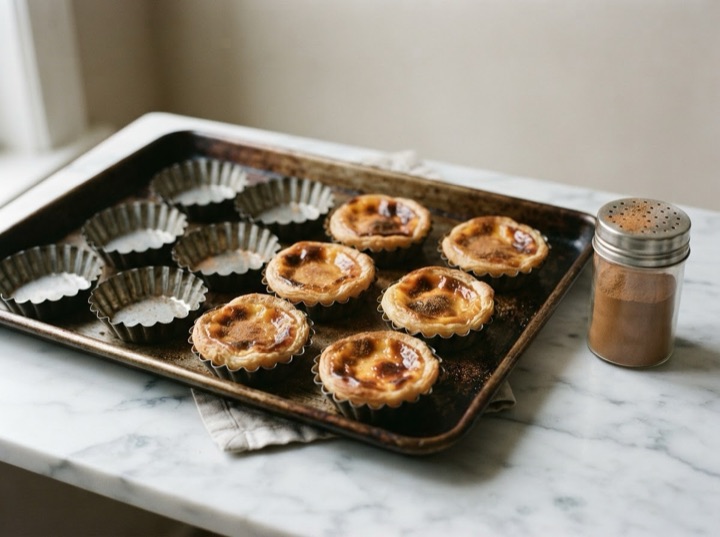
Pastel de nata tins, made in Portugal
The small fluted tins that give natas their thin, crisp base, made in Portugal like the ones pastelarias use.
Tip: Don't wash them in the dishwasher. Wipe them clean and they'll season over time.
A Portuguese coffee alongside finishes the job. Delta is the brand you'll see in most Portuguese cafés.
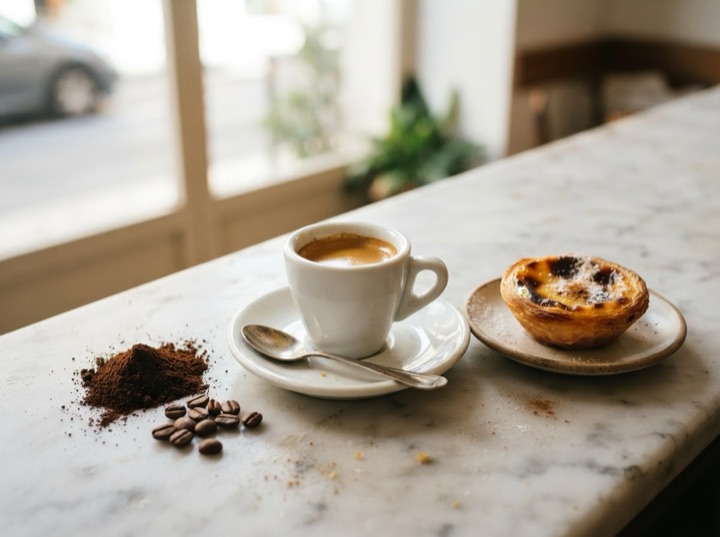
Delta Cafés ground coffee bundle
Portugal's best-known coffee brand, the one in most cafés. Brew it strong for a bica after dinner.
Tip: Ground coffee, so it works in a moka pot or filter.
If you want to explore beyond the custard tart, our guide to Portuguese pastries covers ten more from the pastelaria counter, and what to eat in Lisbon puts the nata in context with the rest of the city's food.
What you’ll need
Links go to Amazon, where you can check today’s price. If you buy, we earn a small commission at no extra cost to you.
Pastel de nata tins, made in Portugal
The small fluted tins that give natas their thin, crisp base, made in Portugal like the ones pastelarias use.
Tip: Don't wash them in the dishwasher. Wipe them clean and they'll season over time.
Delta Cafés ground coffee bundle
Portugal's best-known coffee brand, the one in most cafés. Brew it strong for a bica after dinner.
Tip: Ground coffee, so it works in a moka pot or filter.
Frequently asked
Where was the pastel de nata invented?
When did Pastéis de Belém open?
Is the Pastéis de Belém recipe really secret?
What is the difference between pastel de nata and pastel de Belém?
Why do Portuguese people put cinnamon on pastéis de nata?
Recipes from this story
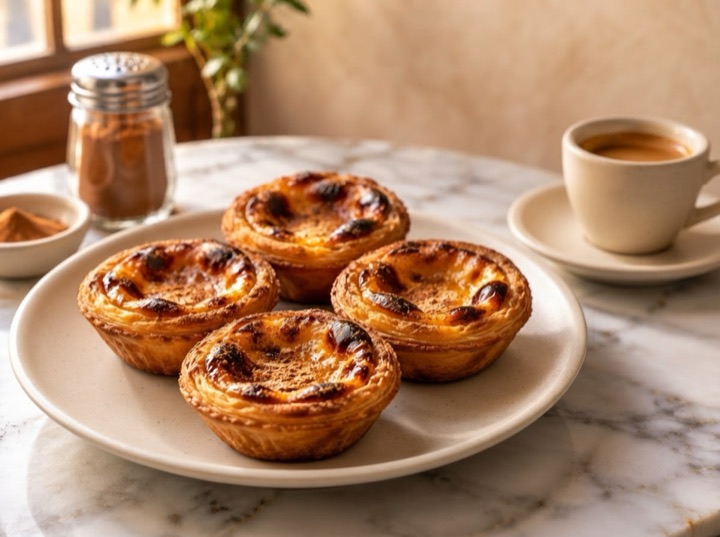 Air Fryer
Pastéis de Nata in the Air Fryer
Homemade Portuguese custard tarts with shop-bought puff pastry, baked in the air fryer. Honest tips on getting the blistered tops without a 300 °C oven.
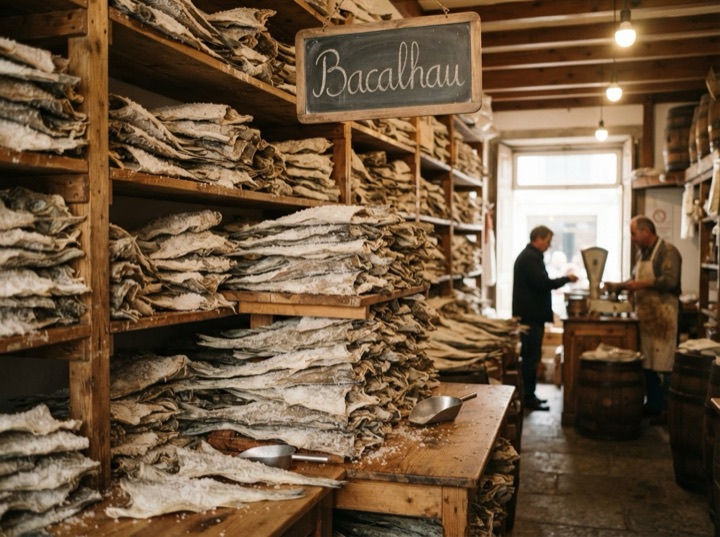 Food culture
Why Do Portuguese Eat BacalhauThe Story of the Faithful Friend
Why do Portuguese eat bacalhau when no cod swims off Portugal? Salt, Catholic fasting, Newfoundland fleets and the Estado Novo, explained simply.
 Eat like a local
What to Eat in SintraTravesseiros, Queijadas and the Coast
What to eat in Sintra: travesseiros and queijadas, Colares wine, and grilled fish on the nearby coast, plus tips to eat well on a Sintra day trip.