Piri Piri SauceOrigins and a Homemade Portuguese Recipe
What piri piri sauce really is in Portugal, where the chilli comes from, how to make the oil-based molho de piri-piri at home and handle chillies safely.
 By Mesa de Portugal Kitchen · Updated · 7 min read
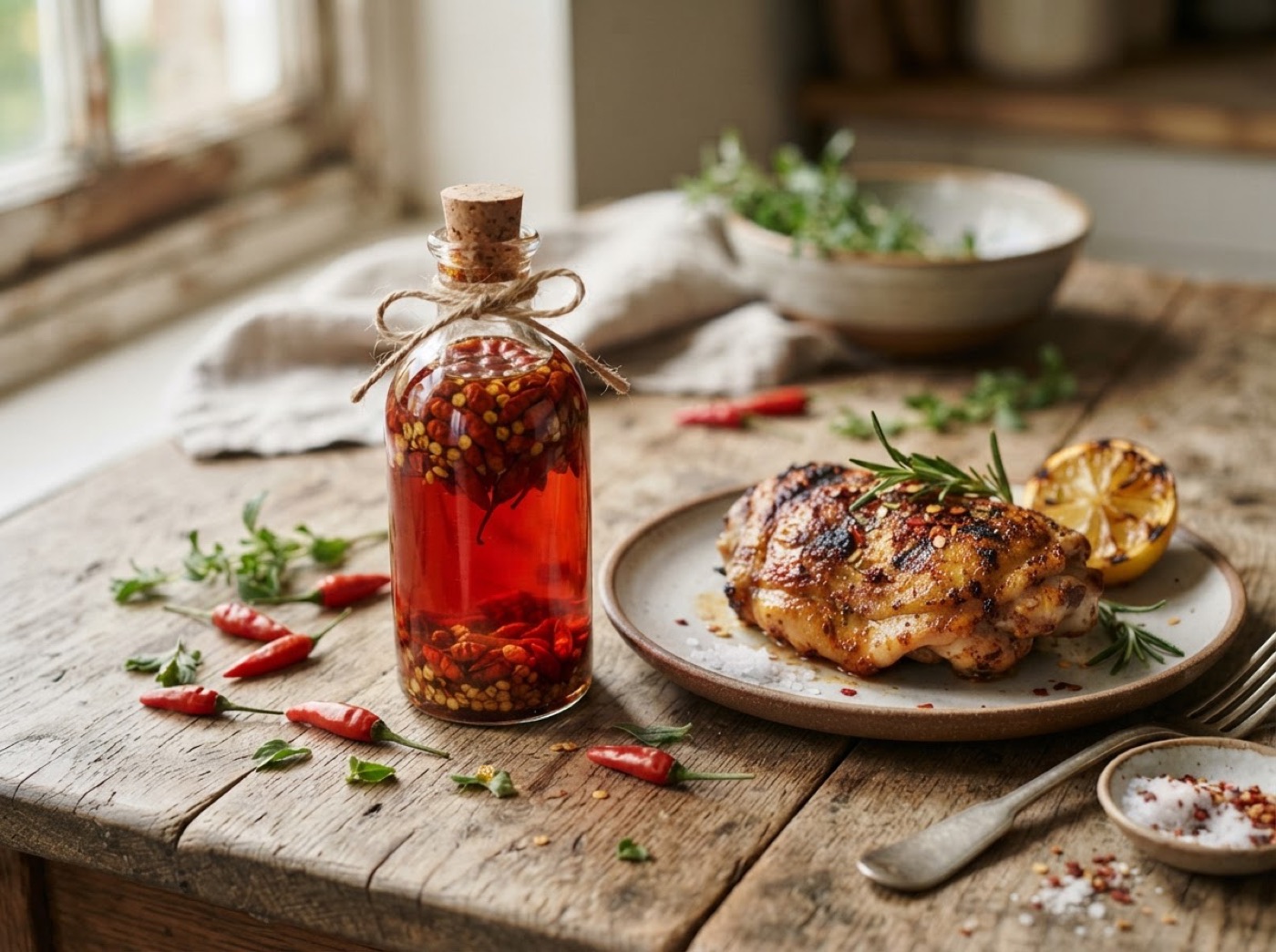
In Portugal, piri piri sauce is usually not a thick red purée but a chilli oil: small dried bird's eye chillies steeped in olive oil, often with garlic, lemon, salt and sometimes a splash of spirit. It's called molho de piri-piri. It sits on restaurant tables in a small bottle, and it's brushed on grilled chicken, frango piri-piri.
The thick, vinegary sauces sold in supermarkets abroad are a different, more recent product. Both have their place, but if you want the taste of a Portuguese grill house, start with the oil.
Where does piri-piri come from?
The short answer: from the Americas, via Africa, into Portugal.
Chilli peppers originally come from the Americas. After 1500, Portuguese and other traders carried them around the world, and small, very hot varieties took hold in Africa, where they grew wild and became part of local cooking. The name piri-piri (also spelled peri-peri or pili-pili) is usually traced to African languages, where it means "pepper" or "pepper-pepper", but the exact route of the word is debated, so treat any neat origin story with care.
Portugal's link to the chilli runs mainly through its former African colonies, especially Mozambique and Angola. Chicken and seafood grilled with chilli and lemon became staples there, and Portuguese who returned from Africa, particularly after independence in 1975, are often credited with helping popularise piri-piri dishes back home. Today the dish most associated with it in Portugal is grilled chicken from the Algarve village of Guia, near Albufeira, whose grill houses made frango da Guia famous. Our Algarve food guide covers it alongside the region's seafood.
What does piri-piri taste like?
The chilli itself is small (2–3 cm), thin-skinned and fiercely hot, with a sharp, clean heat rather than a fruity, lingering one. In oil, the heat softens and spreads, and the garlic and lemon round it out. A good molho de piri-piri should taste of chilli and oil first, not of vinegar.
How Portuguese use piri-piri
- On grilled chicken. The chicken is flattened, grilled over charcoal and brushed with piri-piri oil, often more than once. Diners add more from the bottle. It's a fixture of any Portuguese churrasco.
- On prawns and grilled seafood. Gambas with garlic and chilli are a common petisco.
- In marinades. A few crushed chillies go into the garlic, paprika and wine marinade for pork belly and chicken.
- At the table. Chips, rice, steak, bifanas and grilled fish all get a few drops for people who want heat.
- In tinned fish. Look for sardines and mackerel labelled "picante" in our tinned fish guide.
Most Portuguese food is not hot, which is why piri-piri is usually a choice at the table rather than cooked into the dish. Our Portuguese spices guide explains where it fits among the other seasonings.
Homemade piri piri sauce recipe (molho de piri-piri)
This makes about 250 ml, enough for several meals of chicken.
Ingredients
- 250 ml olive oil (a mild one, not your best finishing oil)
- 10–20 dried piri-piri chillies, or 4–6 fresh red bird's eye chillies
- 2 cloves garlic, peeled and lightly crushed
- 1 bay leaf
- 1 tsp coarse sea salt
- Juice of half a lemon (optional, see storage below)
- 1 tbsp aguardente, brandy or whisky (optional; some cooks add it)
Method
- Crush or slice the chillies. Crush dried chillies in a mortar, or roughly chop them. Halve fresh ones lengthwise. More seeds means more heat.
- Warm, don't fry. Put the oil, chillies, garlic, bay and salt in a small pan and warm over the lowest heat for 5–8 minutes. You should see a few tiny bubbles around the garlic, no more. If it sizzles hard, take it off the heat.
- Cool completely. Off the heat, stir in the spirit if using. Leave to infuse until cold.
- Bottle it. Pour into a clean glass bottle or jar, with the chillies. Add the lemon juice just before using, or keep a lemon to squeeze over the food.
The sauce gets hotter as it sits. Taste after a day and strain out the chillies if it's already as hot as you like.
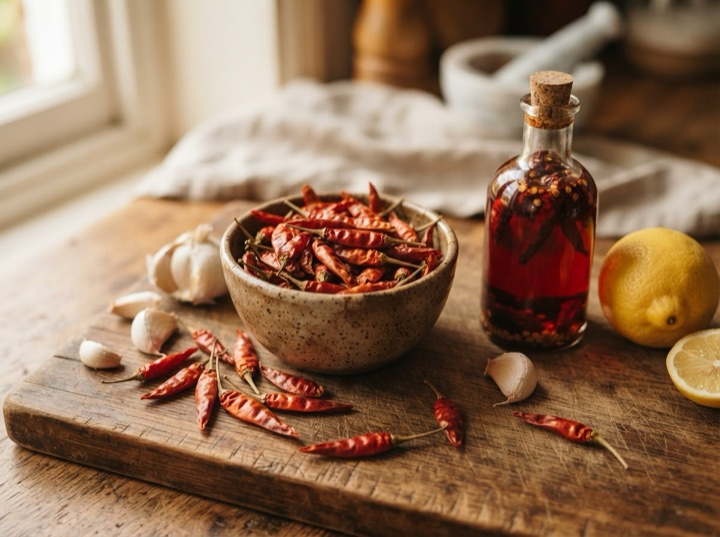
Piri-piri chillies from Portugal
Whole dried bird's-eye chillies, the heat behind frango piri-piri and the bottle of chilli oil on every Portuguese table.
Tip: Two packs last a year. Crush them as you need them.
A quick piri-piri marinade
For 1.2 kg of chicken thighs: 3 tbsp of the oil, 4 crushed garlic cloves, 1 tbsp sweet paprika, the juice of a lemon, 2 tbsp white wine, a crumbled bay leaf and 1 tsp coarse salt. Marinate for at least 2 hours. Our air fryer frango piri-piri uses exactly this, then bastes with the oil during cooking.
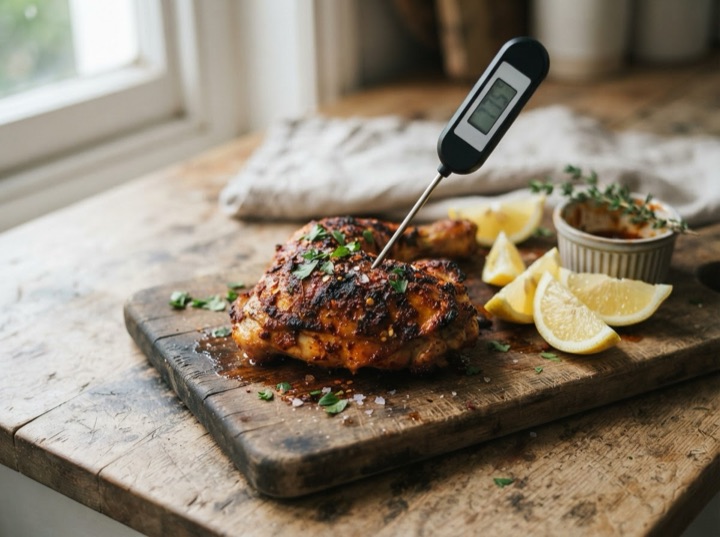
Alpha Grillers instant-read thermometer
Takes the guesswork out of piri-piri chicken and bifanas: 74 °C in the thickest part and the chicken is done.
Tip: Check the thickest piece, away from the bone.
Storing homemade piri-piri safely
Garlic and fresh chillies in oil are low-acid and airless, which are the conditions in which the botulism bacteria can grow. So:
- Keep homemade piri-piri oil in the fridge, not on the counter, and use it within about a week if it contains garlic or fresh chillies.
- For a longer-keeping version, leave out the garlic and fresh chilli and use dried chillies only, still stored cold.
- Lemon juice goes in at serving time, not in the bottle.
- Olive oil clouds in the fridge. Take the bottle out 15 minutes before using and it will clear.
Restaurants and commercial producers use methods and acidity levels designed for room-temperature storage. Home kitchens should play it safe.
Handling chillies safely
Piri-piri chillies are much hotter than most chillies sold in supermarkets abroad.
- Wear thin gloves when cutting fresh chillies or crushing a large batch of dried ones.
- Don't touch your eyes, nose or face, and wash hands, board and knife with soap afterwards. Oil-based capsaicin doesn't rinse off with water alone.
- Ventilate when warming chillies in oil. Keep the heat low and don't lean over the pan.
- Crush dried chillies gently in a mortar rather than a spice grinder, which throws chilli dust into the air.
- Label the bottle, especially if children or guests could mistake it for plain olive oil.
- If you overdo the heat, milk, yoghurt, bread or rice help more than water.
What you’ll need
Links go to Amazon, where you can check today’s price. If you buy, we earn a small commission at no extra cost to you.
Piri-piri chillies from Portugal
Whole dried bird's-eye chillies, the heat behind frango piri-piri and the bottle of chilli oil on every Portuguese table.
Tip: Two packs last a year. Crush them as you need them.
Alpha Grillers instant-read thermometer
Takes the guesswork out of piri-piri chicken and bifanas: 74 °C in the thickest part and the chicken is done.
Tip: Check the thickest piece, away from the bone.
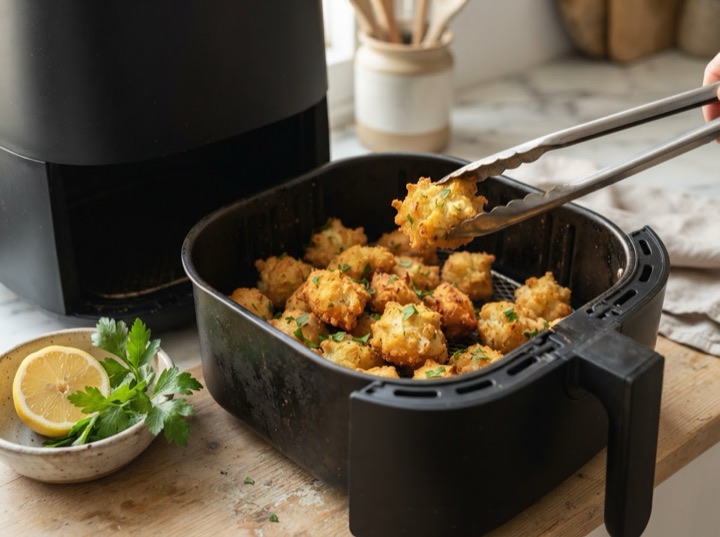
Cosori TurboBlaze 6 Qt Air Fryer
One of Amazon's best-selling air fryers. The 6 Qt basket fits a batch of pastéis de bacalhau or chicken thighs for four, and the ceramic coating is PFAS-free.
Tip: Size is what matters for Portuguese cooking: 5.5–6 Qt feeds 2–4 people in one batch.
Frequently asked
What is the difference between piri piri and peri peri?
Is piri piri sauce Portuguese or African?
How hot is piri piri?
How long does homemade piri piri sauce last?
What do you eat piri piri sauce with?
Recipes from this story
 Air Fryer
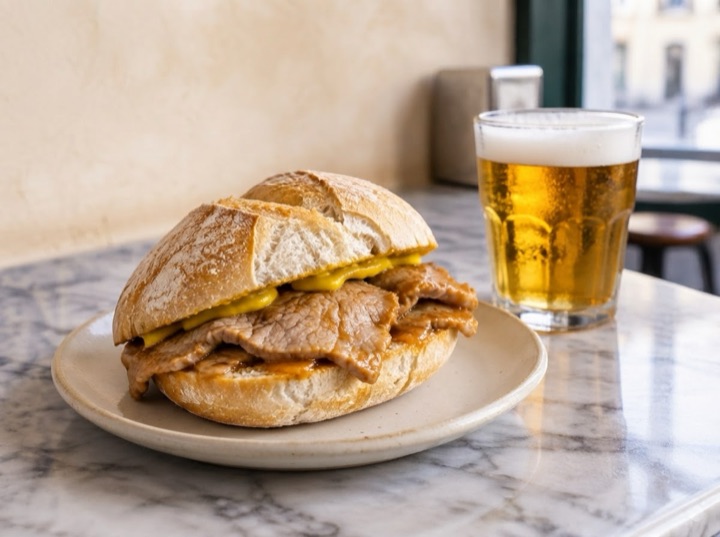
Bifanas with an Air Fryer Shortcut
The Portuguese garlic pork sandwich. Marinate the pork, air fry it fast, then dunk it in the reduced wine sauce, just like the snack bars in Lisbon.
 Air Fryer
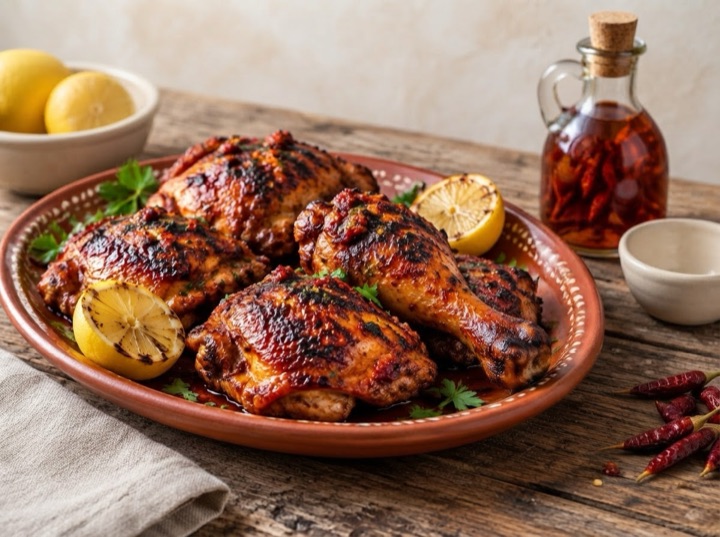
Frango Piri-Piri in the Air Fryer
Portuguese piri-piri chicken with crisp, blistered skin, made in the air fryer in 25 minutes. Includes the marinade and a piri-piri oil for basting.
 Food culture
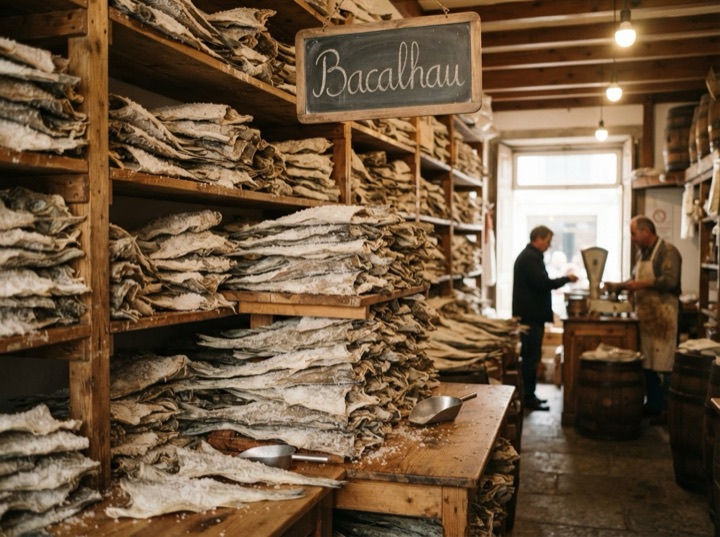
Why Do Portuguese Eat BacalhauThe Story of the Faithful Friend
Why do Portuguese eat bacalhau when no cod swims off Portugal? Salt, Catholic fasting, Newfoundland fleets and the Estado Novo, explained simply.