Port Wine ExplainedEvery Style and How to Serve It
Port wine explained simply: ruby, tawny, colheita, LBV, vintage, white and rosé port, how to serve each, how long an open bottle lasts and what to eat.
 By Mesa de Portugal Kitchen · Updated · 8 min read
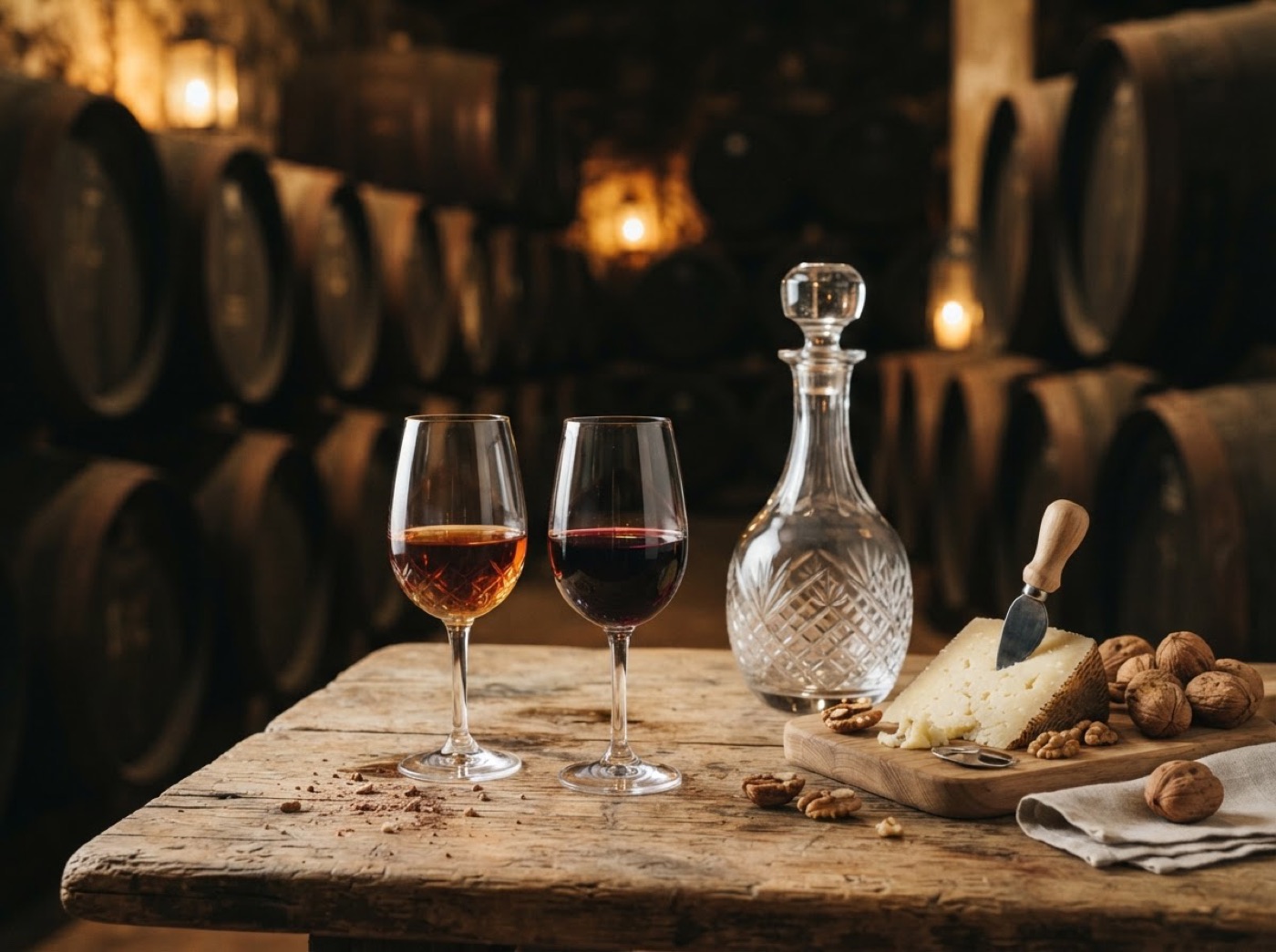
Port is a sweet fortified wine from the Douro Valley in northern Portugal. Grape brandy is added halfway through fermentation, which stops the yeast, keeps natural sugar in the wine and lifts it to around 19-22% alcohol. Every style comes down to one choice: age it in bottle to stay fruity and red (ruby), or in wooden casks to turn nutty and amber (tawny).
The wine is made in the Douro, then traditionally aged in the lodges of Vila Nova de Gaia, across the river from Porto. That's where the name comes from, and why you'll see dozens of lodge signs on the Gaia riverbank. If you're new to Portuguese wine in general, start with our Portuguese wine for beginners guide, then come back here.
The two families: ruby and tawny
Almost every bottle on the shelf belongs to one of two families.
- Ruby styles age mostly in large vats or in bottle, with little contact with air. They stay deep red and taste of blackberry, cherry and plum.
- Tawny styles age in small wooden casks (often 550-600 litre "pipes"). Slow contact with oxygen turns the colour brick-orange and the flavour towards caramel, dried fig, walnut and orange peel.
Then there are white and rosé ports, which sit outside the two families.
Types of port wine, from everyday to special
Ruby
The simplest and cheapest style. Young, fruity and sweet, usually blended from several years. A basic ruby costs from around €6-8 in a Portuguese supermarket. Good for cooking and for anyone who likes jammy red fruit.
Ruby Reserve
A step up from basic ruby: better grapes, more concentration. Often sold under a brand name rather than the word "Reserve". Good value.
Tawny
A basic tawny is light, nutty and sweet. It is usually a blend of younger wines rather than a long-aged one, so don't expect the depth of an aged tawny. Lovely chilled.
Aged tawny: 10, 20, 30 and 40 years old
These are the tawnies with an age on the label. The number is not a minimum age. It's the average style of the blend, approved by the Port wine institute (IVDP) tasting panel. A newer 50-year-old category also exists.
- 10 years old: the sweet spot for most people. Toffee, dried fruit, still some freshness.
- 20 years old: richer and more complex, with roasted nuts and spice. Many fans think this is the best balance of price and depth.
- 30 and 40 years old: concentrated, almost syrupy, with very long finishes. Special-occasion wines.
Colheita
A tawny from a single harvest year, aged at least seven years in wood. The label shows both the harvest year and the bottling year. Think of it as an aged tawny with a birth certificate, which makes it a popular gift for birthdays and anniversaries.
LBV (Late Bottled Vintage)
A ruby from a single year, bottled between the fourth and sixth year after the harvest. It gives you a taste of the vintage style for a fraction of the price. Most LBVs are filtered and ready to drink. "Unfiltered" LBVs throw a sediment and may need decanting.
Vintage
The top of the ruby family. Made only in the best years, when a port house "declares" a vintage, and bottled young, after around two years. It then ages for decades in bottle. Young vintage port is powerful and tannic; at 20-30 years old it becomes silky and complex. Always decant it, because it has a heavy sediment.
White port
Made from white grapes. It ranges from dry (seco) to very sweet (lágrima). In Portugal it's mostly drunk as an aperitif, especially as a Portónico: white port and tonic water over ice with a slice of lemon or orange and a sprig of mint.
Rosé port
The newest style, launched in the late 2000s. Light, fruity and sweet, made to be served very cold or in cocktails. Fun, not serious.
How to serve port
Temperature makes more difference than the glass.
- White, rosé and basic tawny: chilled, around 6-10 °C. Straight from the fridge is fine.
- Aged tawny and colheita: lightly chilled, around 12-14 °C. Twenty minutes in the fridge before pouring.
- Ruby, LBV and vintage: cool room temperature, around 16-18 °C. Too warm and the alcohol dominates.
Use a smallish wine glass with a tulip shape so you can smell the wine. A standard pour is about 60-75 ml, smaller than a glass of table wine.

Vista Alegre Bicos goblets, set of 4
Vista Alegre has made porcelain and glass in Portugal since 1824. These goblets suit a Vinho Verde with your cataplana.
Tip: All-purpose goblets: wine, water or sangria.
How long does port last once opened?
Port lasts longer than table wine because of the extra alcohol and sugar, but it does fade. Re-cork it and keep it in the fridge.
- White and rosé port: about 2-3 weeks.
- Ruby and Ruby Reserve: about 3-4 weeks.
- Filtered LBV: about 2-3 weeks.
- Basic tawny and aged tawny (10-40 years): 1-2 months. These are already used to oxygen, so they are the most forgiving.
- Colheita: 1-2 months, like aged tawny.
- Vintage port: 1-3 days. Plan to finish it with friends.
If an old bottle tastes flat, dull or vinegary, use it in a sauce instead of throwing it away.
Food pairings for port
Match the style to the food: fruity rubies with chocolate and blue cheese, nutty tawnies with nuts, caramel and egg-yolk sweets.
- Ruby and LBV: dark chocolate, chocolate cake, berry tarts and strong cheese. A classic is Stilton, but a mature Portuguese cheese works too (see our Portuguese cheese guide).
- Vintage port: cheese and walnuts at the end of a long dinner. Keep the food simple.
- 10 and 20-year-old tawny: egg-and-sugar desserts, almond tarts, crème brûlée, arroz doce and roasted chestnuts in November. Also very good with a pastel de nata.
- Colheita and older tawnies: dried fruit, toasted almonds, or on their own instead of dessert.
- White port: as a Portónico before dinner, with salted almonds, olives and petiscos.
Port also belongs in the kitchen. A splash of ruby in a pan sauce for steak or duck adds sweetness and colour, and an inexpensive bottle is all you need.
What to buy first
If you're building a small port collection at home, start with three bottles: a dry white port for Portónicos, a 10-year-old tawny for desserts and cheese, and a good LBV for chocolate and winter evenings. That covers almost every occasion for well under the price of one vintage. Save vintage port for a celebration, and buy it from a declared year if you want a bottle to age.
Port is also one of the most popular presents to bring back from Portugal. For more ideas, read our Portuguese food gifts guide. For the full regional picture of Portuguese cooking, Portugal: The Cookbook covers the dishes that go with it.

Portugal: The Cookbook (Phaidon)
A big, comprehensive book of Portuguese recipes, region by region. The one to give a serious cook.
Tip: A large hardback that looks good on the shelf as well as in the kitchen.
What you’ll need
Links go to Amazon, where you can check today’s price. If you buy, we earn a small commission at no extra cost to you.
Vista Alegre Bicos goblets, set of 4
Vista Alegre has made porcelain and glass in Portugal since 1824. These goblets suit a Vinho Verde with your cataplana.
Tip: All-purpose goblets: wine, water or sangria.
Portugal: The Cookbook (Phaidon)
A big, comprehensive book of Portuguese recipes, region by region. The one to give a serious cook.
Tip: A large hardback that looks good on the shelf as well as in the kitchen.
Frequently asked
What is the difference between ruby and tawny port?
Should port wine be chilled?
How long does an open bottle of port last?
What does LBV mean on port?
Is port wine sweet?
Recipes from this story
 Traditional
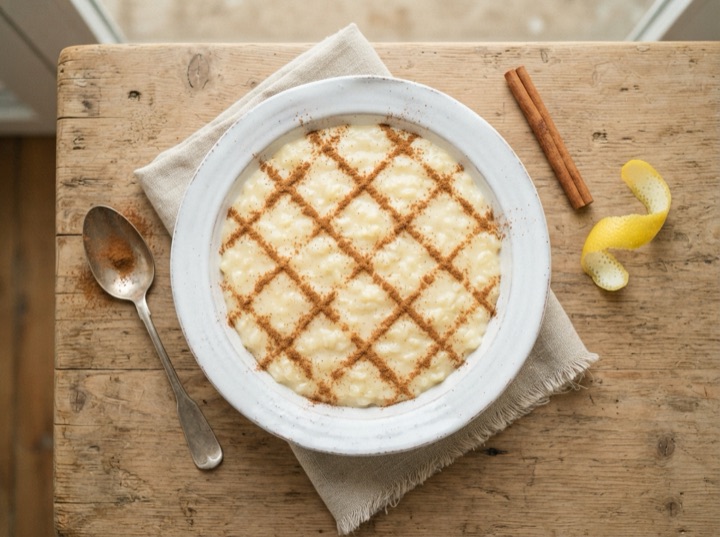
Arroz DocePortuguese Rice Pudding
Creamy Portuguese rice pudding with lemon peel and cinnamon, finished with egg yolks and the classic cinnamon lattice on top. Served cold, at every celebration.
 Air Fryer
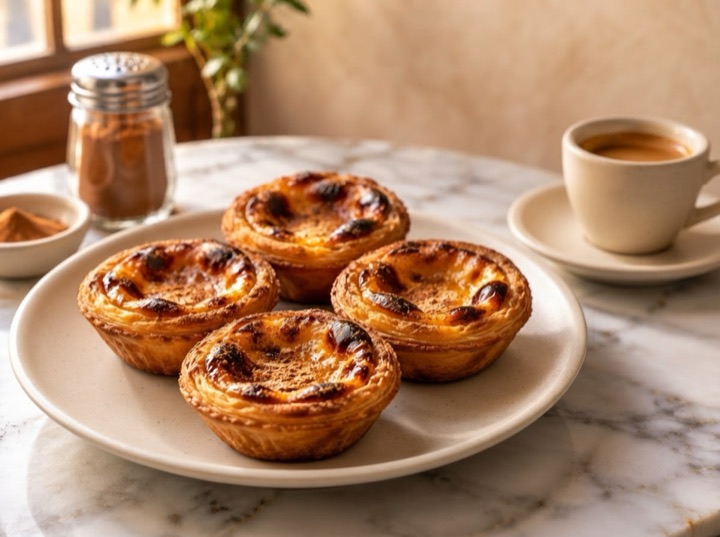
Pastéis de Nata in the Air Fryer
Homemade Portuguese custard tarts with shop-bought puff pastry, baked in the air fryer. Honest tips on getting the blistered tops without a 300 °C oven.
 Food culture
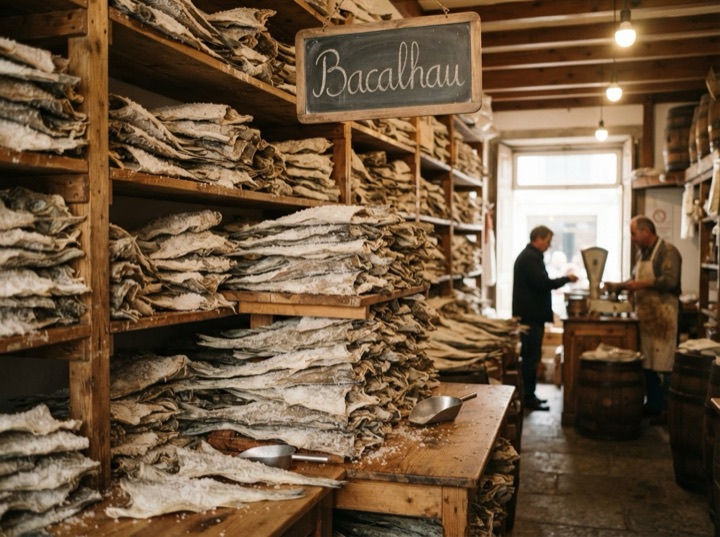
Why Do Portuguese Eat BacalhauThe Story of the Faithful Friend
Why do Portuguese eat bacalhau when no cod swims off Portugal? Salt, Catholic fasting, Newfoundland fleets and the Estado Novo, explained simply.