Portuguese Tinned FishA Beginner's Guide
Why Portuguese conservas are worth buying, which fish to start with, how to read the tin, and simple ways to eat sardines, mackerel and octopus.
 By Mesa de Portugal Kitchen · Updated · 4 min read
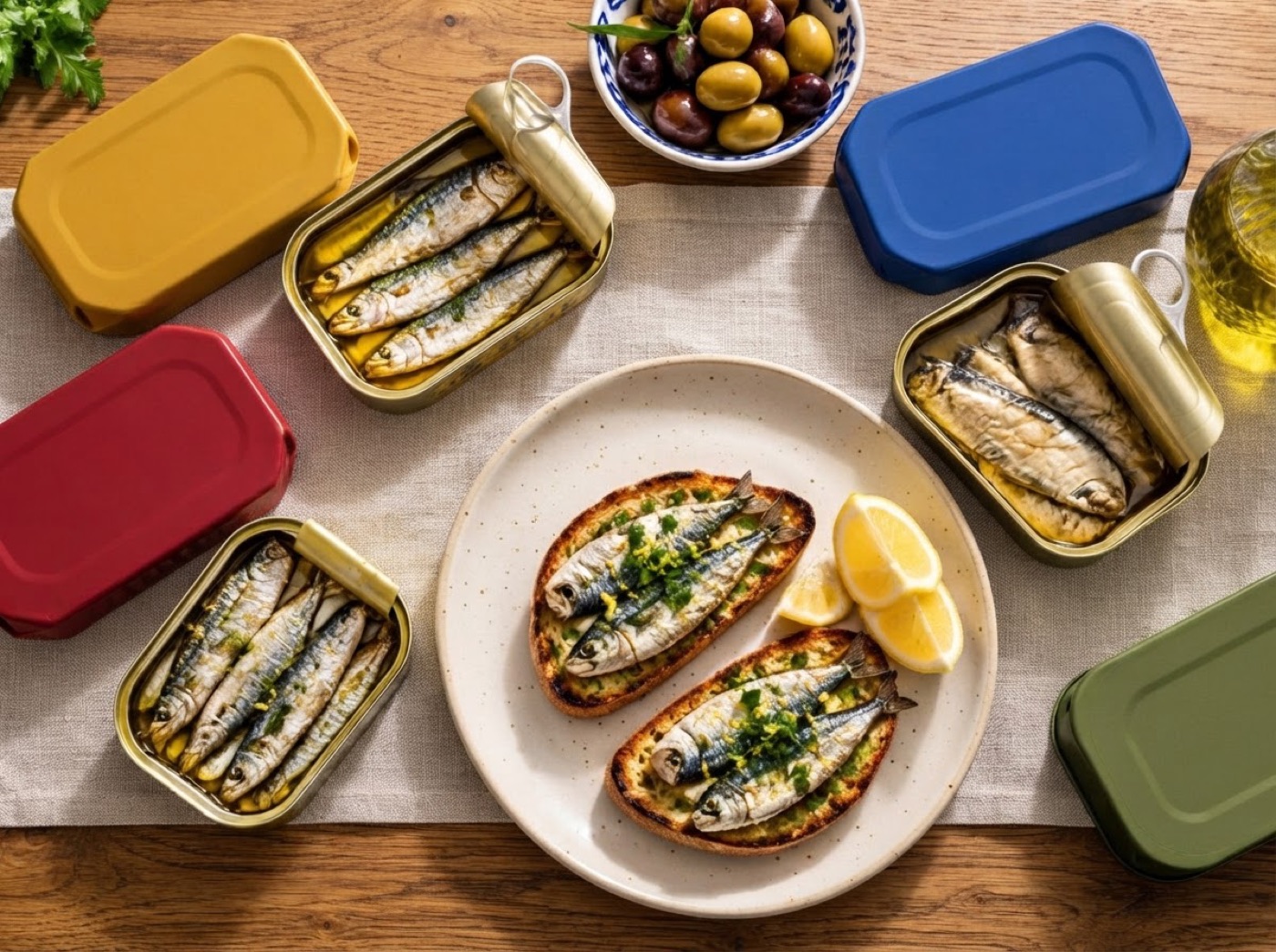
In most countries tinned fish is what you eat when the fridge is empty. In Portugal it's a delicacy. There are shops in Lisbon and Porto that sell nothing else, the tins are designed like little works of art, and people give them as presents.
Portugal has been canning fish since the 1800s, and some factories still pack sardines by hand. If you've only had supermarket own-brand sardines, good Portuguese conservas taste very different: firm, meaty and rich.
Where to start
- Sardines in olive oil. The classic. Try them on toast with lemon, black pepper and raw onion.
- Mackerel (cavala). Milder and meatier than sardines, and a good one to win over people who are unsure about tinned fish.
- Tuna belly (ventresca). The most tender cut of the tuna. Rich, silky and a treat.
- Octopus (polvo). Usually in olive oil and garlic. Excellent in a salad with chickpeas and red onion.
- Sardines with piri-piri, lemon or tomato. Flavoured versions that are good straight from the tin.
Brands to look for
Some well-known Portuguese names you'll see abroad: Ramirez, which has been canning since 1853; Nuri, made by the Pinhais factory in Matosinhos, where much of the work is still done by hand; José Gourmet, with its illustrated tins; and Minerva, Briosa and Cuca. Packaging changes often, so check that the tin says "Made in Portugal."
Reading the tin
- Azeite means olive oil, which is better than "óleo vegetal" (vegetable oil).
- Sem pele e sem espinhas means skinless and boneless, for people who don't like the bones. (The bones in sardines are soft and full of calcium, so try them.)
- Picante means spicy.
- Date of manufacture. Sardines in oil keep for years, and many people believe they improve with age, like wine. Some fans age them, turning the tins every few months.
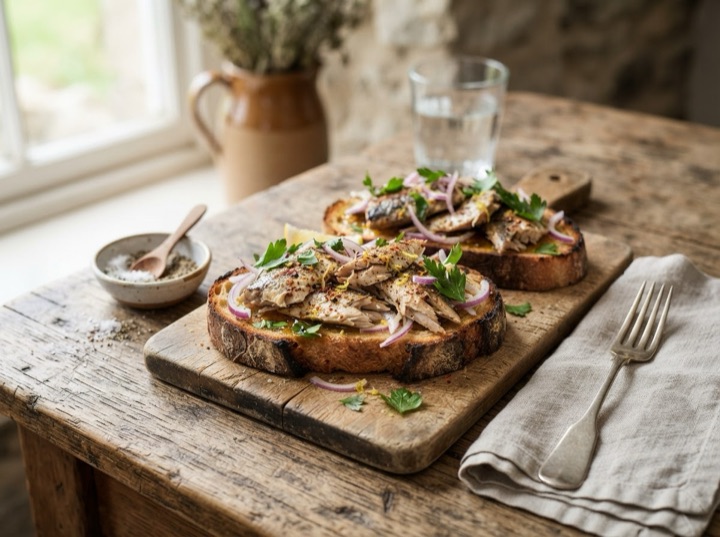
Nuri spiced mackerel in olive oil, 4 pack
From the Pinhais cannery in Matosinhos, where much of the work is still done by hand. Meaty mackerel with a gentle spice.
Tip: On toast with lemon, or folded through warm potatoes.
Three easy ways to eat them
- On toast: good bread, a rub of garlic, the fish, the oil from the tin, lemon, pepper and parsley.
- Petiscos board: two or three opened tins, bread, olives, a hard cheese, and a glass of Vinho Verde. That's dinner.
- Quick pasta: warm a tin of sardines and their oil with garlic, chilli and lemon zest, then toss with spaghetti and breadcrumbs.
As a gift
A box of Portuguese tins is one of the best food presents under €30. It keeps for ages, needs no fridge and looks great. A mixed box lets someone try several fish and brands at once.
What you’ll need
Links go to Amazon, where you can check today’s price. If you buy, we earn a small commission at no extra cost to you.
Nuri spiced mackerel in olive oil, 4 pack
From the Pinhais cannery in Matosinhos, where much of the work is still done by hand. Meaty mackerel with a gentle spice.
Tip: On toast with lemon, or folded through warm potatoes.
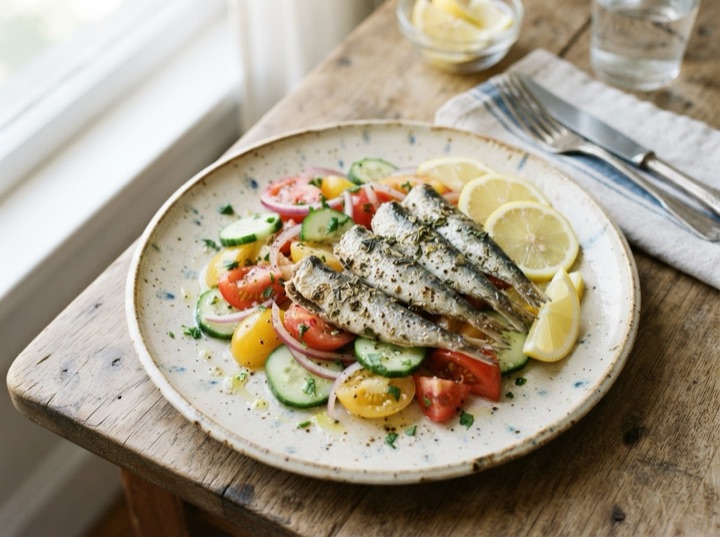
Comur sardines with lemon, 3 tins
Portuguese sardines with lemon in Comur's beautiful retro tins. A gift that's also a quick lunch.
Tip: Good on toast with black pepper.
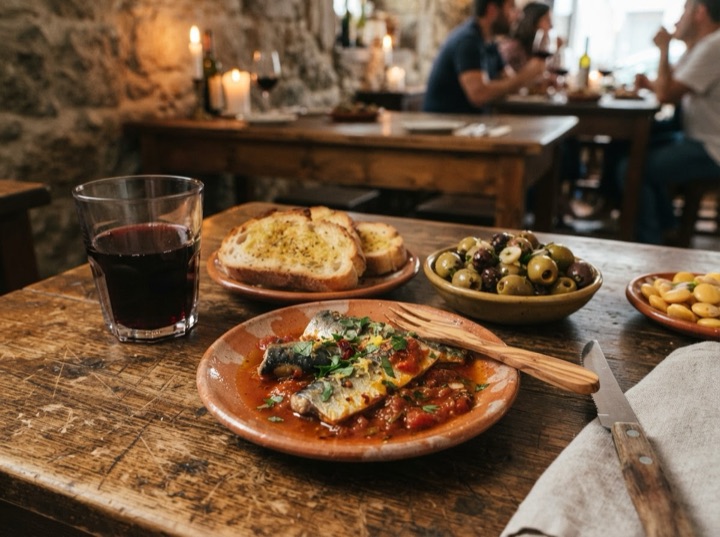
Tricana mackerel in spicy tomato
Mackerel fillets from Portugal in a lightly spicy tomato sauce. Meaty and great for a petiscos board.
Tip: Serve straight from the tin with bread.
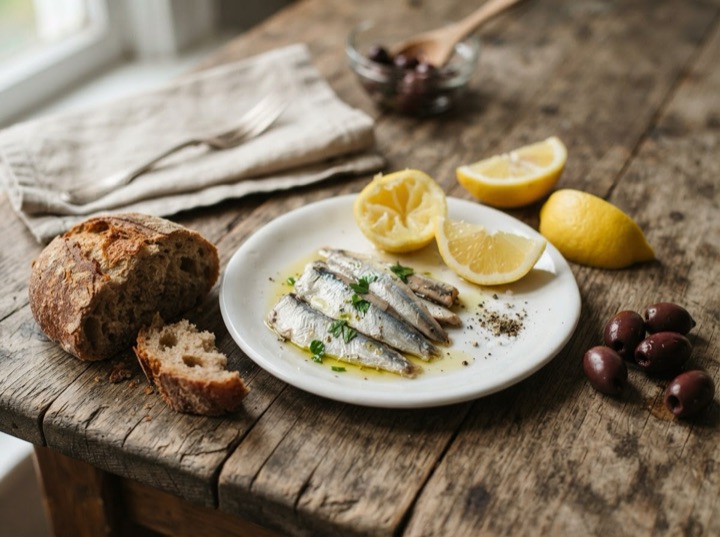
La Rose Portuguese sardines, skinless & boneless
A good first tin for anyone unsure about sardines. Skinless and boneless, packed in Portugal.
Tip: Once you like these, try the whole sardines with bones. They're richer.

José Gourmet ceramic fish dish
A fish-shaped ceramic dish from José Gourmet, one of Portugal's best-known tinned fish brands. Made for serving conservas at the table.
Tip: Pair it with a few tins for a ready-made gift.
Frequently asked
Why is Portuguese tinned fish so good?
Can you eat the bones in tinned sardines?
Does tinned fish get better with age?
Which Portuguese tinned fish brands are best for beginners?
How do you eat tinned sardines?
Recipes from this story
 Food culture
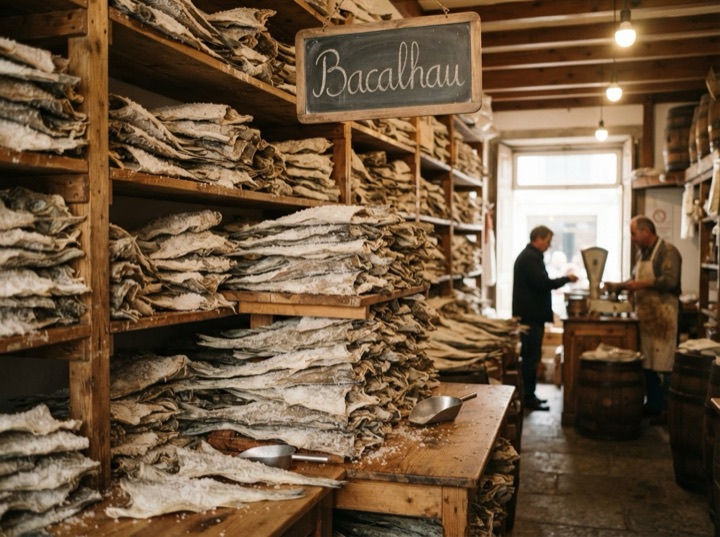
Why Do Portuguese Eat BacalhauThe Story of the Faithful Friend
Why do Portuguese eat bacalhau when no cod swims off Portugal? Salt, Catholic fasting, Newfoundland fleets and the Estado Novo, explained simply.
 Eat like a local
What to Eat in SintraTravesseiros, Queijadas and the Coast
What to eat in Sintra: travesseiros and queijadas, Colares wine, and grilled fish on the nearby coast, plus tips to eat well on a Sintra day trip.
 Eat like a local
What to Eat in Porto12 Local Dishes and How to Order
What to eat in Porto, dish by dish: francesinha, tripas, bifanas, sandes de pernil, bolinhos de bacalhau and port, with tips on how locals order.