Doces ConventuaisPortugal's Convent Sweets Explained
Doces conventuais are Portugal's convent sweets. Why they're all egg yolks and sugar, the famous ones, where each comes from and where to find them.
 By Mesa de Portugal Kitchen · Updated · 7 min read
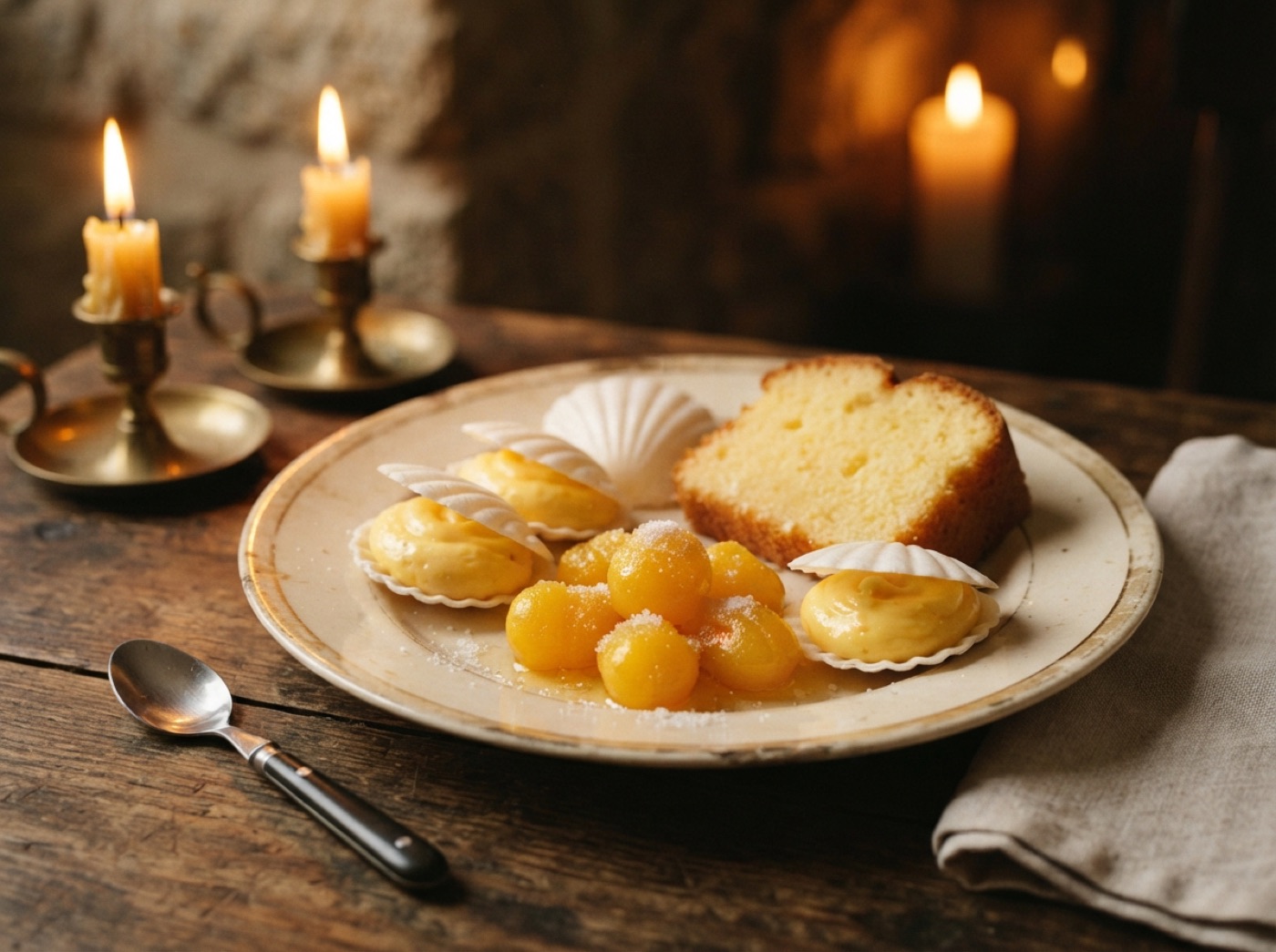
Doces conventuais (convent sweets) are the egg-yolk and sugar desserts created in Portuguese convents and monasteries between roughly the 1500s and 1800s. Nuns and monks used egg whites to starch habits and clarify wine, which left them with huge numbers of spare yolks. Sugar from Madeira and Brazil was plentiful, so they turned the yolks into custards, sponges and golden sweets that are still sold all over Portugal.
Most of Portugal's best-known desserts come from this tradition, including the pastel de nata. Here is why the sweets look and taste the way they do, the famous ones worth knowing, and where to try them.
Why so many egg yolks?
Three things came together in Portuguese religious houses.
- Egg whites had jobs. They were used to stiffen the linen of religious habits and to clarify wine, which convents and monasteries often made. Some accounts also mention whites used in gilding. Whatever the exact mix, yolks were left over.
- Sugar was cheap and abundant. From the 1400s, Portugal grew sugar cane in Madeira and later on a huge scale in Brazil. Lisbon became one of Europe's great sugar ports.
- Convents needed income. Many sold their sweets to visitors, nobles and the royal court, or gave them as gifts. Recipes became a source of pride and rivalry between houses.
The result is a style that is easy to recognise: deep yellow, very sweet, often perfumed with cinnamon or lemon peel, sometimes with almonds, and almost never with butter or cream. Many names are cheerfully religious or a little cheeky, from "bacon from heaven" to "nun's belly".
When Portugal closed its religious houses in 1834, many recipes left with the last nuns and passed to families and pastry shops. That is how a private convent tradition became the stock of every Portuguese pastelaria.
The famous convent sweets
Toucinho do céu
"Bacon from heaven". A dense, moist almond and egg-yolk cake, dusted with icing sugar. Several towns claim it, and Guimarães, in the Minho, is the name most often linked to it. Some old recipes did include a little pork fat, hence the name, but most versions today don't.
Barriga de freira
"Nun's belly". A spoon dessert of egg yolks and sugar syrup thickened with breadcrumbs, often finished with cinnamon. Rich, soft and very sweet, served in small bowls.
Pão de ló
Portugal's light egg sponge, baked in an unglazed clay dish lined with paper. Styles vary hugely: in Ovar it is soft and runny in the middle, while Alfeizerão's version is even wetter, almost a custard inside a thin crust. Pão de Ló de Ovar has protected geographical indication (PGI) status in the EU.
Ovos moles de Aveiro
"Soft eggs". A thick, sweet egg-yolk cream sealed inside thin rice-paper wafers shaped like shells, fish and barrels, a nod to Aveiro's lagoon and fishing life. The cream is also sold in little painted wooden barrels. It has PGI status, so only producers in a defined area around Aveiro can use the name. See our Aveiro food guide.
Queijadas de Sintra
Small, crisp pastry cups filled with fresh cheese, sugar, egg and cinnamon. They are not strictly a convent invention but share the same sugar-and-yolk family tree, and Sintra's bakeries have made them for centuries.
Pastel de Tentúgal
Paper-thin pastry, stretched by hand until you can see through it, rolled around a filling of ovos moles. Made in Tentúgal, near Coimbra, a town with a Carmelite convent tradition.
Papos de anjo
"Angel's double chins". Little egg-yolk puffs baked in tins, then soaked in sugar syrup. Very light, very sweet.
Fios de ovos
"Egg threads". Yolks drizzled into boiling syrup to make fine golden strands, used to decorate cakes and Christmas tables. The same idea travelled with the Portuguese to Thailand and Japan, where versions still exist.
Trouxas de ovos
"Egg bundles". Thin sheets of yolk poached in syrup and rolled up. Strongly linked to Caldas da Rainha.
Sericaia
A soft, puffy egg pudding baked in a clay dish until cracked on top, served with a plum in syrup. The plum version is linked to Elvas, in the Alentejo, whose sugared plums are famous in their own right.
Encharcada and pão de rala
Two Alentejo convent classics. Encharcada is yolks cooked in syrup until set and caramelised, then dusted with cinnamon. Pão de rala is an almond and egg-yolk paste shaped into a loaf, associated with Évora.
Where do doces conventuais come from? A quick map
- North (Minho): toucinho do céu, especially around Guimarães.
- Centre: ovos moles (Aveiro), pão de ló (Ovar, Alfeizerão), pastel de Tentúgal (near Coimbra), trouxas de ovos (Caldas da Rainha), and Alcobaça's Cistercian monastery sweets.
- Lisbon area: queijadas de Sintra, travesseiros, and the pastel de nata from Belém.
- Alentejo: sericaia, encharcada, pão de rala.
- Algarve: almond and fig sweets such as morgado and the marzipan shapes called doces de amêndoa, which mix the convent style with the region's almonds.
Where to try them in Portugal
Any good pastelaria sells a few convent sweets alongside its pastéis de nata, especially pão de ló and toucinho do céu. In the towns above, look for shops that specialise in the local sweet; many have been run by the same families for generations.
The biggest showcase is the Mostra Internacional de Doces e Licores Conventuais in Alcobaça, held inside the Alcobaça Monastery every November. Producers from across Portugal sell their convent sweets and liqueurs there. The 2026 edition is listed for 19 to 22 November.
If you're travelling, our guides to Portuguese pastries and Portuguese desserts cover the rest of the sweet menu.
Making convent sweets at home
Most convent sweets need only eggs, sugar, water and a few flavourings, but technique matters. Three tips that apply to almost all of them:
- Get the syrup right. Many recipes ask for sugar syrup cooked to a specific stage, called ponto in Portuguese. A sugar thermometer takes the guesswork out: around 103 to 105 °C for a light syrup, higher for thicker ones.
- Strain the yolks. Pushing yolks through a fine sieve removes the membranes and gives a smoother cream.
- Low heat, patience. Yolks scramble quickly. Stir constantly over gentle heat and take the pan off before you think it's ready.
A good Portuguese cookbook is the easiest way in, since many of these recipes are hard to find in English.

Authentic Portuguese Cooking (cookbook)
Over 185 classic recipes from mainland Portugal, the Azores and Madeira. A highly rated home-cooking reference.
Tip: Good for family recipes you remember but never wrote down.
Serve them the Portuguese way, in small portions on pretty plates.
Bordallo Pinheiro lemon dessert plate
Bright yellow lemon-leaf plate from the same Caldas da Rainha workshop. Perfect under a pastel de nata.
Tip: 20 cm across: dessert and side-plate size.
What you’ll need
Links go to Amazon, where you can check today’s price. If you buy, we earn a small commission at no extra cost to you.
Bordallo Pinheiro lemon dessert plate
Bright yellow lemon-leaf plate from the same Caldas da Rainha workshop. Perfect under a pastel de nata.
Tip: 20 cm across: dessert and side-plate size.
Costa Nova Rosa dinner plate
An 11-inch Portuguese stoneware plate with a soft organic edge. Pairs with the Costa Nova bowls.
Tip: Buy one to check the colour, then build a set.
Authentic Portuguese Cooking (cookbook)
Over 185 classic recipes from mainland Portugal, the Azores and Madeira. A highly rated home-cooking reference.
Tip: Good for family recipes you remember but never wrote down.
Frequently asked
What are doces conventuais?
Why do Portuguese desserts use so many egg yolks?
What does toucinho do céu mean?
Where can I buy convent sweets in Portugal?
Recipes from this story
 Food culture
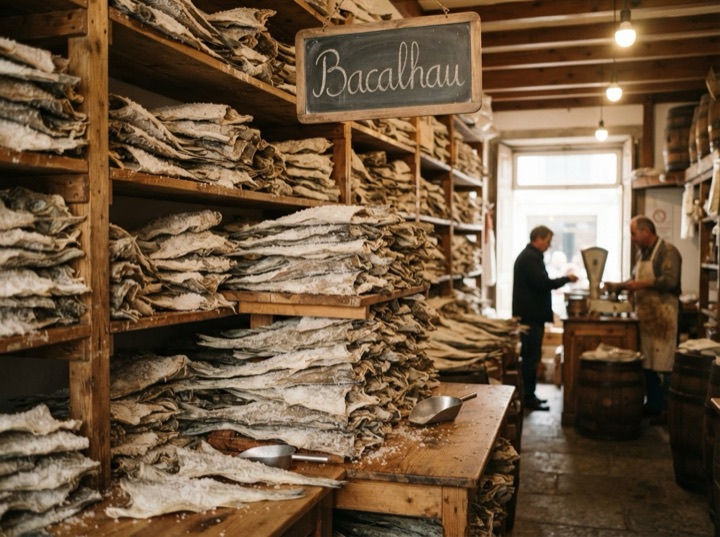
Why Do Portuguese Eat BacalhauThe Story of the Faithful Friend
Why do Portuguese eat bacalhau when no cod swims off Portugal? Salt, Catholic fasting, Newfoundland fleets and the Estado Novo, explained simply.
 Eat like a local
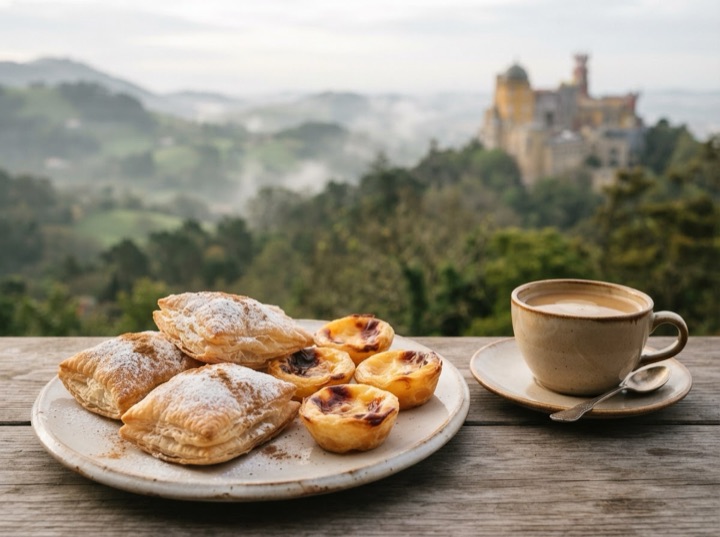
What to Eat in SintraTravesseiros, Queijadas and the Coast
What to eat in Sintra: travesseiros and queijadas, Colares wine, and grilled fish on the nearby coast, plus tips to eat well on a Sintra day trip.
 Eat like a local
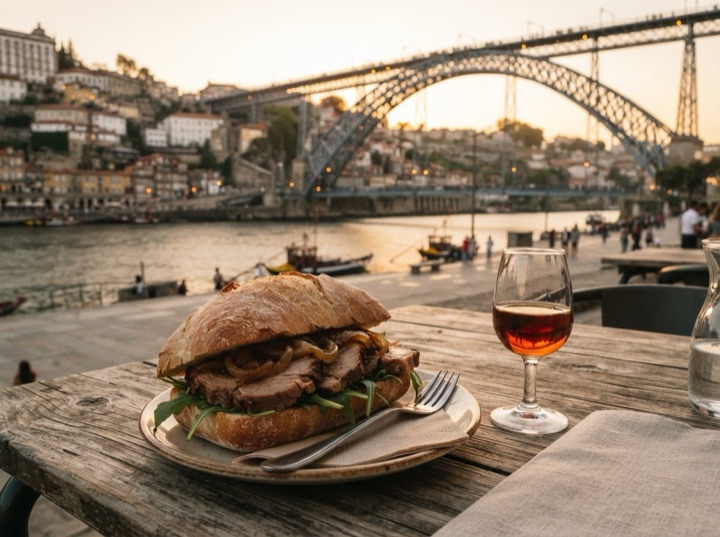
What to Eat in Porto12 Local Dishes and How to Order
What to eat in Porto, dish by dish: francesinha, tripas, bifanas, sandes de pernil, bolinhos de bacalhau and port, with tips on how locals order.