Portuguese Desserts15 Classics to Make or Order
Portuguese desserts beyond the pastry counter: arroz doce, leite creme, baba de camelo, molotof, salame de chocolate and more, with what each tastes like.
 By Mesa de Portugal Kitchen · Updated · 7 min read
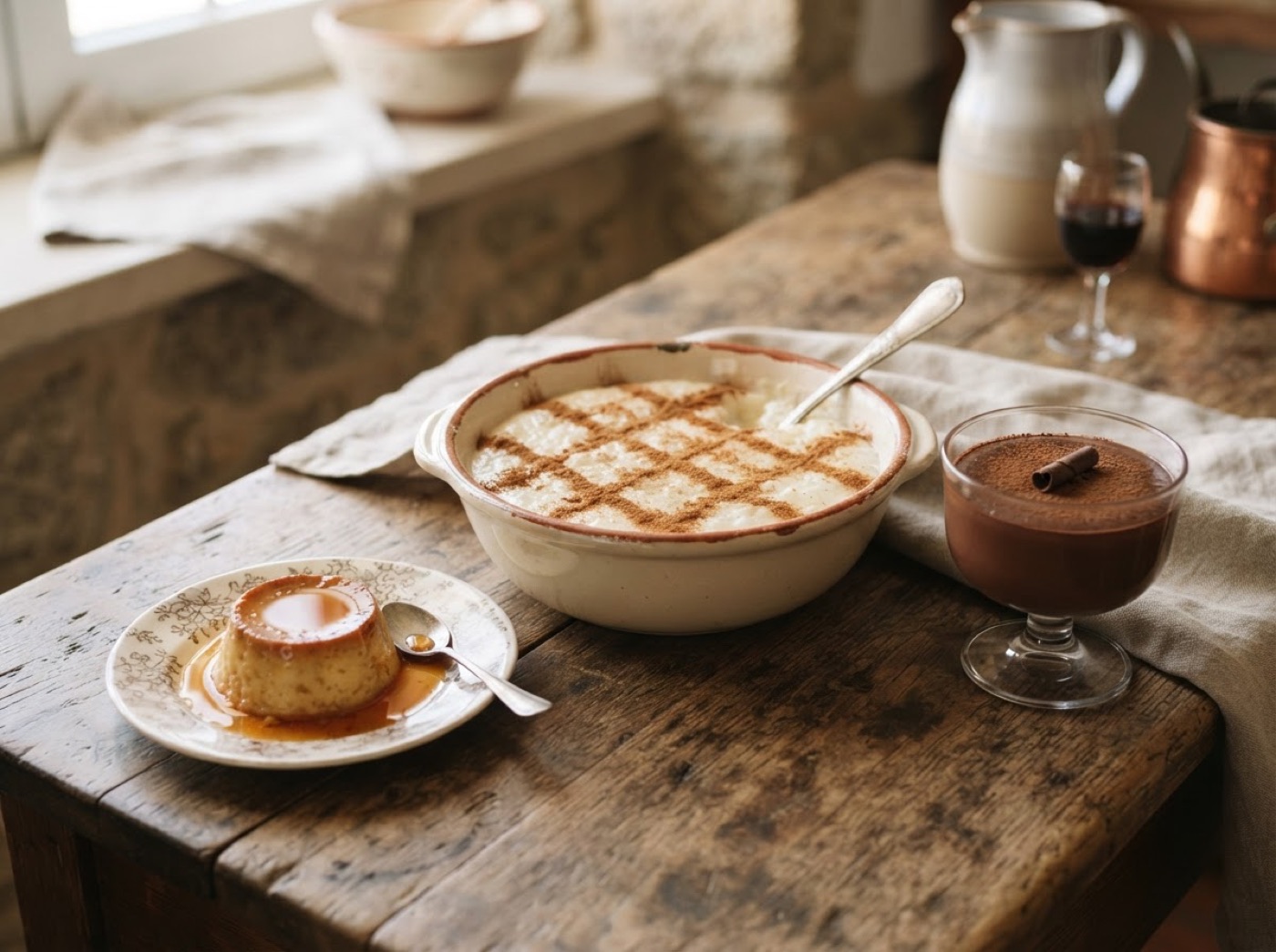
The classic Portuguese desserts are home and restaurant puddings rather than pastries: arroz doce (cinnamon rice pudding), leite creme (a burnt-sugar custard), pudim flan, baba de camelo (condensed milk caramel mousse), molotof (caramel meringue), salame de chocolate and mousse de chocolate. Most are cheap, made a day ahead and built on eggs, milk, sugar and cinnamon.
In a Portuguese restaurant, the sobremesas (desserts) usually arrive on a short list, or the waiter recites them at the table. This guide covers the 15 you'll meet most often, at a tasca or at a family Sunday lunch, and which are easy to make yourself. If you want the café counter instead, with pastéis de nata, travesseiros and bolas de Berlim, see our Portuguese pastries guide.
The everyday restaurant desserts
1. Arroz doce
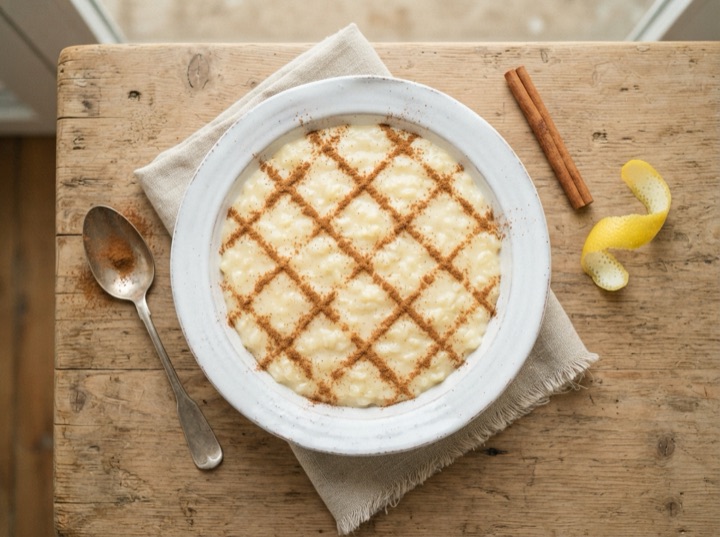
Short-grain rice cooked slowly in milk with lemon peel and a cinnamon stick, enriched with egg yolks and finished with a cinnamon lattice on top. Served cold or at room temperature. It's on almost every tasca menu and at every Portuguese party. Our arroz doce recipe.
2. Pudim flan
A smooth, firm egg and milk custard baked in a caramel-lined ring mould, then turned out so the caramel runs down the sides. Some cafés serve a version with condensed milk, others a lighter one with fresh milk. Either way, it's Portugal's most common dessert.
3. Leite creme
Portugal's answer to crème brûlée: a thick custard of milk, yolks, a little cornflour, lemon peel and cinnamon, with a crust of sugar. Traditionally the sugar is burnt with a red-hot iron disc, the ferro de queimar. A kitchen blowtorch does the same job.
4. Mousse de chocolate
Portuguese chocolate mousse is denser and darker than the airy French version, often made with just chocolate, eggs, sugar and butter. It's a restaurant staple, usually served in a small glass or bowl.
5. Baba de camelo
"Camel's drool", a name that puts some visitors off. It's a mousse of cooked condensed milk (dulce de leche, essentially) folded with egg, often topped with crushed almonds or biscuit. Very sweet, very quick, and a fixture at birthday parties and family lunches.
6. Molotof
A tall, wobbly meringue pudding: egg whites beaten with sugar, cooked in a caramel-lined mould in a water bath, then served with a yolk custard or caramel sauce. It's the clever answer to all the whites left over from yolk-based sweets.
7. Salame de chocolate
A chocolate "salami" of broken Maria biscuits bound with cocoa, butter, sugar and egg, rolled in paper, chilled and sliced into rounds. A children's party classic and no oven required.
8. Bolo de bolacha
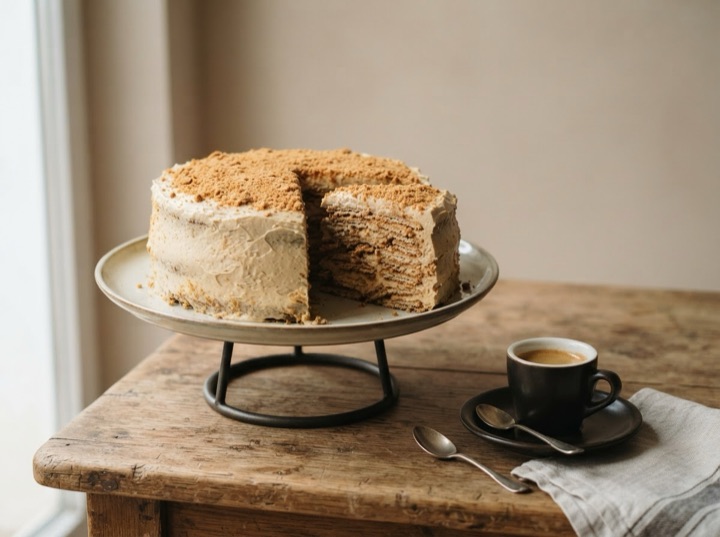
Layers of Maria biscuits dipped in strong coffee and stacked with a sweet butter cream, chilled until firm. Simple and excellent with a coffee. Our bolo de bolacha recipe.
9. Serradura
"Sawdust pudding": whipped cream sweetened with condensed milk, layered with finely crushed Maria biscuits. It came to Portugal via Macau and is now common in restaurants and cafés.
The festive and regional desserts
10. Aletria
Thin vermicelli noodles cooked in sweet milk with lemon and egg yolks, decorated with cinnamon. Like arroz doce made with pasta. It's especially popular at Christmas in the north; our Portuguese Christmas food guide covers the rest of that table.
11. Pudim Abade de Priscos
A rich caramel pudding from the Braga area, famously made with egg yolks, sugar, port wine, lemon and a little toucinho (pork fat). The fat is undetectable; the texture is silky. More in our Braga and Minho food guide.
12. Sericaia
A soft, cracked egg pudding baked in a clay dish, from the Alentejo, often served with Elvas plums in syrup. It's one of the convent sweets that moved into everyday restaurants.
13. Farófias
Poached spoonfuls of meringue floating on a lemon and cinnamon egg custard, like the French île flottante. A thrifty grandmother's dessert, using the whites and yolks of the same eggs.
14. Tarte de amêndoa
An almond tart with a caramelised, crunchy topping on a shortcrust base. Popular in the Algarve, where almonds have been grown for centuries.
15. Pão de ló
Portugal's egg sponge cake, from dry and fluffy to deliberately runny in the centre depending on the region. Served on its own or with ice cream. It sits in both the pastry and dessert worlds.
How to order dessert in Portugal
At a tasca or family restaurant, dessert normally costs around €3 to €5. Sometimes the waiter brings a tray or trolley to the table so you can point. A few useful words:
- Sobremesa: dessert.
- Doce da casa: house dessert.
- Fruta da época: fruit in season, a common alternative.
- Uma bica: an espresso, the usual way to finish. See our Portuguese coffee guide.
For the full ordering ritual, from couvert to the bill, read how to order in a Portuguese restaurant.
Which Portuguese desserts are easiest to make at home?
If you're cooking for friends, these need the least skill and can all be made the day before:
- Salame de chocolate — no baking, 20 minutes plus chilling.
- Bolo de bolacha — no baking, just assembly.
- Serradura — three ingredients, done in 15 minutes.
- Baba de camelo — a tin of condensed milk does most of the work.
- Arroz doce — needs 45 minutes of gentle stirring but no technique.
Pudim flan, leite creme and molotof take more care: low oven temperatures, a water bath and a good caramel. They're worth learning once you've got the easy ones down.
Desserts like arroz doce and serradura look best in simple glazed bowls, the way they're served in Portugal.
Costa Nova Brisa stoneware bowl
Portuguese stoneware that's microwave- and dishwasher-safe. The right depth for caldo verde or açorda.
Tip: The Brisa range comes in several colours, so you can mix and match.
For baked puddings like sericaia or a pudim made in a dish rather than a mould, a ceramic baker that can go from oven to table saves a step.
Costa Nova oval baker, 30 cm
An oven-to-table baking dish, the right size for bacalhau com natas or arroz de pato for four to six.
Tip: Oven-, microwave- and dishwasher-safe stoneware.
What you’ll need
Links go to Amazon, where you can check today’s price. If you buy, we earn a small commission at no extra cost to you.
Costa Nova Brisa stoneware bowl
Portuguese stoneware that's microwave- and dishwasher-safe. The right depth for caldo verde or açorda.
Tip: The Brisa range comes in several colours, so you can mix and match.
Costa Nova oval baker, 30 cm
An oven-to-table baking dish, the right size for bacalhau com natas or arroz de pato for four to six.
Tip: Oven-, microwave- and dishwasher-safe stoneware.

At My Portuguese Table by Maria Lawton
The follow-up to Azorean Cooking, with more family recipes from the islands and the mainland.
Tip: Paperback, easy to cook from.
Frequently asked
What is the most popular dessert in Portugal?
What is baba de camelo made of?
What is a traditional Portuguese dessert for Christmas?
Are Portuguese desserts very sweet?
What are Maria biscuits?
Recipes from this story
 Traditional
Arroz DocePortuguese Rice Pudding
Creamy Portuguese rice pudding with lemon peel and cinnamon, finished with egg yolks and the classic cinnamon lattice on top. Served cold, at every celebration.
 Traditional
Bolo de BolachaNo-Bake Biscuit and Coffee Cake
Maria biscuits dipped in strong coffee and layered with buttercream. Portugal's favourite no-bake birthday cake, assembled in 30 minutes and chilled overnight.
 Food culture
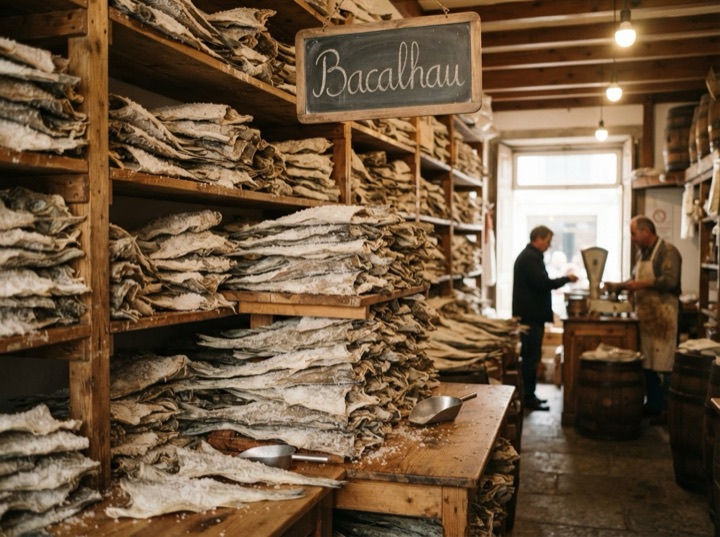
Why Do Portuguese Eat BacalhauThe Story of the Faithful Friend
Why do Portuguese eat bacalhau when no cod swims off Portugal? Salt, Catholic fasting, Newfoundland fleets and the Estado Novo, explained simply.