Portuguese CorkWhy It's Special and How to Use It
Why Portugal produces about half the world's cork, how cork is harvested every nine years, and how to choose and care for cork placemats and trivets.
 By Mesa de Portugal Kitchen · Updated · 7 min read
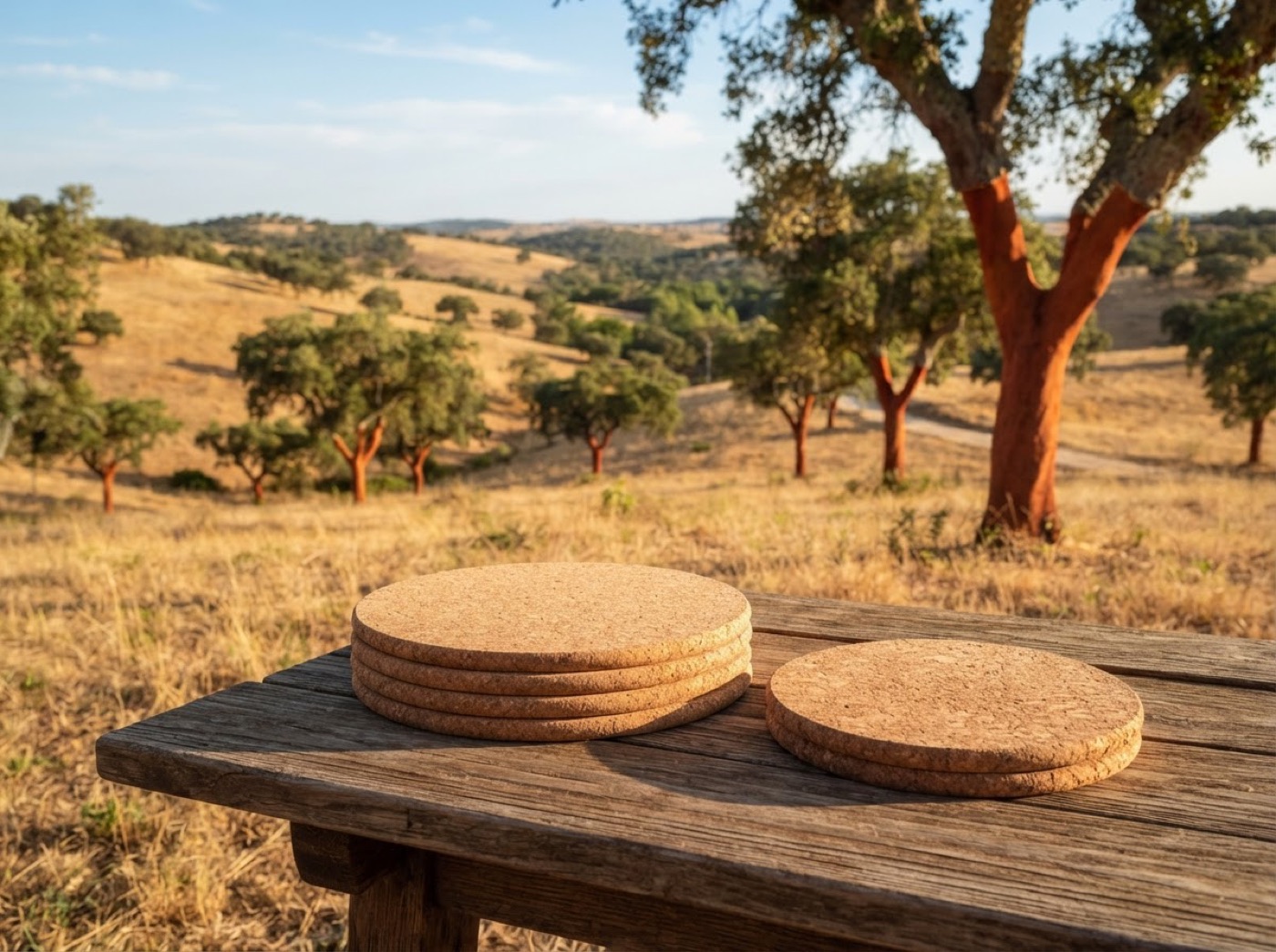
Portuguese cork is the bark of the cork oak, peeled by hand every nine years without cutting the tree down. Portugal produces about half of the world's cork, most of it from the Alentejo. In the kitchen it makes light, heat-resistant placemats, trivets and boards that protect your table from a hot cataplana or clay pot. Wipe them clean and never soak them.
Cork is one of those things Portugal quietly dominates. It's also one of the few natural materials you can harvest again and again from a living tree, which is why it has become a symbol of the country's countryside as much as its wine.
Why does Portugal produce so much cork?
The cork oak, sobreiro in Portuguese, grows naturally around the western Mediterranean, but it thrives in the hot, dry summers and poor soils of southern Portugal. Portugal has about a third of the world's cork oak forest, and according to the Portuguese Cork Association (APCOR) it produces roughly half of the world's cork, around 49–50% depending on the year. Spain is the next biggest producer. Portugal is also the largest exporter of cork products by a wide margin.
The trees grow in the montado: open woodland of scattered oaks over pasture, where pigs, sheep and cattle graze below. It covers huge areas of the Alentejo and parts of the Ribatejo and Algarve, and it's one of the most distinctive landscapes in the country. In 2011 Portugal's parliament named the cork oak the national tree. Cutting down cork oaks is tightly restricted by law.
How cork is harvested
Harvesting cork, descortiçamento, is a skilled manual job that machines haven't replaced.
- The tree has to be old enough. A cork oak is around two decades old, or more, before its trunk is thick enough for the first harvest.
- The season. Harvesting happens in late spring and summer, roughly May to August, when the tree is actively growing and the bark comes away cleanly.
- The cut. Workers use a special axe to cut the bark without touching the living layer beneath. Damage that layer and the tree is harmed. They then prise the bark off in large curved planks.
- The number. The trunk is painted with the last digit of the year, so everyone knows when it was harvested.
- The wait. By Portuguese law, at least nine years must pass before the same tree is harvested again. A cork oak can live for around 200 years, so one tree gives many harvests.
The first harvest, called virgem (virgin cork), is rough and uneven. So is the second. Only from the third harvest is the cork smooth and even enough for wine stoppers, which is why the best bottle corks come from trees that have been worked for decades. Earlier harvests and offcuts go into granulated cork: the material for most placemats, trivets, boards and flooring.
Why cork works in the kitchen
- It's a natural insulator. Cork is full of tiny air cells, so it doesn't pass heat on. A hot pan won't mark the table underneath.
- It's light. Easy to carry, store and move around.
- It grips. Cork is slightly soft and textured, so dishes don't slide.
- It's quiet. Plates and pans don't clatter.
- It's renewable. The tree isn't cut down to make it.
Portuguese cork placemats
Cork placemats are the simplest way to bring Portuguese cork to the table, and they suit any tableware, from Costa Nova stoneware to Bordallo cabbage plates. Look for:
- Thickness. Around 5 mm or more takes hot plates comfortably. Thin mats curl over time.
- Dense granules. Fine, tight granules hold together longer than coarse, crumbly ones.
- Made in Portugal. Many cork products abroad are made elsewhere from imported cork. "Made in Portugal" or "Portuguese cork" should be in the listing.
- Shape. Round and rectangular are classic. Oval mats fit long tables and bigger plates.
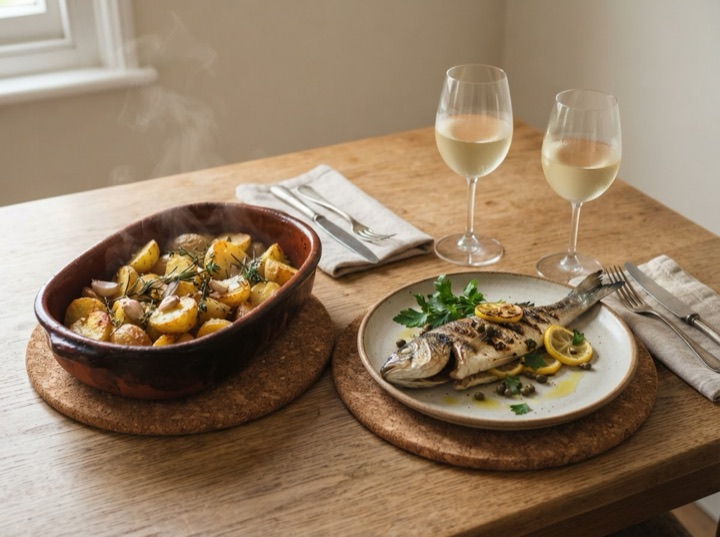
Casafina Portuguese cork placemats, set of 4
Portugal produces about half the world's cork. These heat-safe placemats take a hot cataplana or clay pot.
Tip: Wipe clean with a damp cloth. Don't soak them.
Cork trivets and pot stands
A trivet is the most useful cork object in a Portuguese kitchen, because so much Portuguese food comes to the table in the pan it was cooked in. A cataplana, a clay pot of feijoada or a tray of bacalhau com natas all need somewhere to land.
- Size. At least 20 cm across for a cataplana or a big casserole.
- Thickness. 1 cm or more for pans straight off the hob or out of a 200 °C oven.
- Tile-topped trivets. An azulejo tile set into cork gives you a hard, wipeable surface with cork underneath. They look like Lisbon and take a hot pot well.
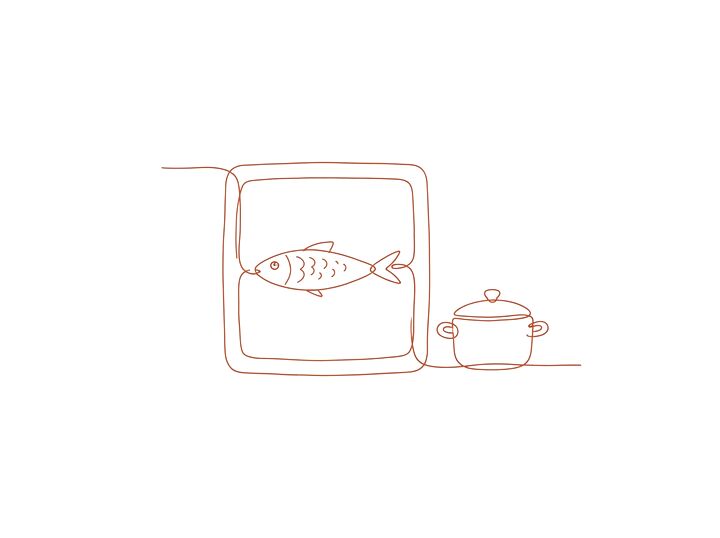
Azulejo tile trivets on Portuguese cork
Portuguese azulejo tiles set on cork, with a sardine design. Takes a hot pan off the heat and looks like Lisbon.
Tip: 20 cm across, big enough for a cataplana.
Cork is heat resistant, not fireproof. Fine for hot pans and dishes, but don't put a pan that's been sitting empty on a high flame straight onto it, and keep it well away from the flames of a chouriço assador.
How to care for cork
- Wipe, don't soak. Use a damp cloth with a drop of washing-up liquid, then a clean damp cloth. Soaking makes cork swell and the granules loosen.
- No dishwasher. The heat and water break down the binder.
- Dry flat. Stand them on edge or lay them flat to dry fully before stacking. Damp cork can grow mould.
- Grease marks. Rub a little bicarbonate of soda paste on the stain, leave it for 10 minutes, then wipe off. Cork darkens with use, and that's normal.
- Sun. Strong sunlight fades cork over time. Store mats in a drawer.
- Smells. If a mat picks up a smell, leave it in fresh air for a day.
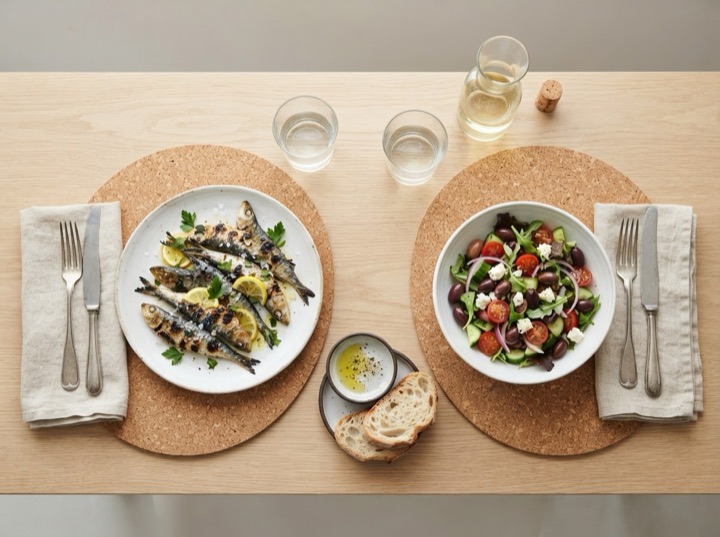
Casafina Portuguese cork oval placemats, set of 4
Natural Portuguese cork placemats that take hot plates and look good with any tableware.
Tip: Wipe clean, don't soak.
Other Portuguese cork worth knowing
Beyond the kitchen, Portugal makes cork bags, wallets, notebooks, coasters, yoga blocks, flooring and even fabric-like cork leather. In Lisbon and the Algarve there are whole shops dedicated to it. Cork coasters and a trivet make easy, light presents to carry home. Our guides to Portuguese gifts under €30 and Portuguese housewarming gifts have more ideas, and our Portuguese kitchen essentials covers the rest of the kit. And yes, the corks in Portuguese wine are worth keeping: our Portuguese wine for beginners guide will help you choose what's inside.
What you’ll need
Links go to Amazon, where you can check today’s price. If you buy, we earn a small commission at no extra cost to you.
Casafina Portuguese cork placemats, set of 4
Portugal produces about half the world's cork. These heat-safe placemats take a hot cataplana or clay pot.
Tip: Wipe clean with a damp cloth. Don't soak them.
Casafina Portuguese cork oval placemats, set of 4
Natural Portuguese cork placemats that take hot plates and look good with any tableware.
Tip: Wipe clean, don't soak.
Azulejo tile trivets on Portuguese cork
Portuguese azulejo tiles set on cork, with a sardine design. Takes a hot pan off the heat and looks like Lisbon.
Tip: 20 cm across, big enough for a cataplana.
Frequently asked
Why is cork from Portugal?
Does harvesting cork kill the tree?
How often is cork harvested in Portugal?
Are cork placemats heat resistant?
How do you clean cork placemats?
Recipes from this story
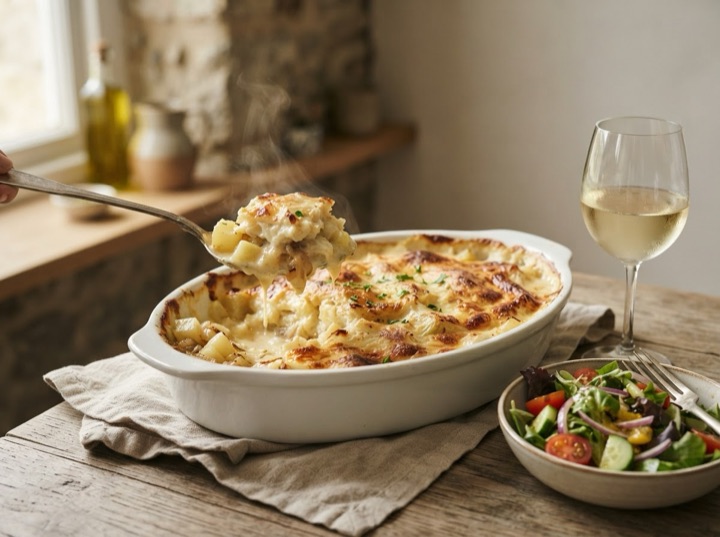 Traditional
Bacalhau com NatasCreamy Baked Salt Cod
Flaked salt cod, golden potatoes and onions baked in a creamy sauce until bubbling. The comforting bacalhau dish of Portuguese family lunches.
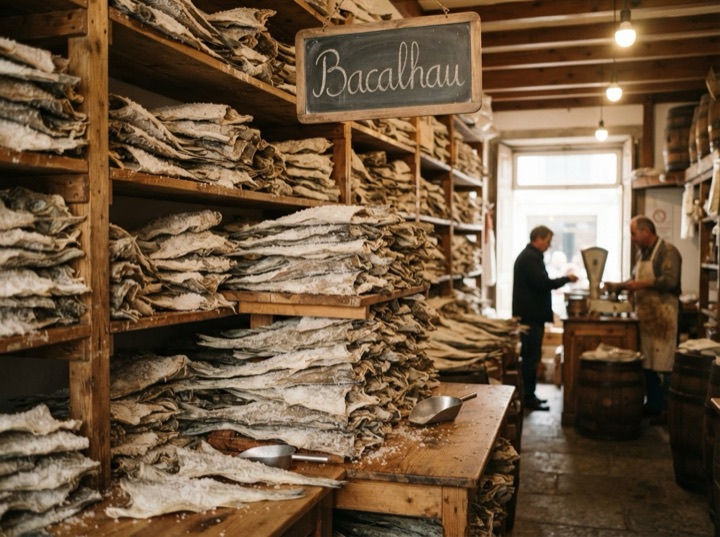 Food culture
Why Do Portuguese Eat BacalhauThe Story of the Faithful Friend
Why do Portuguese eat bacalhau when no cod swims off Portugal? Salt, Catholic fasting, Newfoundland fleets and the Estado Novo, explained simply.
 Eat like a local
What to Eat in SintraTravesseiros, Queijadas and the Coast
What to eat in Sintra: travesseiros and queijadas, Colares wine, and grilled fish on the nearby coast, plus tips to eat well on a Sintra day trip.