Portuguese Kitchen EssentialsThe Starter Kit
The tools a Portuguese kitchen relies on, from cataplana and clay chouriço grill to cork trivets and good azeite, and which ones you can skip at first.
 By Mesa de Portugal Kitchen · Updated · 4 min read
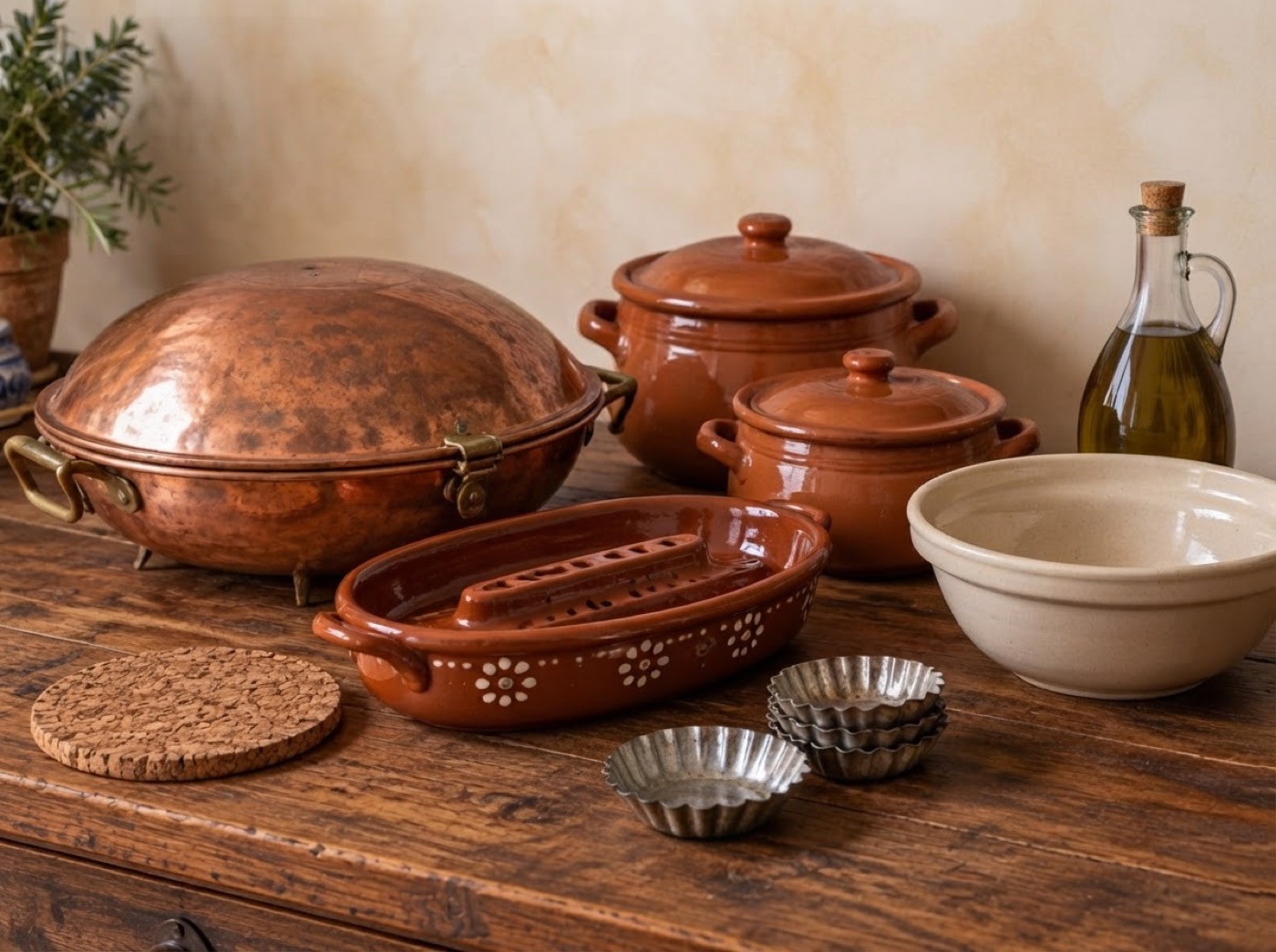
Open a cupboard in a Portuguese home and you'll find a few things you won't see elsewhere: a clam-shaped copper pan, a clay dish with a slotted top, a stack of terracotta bowls and a cork board under everything hot. You don't need all of it to cook Portuguese food well. Here's what each piece does and the order we'd buy them in.
1. Good olive oil (start here)
Portuguese cooking runs on azeite. It goes into almost everything and is poured over at the end. One good bottle for finishing (an Alentejo or Trás-os-Montes extra virgin) and a cheaper one for cooking will improve every recipe on this site more than any pan.
2. A cataplana
The Algarve's hinged clam-shell pan. It steams seafood, pork and fish stews in their own juices and opens dramatically at the table. If you only buy one Portuguese pan, buy this one. Our cataplana buying guide helps you choose between copper and steel.
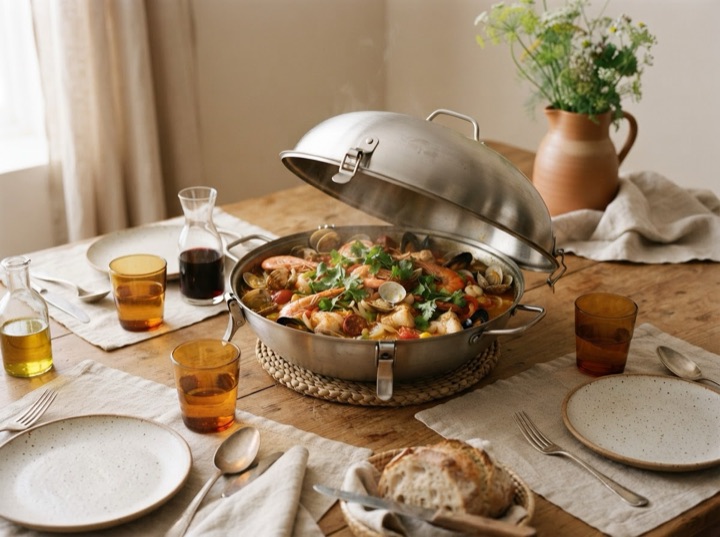
Artame stainless steel cataplana, 30 cm
The family size: enough cataplana de marisco for four, carried to the table and opened in a cloud of steam.
Tip: Check it fits your largest burner before you buy.
3. A clay chouriço grill (assador de barro)
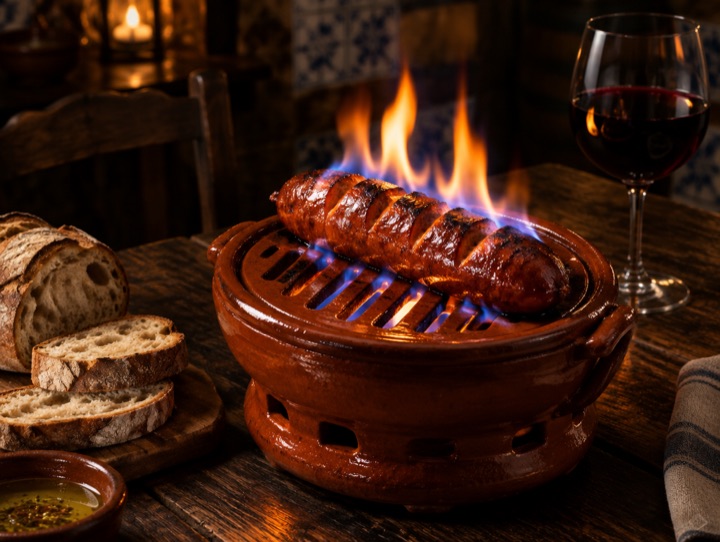
Glazed clay with a curved, slotted top. Pour in aguardente, light it and grill chouriço at the table. It's cheap, it's fun, and it gets used every time friends come round. See chouriço assado.
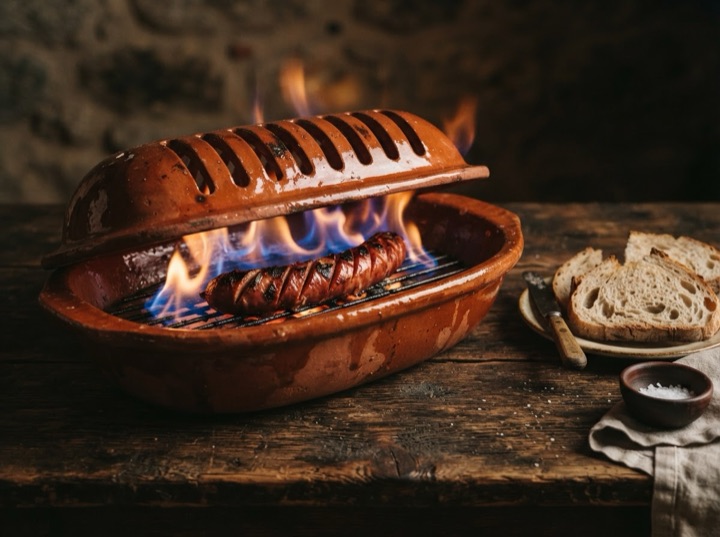
Portuguese clay chouriço grill (assador)
The glazed terracotta dish with a slotted top for flaming chouriço at the table. Most Portuguese homes have one in a cupboard.
Tip: The medium size fits a standard chouriço. Use it on a cork board or tiles, never near curtains.
4. Clay casseroles (tachos de barro)
For rice dishes such as arroz de pato, feijoada, and anything you want to serve in the pot it was cooked in. Check whether yours is safe on the hob. Many clay pots are made for the oven only, and on glass-ceramic hobs you'll need a heat diffuser.
5. Pastel de nata tins
A muffin tray works, but the small fluted tins give thinner, crisper pastry, closer to what you get in a pastelaria. They're cheap and last forever. Try them with our air fryer pastéis de nata.
6. Cork trivets
Portugal produces about half of the world's cork, and cork boards sit under hot cataplanas and clay pots in most Portuguese homes. They're heat-resistant, light, cheap and good-looking.
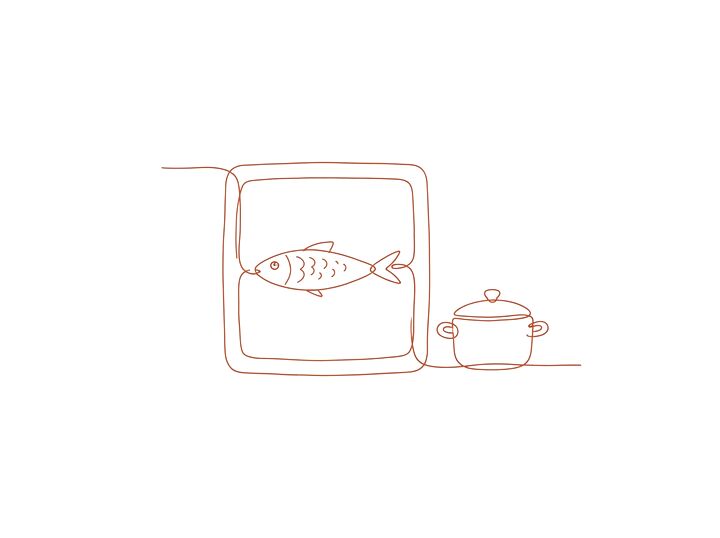
Azulejo tile trivets on Portuguese cork
Portuguese azulejo tiles set on cork, with a sardine design. Takes a hot pan off the heat and looks like Lisbon.
Tip: 20 cm across, big enough for a cataplana.
What you can skip at first
You don't need a special bacalhau soaking tub (any big bowl works), a sardine grill basket (a hot griddle pan will do), or a fancy mortar and pestle. Start with the oil and the cataplana, cook a few recipes, and buy the rest as you need it.
What you’ll need
Links go to Amazon, where you can check today’s price. If you buy, we earn a small commission at no extra cost to you.
Artame stainless steel cataplana, 30 cm
The family size: enough cataplana de marisco for four, carried to the table and opened in a cloud of steam.
Tip: Check it fits your largest burner before you buy.
Portuguese clay chouriço grill (assador)
The glazed terracotta dish with a slotted top for flaming chouriço at the table. Most Portuguese homes have one in a cupboard.
Tip: The medium size fits a standard chouriço. Use it on a cork board or tiles, never near curtains.
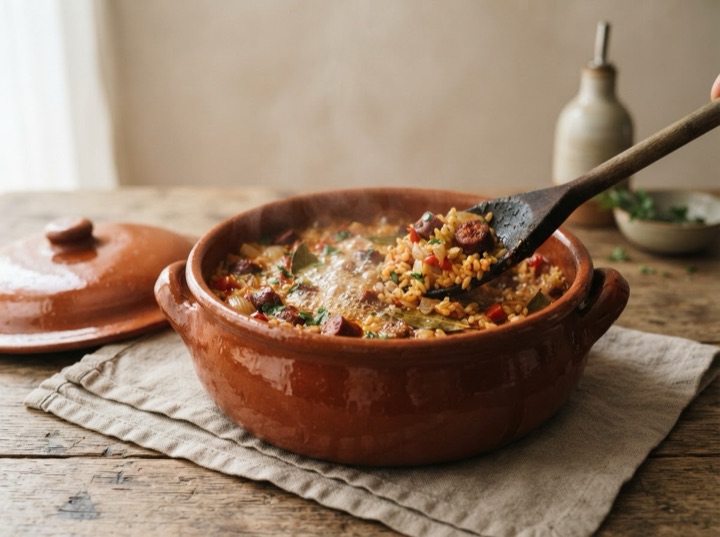
Portuguese hand-painted clay cooking pot
For rice dishes, feijoada and anything that goes from the oven straight to the table.
Tip: Check the listing for stovetop use. Many clay pots are oven-only or need a heat diffuser.
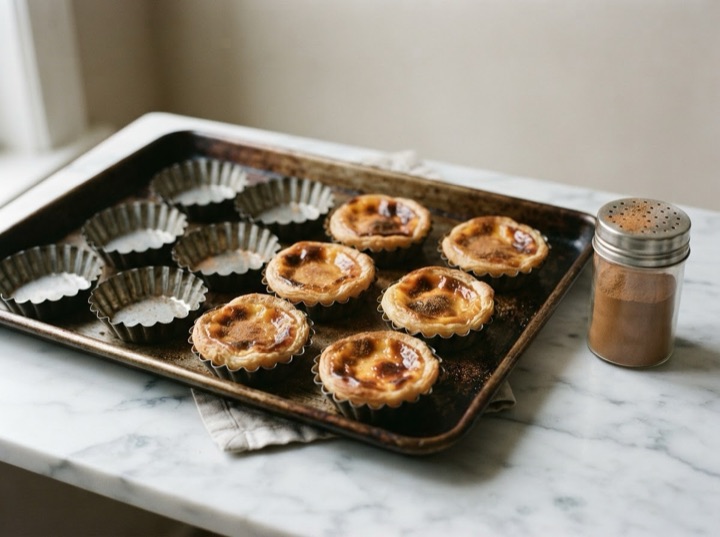
Pastel de nata tins, made in Portugal
The small fluted tins that give natas their thin, crisp base, made in Portugal like the ones pastelarias use.
Tip: Don't wash them in the dishwasher. Wipe them clean and they'll season over time.
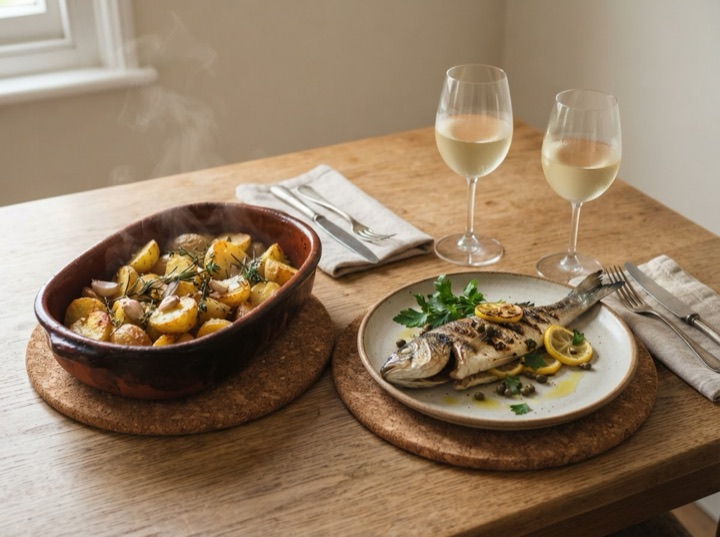
Casafina Portuguese cork placemats, set of 4
Portugal produces about half the world's cork. These heat-safe placemats take a hot cataplana or clay pot.
Tip: Wipe clean with a damp cloth. Don't soak them.
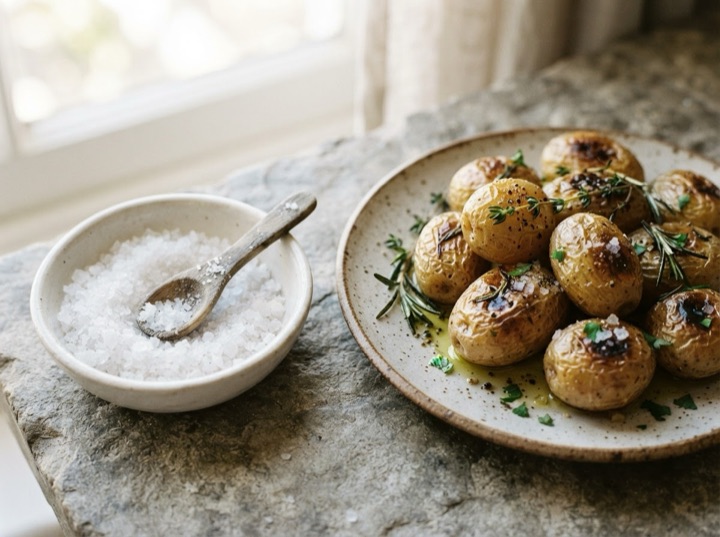
Algarve sea salt
Sea salt from the Algarve salt pans, for coarse-salt roasting batatas a murro and for finishing grilled fish.
Tip: A little goes a long way. Use it for finishing, not boiling water.
Frequently asked
What do you need to cook Portuguese food at home?
What is an assador de barro?
Can you use Portuguese clay pots on the hob?
Do you need special tins to make pastéis de nata?
Why do Portuguese kitchens use cork trivets?
Recipes from this story
 Air Fryer
Chouriço Assado Two WaysClay Grill or Air Fryer
Flame-grilled Portuguese chouriço in a clay assador, the way it's done at the table in Portugal, plus a no-fire air fryer version for weeknights.
 Air Fryer
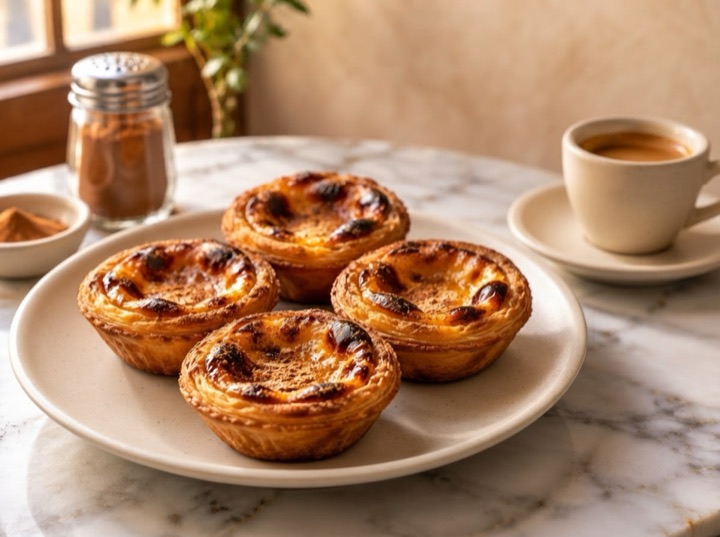
Pastéis de Nata in the Air Fryer
Homemade Portuguese custard tarts with shop-bought puff pastry, baked in the air fryer. Honest tips on getting the blistered tops without a 300 °C oven.
 Food culture
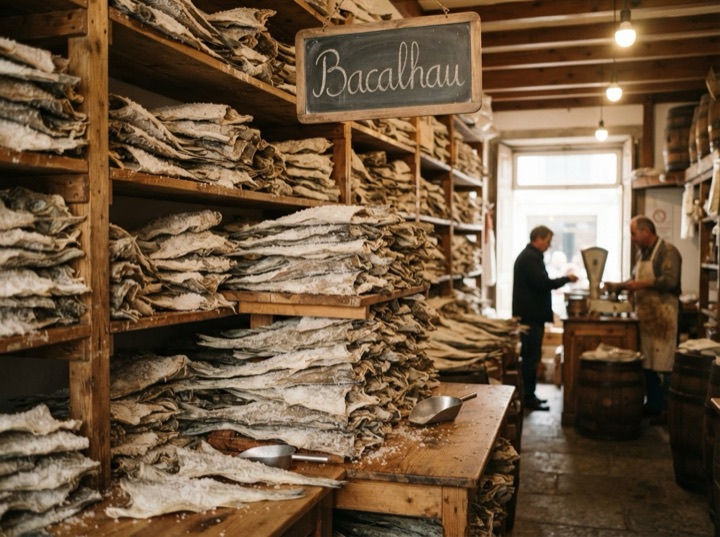
Why Do Portuguese Eat BacalhauThe Story of the Faithful Friend
Why do Portuguese eat bacalhau when no cod swims off Portugal? Salt, Catholic fasting, Newfoundland fleets and the Estado Novo, explained simply.