Portuguese Clay Pot CookingCuring, Heat and Care
How to use a Portuguese clay pot: red vs black clay, curing a new pot, using it on gas or electric, cleaning it, and the best dishes to cook in it.
 By Mesa de Portugal Kitchen · Updated · 8 min read
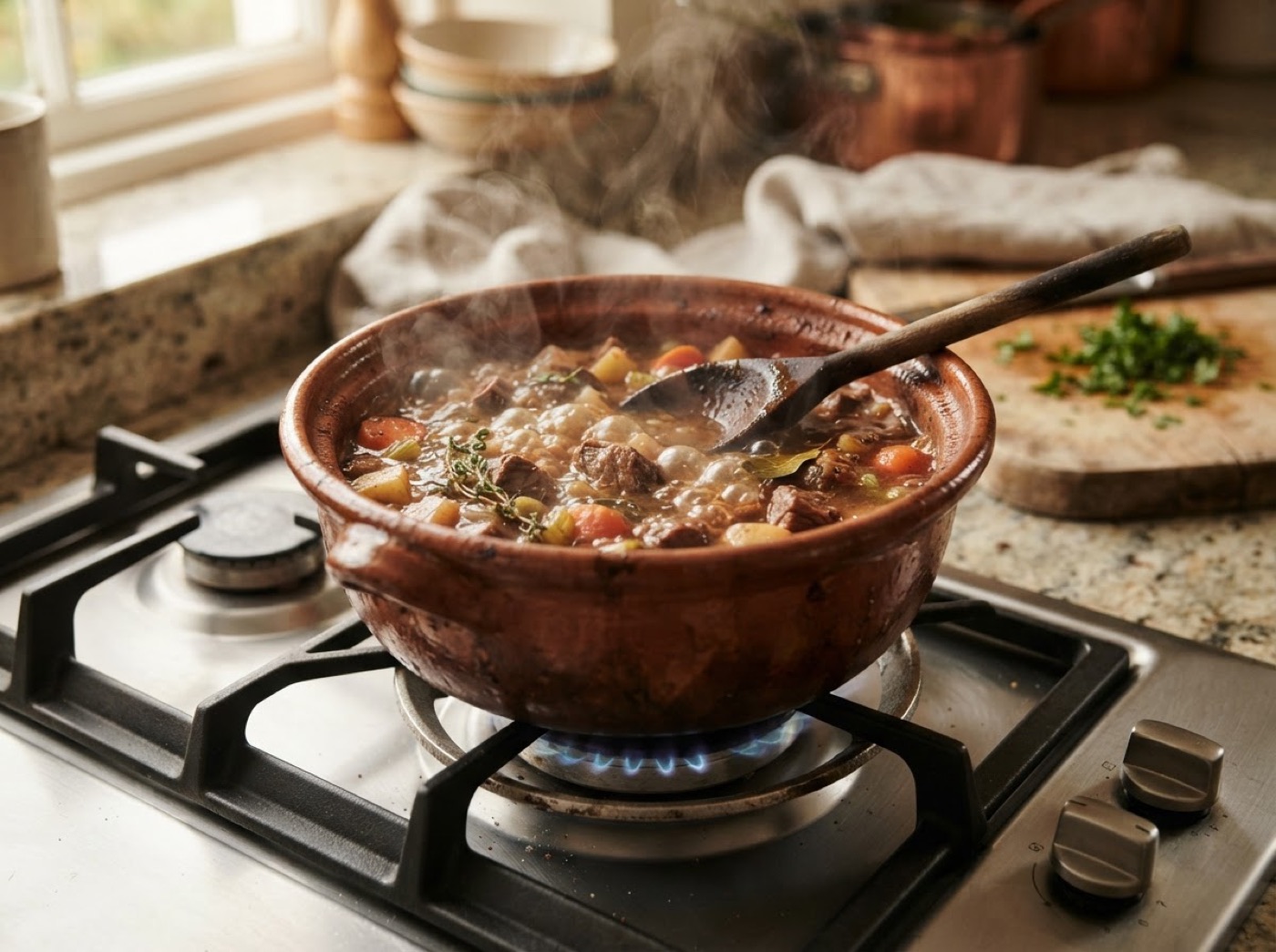
A Portuguese clay pot is a glazed or unglazed terracotta dish for slow stews, rice and roasts that go straight from the oven to the table. Before the first use, soak it and cure it. After that, heat it slowly, never put it on induction, avoid sudden temperature changes, and wash it without soap if it's unglazed. Treated like that, it lasts for years.
Clay is the oldest cooking material in Portugal and it never went away. Every market from Barcelos to Loulé has a stall of barro (clay) pots, and many Portuguese kitchens still keep one for the Sunday stew.
Red clay or black clay?
There are two big families of Portuguese cooking pottery, and they behave slightly differently.
Barro vermelho (red clay)
The orange-red terracotta you see everywhere. It's usually glazed inside, often hand-painted outside, and made in pottery towns across the country, especially in the Minho around Barcelos and in the Alentejo, where São Pedro do Corval near Reguengos de Monsaraz is one of the biggest pottery centres in Portugal. Glazed red clay is the easiest to live with: it doesn't absorb flavours much and it's simple to clean.
Barro preto (black clay)
Black pottery is fired in a way that starves it of oxygen, which turns the clay a deep, smoky black. The best-known comes from Bisalhães, near Vila Real in Trás-os-Montes, where the making process was added to UNESCO's list of heritage in need of urgent safeguarding in 2016. Black clay pots are often unglazed, so they're more porous and need more care. They're the traditional pot for slow, wine-rich dishes from the centre and north.
How to cure a new clay pot
Curing (the Portuguese say curar o barro) seals the pores, toughens the pot and helps stop it cracking the first time it meets heat. Different families do it differently, but the basic steps are the same.
- Soak it. Submerge the pot and lid in cold water for at least 6 hours, ideally overnight. You'll see small bubbles as the clay drinks.
- Dry it. Let it air dry completely, for a few hours or until the next day.
- Rub it. Rub the inside (and any unglazed outside) with a cut clove of garlic, then a thin coat of olive oil.
- First gentle heat. Fill it about two-thirds with water, put it in a cold oven, then set the oven to 150 °C and leave it for an hour or two. Turn the oven off and let the pot cool inside it.
After that it's ready. Unglazed pots benefit from a quick soak of 15–20 minutes before each use for the first few months.
Using a clay pot on gas, electric or in the oven
The rule is simple: heat slowly and evenly. Clay cracks from thermal shock, not from heat itself.
- Oven. The safest place. Put the pot in a cold oven and let them heat up together. 180–200 °C covers almost every Portuguese stew and rice dish.
- Gas. Only if the listing says the pot is stovetop safe. Use a heat diffuser (a flat metal plate that sits between the flame and the pot) and start on the lowest flame, raising it gradually over 10 minutes. Never let a flame lick a dry pot.
- Electric and ceramic hobs. Again, only stovetop-rated pots, again with a diffuser, and start low. The diffuser stops the clay sitting directly on a red-hot ring.
- Induction. No. Clay isn't magnetic, so it won't heat. Use the oven instead.
Mistakes that crack clay pots
- Putting a cold pot into a hot oven, or a hot pot onto a cold, wet worktop. Put it on a wooden board, a folded tea towel or a cork mat.
- Pouring cold liquid into a hot pot. Warm the stock or wine first.
- Heating it empty on the hob.
- Going straight to high heat to "save time".
What to cook in a Portuguese clay pot
Clay holds heat and releases it gently, so it's made for long, slow dishes that are served in the pot.
- Chanfana. Goat (traditionally older goat) slow-cooked in red wine with garlic, bay and paprika in black clay pots, a speciality of the Coimbra and Bairrada area. It goes in a low oven for hours and comes out falling apart.
- Arroz de pato. Duck rice finished in the oven so the top turns crisp with slices of chouriço. Our arroz de pato recipe works beautifully in a wide clay dish.
- Feijoada. Beans and pork simmered until thick. Try the northern version, feijoada à transmontana, in a deep pot with a lid.
- Carne de porco à alentejana. Brown the pork in a pan, then finish it with the clams in the clay pot at the table. See the recipe.
- Oven rice dishes. Arroz de pato is the famous one, but plenty of others suit clay. Our guide to Portuguese rice dishes has more ideas.
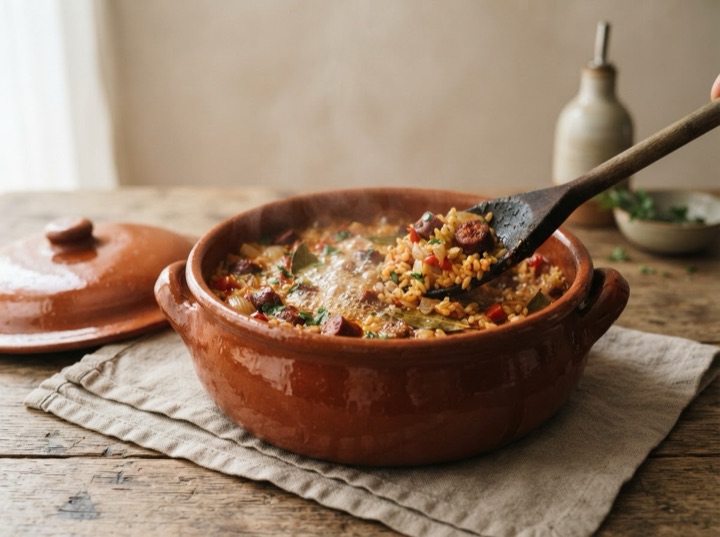
Portuguese hand-painted clay cooking pot
For rice dishes, feijoada and anything that goes from the oven straight to the table.
Tip: Check the listing for stovetop use. Many clay pots are oven-only or need a heat diffuser.
A wide, shallow cazuela is the better shape for rice dishes that need a crust. A deep pot with a lid is better for stews and beans. If you only buy one, go wide.
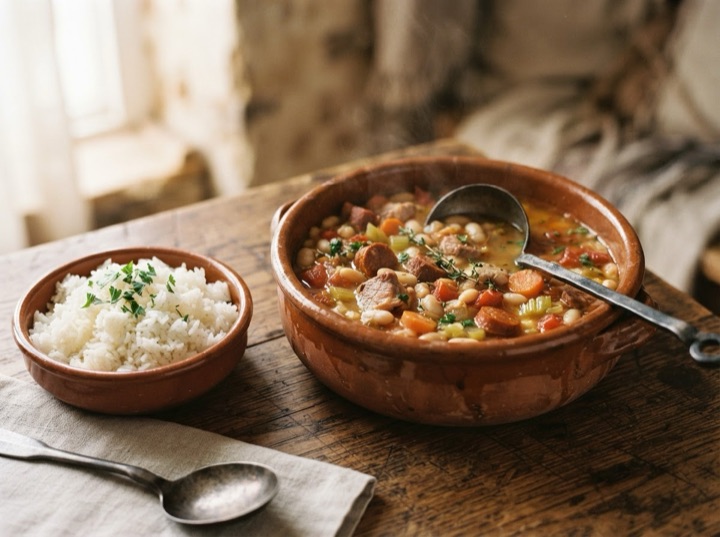
Hand-painted Portuguese clay cazuela
A hand-painted terracotta pot from a Portuguese pottery, for rice dishes, stews and serving.
Tip: Check the listing for stovetop use, and use a heat diffuser.
How to clean a clay pot
- Let it cool first. Never run cold water into a hot pot.
- Glazed pots: warm water, a drop of washing-up liquid and a soft brush are fine.
- Unglazed pots: skip the soap, because the porous clay absorbs it and your next stew will taste of it. Use hot water and a stiff brush. For stuck-on food, fill with hot water and a spoonful of bicarbonate of soda, leave for an hour, then scrub.
- No dishwasher for hand-painted or unglazed pieces, unless the maker says otherwise.
- Dry it fully, upside down, before you put it away. A pot stored damp can grow mould.
- Store with the lid off or resting on a folded paper towel so air can move.
A darkening glaze and a few hairline crazes on the surface are normal and part of the character. A crack you can feel with a fingernail, or one that leaks, means the pot should retire to the shelf.
Other Portuguese clay you'll meet
The same tradition gives you the assador, the slatted clay dish for flaming chouriço at the table. If you have one, our guide on how to use a chouriço assador covers doing it safely.
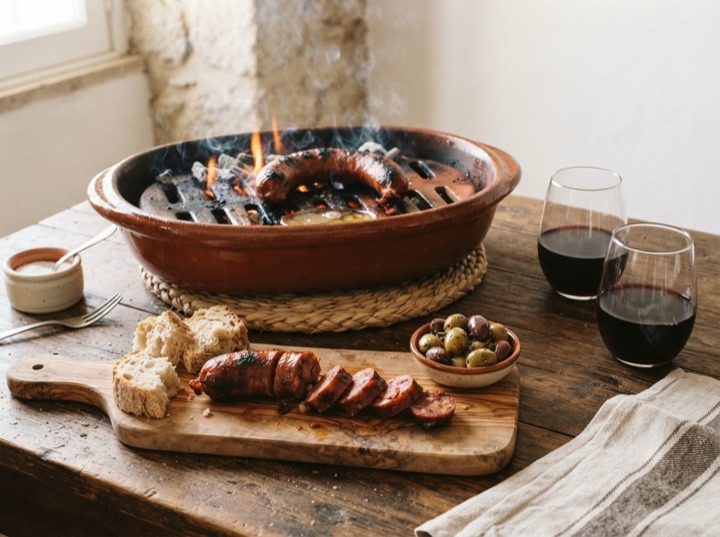
Portuguese clay chouriço roaster, large
The large size of the classic made-in-Portugal assador, for a full chouriço plus a few extra slices.
Tip: Use on a heatproof surface, away from anything flammable.
For more cookware that earns its place in a Portuguese kitchen, see our Portuguese kitchen essentials. And if you're choosing between clay and the Algarve's copper clam-shell pan, read how to use a cataplana.
What you’ll need
Links go to Amazon, where you can check today’s price. If you buy, we earn a small commission at no extra cost to you.
Portuguese hand-painted clay cooking pot
For rice dishes, feijoada and anything that goes from the oven straight to the table.
Tip: Check the listing for stovetop use. Many clay pots are oven-only or need a heat diffuser.
Hand-painted Portuguese clay cazuela
A hand-painted terracotta pot from a Portuguese pottery, for rice dishes, stews and serving.
Tip: Check the listing for stovetop use, and use a heat diffuser.
Portuguese clay chouriço roaster, large
The large size of the classic made-in-Portugal assador, for a full chouriço plus a few extra slices.
Tip: Use on a heatproof surface, away from anything flammable.
Frequently asked
Do you need to soak a clay pot before every use?
Can a Portuguese clay pot go on the stove?
Can I use a clay pot on an induction hob?
Why did my clay pot crack?
Can you wash a clay pot with soap?
Recipes from this story
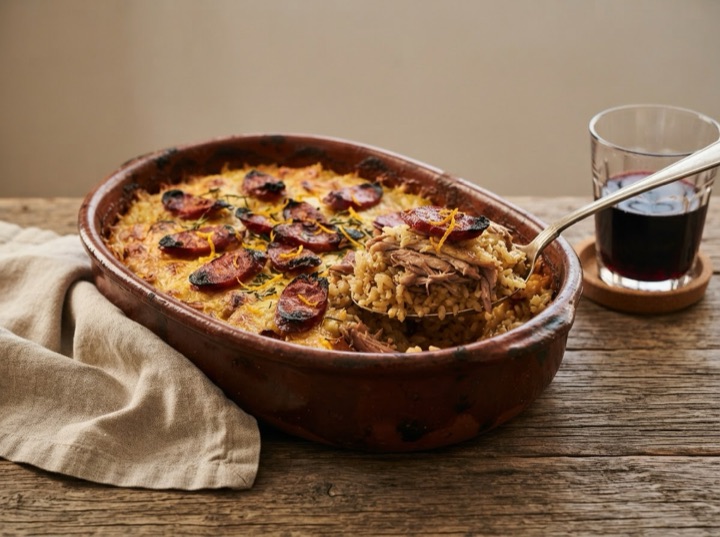 Traditional
Arroz de PatoPortuguese Duck Rice
Slow-cooked duck, rice simmered in its rich broth, chouriço and a crisp golden top from the oven. The Sunday-lunch dish of northern Portugal.
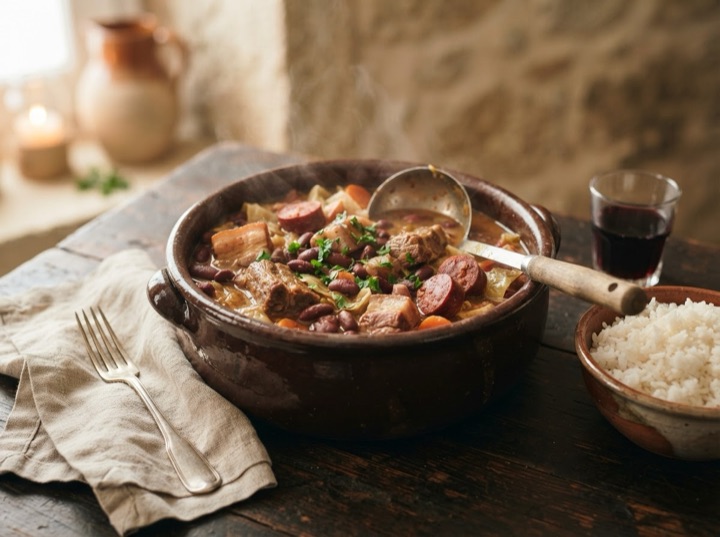 Traditional
Feijoada à TransmontanaBean and Pork Stew
Red beans slow-cooked with pork, chouriço, cabbage and carrots, the hearty winter stew of Trás-os-Montes. A home version that skips the hard-to-find cuts.
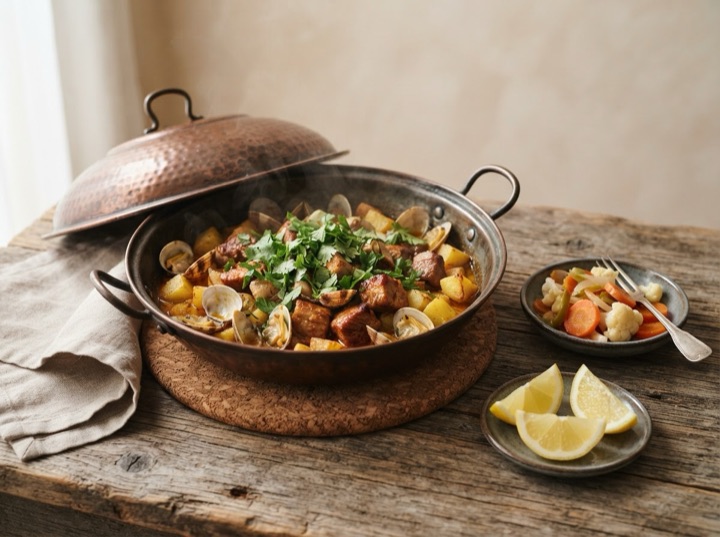 Traditional
Carne de Porco à AlentejanaPork and Clams
Pork marinated in wine, garlic and red pepper paste, tossed with clams, crisp potatoes and coriander. Portugal's great surf-and-turf, cooked in a cataplana.