How to Use a CataplanaStep by Step, Heat and Timing
How to use a cataplana: layering, heat level, how long to cook, when to shake it, opening it safely at the table, and cleaning copper vs steel.
 By Mesa de Portugal Kitchen · Updated · 7 min read
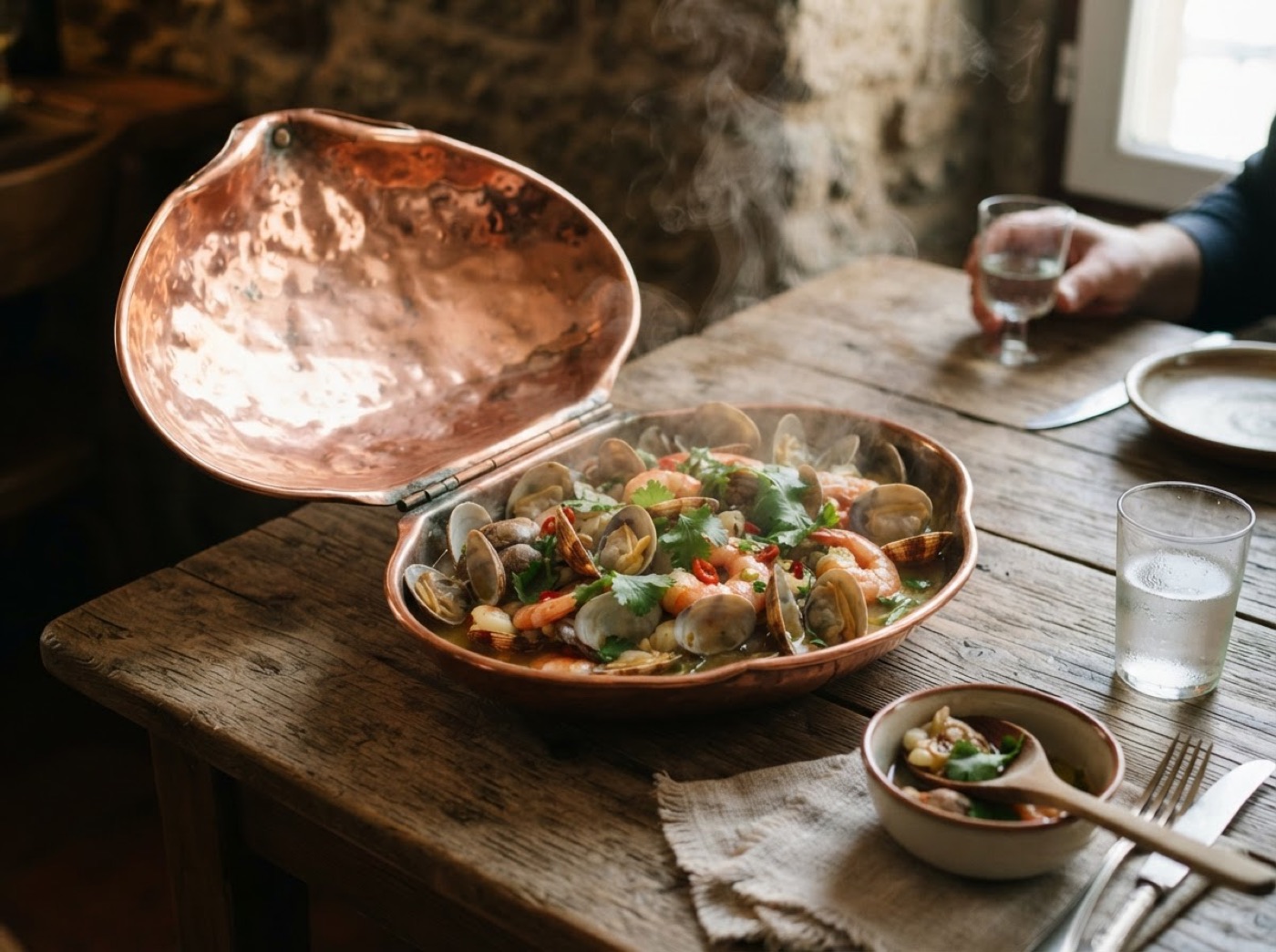
To use a cataplana, soften onion and garlic in olive oil in the bottom half, layer the rest of the ingredients with the slowest-cooking at the bottom, add a splash of wine, then clamp the lid shut and cook over medium heat for 10–20 minutes, shaking once or twice. Carry it to the table, set it on a heatproof mat and open it away from you.
That's the whole technique. The rest is detail, and the detail is what makes the difference between a cataplana that steams beautifully and one that burns on the bottom or comes out watery.
Before the first use
New cataplanas come with a coating of factory oil or polish. Wash both halves in warm soapy water, rinse and dry. For a copper cataplana with a tin lining, check the lining is smooth and unbroken. If you haven't bought one yet, our cataplana buying guide covers materials and sizes, so this post sticks to cooking.
Check how it sits on your hob. Traditional rounded cataplanas wobble on flat rings and may need a wok ring or a heat diffuser. Flat-based stainless steel ones sit straight on gas, electric and, if magnetic, induction.
How to use a cataplana, step by step
1. Start with a base layer of fat and aromatics
Put the open bottom half on the hob over medium heat with 4–5 tablespoons of olive oil. Add sliced onion and cook for about 5 minutes until soft, then garlic and any sliced chouriço or presunto for a couple of minutes more. This layer protects everything above it and flavours the juice.
2. Layer from slow to fast
The cataplana works because everything steams in one sealed space, so the order matters.
- Bottom: onion, peppers, tomato slices. They become the sauce.
- Middle: anything that needs longest, like potato slices, pork cubes or firm fish.
- Top: clams, mussels, prawns and soft fish. They need the least time and sit in the steam.
- Last: a handful of coriander and a bay leaf.
3. Add a little liquid, not a lot
A splash of white wine, about 100–150 ml for a 30 cm pan, is enough. The tomatoes, onions and shellfish release a lot of juice. Too much liquid and you boil the food rather than steam it.
4. Close it and fasten the clamps
Swing the top down and lock the clips on both sides. A tight seal keeps the steam in. If a little steam escapes at the rim, that's normal. A lot means the clamps need tightening.
5. Get the heat right
Medium heat, not high. Once closed you can't see inside, so high heat is how people burn the onion layer. On gas, the flame should stay under the base, not climb up the sides. On a small burner with a large cataplana, use a diffuser to spread the heat.
6. Shake it once or twice
Hold both handles (with a tea towel or oven gloves) and give it a firm shake halfway through. With copper cataplanas some cooks turn the whole pan over for a minute so the juice runs through the top layer. Only do that if your clamps are strong and the pan is designed for it.
How long to cook in a cataplana
Timing starts from when you close the lid.
- Clams and prawns (cataplana de marisco): 10–12 minutes.
- Mixed fish and shellfish: 12–15 minutes.
- Fish with sliced potatoes: 15–20 minutes. Slice the potatoes thinly, about 5 mm, or par-boil them first.
- Pork and clams: brown the marinated pork in the open bottom half first, then add the clams on top and close for 8–10 minutes. Our recipe for carne de porco à alentejana works in a cataplana this way.
You can open it quickly to check. Clams that have opened are done. If most are still shut, close it and give it 2–3 more minutes.
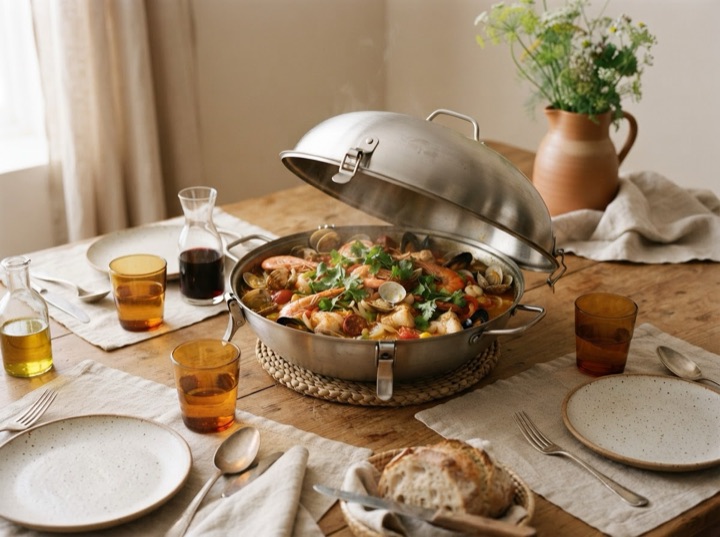
Artame stainless steel cataplana, 30 cm
The family size: enough cataplana de marisco for four, carried to the table and opened in a cloud of steam.
Tip: Check it fits your largest burner before you buy.
Opening the cataplana at the table
This is the moment people remember, so do it well and do it safely.
- Put a heatproof mat or cork board on the table before you carry the pan out.
- Carry it with both hands, using gloves or a thick tea towel. Copper handles get very hot.
- Undo the clamps.
- Lift the lid away from you, hinge side towards you, so the steam goes towards the middle of the table, not into your face or your guests'.
- Scatter over fresh coriander and serve straight from the bottom half with a ladle.
Azulejo tile trivets on Portuguese cork
Portuguese azulejo tiles set on cork, with a sardine design. Takes a hot pan off the heat and looks like Lisbon.
Tip: 20 cm across, big enough for a cataplana.
Common cataplana mistakes
- Too much liquid. Watery broth and rubbery prawns. Trust the vegetables.
- High heat. The bottom catches before the top has steamed.
- Overfilling. Leave a few centimetres of space under the lid for the steam to move.
- Clams not purged. Gritty sauce. Soak them in salted water for 1–2 hours first.
- Opening it too often. Each time you lose the steam and add minutes.
Cleaning a copper cataplana vs a stainless steel one
Copper (tin- or steel-lined)
- Let it cool completely.
- Wash by hand with warm water, mild washing-up liquid and a soft sponge. Never steel wool, never scourers, never the dishwasher.
- Dry inside and out straight away.
- To bring the outside back to a shine, rub with half a lemon dipped in salt, or a paste of lemon juice, salt and a little flour. Rinse and dry.
- A tin lining darkens with use. That's normal. If it wears through to the pinky copper underneath, stop cooking in it until it's re-tinned.
Stainless steel
- Dishwasher safe in most cases, but hand washing keeps the outside looking better.
- For burnt-on bits, fill the bottom with hot water and a spoonful of bicarbonate of soda, leave for 30 minutes, then wipe.
- Rainbow marks from heat come off with a little white vinegar.
Store either type with the lid open or resting slightly ajar, so no moisture gets trapped.
What else to cook in a cataplana
Once you've mastered seafood, try chicken with chouriço and peppers, cod with potatoes, or a vegetable version with chickpeas and spinach. The technique is identical. For the full classic, start with our cataplana de marisco, and read what to eat in the Algarve for the region it comes from. Building a whole menu around it? Our Portuguese dinner party menu has ideas for the courses either side.
What you’ll need
Links go to Amazon, where you can check today’s price. If you buy, we earn a small commission at no extra cost to you.
Artame stainless steel cataplana, 30 cm
The family size: enough cataplana de marisco for four, carried to the table and opened in a cloud of steam.
Tip: Check it fits your largest burner before you buy.
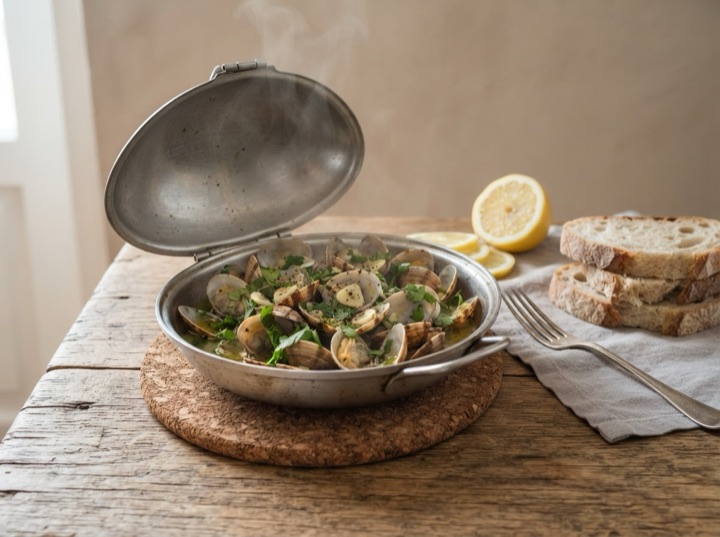
Artame stainless steel cataplana, 24 cm
A real cataplana from Artame, a Portuguese cookware maker. Stainless steel works on every hob, induction included. The right size for two.
Tip: Choose 24 cm for 2 people, 30 cm for 4.
Azulejo tile trivets on Portuguese cork
Portuguese azulejo tiles set on cork, with a sardine design. Takes a hot pan off the heat and looks like Lisbon.
Tip: 20 cm across, big enough for a cataplana.
Frequently asked
How long do you cook a cataplana?
Do you cook a cataplana on high heat?
Do you need to add water to a cataplana?
Can a cataplana go in the dishwasher?
Can you use a cataplana on induction?
Recipes from this story
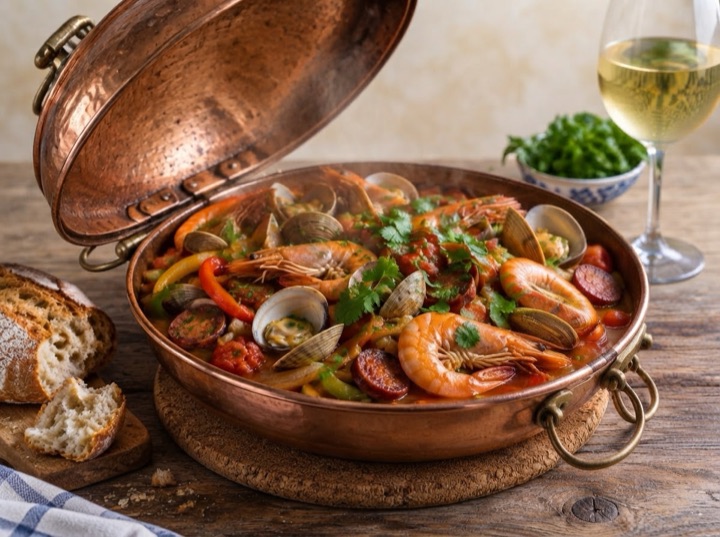 Traditional
Cataplana de MariscoAlgarve Seafood Stew
The Algarve's famous seafood stew, steamed shut in a cataplana: clams, prawns and chouriço in a tomato, wine and coriander broth. Ready in 40 minutes.
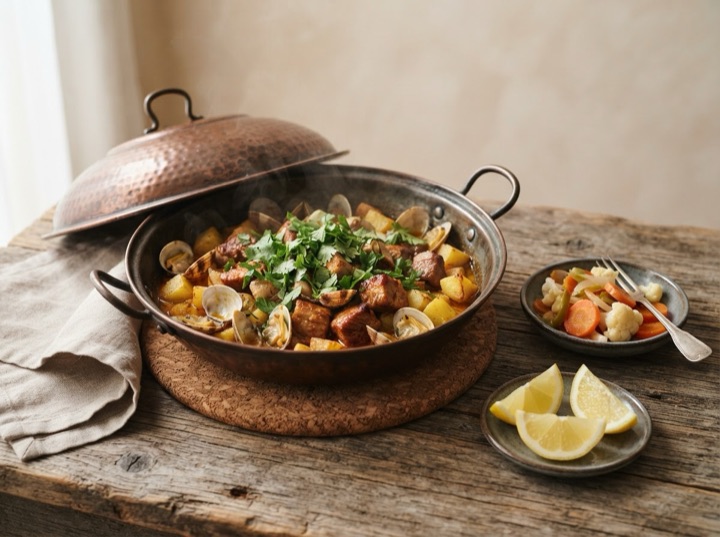 Traditional
Carne de Porco à AlentejanaPork and Clams
Pork marinated in wine, garlic and red pepper paste, tossed with clams, crisp potatoes and coriander. Portugal's great surf-and-turf, cooked in a cataplana.
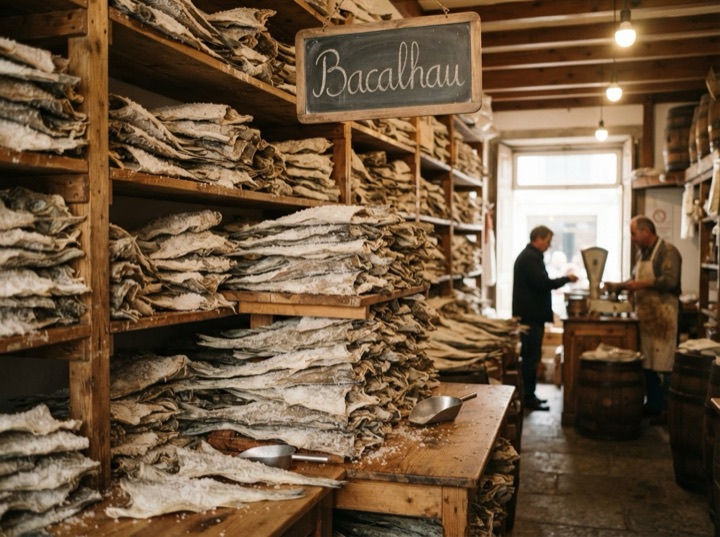 Food culture
Why Do Portuguese Eat BacalhauThe Story of the Faithful Friend
Why do Portuguese eat bacalhau when no cod swims off Portugal? Salt, Catholic fasting, Newfoundland fleets and the Estado Novo, explained simply.