Is Portuguese Food Healthy? An Honest Look at the Atlantic Diet
Is Portuguese food healthy? The good (fish, olive oil, soups, beans), the less good (fried food, salt, sugar) and what the Atlantic diet means.
 By Mesa de Portugal Kitchen · Updated · 7 min read

Traditional Portuguese food is healthy in many ways: lots of fish, olive oil, vegetable soups, beans, bread and fruit, cooked at home from simple ingredients. It also has weak spots: plenty of fried food, salty cured meats and salt cod, white rice and chips on the same plate, and very sugary desserts. How healthy it is depends on which dishes you choose and how often.
This is a general food guide, not medical or nutrition advice. If you have a health condition or a specific diet, talk to a doctor or registered dietitian.
What is the Atlantic diet?
The Atlantic diet is the name given to the traditional way of eating in northern Portugal and Galicia, in north-west Spain. It overlaps a lot with the better-known Mediterranean diet, but it is shaped by a colder, wetter coast.
Its typical features:
- Fresh fish and seafood several times a week
- Vegetable soups, cabbages and greens, potatoes and beans
- Bread, often wholegrain or cornbread
- Olive oil as the main fat
- Some pork, beef and dairy, especially cheese and milk
- Seasonal fruit, chestnuts and nuts
- Wine with meals, in moderation
- Home cooking: stewing, boiling, grilling and baking
In 2024, a study from Galicia published in JAMA Network Open looked at families who were given cooking classes, guidance and typical Atlantic diet foods for six months. It reported a lower rate of metabolic syndrome in that group than in the control group. One study in one town doesn't prove the diet is a cure for anything, but it has helped put the Atlantic diet on the map.
Portugal is also officially part of the Mediterranean diet. In 2013, UNESCO extended the Mediterranean diet's listing as Intangible Cultural Heritage to include Portugal, with the Algarve town of Tavira as the representative community.
What's healthy about Portuguese food?
Fish, and lots of it
Portugal eats more fish and seafood per person than any other country in the EU, more than twice the EU average. Oily fish like sardines and mackerel are cheap, everyday food, not a luxury. Grilling is the default way to cook fresh fish: sardinhas assadas need nothing but salt and a hot grill.
Tinned fish counts too. A tin of sardines or mackerel in olive oil is a quick lunch with bread and a salad. Our Portuguese tinned fish guide explains what to look for.
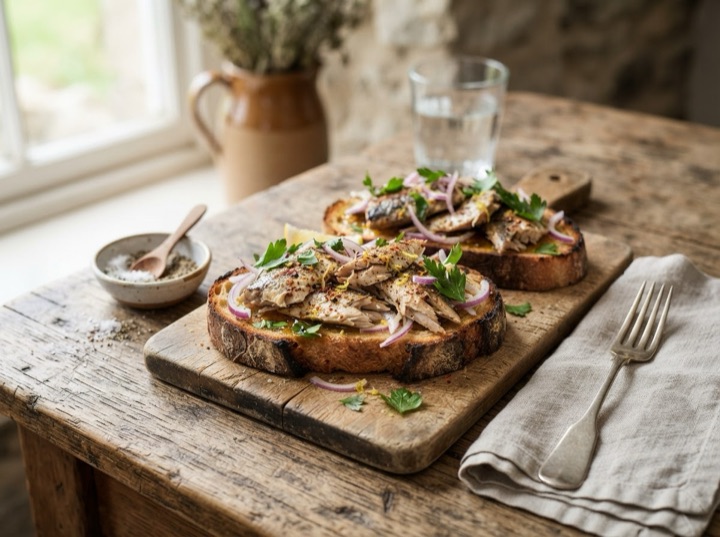
Nuri spiced mackerel in olive oil, 4 pack
From the Pinhais cannery in Matosinhos, where much of the work is still done by hand. Meaty mackerel with a gentle spice.
Tip: On toast with lemon, or folded through warm potatoes.
Soup before almost every meal
Many Portuguese lunches and dinners start with a bowl of smooth vegetable soup: carrot, pumpkin, courgette, leek, spinach, beans, bound with a little potato and finished with olive oil. It is an easy way to eat several portions of vegetables a day. Read our Portuguese soups guide for a basic recipe.
Olive oil as the main fat
Olive oil is used for cooking, finishing and dressing. Portugal makes a lot of its own. See our Portuguese olive oil guide.
Beans, chickpeas and greens
Chickpea salads with tuna or salt cod, bean stews, couve (collard greens) and turnip tops are everyday food, especially in the north.
Simple home cooking
Much traditional Portuguese food is cooked from scratch with few processed ingredients: a piece of fish, potatoes, vegetables, olive oil.
What's less healthy about Portuguese food?
Honesty matters here. Portuguese food is not a health-food cuisine, and pretending otherwise doesn't help anyone.
Salt
This is the big one. Salt cod, cured ham, chouriço, olives, tinned fish and well-salted bread add up. Portugal's health authorities have worked on this for years. A 2009 law capped the salt in most bread at 1.4 g per 100 g, but surveys still put typical salt intake well above the World Health Organization's advice of under 5 g a day.
What helps at home:
- Soak bacalhau properly. Done well, most of the salt comes out. Follow our bacalhau soaking guide and taste the fish before you add any salt to the dish.
- Use herbs and garlic for flavour. Coriander, parsley, bay, lemon and garlic carry a lot of Portuguese cooking.
- Treat chouriço as seasoning. A few slices flavour a whole pot of caldo verde.
Fried food
Pastéis de bacalhau, rissóis, croquettes, fried horse mackerel, fried squid and chips are everywhere. Frying is part of the cuisine. An air fryer is one way to cut the oil a lot for the dishes that suit it, such as carapaus fritos and pastéis de bacalhau. Our Portuguese air fryer recipes collect them.
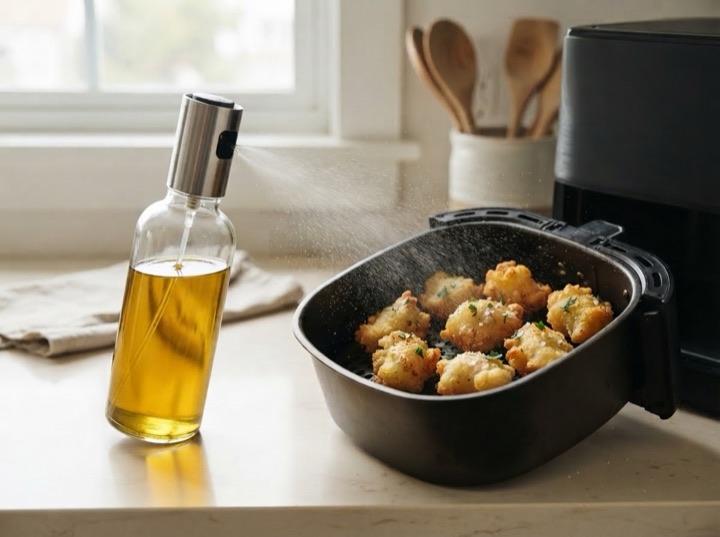
TrendPlain glass olive oil sprayer
A fine mist of real azeite is what turns air-fried food golden. It's cheaper and kinder to non-stick baskets than aerosol sprays.
Tip: Fill it with a mild olive oil and keep it next to the air fryer.
Double carbs
A Portuguese plate often comes with both rice and chips, plus bread before. At home, choose one, and add a salad or a side of greens instead.
Sugar
Traditional sweets are built on egg yolks and sugar, often a lot of both. A pastel de nata is a small tart, but convent sweets like toucinho do céu or ovos moles are very rich. Enjoy them as treats, not daily food.
Big portions and late wine
Restaurant portions are large. A meia dose (half portion) is often plenty. Wine is part of the culture, but moderation is part of the tradition too.
The healthiest Portuguese dishes to cook at home
- Grilled fish with boiled potatoes, greens and olive oil
- Vegetable soups, including caldo verde with less chouriço
- Polvo à lagareiro, roast octopus with potatoes and olive oil
- Amêijoas à Bulhão Pato, clams with garlic and coriander
- Chickpea salad with tinned tuna, red onion, parsley and olive oil
- Açorda alentejana, a light garlic and coriander bread soup with an egg
What you’ll need
Links go to Amazon, where you can check today’s price. If you buy, we earn a small commission at no extra cost to you.
Nuri spiced mackerel in olive oil, 4 pack
From the Pinhais cannery in Matosinhos, where much of the work is still done by hand. Meaty mackerel with a gentle spice.
Tip: On toast with lemon, or folded through warm potatoes.
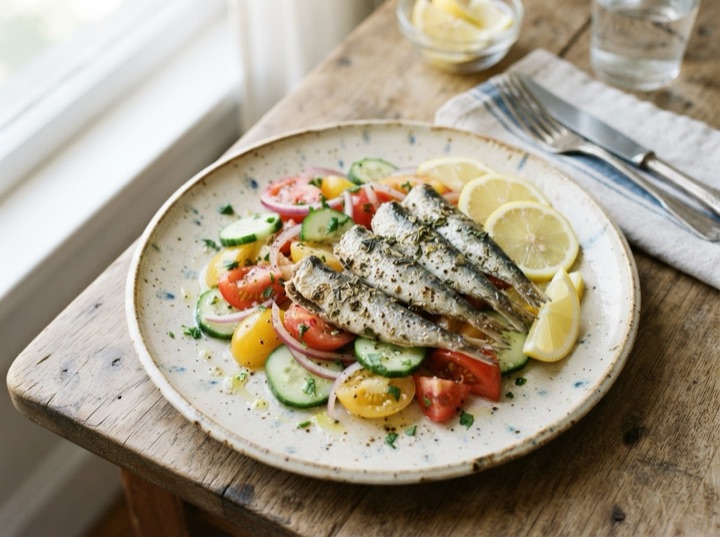
Comur sardines with lemon, 3 tins
Portuguese sardines with lemon in Comur's beautiful retro tins. A gift that's also a quick lunch.
Tip: Good on toast with black pepper.
TrendPlain glass olive oil sprayer
A fine mist of real azeite is what turns air-fried food golden. It's cheaper and kinder to non-stick baskets than aerosol sprays.
Tip: Fill it with a mild olive oil and keep it next to the air fryer.
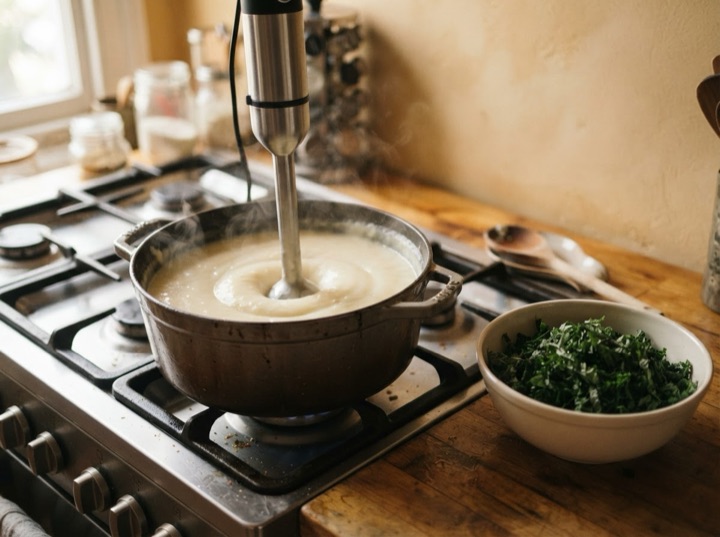
Cuisinart Smart Stick hand blender
Caldo verde's base has to be completely smooth before the greens go in. Blending in the pot means less washing up.
Tip: Take the pot off the heat before you blend to avoid splashes.
Frequently asked
Is Portuguese food healthy?
What is the Atlantic diet?
Is the Atlantic diet the same as the Mediterranean diet?
Is bacalhau high in salt?
Are sardines healthy?
Recipes from this story
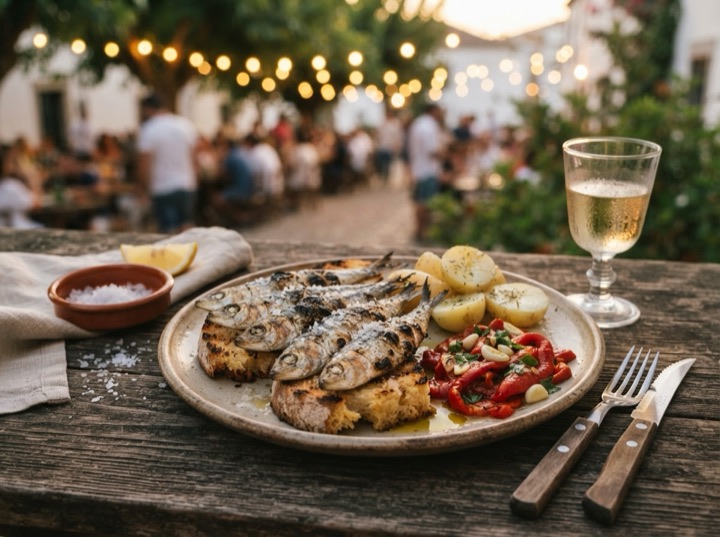 Air Fryer
Sardinhas Assadas in the Air FryerGrilled Sardines
The smell of Lisbon in June, without a charcoal grill: whole salted sardines crisped in the air fryer, served on bread with roasted pepper salad.
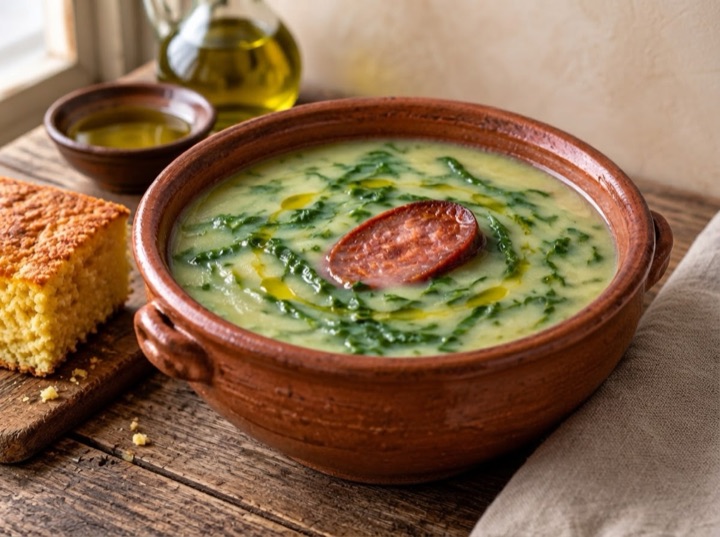 Traditional
Caldo VerdePortuguese Green Soup
Portugal's national soup: a silky potato base, ribbons of finely shredded greens and a slice of chouriço on top. Simple, cheap and done in 40 minutes.
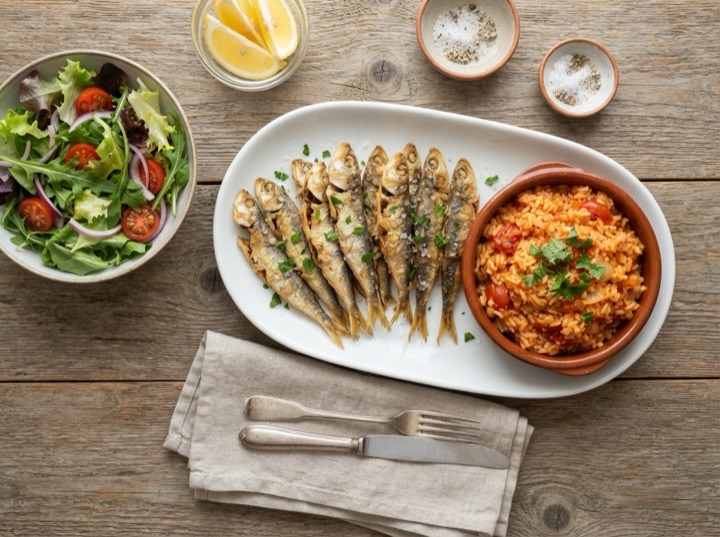 Air Fryer
Carapaus Fritos in the Air FryerCrispy Horse Mackerel
Small Portuguese horse mackerel, salted, floured and crisped in the air fryer. Served with tomato rice or açorda, it's a real Portuguese weeknight fish supper.