Leitão da BairradaPortugal's Roast Suckling Pig
Leitão da Bairrada explained: how the Mealhada suckling pig is roasted, the peppery sauce, how to order it, what to drink, and Coimbra sweets nearby.
 By Mesa de Portugal Kitchen · Updated · 7 min read
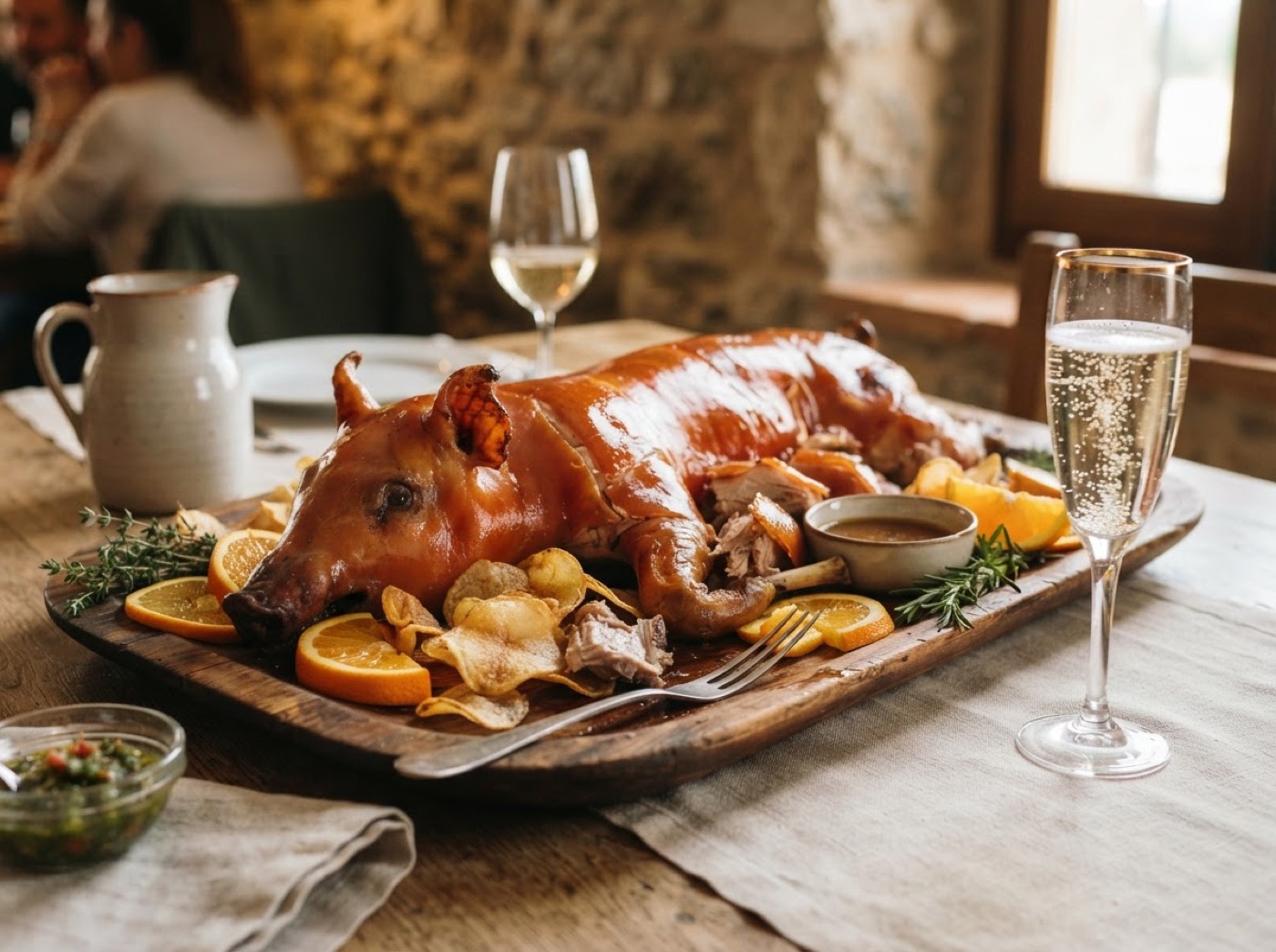
Leitão da Bairrada is roast suckling pig from the Bairrada region of central Portugal, best known from the town of Mealhada. A young piglet is rubbed inside with a paste of lard, garlic, salt and lots of black pepper, threaded on a long iron spit and roasted in a very hot wood-fired oven until the skin is glassy and crackling. It's served in pieces with its peppery juices, thin fried potatoes, salad and local sparkling wine.
It's one of the dishes Portuguese people will drive a long way for, and Mealhada exists, in many travellers' minds, as the leitão stop between Lisbon and Porto.
What makes leitão da Bairrada different
Roast pig is eaten all over the world. Three things set the Bairrada version apart:
- The age of the pig. It's a very young piglet, so the meat is pale, soft and almost melting, and the skin is thin enough to turn completely crisp.
- The seasoning. The paste rubbed inside the cavity is heavy on black pepper and garlic. The outside is mostly left alone so the skin can blister.
- The oven. The pigs are roasted whole on spits in large wood-fired ovens. Wood such as eucalyptus and vine cuttings is used, and the heat is high. The cook turns and checks each pig until the skin crackles evenly.
The skin should shatter when you bite it, and you should hear it. Soft or leathery skin means it has sat too long.
The pepper sauce
The juices and fat that drip from the pig mix with the garlic and pepper paste as it roasts. This becomes the sauce, spooned over the cut pieces or served on the side. It's thin, glossy, salty and strongly peppery, with no tomato and no thickener. The potatoes soak it up.
How leitão is served
A typical plate includes:
- Leitão cut into pieces through the bone, including skin, meat and some fat.
- Batatas fritas caseiras: thin, round, home-fried potato slices, a bit like thick crisps.
- Salada: simple lettuce, tomato and onion, sometimes with orange slices to cut the richness.
- Bread for the sauce.
How to order
- By portion (dose): one dose is generous. A meia dose (half portion) is enough for a light eater.
- By weight for takeaway: many places sell leitão by the kilo, wrapped, for family meals or picnics.
- As a sandwich: sandes de leitão or sandes de leitoa, sliced pig in a roll with some sauce. A good option if you're driving through.
- Ask for crackling: some people request pele (skin) or a piece with plenty of it. You can try.
Leitão is served warm, but it's also eaten at room temperature, especially at weddings and big gatherings.
What to drink: espumante da Bairrada
The Bairrada is one of Portugal's main sparkling wine regions, and espumante (sparkling wine) is the traditional partner for leitão. Its acidity and bubbles cut straight through the fat and salt. Order a bottle of local white or rosé espumante for the table.
If you prefer still wine, the region's red wines are often made from the Baga grape, which gives firm, high-acid reds that also work with fatty pork. Our Portuguese wine for beginners guide explains the main regions, and our Portuguese drinks guide covers what else to order.
Where to eat leitão
Mealhada is the reference point. You'll also find good leitão across the wider Bairrada area, which spreads between Aveiro and Coimbra, and some restaurants elsewhere in Portugal fly the Bairrada flag on their menus.
The name "leitão da Bairrada" is widely used, and producers in the region have been working towards formal protection for it. Until that's done, look for restaurants that roast on site, with a wood-fired oven you can usually see or smell.
It's an easy stop on a road trip. Mealhada is roughly 30 minutes north of Coimbra and under an hour south of Aveiro. If you're heading north, see what to eat in Aveiro and what to eat in Porto.
Also in the region: chanfana
Chanfana is goat (usually older goat) slowly braised in red wine with garlic, bay and paprika in a black clay pot, often in a wood oven. It's associated with the hills east of Coimbra and appears on menus across the area. If leitão is the feast, chanfana is the slow winter dish.
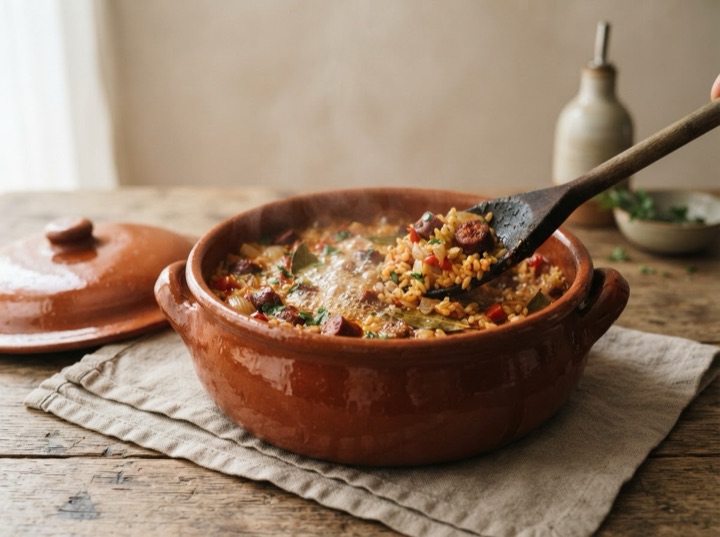
Portuguese hand-painted clay cooking pot
For rice dishes, feijoada and anything that goes from the oven straight to the table.
Tip: Check the listing for stovetop use. Many clay pots are oven-only or need a heat diffuser.
Our clay pot cooking guide explains how to season and use one at home.
Coimbra sweets to try
Coimbra, the old university city, is close by and has a strong pastry tradition, much of it from its convents. Look for:
- Pastéis de Tentúgal: paper-thin, crisp pastry rolled around a sweet egg filling, from the village of Tentúgal near Coimbra.
- Pastéis de Santa Clara: half-moon pastries filled with egg and almond, linked to the Santa Clara convent.
- Arrufadas de Coimbra: soft, slightly sweet bread rolls, often eaten with coffee.
Our Portuguese convent sweets guide explains why egg yolks and sugar dominate these recipes, and our Portuguese pastries guide helps with the rest of the counter.
Can you make leitão at home?
A true leitão needs a whole piglet and a very hot wood oven, which most home cooks don't have. You can get close to the flavour with pork belly or a small pork shoulder:
- Make a paste of crushed garlic, coarse salt, a generous amount of freshly ground black pepper, chopped parsley, a bay leaf and a few spoonfuls of lard or olive oil.
- Rub it into the meat side only. Keep the skin dry, score it, and salt it lightly.
- Leave uncovered in the fridge overnight so the skin dries.
- Roast at 160 °C until the meat is tender, then raise the oven to 230-250 °C to blister the skin.
- Mix the pan juices with a little hot water and more pepper for the sauce.
For pork belly, a probe thermometer helps you judge when the meat is done before you crank up the heat.
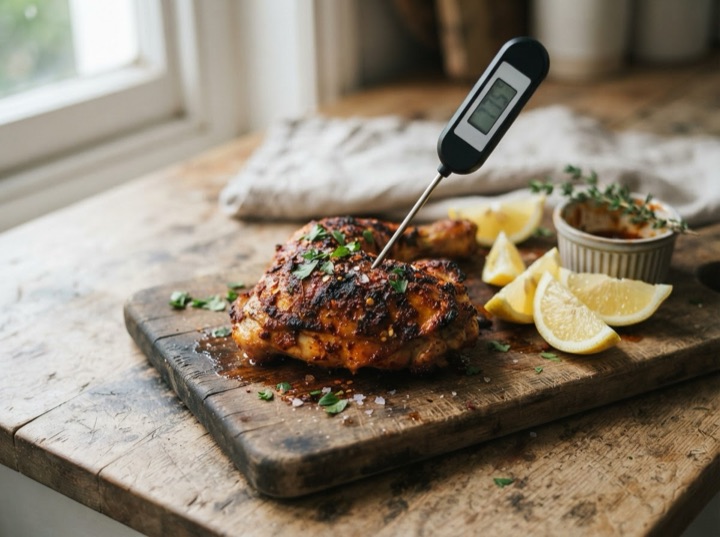
Alpha Grillers instant-read thermometer
Takes the guesswork out of piri-piri chicken and bifanas: 74 °C in the thickest part and the chicken is done.
Tip: Check the thickest piece, away from the bone.
Serve it with thin fried potatoes, an orange and lettuce salad, and a bottle of Portuguese sparkling wine. For other big pork dishes, try our carne de porco à alentejana, and for a thorough reference on regional dishes, a broad Portuguese cookbook is useful.

Portugal: The Cookbook (Phaidon)
A big, comprehensive book of Portuguese recipes, region by region. The one to give a serious cook.
Tip: A large hardback that looks good on the shelf as well as in the kitchen.
What you’ll need
Links go to Amazon, where you can check today’s price. If you buy, we earn a small commission at no extra cost to you.
Alpha Grillers instant-read thermometer
Takes the guesswork out of piri-piri chicken and bifanas: 74 °C in the thickest part and the chicken is done.
Tip: Check the thickest piece, away from the bone.
Portuguese hand-painted clay cooking pot
For rice dishes, feijoada and anything that goes from the oven straight to the table.
Tip: Check the listing for stovetop use. Many clay pots are oven-only or need a heat diffuser.
Portugal: The Cookbook (Phaidon)
A big, comprehensive book of Portuguese recipes, region by region. The one to give a serious cook.
Tip: A large hardback that looks good on the shelf as well as in the kitchen.
Frequently asked
What is leitão in Portugal?
Where is the best place to eat leitão?
What do you drink with leitão da Bairrada?
Is leitão served hot or cold?
Recipes from this story
 Traditional
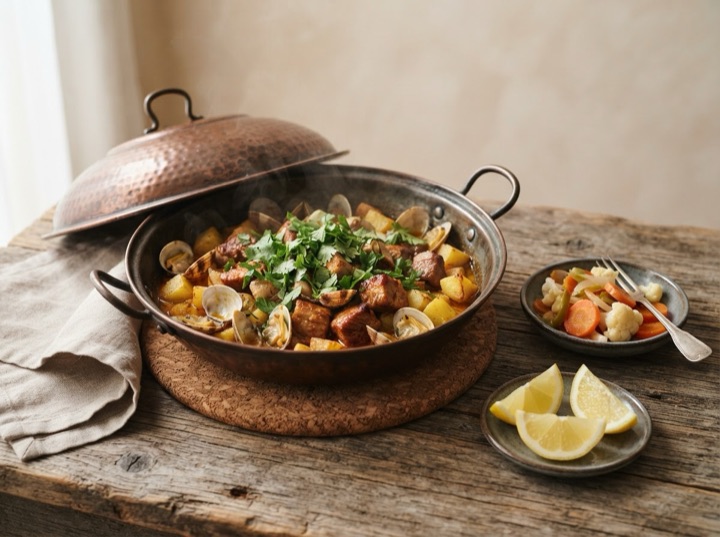
Carne de Porco à AlentejanaPork and Clams
Pork marinated in wine, garlic and red pepper paste, tossed with clams, crisp potatoes and coriander. Portugal's great surf-and-turf, cooked in a cataplana.
 Food culture
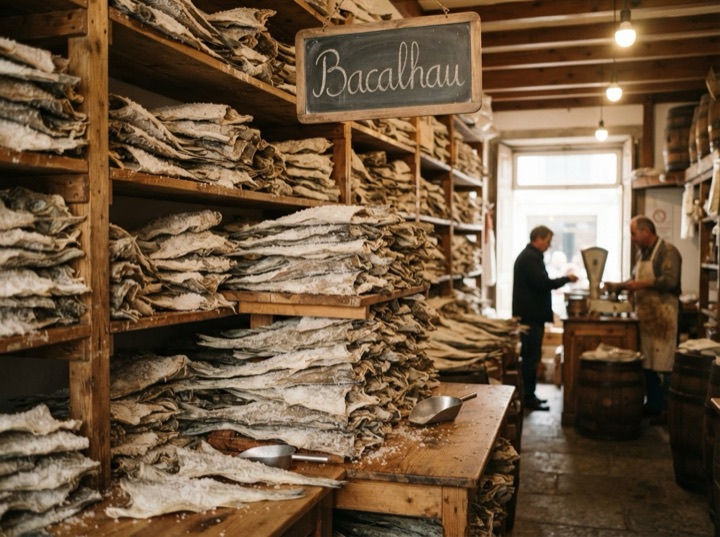
Why Do Portuguese Eat BacalhauThe Story of the Faithful Friend
Why do Portuguese eat bacalhau when no cod swims off Portugal? Salt, Catholic fasting, Newfoundland fleets and the Estado Novo, explained simply.
 Eat like a local
What to Eat in SintraTravesseiros, Queijadas and the Coast
What to eat in Sintra: travesseiros and queijadas, Colares wine, and grilled fish on the nearby coast, plus tips to eat well on a Sintra day trip.