Portuguese Olive OilA Buyer's Guide
Why Portuguese azeite tastes different, the regions and olive varieties to look for, what the labels mean, and how Portuguese cooks use oil at the table.
 By Mesa de Portugal Kitchen · Updated · 4 min read
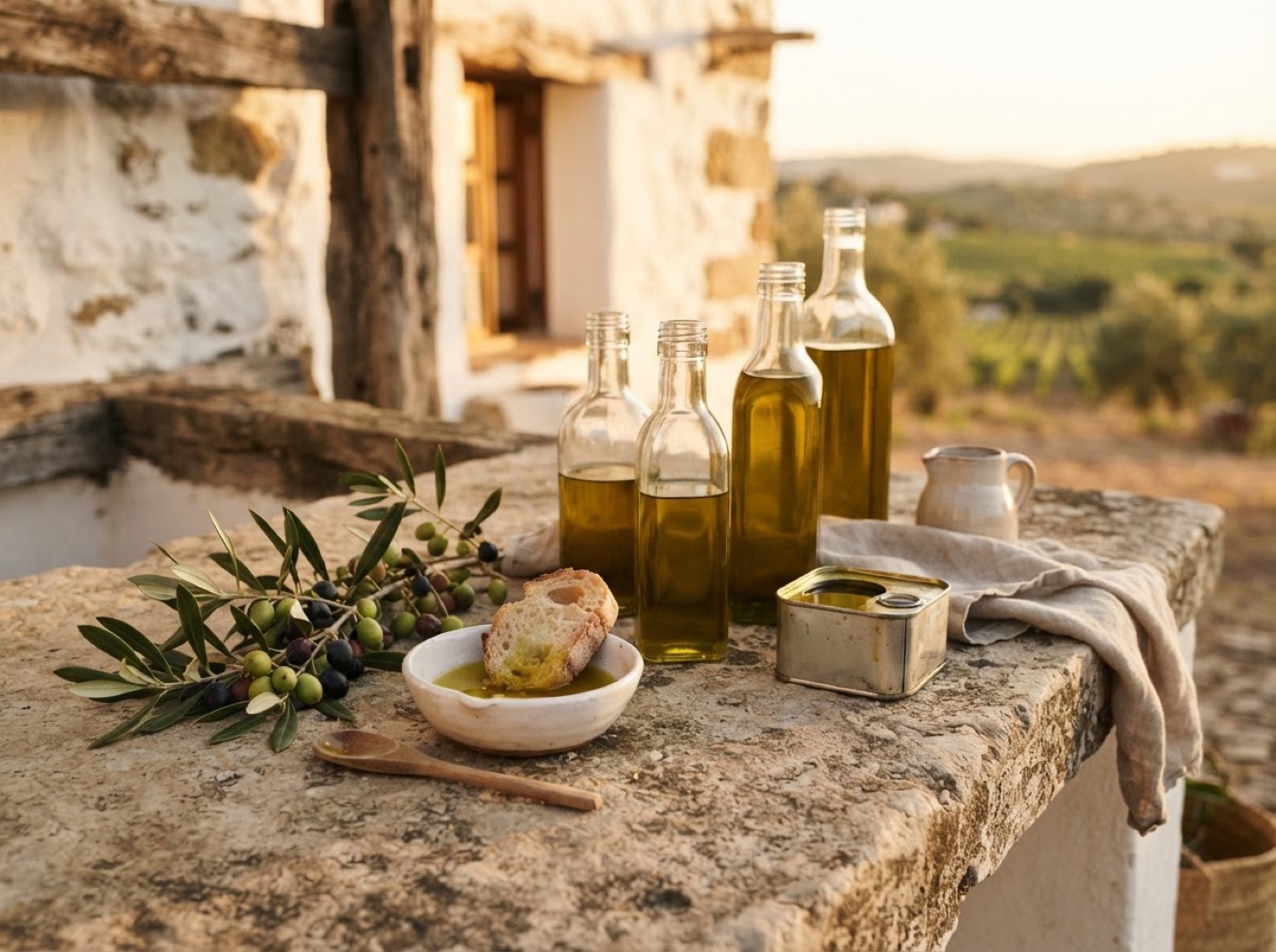
Portuguese cooking uses olive oil (azeite) the way other cuisines use salt: in almost everything, and generously. It goes into the pan, over the fish, into the soup and onto the potatoes at the table. Portugal is one of the world's larger olive oil producers, yet its oils are much less known abroad than Italian or Spanish ones.
What makes it different
Many Portuguese oils are made from native olive varieties you won't find elsewhere, such as Galega, Cobrançosa, Cordovil and Verdeal. Galega oils tend to be soft, sweet and buttery. Cobrançosa and Verdeal give greener, more peppery oils.
The main regions
- Alentejo: the biggest producing region, with large modern groves and traditional ones. Its oils range from mild to fruity.
- Trás-os-Montes: the cold northeast. Smaller, older groves and often greener, more intense oils.
- Beira Interior and Ribatejo: smaller regions with traditional oils, often made from Galega olives.
Several areas have a protected designation of origin (DOP), such as Azeite de Trás-os-Montes DOP and Azeite de Moura DOP. The DOP seal guarantees where and how the oil was made.
Reading the label
- Azeite virgem extra: extra virgin, the top grade. Buy this for finishing and salads.
- Acidez: acidity. Extra virgin must be 0.8% or lower; good oils are often much lower.
- Colheita: harvest year. Olive oil is best within 12–18 months of harvest, so check it.
- Azeite (without "virgem"): refined oil blended with virgin oil. Fine for frying, not for finishing.
How Portuguese cooks use it
Keep two oils: an everyday extra virgin for cooking, and a really good one for pouring over finished dishes like batatas a murro, polvo à lagareiro and caldo verde.
Where to buy it
In Portugal, supermarkets carry excellent oils at low prices. Abroad, look for Portuguese oil in delis and Portuguese grocers. We'll add Portuguese oils to the shop when they're reliably available on Amazon.
What you’ll need
Links go to Amazon, where you can check today’s price. If you buy, we earn a small commission at no extra cost to you.
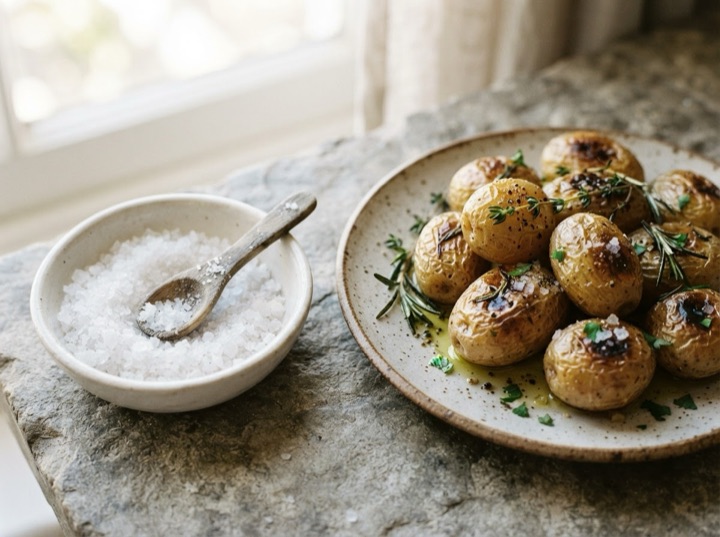
Algarve sea salt
Sea salt from the Algarve salt pans, for coarse-salt roasting batatas a murro and for finishing grilled fish.
Tip: A little goes a long way. Use it for finishing, not boiling water.
Bordallo Pinheiro cabbage serving bowl
The famous cabbage-leaf ceramics from Caldas da Rainha, made since the 1800s. Perfect for salads and batatas a murro.
Tip: Large bowl for the table, or the set of four for individual portions.
Portugal: The Cookbook (Phaidon)
A big, comprehensive book of Portuguese recipes, region by region. The one to give a serious cook.
Tip: A large hardback that looks good on the shelf as well as in the kitchen.
Frequently asked
Is Portuguese olive oil good?
Which region of Portugal makes the best olive oil?
What does DOP mean on Portuguese olive oil?
What acidity should extra virgin olive oil have?
How long does olive oil stay fresh?
Recipes from this story
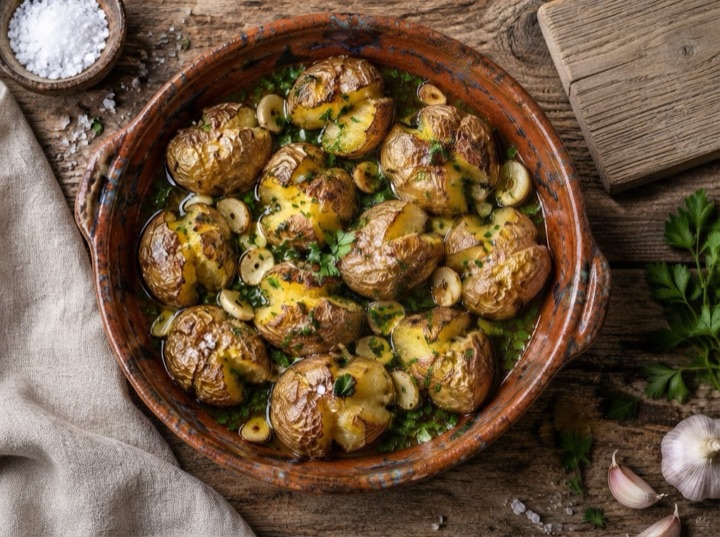 Air Fryer
Batatas a Murro in the Air Fryer (Punched Potatoes)
Portuguese punched potatoes made in the air fryer: salt-crusted skins, a fluffy middle and plenty of garlic olive oil. The classic partner for bacalhau.
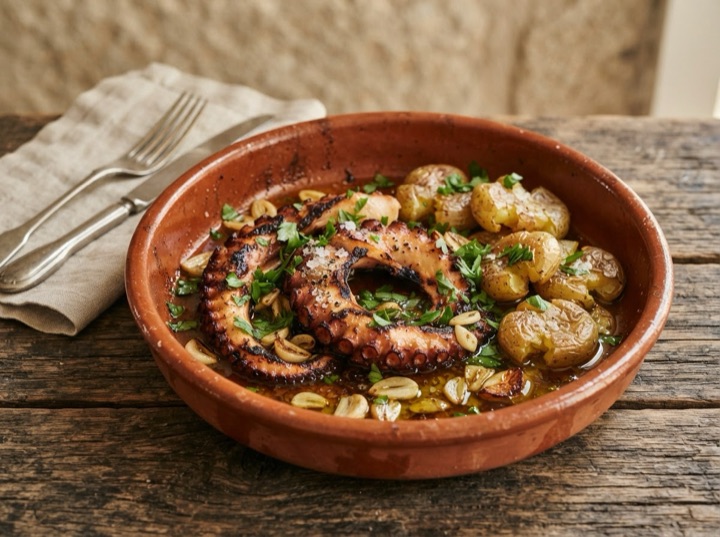 Traditional
Polvo à LagareiroRoast Octopus with Garlic Oil
Tender octopus roasted with plenty of olive oil and garlic, served with punched potatoes. Includes the freezing trick that makes octopus soft every time.
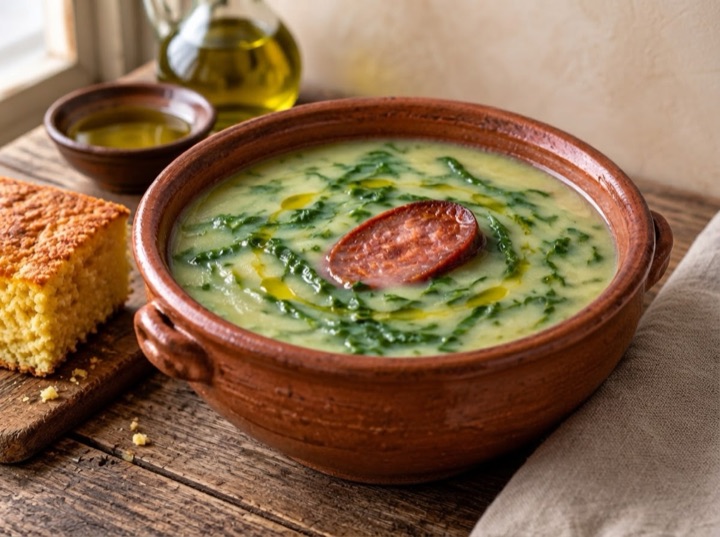 Traditional
Caldo VerdePortuguese Green Soup
Portugal's national soup: a silky potato base, ribbons of finely shredded greens and a slice of chouriço on top. Simple, cheap and done in 40 minutes.