How to Reheat Pastel de NataCrisp Again in 5 Minutes
How to reheat pastel de nata so the pastry crisps and the custard stays creamy: oven and air fryer times, why to skip the microwave, storing and freezing.
 By Mesa de Portugal Kitchen · Updated · 7 min read
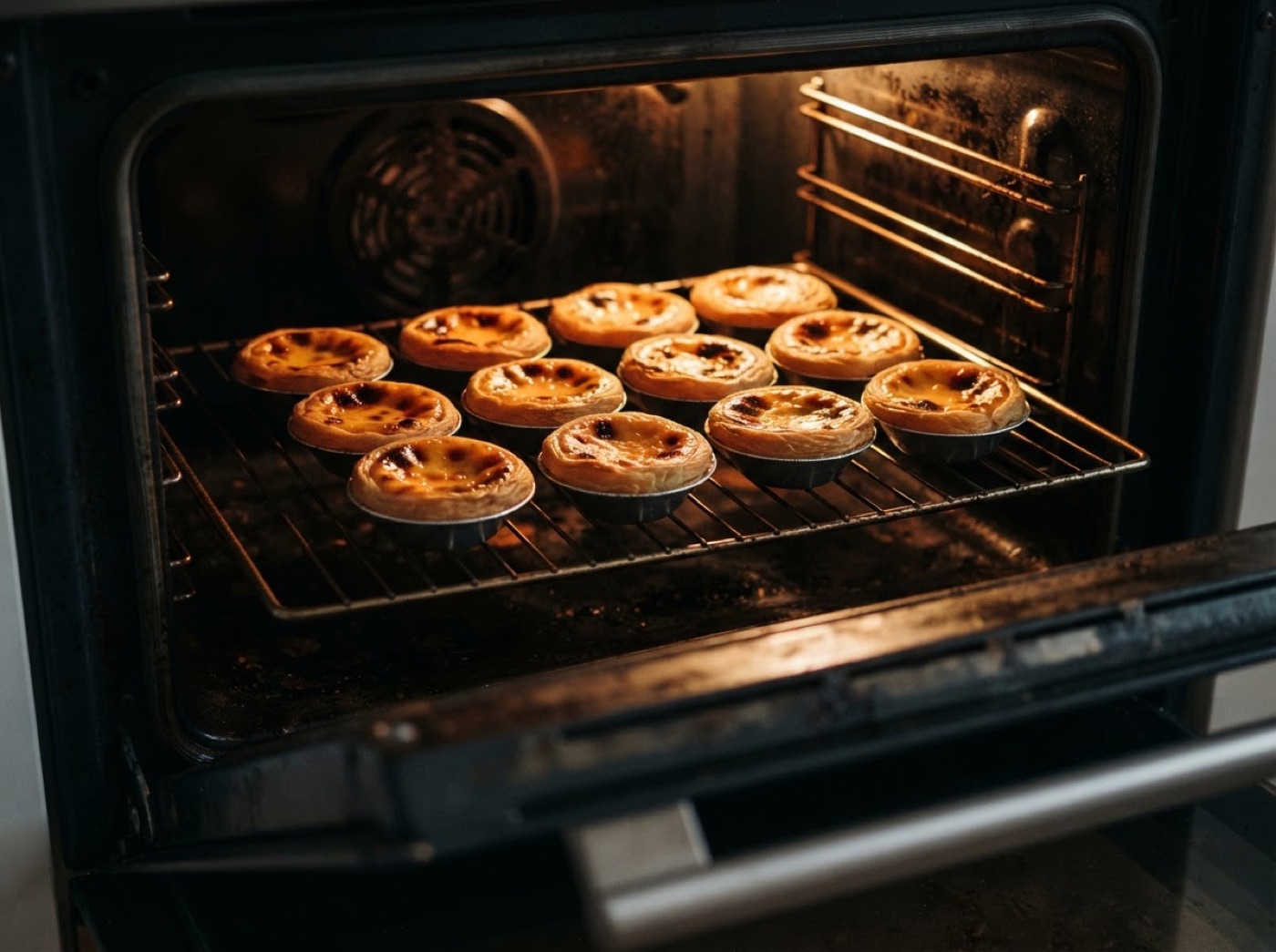
To reheat a pastel de nata, put it in a preheated oven at 180 °C (160 °C fan, 350°F) for 5 to 7 minutes, or in an air fryer at 160 °C for 3 to 4 minutes. The pastry crisps up again and the custard warms through without splitting. Don't use the microwave: it turns the pastry soft and chewy in seconds.
A pastel de nata is at its best within a few hours of baking. After that, the moisture in the custard creeps into the pastry and the shell goes limp. The good news is that a short blast of dry heat brings most of that crunch back. Here's exactly how to do it, plus how to store and freeze them.
How to reheat pastel de nata in the oven
The oven is the most reliable method, especially for more than four tarts.
- Preheat properly. 180 °C conventional or 160 °C fan. Putting tarts into a cold oven dries the custard before the pastry crisps.
- Use a dry tray. Place the tarts on a baking tray or a sheet of baking paper. If you still have the metal tins, put them back in; the metal conducts heat to the base.
- Heat for 5 to 7 minutes if they've been at room temperature, or 7 to 9 minutes straight from the fridge.
- Check the base. Lift one and tap the bottom. It should feel firm and sound slightly hollow.
- Rest for 2 minutes. The custard is hot inside and the pastry finishes crisping as it cools slightly.
Avoid the grill. It scorches the top before the base warms through.
How to reheat pastel de nata in an air fryer
An air fryer is the fastest way, and arguably the best, because the fan blows hot air right around the pastry.
- Temperature: 160 °C (320°F). Higher than that and the caramelised spots on top can burn.
- Time: 3 to 4 minutes from room temperature, 4 to 5 minutes from the fridge.
- Spacing: one layer, with a little gap between tarts so the air can move.
- Preheat: 2 minutes if your model allows it.
A perforated paper liner stops sticky custard from glueing to the basket, and still lets air reach the base.
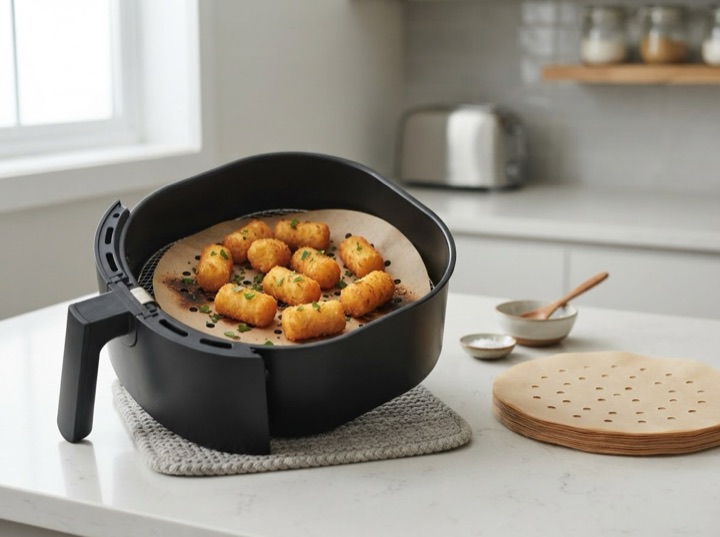
Air fryer parchment liners, 125 pack
Stops wet mixtures like pastéis and croquetes from sticking to the basket.
Tip: Never preheat the air fryer with an empty liner inside.
If your air fryer is a small one, you'll be doing batches of two or three. Our guide to the best air fryer size for Portuguese cooking explains what fits, and air fryer tips for Portuguese food covers pastry in more detail.
What not to do
- Don't microwave them. Microwaves heat the water in the custard and the steam soaks straight into the pastry. You get a hot, rubbery tart in 20 seconds. If a microwave is your only option, give it 10 seconds at most just to take the fridge chill off, and accept a soft shell.
- Don't cover them with foil. Foil traps steam. You want dry heat.
- Don't go above 200 °C. The custard can split and bubble up, and the top burns.
- Don't reheat twice. Each round of heating dries the custard further. Reheat only what you'll eat.
How to store pastéis de nata
Pastéis de nata are made with eggs and milk, so treat them like any custard.
- Same day: keep them at room temperature, uncovered or loosely covered with a clean tea towel. A sealed box makes the pastry sweat.
- Next day: move them to the fridge in a container with a sheet of kitchen paper underneath to absorb moisture. Eat within 2 days.
- Warm climate: in summer, or in a warm kitchen, refrigerate any you won't eat within a few hours.
Portuguese cafés bake them several times a day for a reason. If you're buying in Portugal to take home on a flight the same day, carry them in the cardboard box the café gives you, and reheat them when you land.
Can you freeze pastéis de nata?
Yes, and they freeze better than you might expect.
- Cool completely. Freezing warm tarts creates ice crystals in the custard.
- Open freeze. Spread them on a tray in the freezer for an hour so they don't stick together.
- Pack tightly. Move them into a freezer bag or box, pressing out the air.
- Use within a month. After that the pastry starts to taste stale.
To reheat from frozen, don't thaw them first. Thawing at room temperature makes the pastry soggy.
- Oven: 180 °C (160 °C fan) for 10 to 12 minutes.
- Air fryer: 150 °C for 6 to 8 minutes, then check. If the top is browning before the centre is warm, lower to 140 °C and give it a few more minutes.
Freezing unbaked tarts
If you're making your own, freezing them unbaked gives the best result of all. Assemble the tarts in their tins, freeze them uncovered for 2 hours, then pop them out and bag them. Bake straight from frozen, adding 3 to 5 minutes to the usual time. Our air fryer pastéis de nata recipe gives the base temperatures.
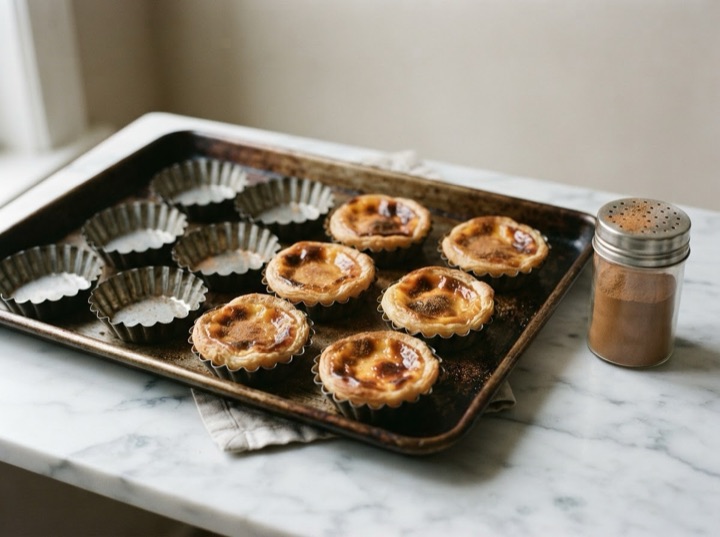
Pastel de nata tins, made in Portugal
The small fluted tins that give natas their thin, crisp base, made in Portugal like the ones pastelarias use.
Tip: Don't wash them in the dishwasher. Wipe them clean and they'll season over time.
How do you know a reheated nata is ready?
- The base is firm and doesn't bend when you lift the tart.
- The edges of the pastry are dry to the touch and flake when pressed.
- The custard is warm in the middle (around 60 to 65 °C if you test with a thermometer) but still wobbles slightly.
If the custard has puffed up like a soufflé, it's overheated. Let it sit for a few minutes and it will sink back.
Serving them the Portuguese way
In Portugal, a pastel de nata comes with a bica, a short espresso, and the cinnamon shaker within reach. It's eaten at any time: breakfast, mid-morning, after lunch or as an afternoon snack. Our Portuguese coffee guide explains how to order, and if you want the story behind the tart, read the history of the pastel de nata.
For more of the pastry counter, see the Portuguese pastries guide.
What you’ll need
Links go to Amazon, where you can check today’s price. If you buy, we earn a small commission at no extra cost to you.
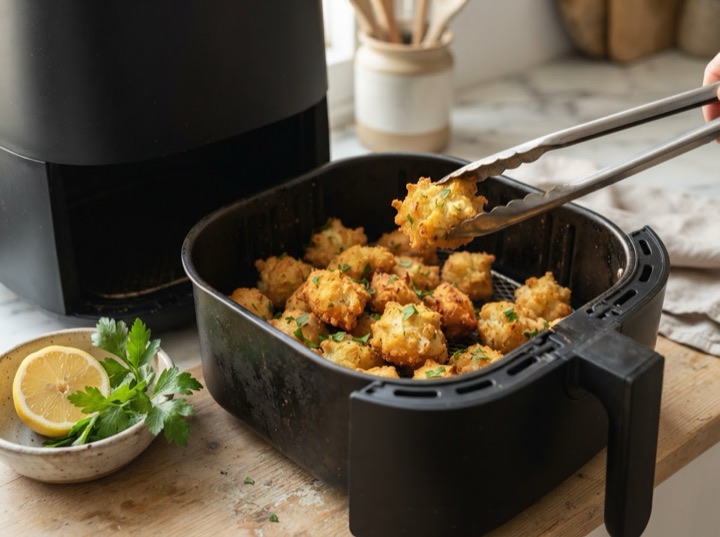
Cosori TurboBlaze 6 Qt Air Fryer
One of Amazon's best-selling air fryers. The 6 Qt basket fits a batch of pastéis de bacalhau or chicken thighs for four, and the ceramic coating is PFAS-free.
Tip: Size is what matters for Portuguese cooking: 5.5–6 Qt feeds 2–4 people in one batch.
Air fryer parchment liners, 125 pack
Stops wet mixtures like pastéis and croquetes from sticking to the basket.
Tip: Never preheat the air fryer with an empty liner inside.
Pastel de nata tins, made in Portugal
The small fluted tins that give natas their thin, crisp base, made in Portugal like the ones pastelarias use.
Tip: Don't wash them in the dishwasher. Wipe them clean and they'll season over time.
Frequently asked
Can you reheat pastéis de nata in the microwave?
How long do pastéis de nata last?
Should pastéis de nata be eaten warm or cold?
Do pastéis de nata need to be refrigerated?
Can you reheat frozen pastéis de nata without thawing?
Recipes from this story
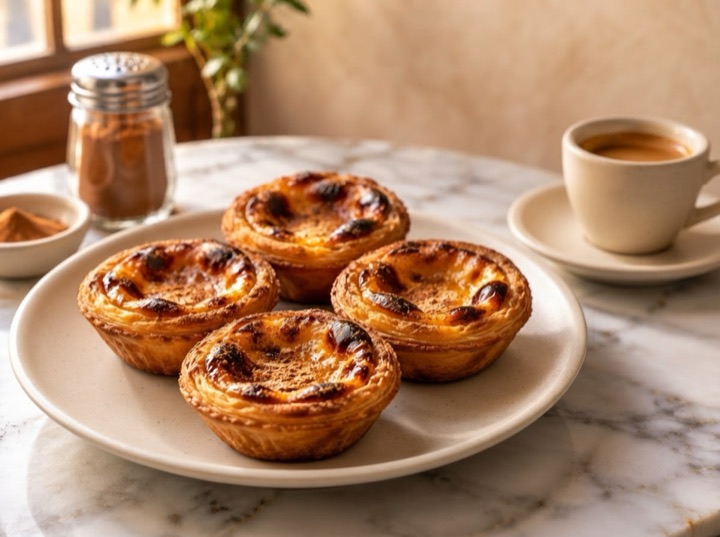 Air Fryer
Pastéis de Nata in the Air Fryer
Homemade Portuguese custard tarts with shop-bought puff pastry, baked in the air fryer. Honest tips on getting the blistered tops without a 300 °C oven.
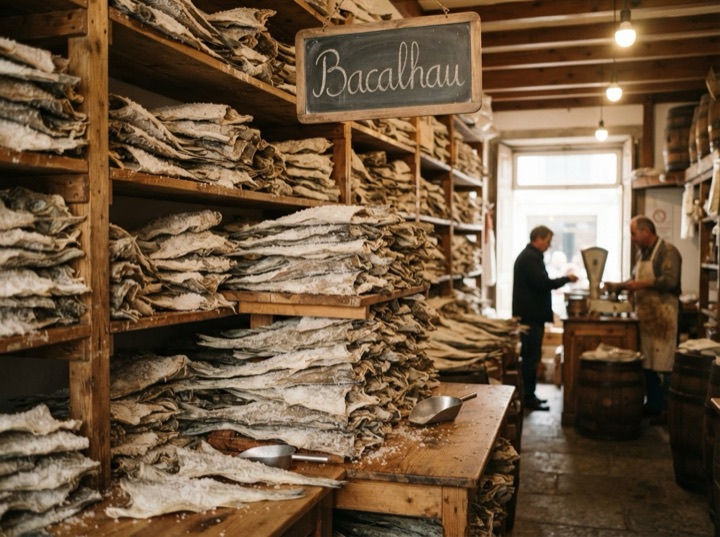 Food culture
Why Do Portuguese Eat BacalhauThe Story of the Faithful Friend
Why do Portuguese eat bacalhau when no cod swims off Portugal? Salt, Catholic fasting, Newfoundland fleets and the Estado Novo, explained simply.
 Eat like a local
What to Eat in SintraTravesseiros, Queijadas and the Coast
What to eat in Sintra: travesseiros and queijadas, Colares wine, and grilled fish on the nearby coast, plus tips to eat well on a Sintra day trip.