Chouriço vs ChorizoThe Real Differences, and Substitutes
Chouriço vs chorizo: how Portuguese and Spanish sausages differ in spices, texture and use, when to swap them, and how to flame chouriço at the table.
 By Mesa de Portugal Kitchen · Updated · 7 min read
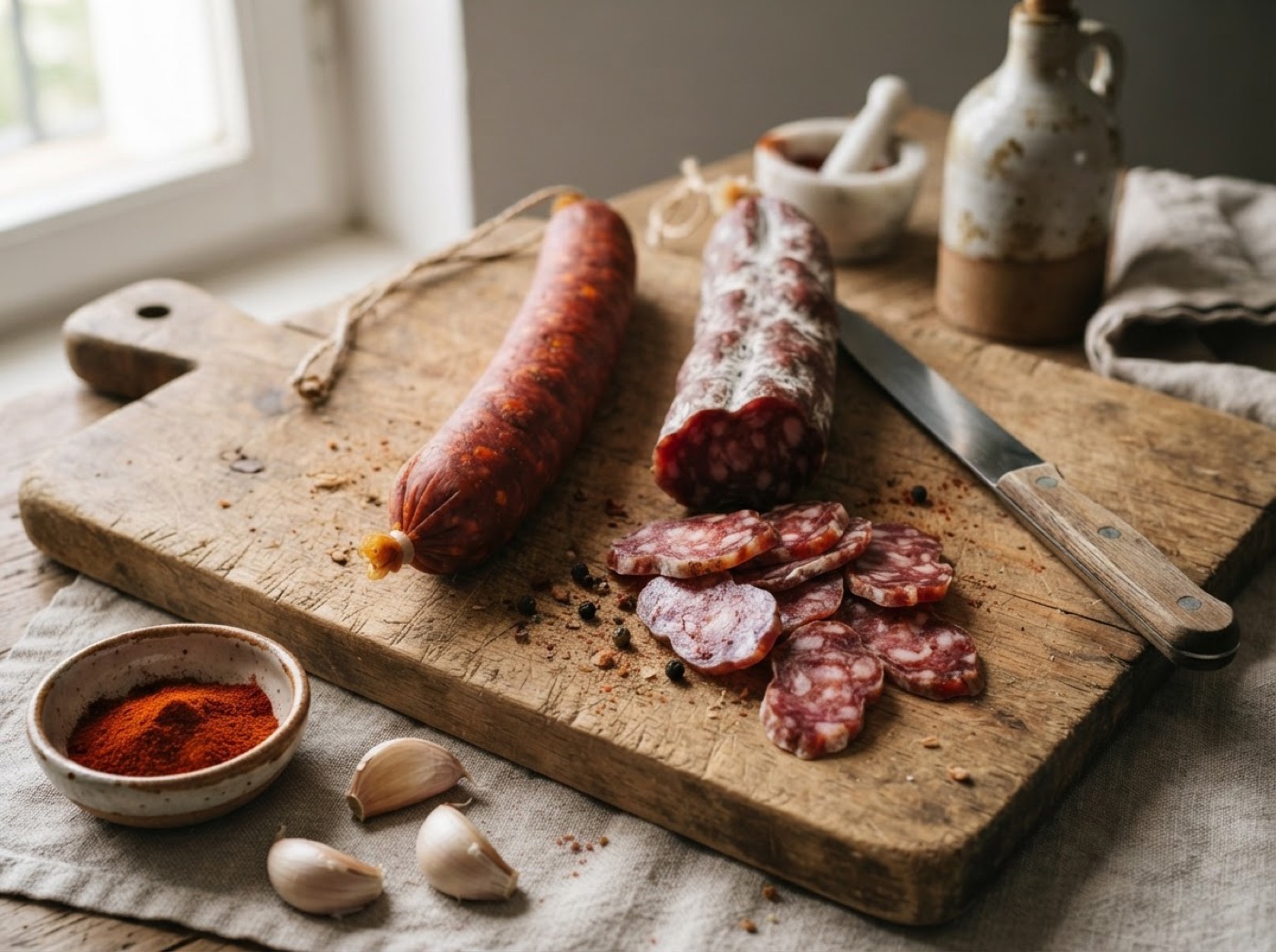
Portuguese chouriço and Spanish chorizo are cousins, but they don't taste the same. Chouriço is seasoned with wine, lots of garlic and sweet red pepper paste or paprika, and gets its smokiness from being smoked over wood. Spanish chorizo leans on pimentón, Spanish paprika, which gives it a deeper red colour and, in smoked styles, a smoky taste from the spice itself. Chouriço is usually milder, more garlicky and a little winey.
Both are cured pork sausages, both are red, and in a pinch you can swap one for the other. But if a Portuguese recipe calls for chouriço, knowing the difference helps you choose the closest match.
Chouriço vs chorizo at a glance
- Main seasoning: chouriço uses wine, garlic and massa de pimentão (sweet pepper paste) or sweet paprika. Chorizo uses pimentón (sweet, bittersweet or hot), garlic and sometimes oregano.
- Where the smoke comes from: chouriço is smoked over wood. Many Spanish chorizos get their smoky flavour from smoked pimentón, though some are also smoked.
- Heat: both are usually mild. Hot versions exist on both sides (picante in both languages).
- Colour: chorizo is often a brighter, deeper red because of the generous pimentón.
- Texture: both range from soft and fresh to hard and dry. Portuguese chouriço is often made with chunkier pieces of meat and fat.
- Typical use: chouriço is flamed, grilled, sliced into soups and stews. Chorizo is sliced as tapas, cooked in cider or wine, and added to lentils and stews.
How chouriço is made
Pork shoulder and belly are cut into small chunks, then marinated for a day or more in wine (red or white), crushed garlic, salt and massa de pimentão or paprika, sometimes with a bay leaf. The mixture is stuffed into natural casings and hung in a smokehouse over a slow wood fire for days or weeks. The wine and garlic come through clearly when you eat it.
Read more about the red pepper paste that gives chouriço its flavour in our guide to massa de pimentão, and about all the Portuguese sausages in the Portuguese sausages guide.
How Spanish chorizo is made
Minced or chopped pork and fat are mixed with salt, garlic and plenty of pimentón, then cured. The pimentón can be sweet (dulce), bittersweet (agridulce) or hot (picante), and smoked pimentón from La Vera in Extremadura gives many chorizos their smoky taste.
Spain has two main kinds:
- Cured chorizo is dried until firm and sliced like salami.
- Fresh chorizo (chorizo fresco or para cocinar) is soft and must be cooked.
And Mexican chorizo?
Mexican chorizo is different again: usually fresh, loose minced pork with chilli, spices and vinegar, crumbled into a pan. It's not a substitute for Portuguese chouriço.
Do they taste different in cooking?
Yes, especially in soups and stews. In caldo verde, a slice of Portuguese chouriço gives a gentle smoky, garlicky note without turning the broth bright red. A pimentón-heavy Spanish chorizo leaks more red oil and makes the soup taste more of paprika. In a rich bean stew like feijoada à transmontana, the difference matters less.
For more on how the two cuisines differ in general, see Portuguese vs Spanish food.
Chouriço substitutes
If you can't find Portuguese chouriço, in order of preference:
- Linguiça. Same seasoning, thinner shape. Ideal.
- Mild cured Spanish chorizo (dulce, not picante). Use a little less, because the paprika is stronger.
- Polish kielbasa or another smoked pork sausage, plus a crushed garlic clove and a splash of wine in the dish. Good in soups and stews.
- Smoked bacon or pancetta with a pinch of sweet paprika, for stews only.
For the flaming dish, chouriço assado, you need a firm, fully cured sausage that holds its shape. A fresh, soft chorizo will split and burn.
Chorizo substitutes
Going the other way, Portuguese chouriço works well in most Spanish recipes that call for cured chorizo. Add a pinch of smoked paprika if you want the deeper Spanish flavour. Don't use cured chouriço where a recipe calls for fresh cooking chorizo to be crumbled; it's too firm.
For more swaps, see our guide to Portuguese ingredient substitutes.
Flaming chouriço: the Portuguese party trick
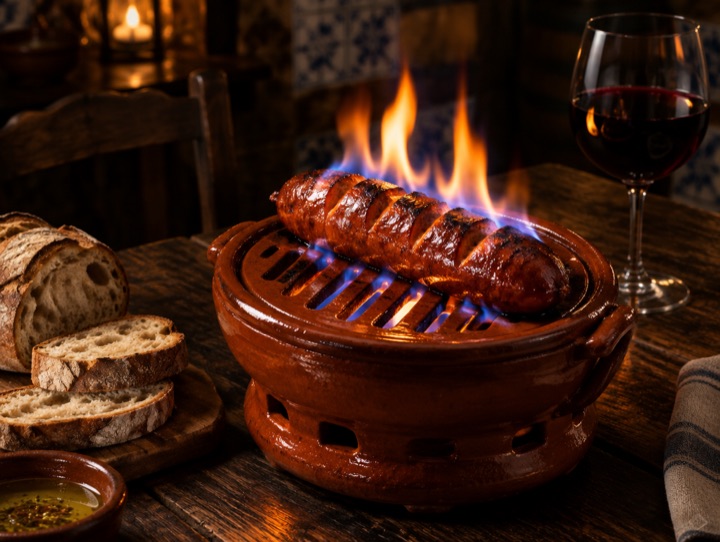
Chouriço assado (flamed chouriço) is the dish that makes chouriço famous outside Portugal. A whole cured chouriço sits on a glazed clay dish with a grill on top, called an assador. Strong spirit is poured into the dish underneath and lit, and the chouriço cooks in the flames at the table until the skin blisters and the fat sizzles.
How to do it:
- Score the chouriço with shallow diagonal cuts so it crisps and doesn't burst.
- Pour the spirit into the base of the assador: 2-3 tablespoons of aguardente bagaceira, or a high-proof grape brandy. Wine or low-proof spirits won't light properly.
- Light it carefully with a long match, away from anything flammable.
- Turn the chouriço with tongs as it cooks, 5-8 minutes until hot and charred at the edges.
- Slice and serve on bread, which soaks up the fat.
The full method is in our chouriço assado recipe, and our guide on how to use a chouriço assador covers care and safety.
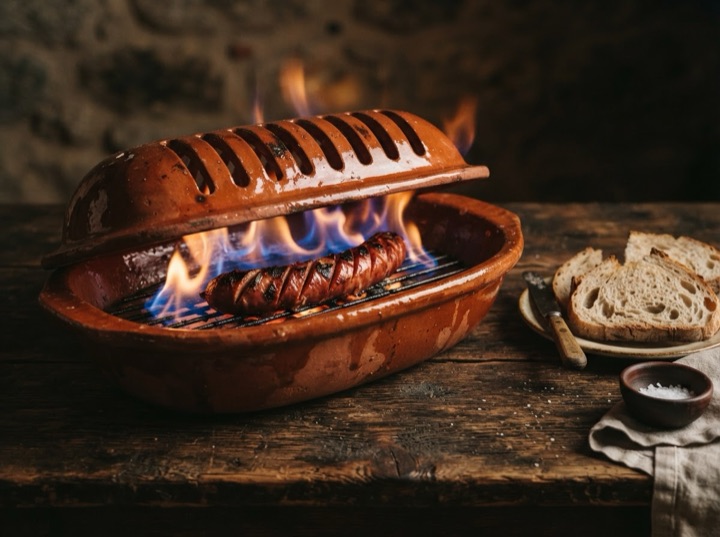
Portuguese clay chouriço grill (assador)
The glazed terracotta dish with a slotted top for flaming chouriço at the table. Most Portuguese homes have one in a cupboard.
Tip: The medium size fits a standard chouriço. Use it on a cork board or tiles, never near curtains.
A larger clay roaster takes two chouriços at once, which is handy for parties.
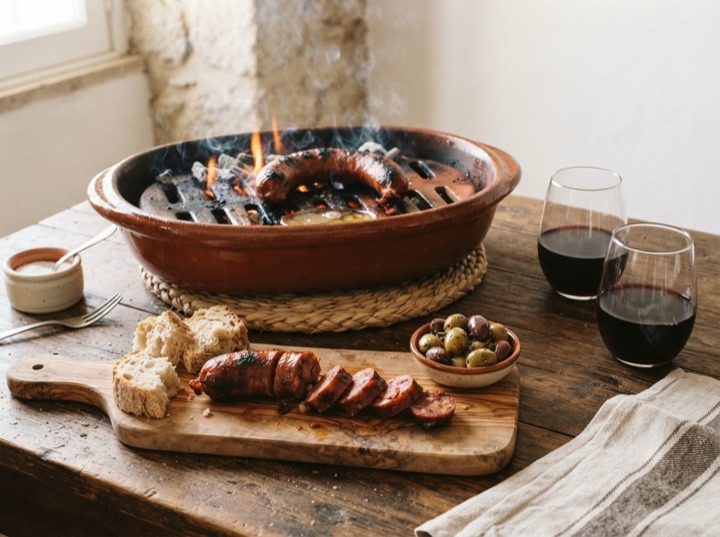
Portuguese clay chouriço roaster, large
The large size of the classic made-in-Portugal assador, for a full chouriço plus a few extra slices.
Tip: Use on a heatproof surface, away from anything flammable.
Which should you buy?
Buy Portuguese chouriço for Portuguese recipes: caldo verde, feijoada, cozido and flamed chouriço. Buy Spanish chorizo for Spanish recipes: tapas, lentils, chorizo in cider. If you only keep one in the fridge, a mild, fully cured sausage from either country is the most flexible.
For classic Portuguese recipes that use chouriço, Authentic Portuguese Cooking is a good place to start.

Authentic Portuguese Cooking (cookbook)
Over 185 classic recipes from mainland Portugal, the Azores and Madeira. A highly rated home-cooking reference.
Tip: Good for family recipes you remember but never wrote down.
What you’ll need
Links go to Amazon, where you can check today’s price. If you buy, we earn a small commission at no extra cost to you.
Portuguese clay chouriço grill (assador)
The glazed terracotta dish with a slotted top for flaming chouriço at the table. Most Portuguese homes have one in a cupboard.
Tip: The medium size fits a standard chouriço. Use it on a cork board or tiles, never near curtains.
Portuguese clay chouriço roaster, large
The large size of the classic made-in-Portugal assador, for a full chouriço plus a few extra slices.
Tip: Use on a heatproof surface, away from anything flammable.
Authentic Portuguese Cooking (cookbook)
Over 185 classic recipes from mainland Portugal, the Azores and Madeira. A highly rated home-cooking reference.
Tip: Good for family recipes you remember but never wrote down.
Frequently asked
Is chouriço the same as chorizo?
Can I use chorizo instead of chouriço?
Is chouriço spicy?
Can you eat chouriço without cooking it?
What alcohol do you use to flame chouriço?
Recipes from this story
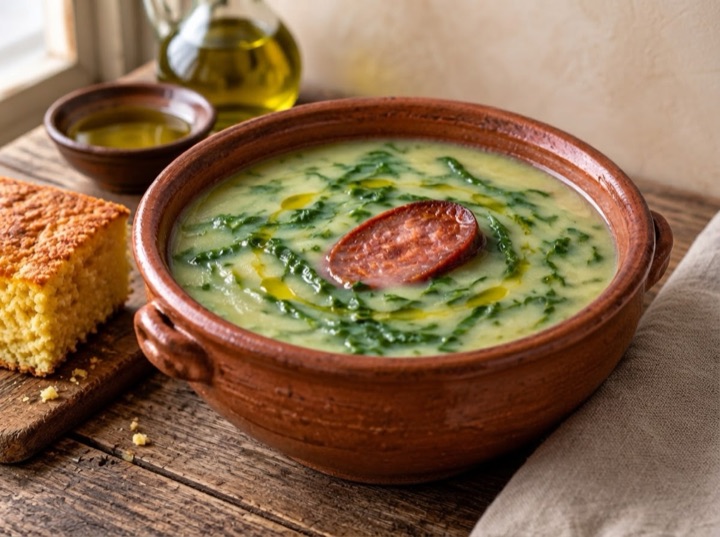 Traditional
Caldo VerdePortuguese Green Soup
Portugal's national soup: a silky potato base, ribbons of finely shredded greens and a slice of chouriço on top. Simple, cheap and done in 40 minutes.
 Traditional
Feijoada à TransmontanaBean and Pork Stew
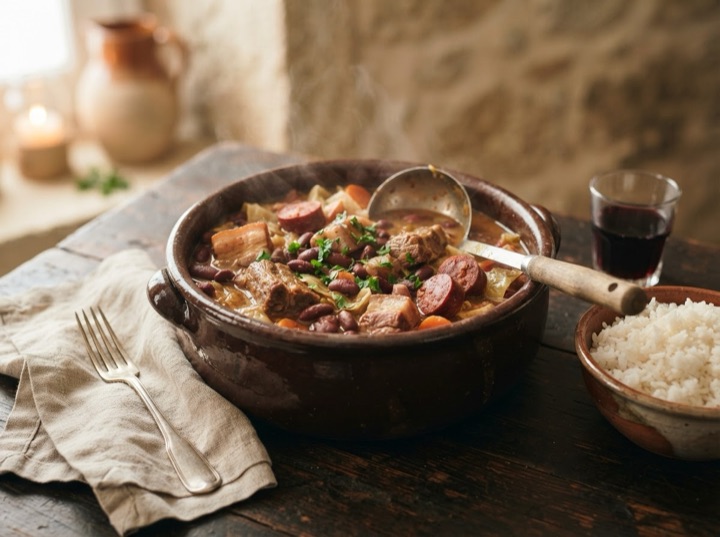
Red beans slow-cooked with pork, chouriço, cabbage and carrots, the hearty winter stew of Trás-os-Montes. A home version that skips the hard-to-find cuts.
 Air Fryer
Chouriço Assado Two WaysClay Grill or Air Fryer
Flame-grilled Portuguese chouriço in a clay assador, the way it's done at the table in Portugal, plus a no-fire air fryer version for weeknights.