Massa de PimentãoHow to Make Portuguese Red Pepper Paste
What massa de pimentão is, how to make the salted red pepper paste at home in three days, how long it keeps, and how to use it in pork dishes.
 By Mesa de Portugal Kitchen · Updated · 7 min read
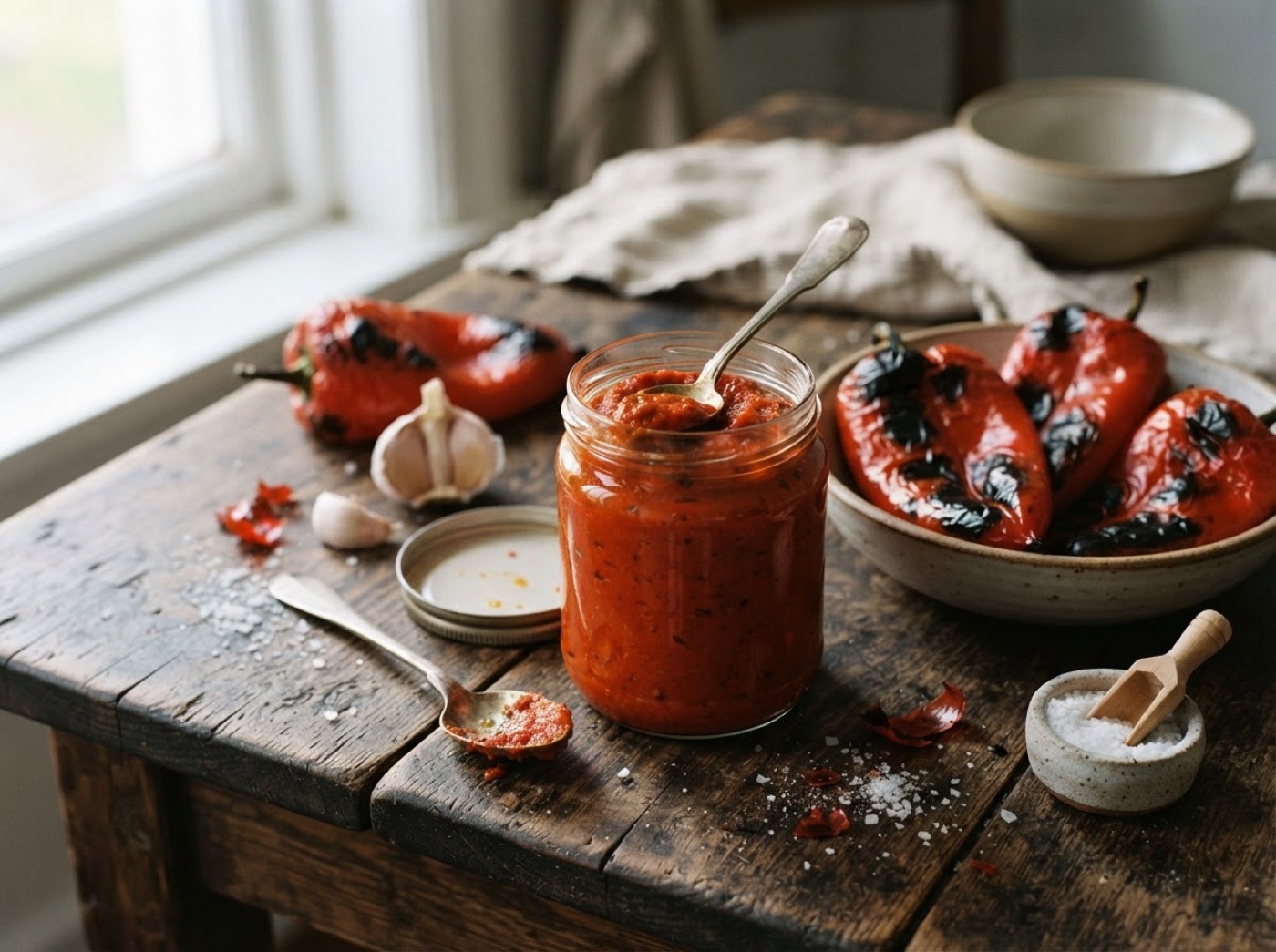
Massa de pimentão is a Portuguese paste of sweet red peppers cured in coarse salt, then blended with garlic and olive oil. It's thick, brick-red, salty and sweet, and it's the flavour behind Alentejo pork dishes like carne de porco à alentejana. You can make it at home with three ingredients and about three days of mostly waiting.
Think of it as the fresh, wet version of sweet paprika. Where colorau is dried and ground, massa de pimentão keeps the juicy sweetness of the pepper and adds a cured, savoury edge from the salt. A spoonful in a marinade does what a whole teaspoon of paprika can't.
What is massa de pimentão used for?
It's above all a marinade for pork. In the Alentejo and much of the south it's rubbed into pork with garlic, white wine and bay leaf the day before cooking. Its main uses:
- Carne de porco à alentejana, pork and clams. The paste colours the meat and seasons the sauce the clams open into.
- Rojões, cubes of pork fried in their own fat. Many recipes rely on a plain wine and garlic marinade, but some cooks add massa de pimentão.
- Roast pork and pork ribs, smeared on before the oven.
- Roast chicken and potatoes, thinned with olive oil and lemon.
- Homemade sausages, where it gives the red colour and part of the flavour.
- Pork belly, as in our air fryer entremeada, if you want a red, sweeter crust.
It's part of a bigger family of seasonings covered in our Portuguese spices guide, where it sits alongside garlic, bay and the wine and garlic marinade, vinha d'alhos.
How to make massa de pimentão at home
This is the traditional raw-pepper method. Salt draws the water out of the peppers and starts a light cure, which is what gives the paste its depth.
Ingredients (makes about 1 small jar, 300–350 g)
- 1 kg fleshy red peppers (bell or Romano types, ripe and fully red)
- About 150 g coarse sea salt (sal grosso)
- 4–6 cloves garlic, peeled
- Olive oil, about 4 tbsp plus extra to cover
Method
- Prepare the peppers. Wash and dry them. Cut out the stems, remove all seeds and white ribs, and cut the flesh into wide strips.
- Salt them. In a colander set over a bowl, or in a glass or ceramic dish, layer the strips with coarse salt, skin side down, so every piece is in contact with salt.
- Cure for about 3 days. Cover with a clean cloth and leave somewhere cool, away from sun (a cool larder, or the fridge in a hot kitchen). Drain off the red liquid once or twice a day. The peppers will soften and shrink a lot. Some families leave them up to a week; 2–3 days is enough for a good paste.
- Rinse lightly. Shake off the loose salt. If you want a less salty paste, give the strips a very quick rinse and pat them completely dry. Taste a piece: it should be salty, but not painfully so.
- Blend. Blend or mince the peppers with the garlic and the olive oil to a thick, slightly textured paste. A stick blender in a tall jug works well. Older cooks pass the peppers through a mincer.
- Jar it. Spoon into a clean jar, press down to remove air pockets and cover the surface with a thin layer of olive oil.
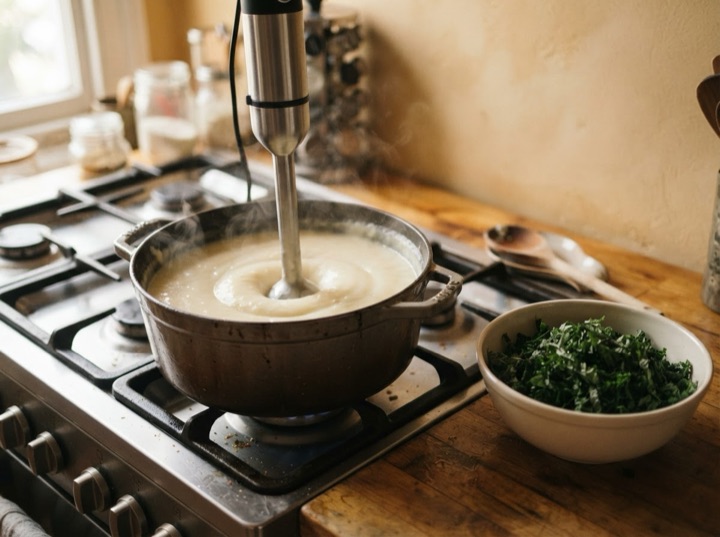
Cuisinart Smart Stick hand blender
Caldo verde's base has to be completely smooth before the greens go in. Blending in the pot means less washing up.
Tip: Take the pot off the heat before you blend to avoid splashes.
The quick version
If you need it tomorrow, roast or grill red peppers until blackened, peel them, then blend the flesh with garlic, olive oil and about 1 teaspoon of fine salt per pepper. Leave it in the fridge overnight. It's softer and smokier and lacks the cured depth, but it works in any recipe on this site. In a real hurry, mix 2 teaspoons of sweet (not smoked) paprika with a tablespoon of olive oil and a pinch of salt.
How long does massa de pimentão keep?
Homemade massa de pimentão is high in salt, which is why it keeps well. Store it in the fridge with a film of olive oil on top and always use a clean spoon. Keep it for 4–6 weeks and check it before each use: if it smells off, grows mould or bubbles, throw it out. You can also freeze it in an ice-cube tray, then bag the cubes. One cube is about one tablespoon, the amount most marinades need.
Because it contains raw garlic in oil, always keep it cold. Never store it at room temperature.
How to use it: a basic pork marinade
For 1 kg of pork shoulder or loin, cut into 3 cm cubes:
- 2 tbsp massa de pimentão
- 4 cloves garlic, crushed
- 200 ml dry white wine
- 2 bay leaves
- Black pepper
Massage everything into the meat, cover and refrigerate overnight. Don't add more salt: the paste already brings plenty. Lift the pork out, pat it dry and brown it in olive oil or lard, then use the marinade as the base of the sauce. This is exactly how the Alentejo pork and clams starts.
For a roast, mix 2 tablespoons of paste with 3 tablespoons of olive oil and the juice of half a lemon, and rub it over a pork shoulder or chicken pieces with sliced garlic and bay. Roast as normal. The paste browns quickly, so cover with foil if the top darkens too early.
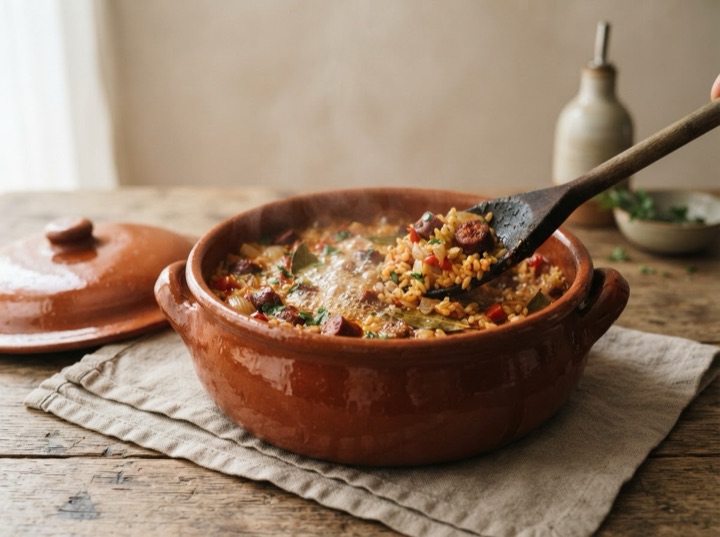
Portuguese hand-painted clay cooking pot
For rice dishes, feijoada and anything that goes from the oven straight to the table.
Tip: Check the listing for stovetop use. Many clay pots are oven-only or need a heat diffuser.
Common mistakes
- Using smoked paprika in the quick version. It changes the dish completely. Portuguese pepper paste is sweet, not smoky.
- Salting the meat as well. Taste the paste first and season the dish at the end.
- Green or half-ripe peppers. They give a bitter paste. Use peppers that are fully red and heavy for their size. They're cheapest in late summer, which is when Portuguese families traditionally make a batch.
- Leaving seeds and ribs. They add bitterness and make the paste grainy.
Buying it instead
In Portugal, jars of massa de pimentão are sold in supermarkets and at markets, often next to the tinned tomatoes. Abroad, look in Portuguese delis in places like Newark, Fall River or London's Stockwell and Vauxhall. Turkish sweet red pepper paste (tatlı biber salçası) is a decent stand-in: it's cooked rather than cured, so add a little extra garlic and salt. Check our Portuguese ingredient substitutes for other swaps, and our pantry staples list for what to keep alongside it.
What you’ll need
Links go to Amazon, where you can check today’s price. If you buy, we earn a small commission at no extra cost to you.
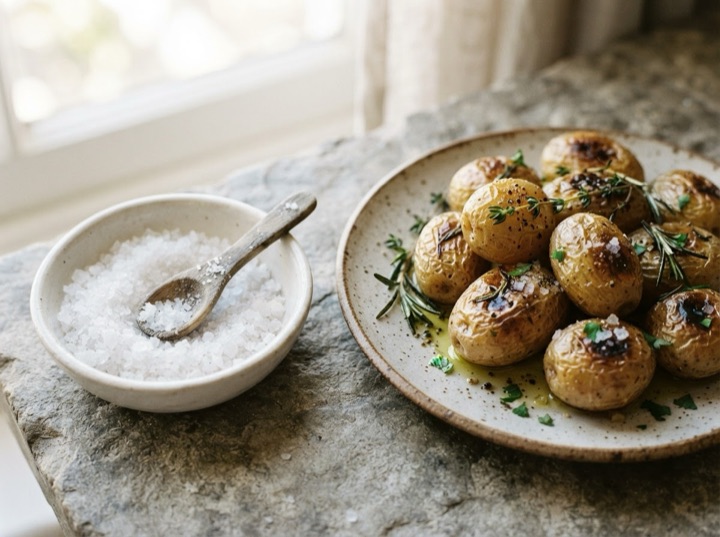
Algarve sea salt
Sea salt from the Algarve salt pans, for coarse-salt roasting batatas a murro and for finishing grilled fish.
Tip: A little goes a long way. Use it for finishing, not boiling water.
Cuisinart Smart Stick hand blender
Caldo verde's base has to be completely smooth before the greens go in. Blending in the pot means less washing up.
Tip: Take the pot off the heat before you blend to avoid splashes.
Portuguese hand-painted clay cooking pot
For rice dishes, feijoada and anything that goes from the oven straight to the table.
Tip: Check the listing for stovetop use. Many clay pots are oven-only or need a heat diffuser.
Frequently asked
What is massa de pimentão in English?
What can I use instead of massa de pimentão?
Is massa de pimentão spicy?
Does massa de pimentão need to be refrigerated?
How much massa de pimentão should I use?
Recipes from this story
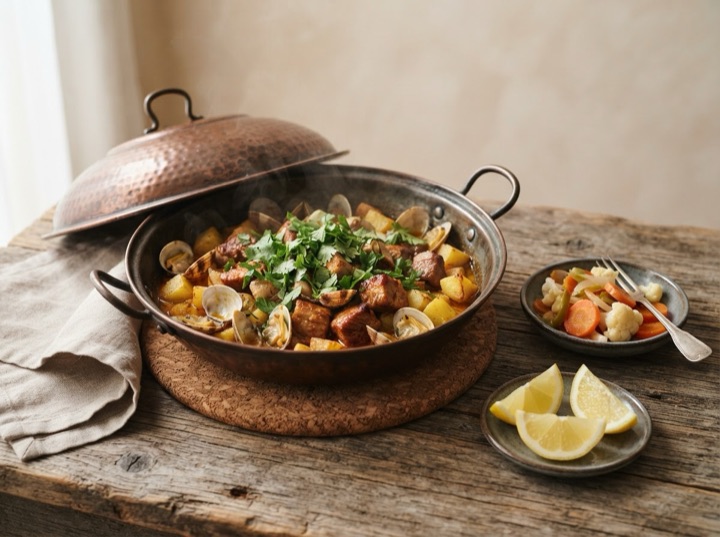 Traditional
Carne de Porco à AlentejanaPork and Clams
Pork marinated in wine, garlic and red pepper paste, tossed with clams, crisp potatoes and coriander. Portugal's great surf-and-turf, cooked in a cataplana.
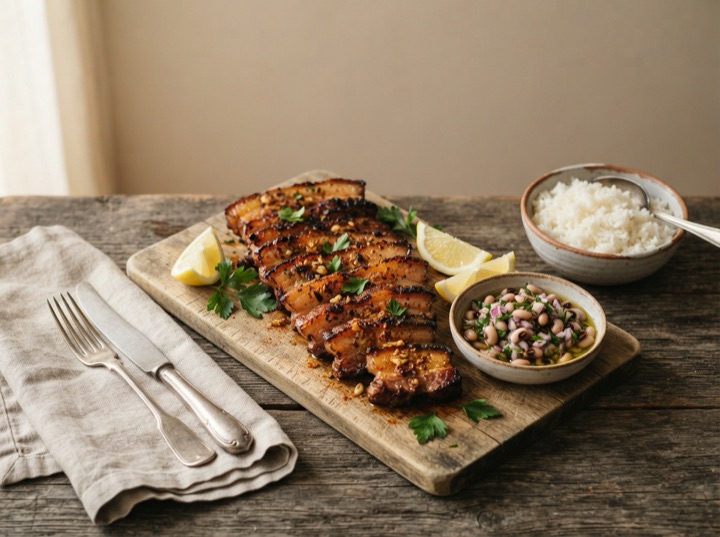 Air Fryer
Entremeada in the Air FryerGarlic Pork Belly
Thin slices of pork belly marinated in garlic, paprika and white wine, crisped in the air fryer. A Portuguese barbecue favourite, ready in 15 minutes.
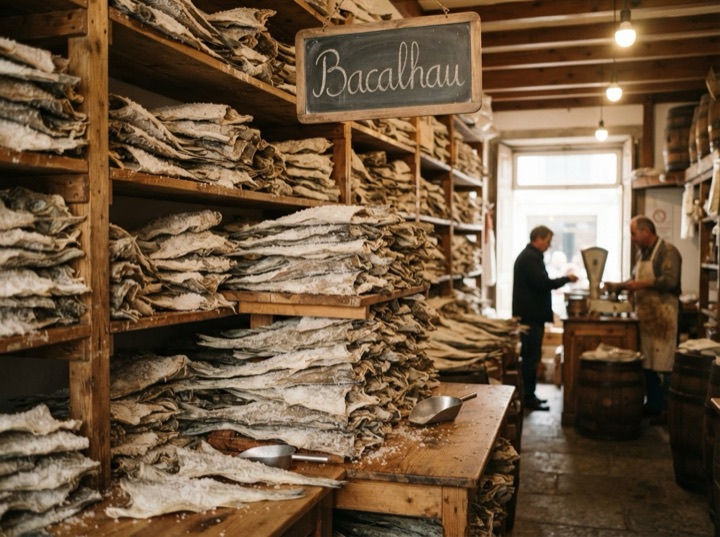 Food culture
Why Do Portuguese Eat BacalhauThe Story of the Faithful Friend
Why do Portuguese eat bacalhau when no cod swims off Portugal? Salt, Catholic fasting, Newfoundland fleets and the Estado Novo, explained simply.