Portuguese Ingredient SubstitutesWhat to Use Abroad
Portuguese ingredient substitutes for cooking abroad: what to use for chouriço, presunto, queijo da serra, massa de pimentão, bacalhau and carolino rice.
 By Mesa de Portugal Kitchen · Updated · 8 min read
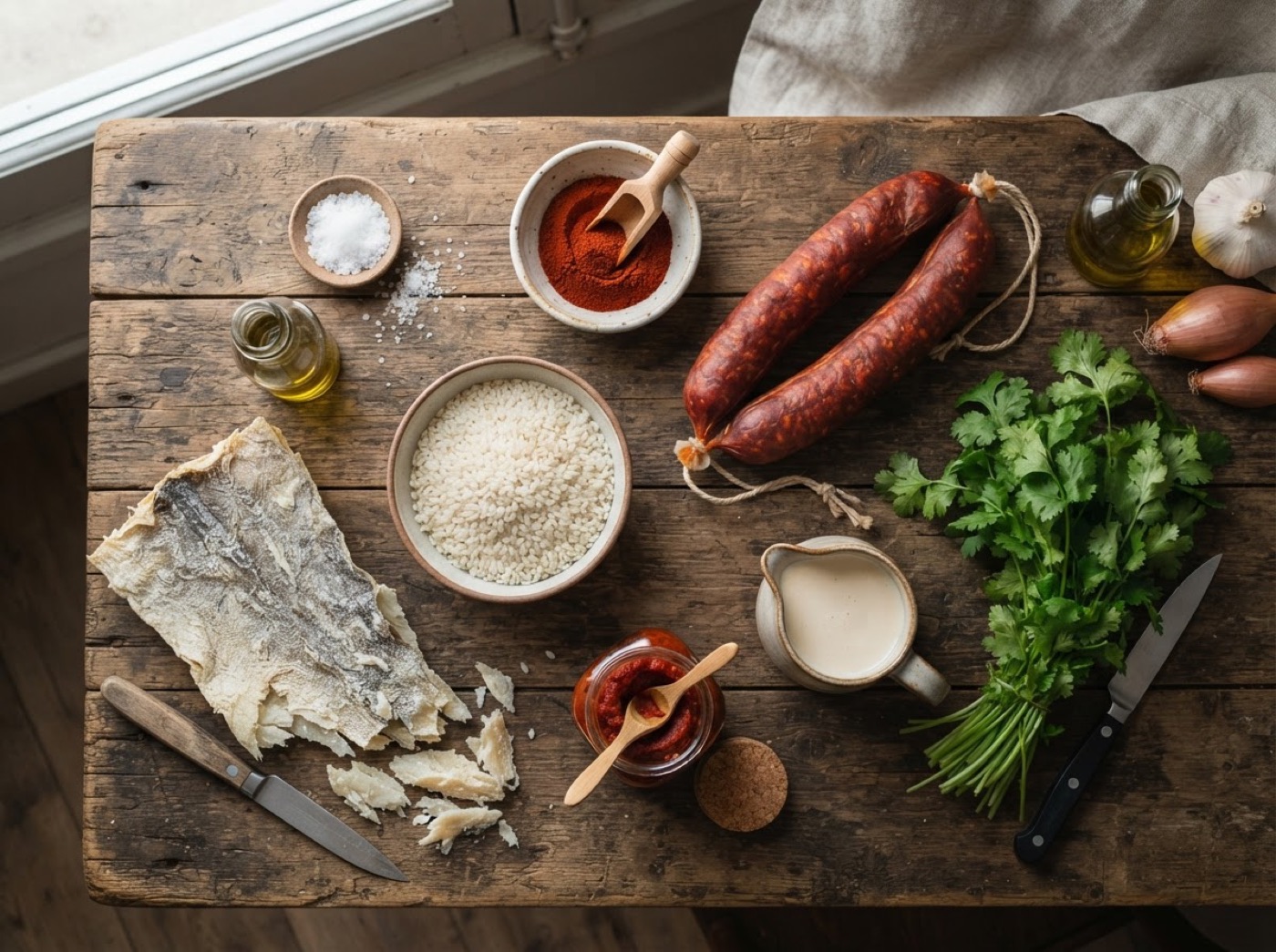
The best Portuguese ingredient substitutes are close cousins, not lookalikes. Use a smoked, cured pork sausage (or Portuguese-American linguiça) for chouriço, serrano or prosciutto for presunto, Torta del Casar for queijo da serra, red pepper paste for massa de pimentão, bird's eye chillies for piri-piri, and arborio for carolino rice. Some swaps work perfectly. Others need a small tweak.
Here's what to buy, what to avoid, and how to adjust the recipe for each one.
Chouriço
Portuguese chouriço is a cured, smoked pork sausage seasoned with garlic, wine and paprika or red pepper paste. It's firmer and smokier than most sausages, and less paprika-heavy than Spanish chorizo.
Best substitutes:
- Portuguese-American linguiça or chouriço. Made in the US by Portuguese-American producers, mainly around New England and New Jersey, and sold in many supermarkets there. The closest match.
- Spanish chorizo, cured (not fresh). Choose a smoked, mild (dulce) one. It's more paprika-forward, so use a little less and skip any extra paprika in the recipe.
- Polish kiełbasa for soups like caldo verde. Different spicing, but the right smoky, garlicky character.
Avoid: fresh Mexican chorizo. It's raw, crumbly and spiced with chilli and vinegar, and it won't hold slices in soup or flame in a clay grill. For the full story, read chouriço vs chorizo and our Portuguese sausages guide.
Presunto
Presunto is Portuguese dry-cured ham. The famous ones, like presunto de Chaves and presunto de Barrancos, are richer and saltier than Italian ham.
Best substitutes: Spanish jamón serrano is the closest, and Italian prosciutto works for eating raw. For cooking (in feijoada, stews or stuffing), any dry-cured ham or a piece of smoked bacon does the job. Slice a little thicker than you would for prosciutto: presunto is usually cut in thicker slices in Portugal.
Queijo da serra
Queijo Serra da Estrela is a raw ewe's milk cheese curdled with thistle flower (cardo). In winter it's so ripe and soft that you cut a lid off the top and scoop the inside with a spoon.
Best substitutes:
- Torta del Casar or Torta de la Serena from Spain. Both are ewe's milk cheeses set with thistle, made just over the border, and they're scooped the same way. The closest match.
- A ripe, runny Vacherin or Époisses-style cheese for the spoonable experience, though the flavour is different.
- Manchego curado stands in for the aged, firm version (queijo da serra velho).
Our Portuguese cheese guide covers other cheeses you might find abroad, like São Jorge and Azeitão.
Massa de pimentão
Massa de pimentão is a salty, fermented paste of red peppers. It's what gives Alentejo pork, chouriço and many marinades their colour and depth. It's rarely sold outside Portugal.
Best substitutes:
- Turkish or Middle Eastern red pepper paste (biber salçası), the mild or sweet kind, sold in Turkish and Middle Eastern shops. Very close. Add a pinch of salt, as massa is saltier.
- Homemade quick version: blitz 2 roasted red peppers (from a jar, drained) with 1 teaspoon coarse salt, 1 garlic clove and 1 tablespoon olive oil.
- In a hurry: 1 tablespoon tomato purée mixed with 2 teaspoons sweet paprika and salt.
Better still, make the real thing. It takes salt, peppers and a few days. Our massa de pimentão guide shows how.
Piri-piri
Piri-piri is a small, very hot African bird's eye chilli. In Portugal it's mostly used dried, crushed into oil, or in a bottled sauce.
Best substitutes: Thai bird's eye chillies, fresh or dried, are the same family and similar in heat. Dried chilli flakes work in oil and marinades. Cayenne pepper works at a pinch, but it lacks the fruity bite. Bottled sauces are fine for the table, but for cooking, make your own piri-piri sauce from dried chillies, garlic, olive oil and lemon.
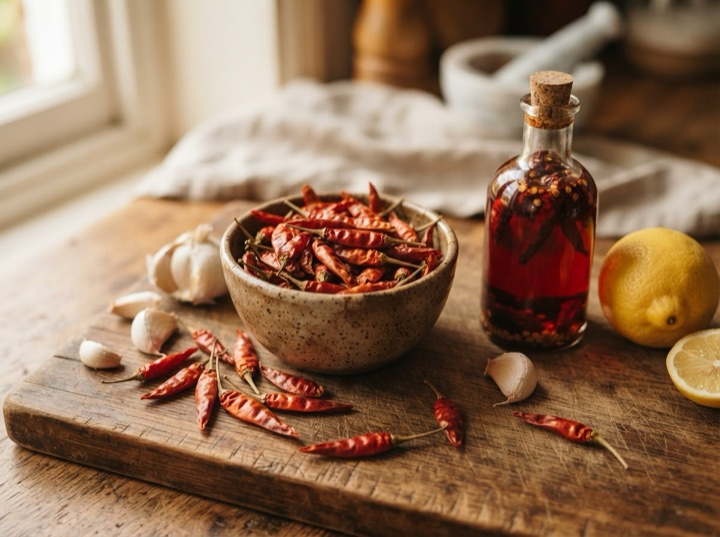
Piri-piri chillies from Portugal
Whole dried bird's-eye chillies, the heat behind frango piri-piri and the bottle of chilli oil on every Portuguese table.
Tip: Two packs last a year. Crush them as you need them.
Bacalhau
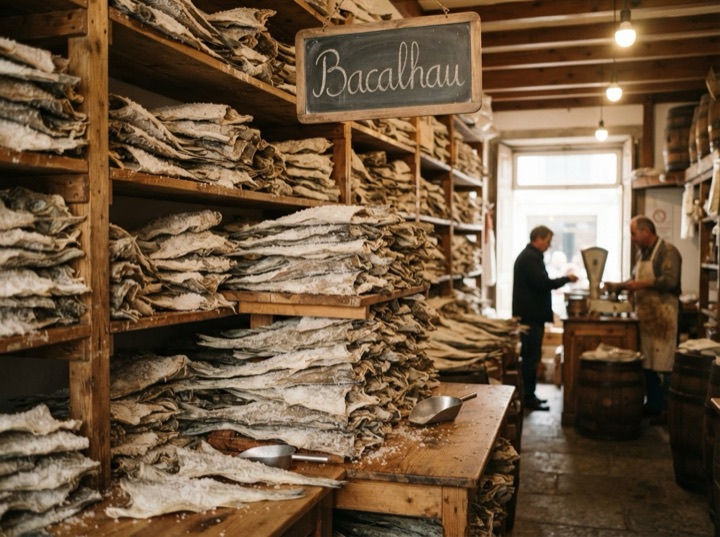
Bacalhau is dried salt cod, soaked for one to three days before cooking. There's no true substitute, because the salting and drying change the texture completely.
Where to find it abroad: look for it in Portuguese, Spanish (bacalao), Italian (baccalà), Caribbean and Brazilian shops. It's sold as whole sides, loins or pieces, sometimes already soaked and frozen. See our guide to buying bacalhau.
If you really can't get it: salt fresh cod yourself. Cover thick fillets in a generous layer of coarse salt and leave them in the fridge for 24 to 48 hours, then rinse and soak for a few hours. It won't flake like the real thing, but it gives a seasoned, firmer fish for dishes like bacalhau à Brás. Don't do this with thin fillets, which turn tough.
Carolino rice
Carolino is a Portuguese medium-grain rice that soaks up lots of liquid and turns creamy, perfect for arroz de marisco, arroz de pato and arroz doce.
Best substitutes: arborio or another risotto rice is the closest. Spanish bomba or Calasparra works for brothy rice dishes. For arroz doce, any pudding rice is fine.
Avoid: basmati and long-grain rice. They stay separate and won't give the soupy, creamy texture Portuguese rice dishes need. Our Portuguese rice dishes guide explains why the texture matters.
Broa
Broa is a dense, slightly sour cornbread from northern Portugal, made with corn and rye or wheat flour and baked with a thick crust. It's served with caldo verde and sardines.
Best substitutes: a dense rye or sourdough loaf with a heavy crust is better than anything sold as "cornbread". American cornbread is sweet, cake-like and crumbly, and it falls apart in soup. If you want the real flavour, broa is surprisingly easy to bake. See our Portuguese bread guide.
Coentros
Coentros is fresh coriander (cilantro in the US). It's used far more in Portugal than in Spain, in açorda, clams and pork with clams.
Best substitutes: there isn't a real one. Flat-leaf parsley gives freshness but tastes completely different. If coriander tastes of soap to you, use parsley and a little lemon zest. Otherwise, buy a big bunch and freeze the leftovers chopped in olive oil in an ice cube tray.
Natas
Portuguese supermarket natas for cooking come in small cartons, lighter than double cream, and are used in bacalhau com natas and creamy pasta.
Best substitutes: single cream in the UK or light cream in the US for sauces and bakes. For whipping, use double cream or heavy cream. Crème fraîche works in bacalhau com natas, and adds a slight tang.
A few more quick swaps
- Colorau (sweet paprika): any sweet, unsmoked paprika.
- Banha (lard): lard, or olive oil if you prefer.
- Farinheira (flour-and-pork sausage): no good swap. Leave it out.
- Flor de sal: any flaky sea salt.
- Vinho verde for cooking: any dry, crisp white wine.
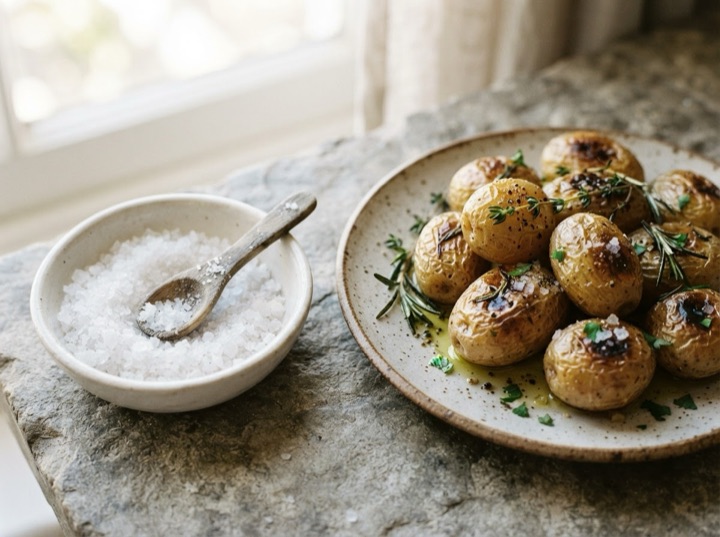
Algarve sea salt
Sea salt from the Algarve salt pans, for coarse-salt roasting batatas a murro and for finishing grilled fish.
Tip: A little goes a long way. Use it for finishing, not boiling water.
What you’ll need
Links go to Amazon, where you can check today’s price. If you buy, we earn a small commission at no extra cost to you.
Piri-piri chillies from Portugal
Whole dried bird's-eye chillies, the heat behind frango piri-piri and the bottle of chilli oil on every Portuguese table.
Tip: Two packs last a year. Crush them as you need them.
Algarve sea salt
Sea salt from the Algarve salt pans, for coarse-salt roasting batatas a murro and for finishing grilled fish.
Tip: A little goes a long way. Use it for finishing, not boiling water.

Authentic Portuguese Cooking (cookbook)
Over 185 classic recipes from mainland Portugal, the Azores and Madeira. A highly rated home-cooking reference.
Tip: Good for family recipes you remember but never wrote down.
Frequently asked
What can I use instead of Portuguese chouriço?
What is a good substitute for carolino rice?
What can I use instead of massa de pimentão?
Can I use fresh cod instead of bacalhau?
Is Spanish chorizo the same as Portuguese chouriço?
Recipes from this story
 Food culture
Why Do Portuguese Eat BacalhauThe Story of the Faithful Friend
Why do Portuguese eat bacalhau when no cod swims off Portugal? Salt, Catholic fasting, Newfoundland fleets and the Estado Novo, explained simply.
 Eat like a local
What to Eat in SintraTravesseiros, Queijadas and the Coast
What to eat in Sintra: travesseiros and queijadas, Colares wine, and grilled fish on the nearby coast, plus tips to eat well on a Sintra day trip.
 Eat like a local
What to Eat in Porto12 Local Dishes and How to Order
What to eat in Porto, dish by dish: francesinha, tripas, bifanas, sandes de pernil, bolinhos de bacalhau and port, with tips on how locals order.