Portuguese Sausage Guide7 Types and How to Cook Each
Portuguese sausage explained: chouriço, linguiça, alheira, farinheira, morcela, salpicão and paio, what's in each, which to eat raw, how to cook them.
 By Mesa de Portugal Kitchen · Updated · 7 min read
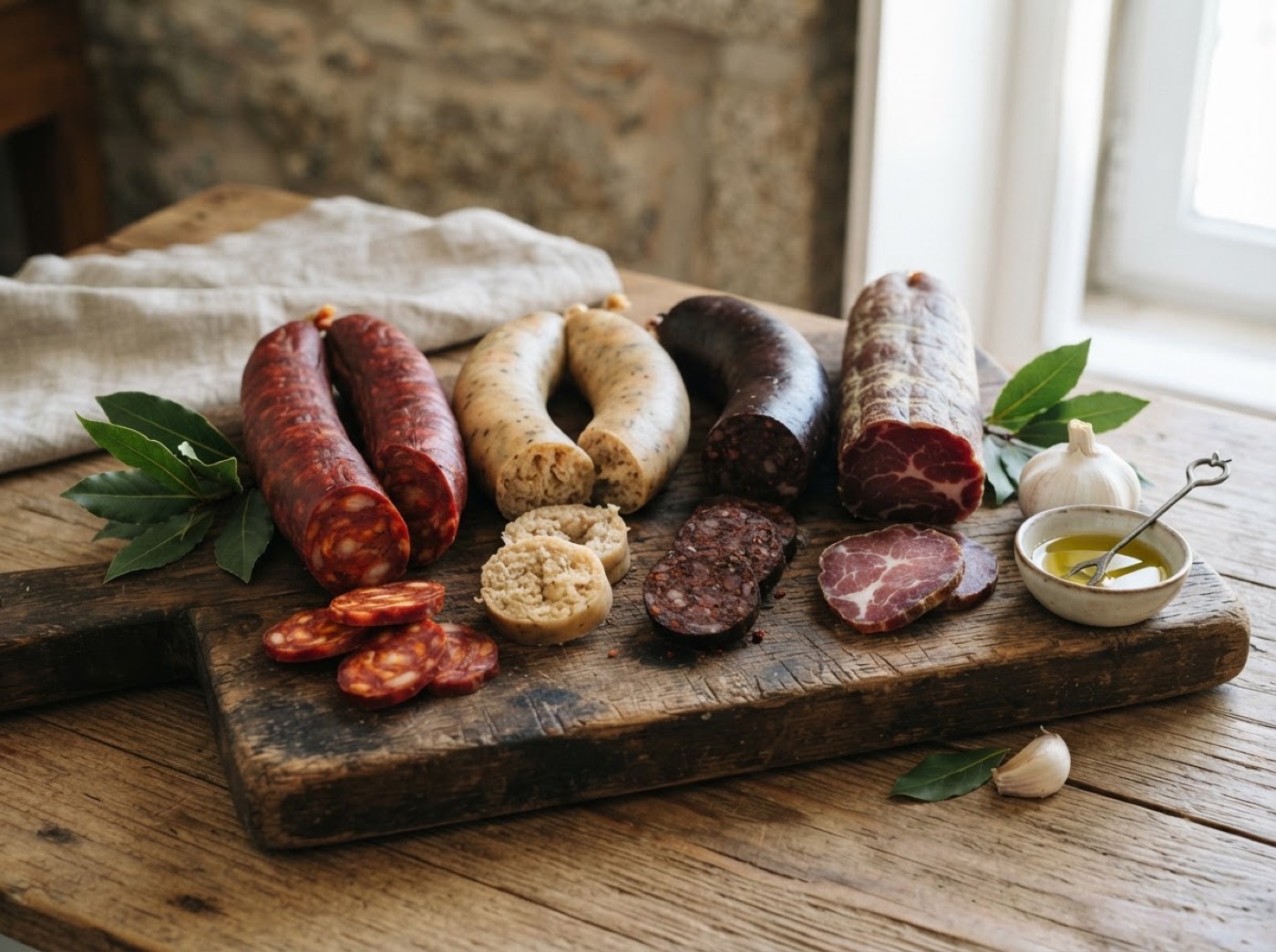
Portuguese sausages, called enchidos ("stuffed things"), are mostly pork seasoned with garlic, wine and sweet paprika, then smoked. The main types are chouriço (the classic smoked pork sausage), linguiça (a thinner cousin), alheira (a bread-and-meat sausage), farinheira (a flour sausage), morcela (blood sausage), and the lean cured loins salpicão and paio. Some are eaten raw, others must be cooked.
Most of them come from a tradition called the matança do porco, the winter pig slaughter held by families in rural Portugal, when every part of the animal was salted, stuffed and hung in the smokehouse to last the year. Trás-os-Montes, the Beiras and the Alentejo are the great sausage regions.
Raw or cooked: the quick answer
- Ready to eat sliced: chouriço (cured), salpicão, paio.
- Must be cooked: alheira, farinheira, most morcela.
- Both: linguiça and softer chouriço are usually grilled or cooked, though well-cured ones can be sliced.
Check the label: curado means cured, and para cozinhar means for cooking.
1. Chouriço
The best-known Portuguese sausage. Chunks of pork and pork fat are marinated in wine, garlic, salt and massa de pimentão (sweet red pepper paste) or paprika, stuffed into natural casing and slowly smoked. It's smoky and garlicky rather than intensely spicy, and redder and drier the longer it's cured.
How to cook it:
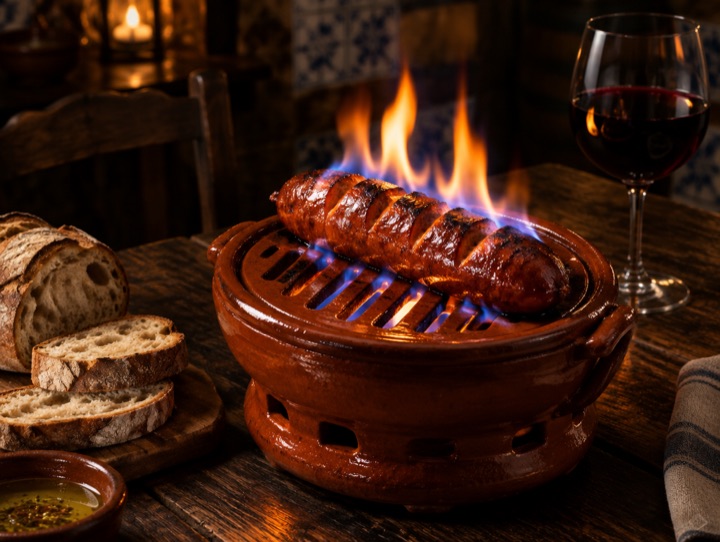
- Flamed at the table in a clay assador with a splash of aguardente: our chouriço assado recipe shows how.
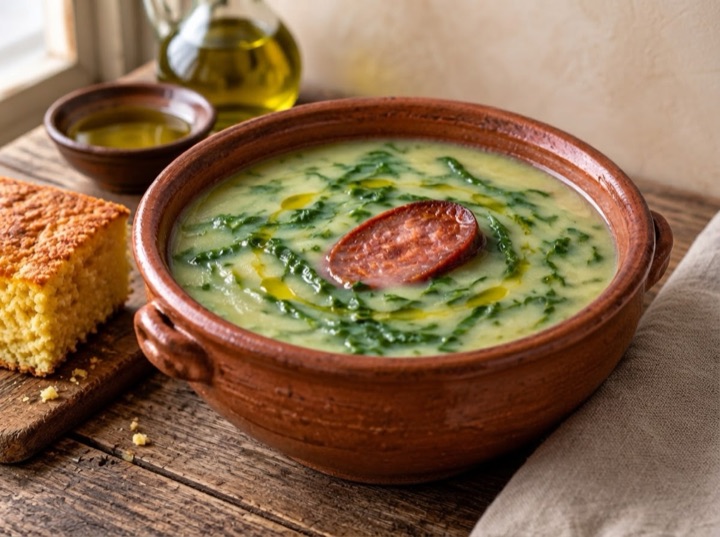
- Sliced into soups, one coin per bowl, as in caldo verde.
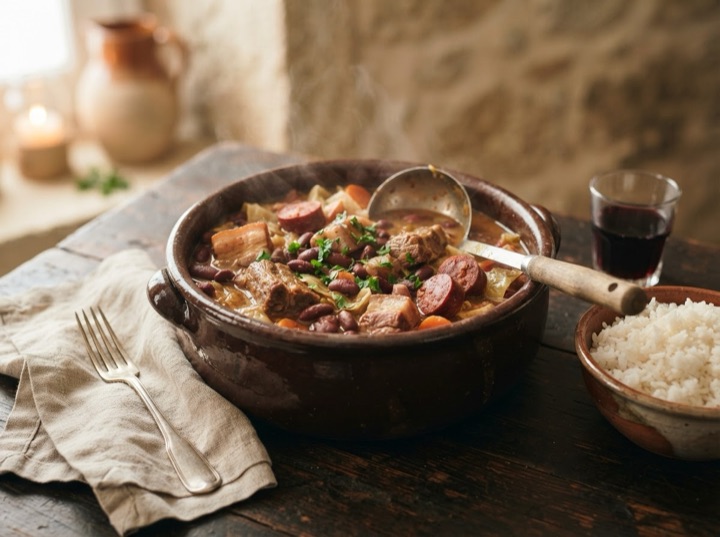
- In stews like feijoada à transmontana and cozido à portuguesa.
- Sliced raw on a board with bread and cheese.
There's also chouriço de sangue or chouriço mouro, a darker version made with pig's blood.
If you're wondering how it differs from Spanish chorizo, read chouriço vs chorizo.
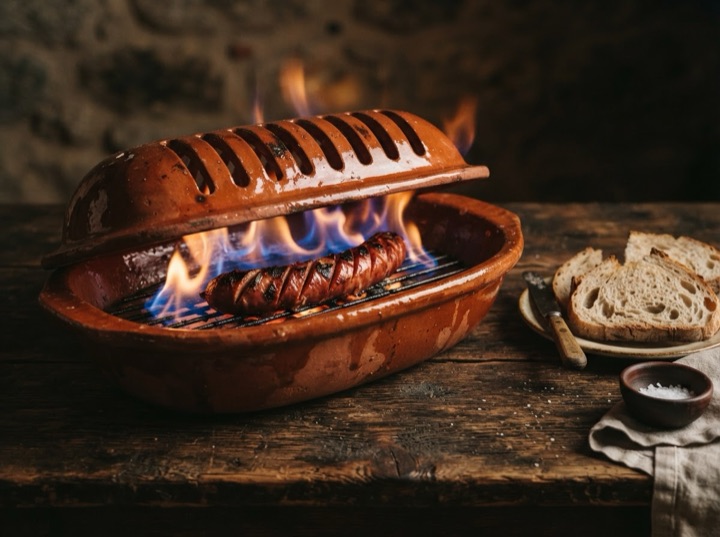
Portuguese clay chouriço grill (assador)
The glazed terracotta dish with a slotted top for flaming chouriço at the table. Most Portuguese homes have one in a cupboard.
Tip: The medium size fits a standard chouriço. Use it on a cork board or tiles, never near curtains.
2. Linguiça
A long, thin sausage with a similar seasoning to chouriço: pork, garlic, paprika and wine, then smoked. Because it's thinner, it cooks faster and is usually grilled whole or in pieces. Linguiça is especially popular in the Azores and in Portuguese communities in the US, where it's a breakfast and barbecue staple.
How to cook it: grill over charcoal for 8-10 minutes, turning often, or slice and fry with onions and peppers. It's excellent in a crusty roll, and on a Portuguese churrasco.
3. Alheira
The most interesting sausage in Portugal. Alheira is made with bread and shredded meat, traditionally poultry, game and more recently also pork, bound with olive oil and plenty of garlic. It's soft inside, usually horseshoe-shaped, and lightly smoked. The best known comes from Mirandela, in Trás-os-Montes, where Alheira de Mirandela has protected (PGI) status.
The origin story
According to popular history, alheira was invented by Jewish families in Portugal after the forced conversions of the late 15th century. Living as cristãos-novos (New Christians) under the eye of the Inquisition, they are said to have made pork-free sausages from bread and poultry, so they could hang sausages in the smokehouse like their Christian neighbours without eating pork. Historians debate how much of the story is literal, and today most alheiras do contain some pork, but it's the story every Portuguese person knows.
How to cook it: alheira must be cooked. Fry it gently in a little olive oil in a pan, or bake it at 200 °C for 15-20 minutes, until the skin is crisp and blistered and the inside is hot. The classic plate is alheira com ovo: alheira with a fried egg, chips and sautéed turnip greens. Don't boil it, or it falls apart.
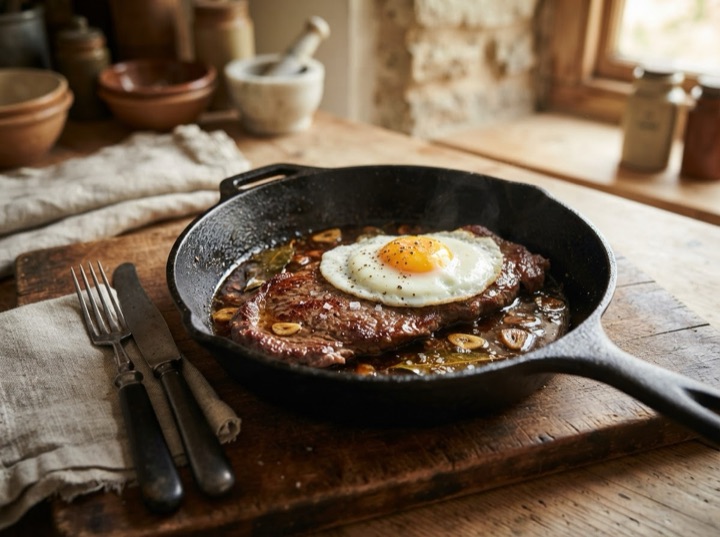
Lodge 12-inch cast iron skillet
One of Amazon's best-selling pans. Gets hot enough to sear bitoque steaks and blister sardines.
Tip: Season it and it lasts forever.
4. Farinheira
A pale sausage made with wheat flour, pork fat, garlic, white wine and paprika. It's soft and almost pasty inside, with a mild, smoky flavour.
How to cook it: farinheira is never eaten raw. The most popular dish is ovos mexidos com farinheira: squeeze the filling out of the casing into a hot pan, fry it for a few minutes until it loosens, then stir in beaten eggs and scramble softly. It's also simmered in cozido, or grilled whole and sliced as a petisco.
5. Morcela
Portuguese blood sausage. Styles vary by region:
- Morcela de arroz, from the Beiras, has rice, pork and blood, often with cumin and other spices.
- Morcela from the Alentejo and the north is usually blood, pork fat and spices, smoked and firmer.
How to cook it: slice morcela de arroz and fry or grill it until the outside is crisp. Firmer smoked morcela goes into cozido à portuguesa and bean stews, or onto the grill alongside chouriço.
6. Salpicão
A thick, lean sausage made from chunks of pork loin marinated in wine, garlic and paprika, then smoked for a long time. It's firmer and leaner than chouriço, a little like a Portuguese version of Italian lonza. Trás-os-Montes is famous for it, especially the town of Vinhais.
How to eat it: slice it thin and eat it raw with bread, or add it to feijoada à transmontana and other bean dishes for meaty depth.
7. Paio
Another cured pork loin sausage, popular in the Alentejo. Paio do lombo is made from whole pork loin seasoned with garlic and paprika. It's lean, mild and sliced thin like salami.
How to eat it: on a board or in a sandwich. It's also used in some feijoadas and bean stews. It's a natural partner for a glass of Alentejo red; see our Alentejo food guide.
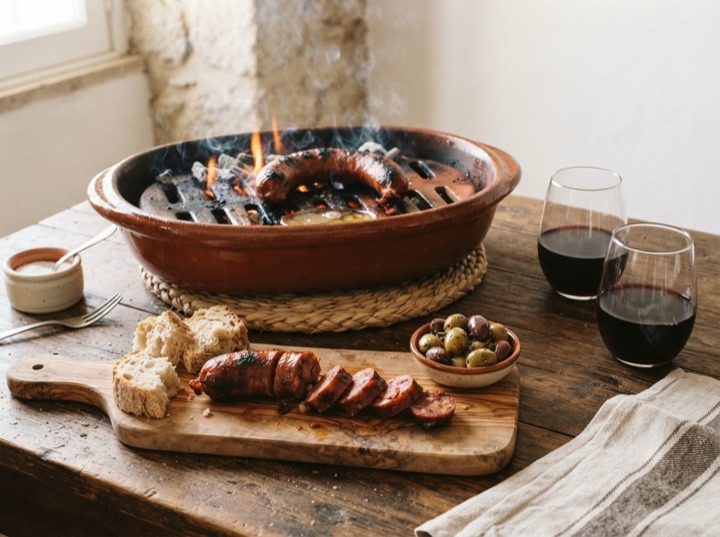
Portuguese clay chouriço roaster, large
The large size of the classic made-in-Portugal assador, for a full chouriço plus a few extra slices.
Tip: Use on a heatproof surface, away from anything flammable.
Buying Portuguese sausages outside Portugal
Portuguese delis in the UK, US, Canada and France usually stock chouriço, linguiça and often alheira and morcela. In the US, Portuguese-American brands from New England and California are easy to find. Look at the ingredients: good chouriço has pork, garlic, paprika, wine and salt, not liquid smoke or a long list of additives.
Fresh sausages keep in the fridge for a week or two. Cured chouriço, salpicão and paio keep for weeks in a cool place, wrapped in paper, not plastic.
For more on Portuguese seasonings, including massa de pimentão, read our guide to Portuguese spices and seasonings.
What you’ll need
Links go to Amazon, where you can check today’s price. If you buy, we earn a small commission at no extra cost to you.
Portuguese clay chouriço grill (assador)
The glazed terracotta dish with a slotted top for flaming chouriço at the table. Most Portuguese homes have one in a cupboard.
Tip: The medium size fits a standard chouriço. Use it on a cork board or tiles, never near curtains.
Portuguese clay chouriço roaster, large
The large size of the classic made-in-Portugal assador, for a full chouriço plus a few extra slices.
Tip: Use on a heatproof surface, away from anything flammable.
Lodge 12-inch cast iron skillet
One of Amazon's best-selling pans. Gets hot enough to sear bitoque steaks and blister sardines.
Tip: Season it and it lasts forever.
Frequently asked
What is Portuguese sausage called?
Can you eat Portuguese chouriço raw?
What is the difference between chouriço and linguiça?
What is alheira made of?
How do you cook farinheira?
Recipes from this story
 Air Fryer
Chouriço Assado Two WaysClay Grill or Air Fryer
Flame-grilled Portuguese chouriço in a clay assador, the way it's done at the table in Portugal, plus a no-fire air fryer version for weeknights.
 Traditional
Caldo VerdePortuguese Green Soup
Portugal's national soup: a silky potato base, ribbons of finely shredded greens and a slice of chouriço on top. Simple, cheap and done in 40 minutes.
 Traditional
Feijoada à TransmontanaBean and Pork Stew
Red beans slow-cooked with pork, chouriço, cabbage and carrots, the hearty winter stew of Trás-os-Montes. A home version that skips the hard-to-find cuts.