Alentejo FoodWhat to Eat in Southern Portugal
Alentejo food dish by dish: açorda, migas, porco preto, sopa de cação, ensopado de borrego, sheep's cheeses and talha wine, and how to order them.
 By Mesa de Portugal Kitchen · Updated · 7 min read
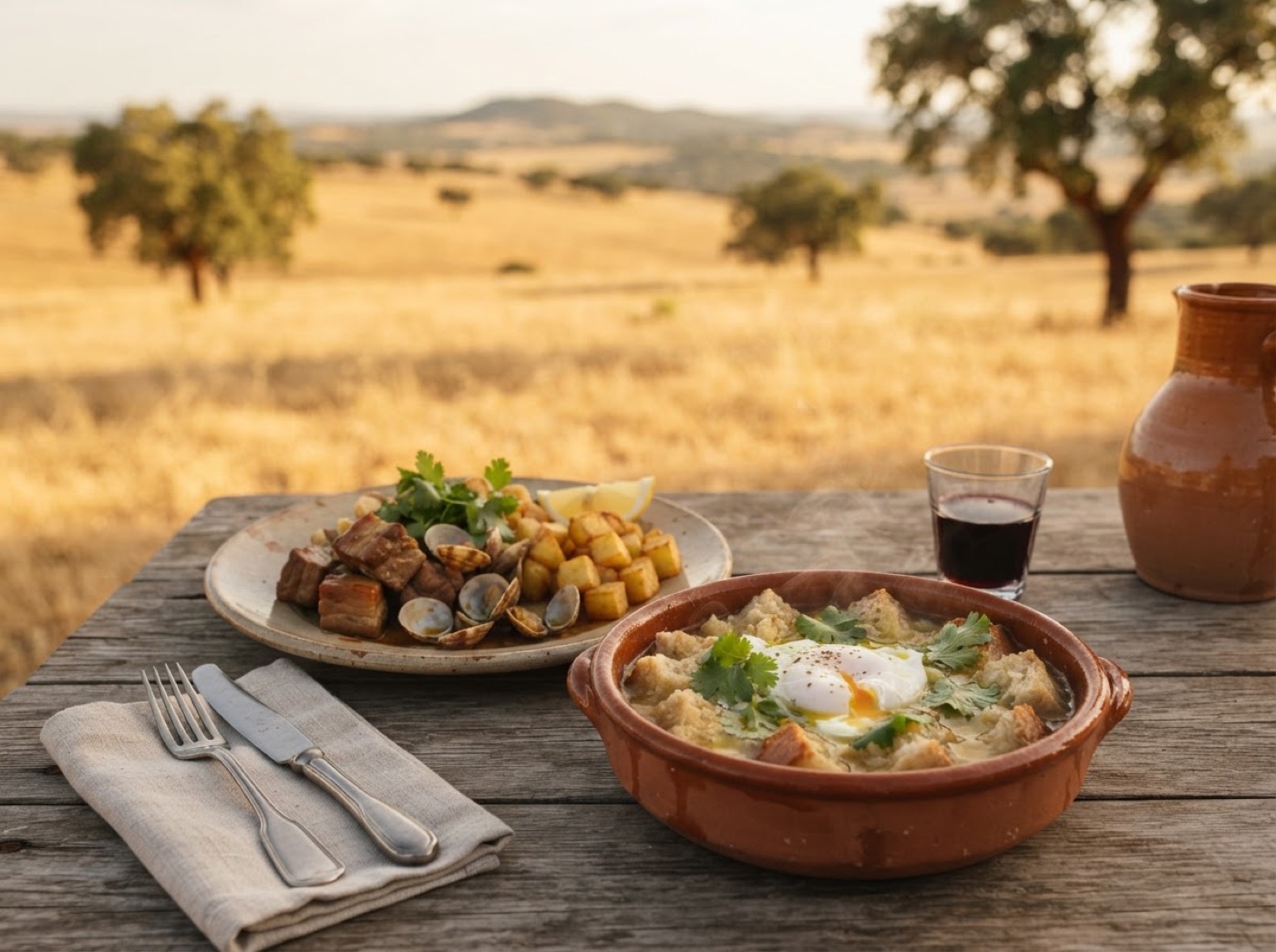
Alentejo food is bread, pork, olive oil, garlic and herbs, cooked slowly. The essential dishes are açorda (garlic and coriander bread soup with a poached egg), migas (fried bread crumbs with pork), porco preto (acorn-fed black pig), sopa de cação (dogfish soup), ensopado de borrego (lamb stew over bread) and gaspacho in summer, with sheep's cheeses from Serpa, Évora and Nisa and big, warm red wines.
The Alentejo covers about a third of mainland Portugal, south of the Tagus. It's hot, dry and sparsely populated, with cork oaks, olive groves and wheat fields. Its cooking came from poverty: nothing wasted, especially not yesterday's bread. Today it's some of the most loved food in the country.
Bread dishes: the heart of Alentejo cooking
Alentejo bread (pão alentejano) is a dense, chewy, crusty white loaf that keeps for days. When it goes stale, it becomes dinner. Our Portuguese bread guide explains the loaf itself.
1. Açorda alentejana
Not the thick bread porridge of Lisbon, but a soup: garlic, salt and fresh coriander pounded into a paste, loosened with olive oil and boiling water, poured over slices of stale bread, and topped with a poached egg. It takes 20 minutes and tastes far better than the ingredients suggest. See our açorda alentejana recipe.
2. Migas
Stale bread soaked and then fried in pork fat and garlic until it forms a soft, savoury mass with crisp edges. Migas usually come alongside fried pork (migas com carne de porco), but there are also versions with wild asparagus (migas de espargos) or with tomato. It's rich, filling winter food.
3. Gaspacho alentejano
The Alentejo's cold summer soup: tomato, cucumber, green pepper, garlic, vinegar, olive oil, oregano, cold water and cubes of bread. Unlike Spanish gazpacho, it's usually not blended smooth, so it's chunky and refreshing. Often eaten with fried fish or sausage on the side.
Pork: porco preto and friends
4. Porco preto
The Alentejo's black pig is an Iberian breed, raised outdoors in the montado, the open cork and holm oak woodland. In autumn and winter the pigs feed on fallen acorns (bolota), which gives the meat and fat a nutty flavour and lots of marbling. On menus look for:
- Secretos: the "secret" cut, a thin, fatty strip from under the shoulder, grilled fast.
- Plumas: a tender, marbled cut near the loin.
- Presas: a juicy cut from the shoulder.
- Lombinhos: small loin pieces.
They're usually grilled simply with salt and served with fries or migas. The best are served pink in the middle. Cured hams (presunto) and sausages from the black pig are also excellent. Our Portuguese sausages guide covers the cured side.
5. Carne de porco à alentejana
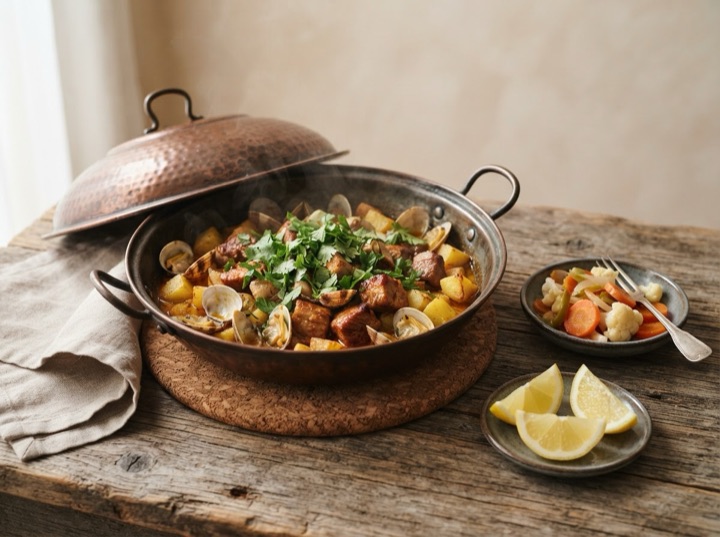
Pork marinated in white wine, garlic and massa de pimentão (red pepper paste), fried, then tossed with clams, fried potato cubes and coriander. Its name says Alentejo, but the combination of pork and clams is often linked to the coast and the Algarve too, and its exact origin is debated. Either way, you'll find it all over the south. Our carne de porco à alentejana recipe and our guide to massa de pimentão will get you there.
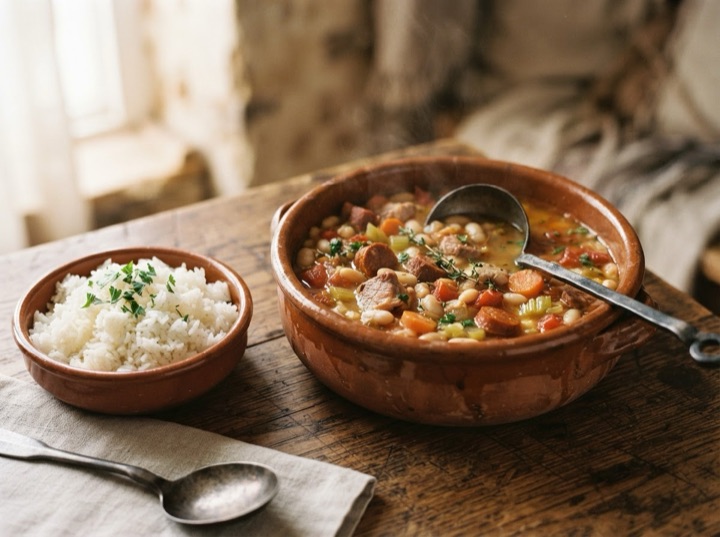
Hand-painted Portuguese clay cazuela
A hand-painted terracotta pot from a Portuguese pottery, for rice dishes, stews and serving.
Tip: Check the listing for stovetop use, and use a heat diffuser.
Fish, lamb and game
6. Sopa de cação
Dogfish (cação, a small shark) poached in a broth of garlic, coriander, olive oil and a splash of vinegar, poured over bread. The vinegar gives it a sharp, appetising edge. It's a classic in Évora and across the region.
7. Ensopado de borrego
Lamb stew, slow-cooked with garlic, bay, white wine and sometimes paprika, then served over slices of bread that soak up the juices. Lamb dishes are especially popular around Easter.
8. Game and wild herbs
In season you may see partridge (perdiz), hare (lebre) and wild boar (javali), plus dishes with wild asparagus, mushrooms (túbaras) and beldroegas (purslane), often in soup with a poached egg and cheese.
Cheeses
The Alentejo makes some of Portugal's best sheep's and goat's cheeses, three of them with protected (DOP) names:
- Queijo de Serpa: a raw sheep's milk cheese made with thistle rennet. Young, it's soft and spoonable, with a strong, tangy flavour.
- Queijo de Évora: small, firm sheep's milk cheeses, sharp and salty, often eaten as a starter.
- Queijo de Nisa: a semi-hard sheep's milk cheese from the north of the region, mild and buttery.
They're typically served as an entrada (starter) with bread and olives before you order. Remember that anything put on the table you eat is charged. Our Portuguese cheese guide explains how to choose.
Olive oil and wine
Olive oil
The Alentejo produces most of Portugal's olive oil, and you'll taste it in everything, from açorda to gaspacho. Our Portuguese olive oil guide explains what to look for on the label.
Alentejo wine
Alentejo reds are ripe, round and generous, often blends with grapes like Aragonez, Trincadeira and Alicante Bouschet. They're easy to like and good value. Whites are fuller than vinho verde.
Vinho de talha
The region also keeps alive one of the oldest winemaking methods in Europe: wine fermented in huge clay amphorae called talhas, a technique with Roman roots. Traditionally, the new talha wine is first tasted around São Martinho on 11 November. Villages like Vila de Frades are known for it. Read our São Martinho guide for the rest of that tradition, and our Portuguese wine for beginners for the wider picture.
Sweets
- Sericaia: a soft, cinnamon-dusted egg pudding baked in clay dishes, usually served with syrupy Elvas plums.
- Pão de rala: an almond and egg sweet from Évora, shaped like a small loaf.
- Encharcada: an egg-yolk and sugar syrup dessert.
Our Portuguese desserts guide and convent sweets guide cover more.
How to eat in the Alentejo
Évora is the easiest base, with plenty of restaurants around the old centre. Smaller towns like Estremoz, Monsaraz, Serpa and Beja have simple places where the menu is short and seasonal. Lunch is the big meal, roughly 12:30 to 15:00. Many restaurants close one day a week and some close between services, so don't leave lunch too late.
The region is also cork country: much of the world's cork is harvested from Alentejo oaks, and cork placemats make a fitting table for these dishes.
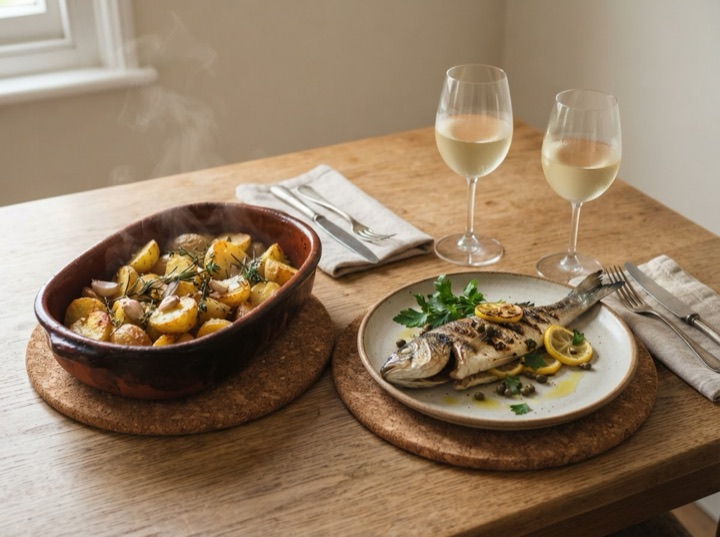
Casafina Portuguese cork placemats, set of 4
Portugal produces about half the world's cork. These heat-safe placemats take a hot cataplana or clay pot.
Tip: Wipe clean with a damp cloth. Don't soak them.
Heading south afterwards? See what to eat in the Algarve.

Authentic Portuguese Cooking (cookbook)
Over 185 classic recipes from mainland Portugal, the Azores and Madeira. A highly rated home-cooking reference.
Tip: Good for family recipes you remember but never wrote down.
What you’ll need
Links go to Amazon, where you can check today’s price. If you buy, we earn a small commission at no extra cost to you.
Hand-painted Portuguese clay cazuela
A hand-painted terracotta pot from a Portuguese pottery, for rice dishes, stews and serving.
Tip: Check the listing for stovetop use, and use a heat diffuser.
Casafina Portuguese cork placemats, set of 4
Portugal produces about half the world's cork. These heat-safe placemats take a hot cataplana or clay pot.
Tip: Wipe clean with a damp cloth. Don't soak them.
Authentic Portuguese Cooking (cookbook)
Over 185 classic recipes from mainland Portugal, the Azores and Madeira. A highly rated home-cooking reference.
Tip: Good for family recipes you remember but never wrote down.
Frequently asked
What is the most typical dish of the Alentejo?
What is porco preto?
What cheese is from the Alentejo?
What wine should I drink in the Alentejo?
Recipes from this story
 Traditional
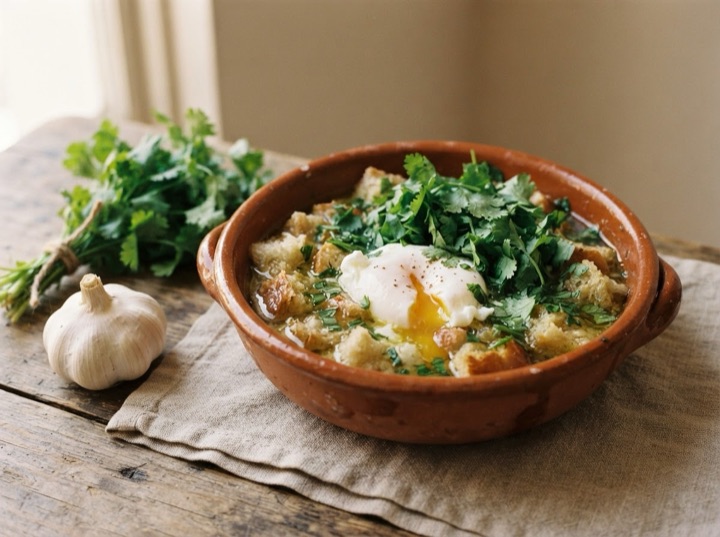
Açorda AlentejanaGarlic and Coriander Bread Soup
The Alentejo's famous bread soup: garlic, coriander and olive oil, boiling water, stale bread and a poached egg. Ready in 20 minutes from pantry staples.
 Traditional
Carne de Porco à AlentejanaPork and Clams
Pork marinated in wine, garlic and red pepper paste, tossed with clams, crisp potatoes and coriander. Portugal's great surf-and-turf, cooked in a cataplana.
 Food culture
Why Do Portuguese Eat BacalhauThe Story of the Faithful Friend
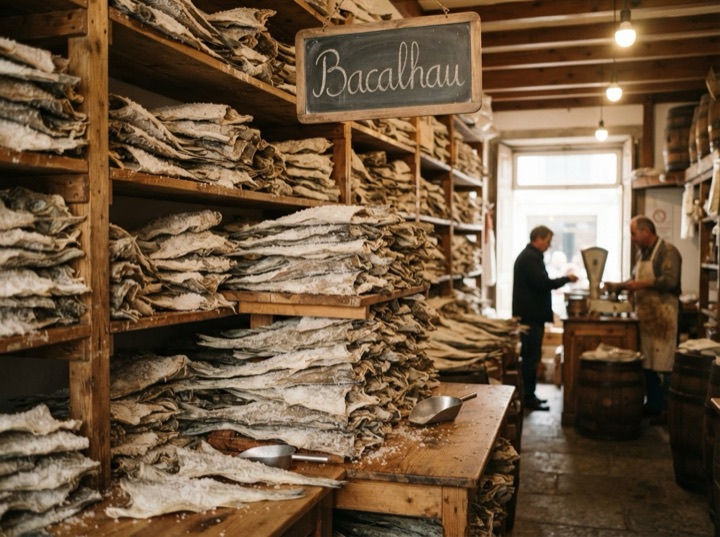
Why do Portuguese eat bacalhau when no cod swims off Portugal? Salt, Catholic fasting, Newfoundland fleets and the Estado Novo, explained simply.