Portuguese vs Spanish FoodThe Real Differences
Portuguese vs Spanish food explained: seasoning, bacalhau, rice, chouriço vs chorizo, petiscos vs tapas, meal times and sweets. The real differences.
 By Mesa de Portugal Kitchen · Updated · 6 min read
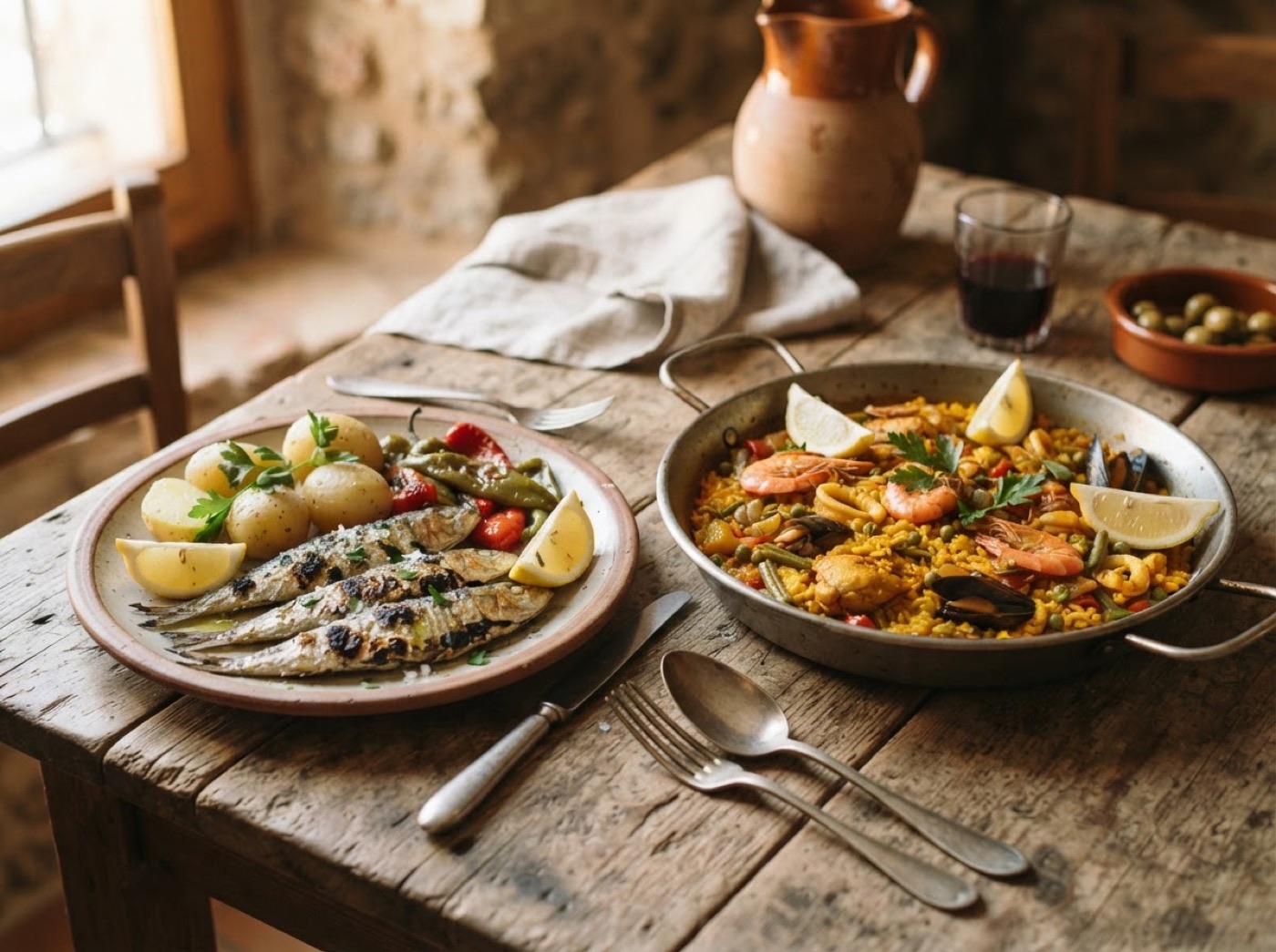
Portuguese and Spanish food share olive oil, garlic, pork and seafood, but they taste different. Portuguese cooking uses more fresh coriander, bay leaf and white wine, far more salt cod, and wetter rice dishes. Spanish cooking leans harder on pimentón, saffron and cured ham. Portugal also eats earlier, and its sweets are built almost entirely on egg yolks and sugar.
Both countries have huge regional variety, so these are broad patterns, not rules. The food of Galicia in north-west Spain, for example, is closer to northern Portugal than to Andalusia.
How is the seasoning different?
This is the biggest difference you'll taste.
- Coriander. Fresh coriander is everywhere in southern Portuguese cooking: in clams, in açorda, in pork with clams. In most of mainland Spain it is rarely used.
- Bay leaf, garlic and white wine. The Portuguese base for marinating meat. Vinha d'alhos (wine and garlic) is a technique more than a recipe.
- Paprika. Both use it, but Spain uses far more, and often smoked. Spanish pimentón gives many dishes a red, smoky flavour. Portugal uses sweet paprika more lightly, and in the south uses massa de pimentão, a salted red pepper paste.
- Saffron. Central to Spanish rice dishes. Rare in Portugal.
- Chilli. Piri-piri is Portuguese, a legacy of its African colonies, and usually served on the side as an oil or sauce. Most Spanish food uses little chilli.
- Cinnamon. Portugal puts it on rice pudding, custard tarts and some savoury dishes. Spain uses it in sweets too, but less freely.
For a deeper look at Portuguese flavourings, read our guide to Portuguese spices and seasonings.
Bacalhau: a national obsession vs a regional dish
Spain eats salt cod, especially in the Basque Country and at Easter. Portugal eats it all year, in hundreds of recipes, and it is the centre of Christmas Eve dinner. Portuguese supermarkets sell whole dried cod stacked like firewood, graded by size.
If you only cook one thing to taste the difference, make bacalhau à Brás. There is no Spanish equivalent. Our post on why Portugal loves bacalhau explains how it happened.
Rice: wet vs dry
Spanish paella is cooked wide and shallow, and the rice should be dry, with a crust (socarrat) on the bottom.
Portuguese rice is the opposite. Arroz de marisco, arroz de tamboril (monkfish rice) and arroz de polvo are soupy and loose, served in the pot and eaten with a spoon. The style is called malandrinho. The main exception is arroz de pato, duck rice baked in the oven with chouriço on top. Portugal is often cited as the biggest rice-eating country in Europe per person, and rice turns up as a side for fish and meat too, often on the same plate as chips.
Chouriço vs chorizo
They share a name and a shape, but not a flavour.
- Spanish chorizo is dominated by pimentón, sweet or hot, often smoked. It is usually cured and sliced thin, or cooked in stews.
- Portuguese chouriço is usually smoked over wood and seasoned with garlic, wine and paprika, with paprika playing a smaller part. It tastes more of smoke, garlic and pork.
In Portugal, chouriço is often cooked, not just sliced: a slice on caldo verde, chunks in bean stews, or flamed at the table in a clay dish. Our full comparison is in chouriço vs chorizo.
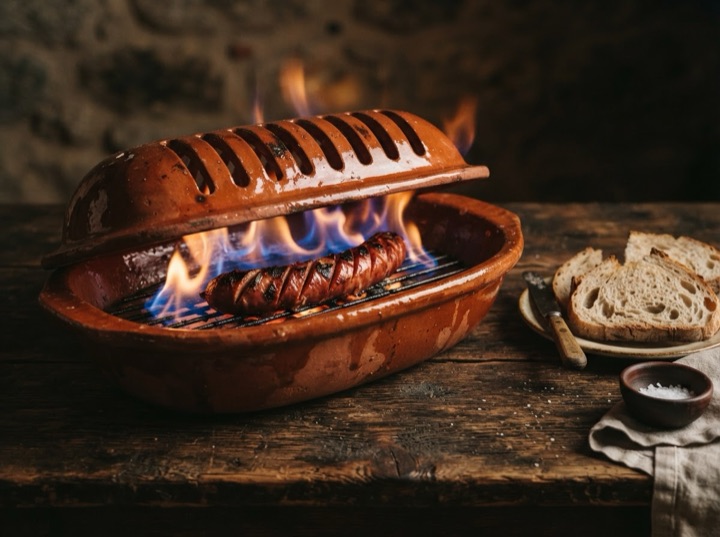
Portuguese clay chouriço grill (assador)
The glazed terracotta dish with a slotted top for flaming chouriço at the table. Most Portuguese homes have one in a cupboard.
Tip: The medium size fits a standard chouriço. Use it on a cork board or tiles, never near curtains.
Petiscos vs tapas
Both are small plates to share with a drink. The differences are in how they're served.
- In Spain, tapas are often eaten bar to bar, standing, and in a few cities a small one comes free with a drink.
- Portuguese petiscos are more often ordered at a table as a meal. Typical ones: pastéis de bacalhau, clams, pica-pau, octopus salad, chouriço assado and tinned fish.
- Portugal has the couvert: bread, olives and butter brought unasked. It is never free. If you eat it, you pay for it.
When do people eat?
Spain is famous for eating late: lunch often from 14:00 to 15:30 and dinner from 21:00 or later. Portugal keeps more typical European hours. Lunch is usually 12:30 to 14:00, and dinner around 19:30 to 21:00. Restaurant kitchens in smaller Portuguese towns can close by 22:00, while in Spain that is when many people sit down.
Sweets: egg yolks vs everything else
Portuguese desserts are dominated by egg yolks and sugar: pastéis de nata, ovos moles from Aveiro, toucinho do céu, pudim. Many were first made in convents. Spain has its egg sweets too (yemas, flan), but its best-known treats are more varied: churros, turrón, crema catalana. Portugal's leite creme is close to crema catalana. Read our guide to Portuguese convent sweets.
Coffee and drinks
Portuguese coffee is a short, strong bica or café, drunk standing at the counter. Spain has its café solo and cortado, but milky coffee is more common there. For wine, Portugal has its own native grapes and two drinks Spain does not make: port and vinho verde. See Portuguese wine for beginners.
So which is better?
Neither. They are neighbours with different priorities. Spanish food tends to be bolder in spice and more varied in small plates. Portuguese food is simpler and more herb-led, built on salt cod, fresh fish, pork and bread. The best way to understand the difference is to cook one dish from each side of the border and taste them together.
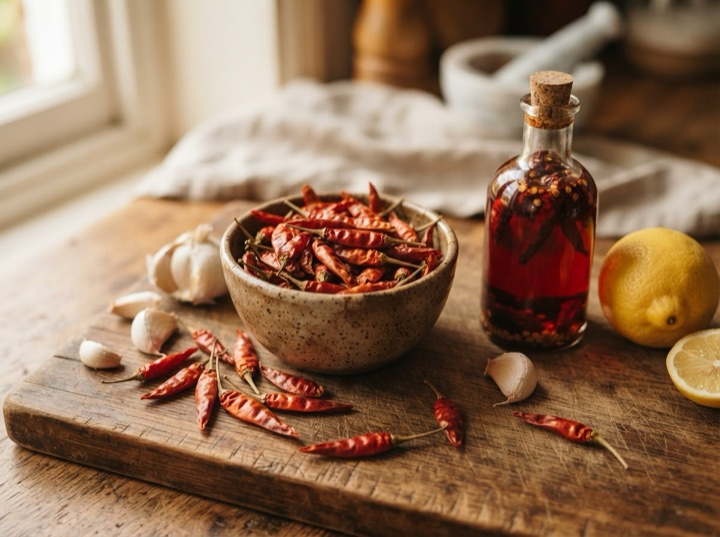
Piri-piri chillies from Portugal
Whole dried bird's-eye chillies, the heat behind frango piri-piri and the bottle of chilli oil on every Portuguese table.
Tip: Two packs last a year. Crush them as you need them.
What you’ll need
Links go to Amazon, where you can check today’s price. If you buy, we earn a small commission at no extra cost to you.
Piri-piri chillies from Portugal
Whole dried bird's-eye chillies, the heat behind frango piri-piri and the bottle of chilli oil on every Portuguese table.
Tip: Two packs last a year. Crush them as you need them.
Portuguese clay chouriço grill (assador)
The glazed terracotta dish with a slotted top for flaming chouriço at the table. Most Portuguese homes have one in a cupboard.
Tip: The medium size fits a standard chouriço. Use it on a cork board or tiles, never near curtains.
Portugal: The Cookbook (Phaidon)
A big, comprehensive book of Portuguese recipes, region by region. The one to give a serious cook.
Tip: A large hardback that looks good on the shelf as well as in the kitchen.
Frequently asked
Is Portuguese food the same as Spanish food?
Is Portuguese food spicier than Spanish food?
Do Portuguese people eat tapas?
What is the difference between chouriço and chorizo?
Recipes from this story
 Traditional
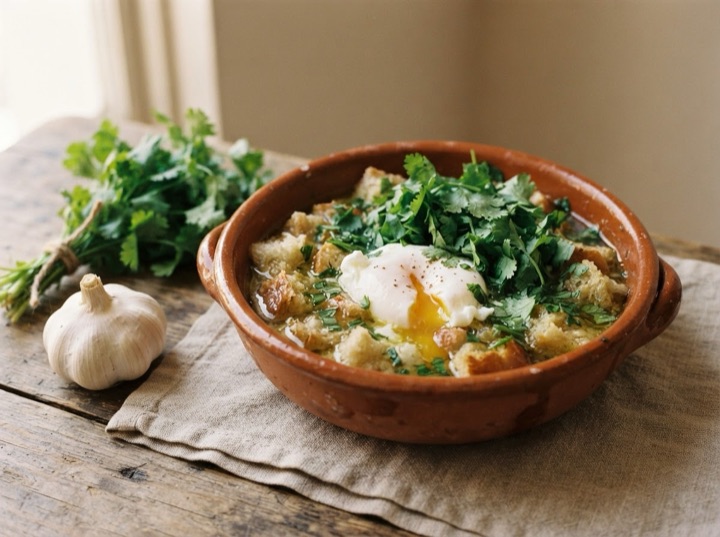
Açorda AlentejanaGarlic and Coriander Bread Soup
The Alentejo's famous bread soup: garlic, coriander and olive oil, boiling water, stale bread and a poached egg. Ready in 20 minutes from pantry staples.
 Traditional
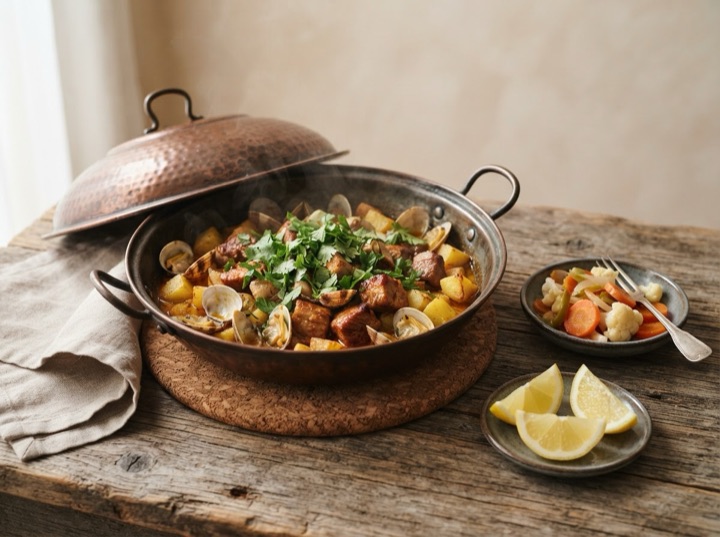
Carne de Porco à AlentejanaPork and Clams
Pork marinated in wine, garlic and red pepper paste, tossed with clams, crisp potatoes and coriander. Portugal's great surf-and-turf, cooked in a cataplana.
 Traditional
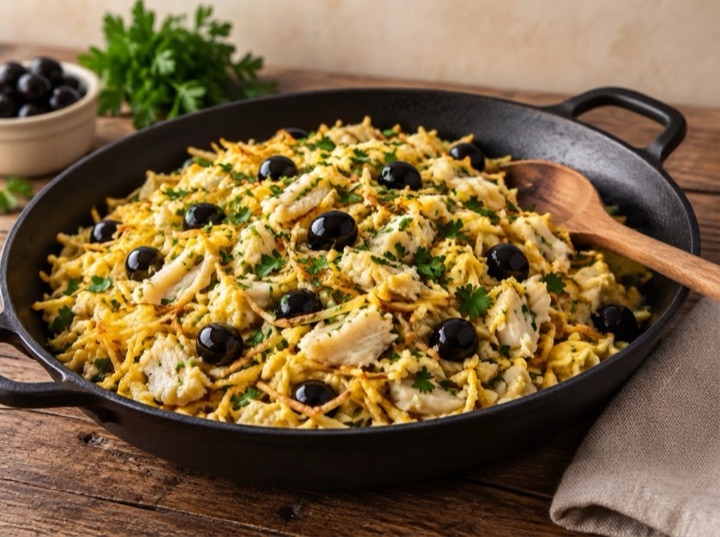
Bacalhau à BrásSalt Cod with Eggs and Potatoes
Lisbon's favourite salt cod dish: flaked bacalhau, matchstick potatoes and onions, bound with barely-set eggs and finished with olives and parsley.