Portuguese FoodWhat It Is and Why It Tastes Like Home
What Portuguese food is really like: the key ingredients, the regional cooking, the history behind it and how a meal works in Portugal.
 By Mesa de Portugal Kitchen · Updated · 7 min read
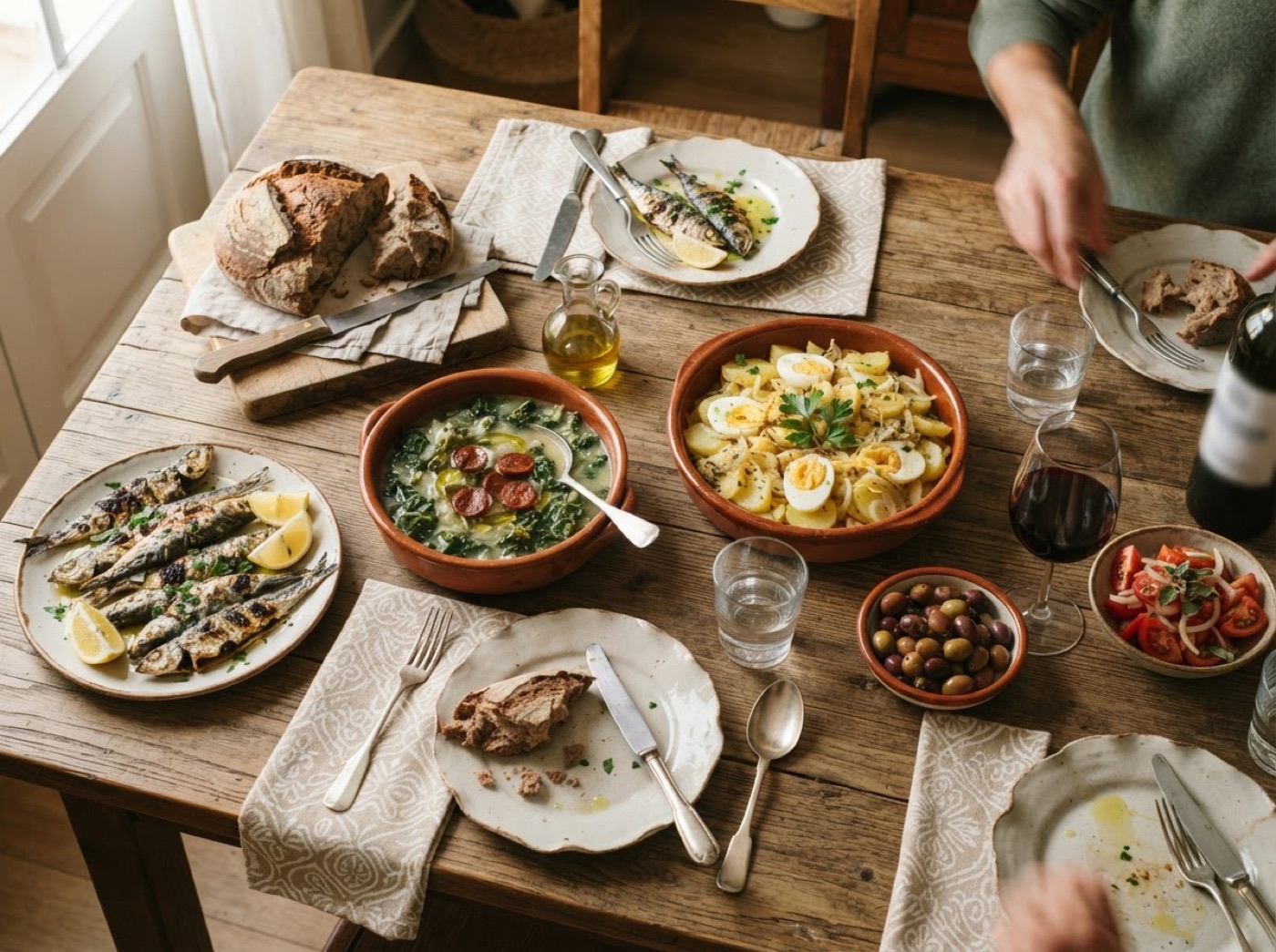
Portuguese food is simple, generous home cooking built on a handful of ingredients: fish and seafood from the Atlantic, pork, olive oil, garlic, bread, potatoes and rice. It is less spicy than people expect and less fussy than French food. Most dishes are slow stews, grills and soups, seasoned with bay, paprika, coriander, wine and a lot of good olive oil.
It is not a cuisine of sauces and techniques. It is a cuisine of good raw ingredients cooked honestly, eaten slowly, with bread on the table and a glass of wine.
What are the main ingredients in Portuguese food?
Walk through any Portuguese market and you will see the same core larder from the Minho to the Algarve.
- Bacalhau (dried salt cod). The country's most famous ingredient, even though the cod comes from the North Atlantic, not Portuguese waters. It is soaked for days before cooking. Read how to soak bacalhau and why Portugal loves bacalhau.
- Fresh fish and seafood. Sardines, horse mackerel (carapau), sea bream, octopus, squid, clams and prawns. Portugal eats more fish per person than any other country in the EU.
- Pork. From the acorn-fed black pigs of the Alentejo to the smoked sausages of the north. Chouriço turns up in soups, rice and stews.
- Olive oil (azeite). Used generously, raw and for cooking. See our Portuguese olive oil guide.
- Bread. Every region has its own loaf, and stale bread becomes soups and side dishes.
- Potatoes and rice. Often both on the same plate.
- Garlic, bay leaves, paprika, coriander and parsley. The seasoning backbone. Black pepper and piri-piri chilli come next.
- Eggs and sugar. The base of almost every traditional sweet.
Where does Portuguese cuisine come from?
Portuguese food is a layered record of the people who passed through.
The Romans planted wheat, olives and vines, the trio that still defines the Alentejo. The Moors, who ruled much of the south for centuries, are credited with almonds, citrus, figs and a taste for sweets, which is why the Algarve still makes marzipan and fig-and-almond treats.
Then came the Age of Discoveries in the 15th and 16th centuries. Portuguese ships brought cinnamon, pepper and cloves from Asia, and chillies, maize and potatoes from the Americas. Chillies grown in Portuguese Africa became piri-piri. Maize became the cornbread of the north. Cinnamon ended up on rice pudding and pastéis de nata.
The influence also flowed the other way. Goa's vindaloo is widely traced back to the Portuguese carne de vinha d'alhos (pork in wine and garlic). The Japanese word for bread, pan, comes from the Portuguese pão, and tempura is often said to descend from Portuguese battered green beans, peixinhos da horta.
Finally, the convents shaped the sweets. The usual story is that nuns used egg whites to starch clothes and turned the leftover yolks into the rich egg-and-sugar desserts the country is famous for. Our Portuguese pastries guide covers the best known.
How does Portuguese food change by region?
Portugal is small, but the food changes a lot in a few hours of driving.
The north: Minho, Porto and Trás-os-Montes
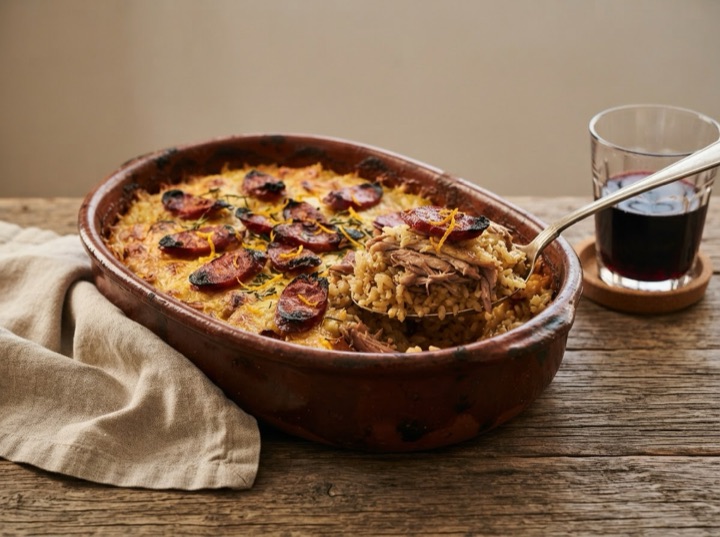
Green, wet and hearty. This is the home of caldo verde, cornbread, smoked sausages, roast kid and feijoada à transmontana. Porto has its tripe stew and the francesinha sandwich. Sunday lunch might be arroz de pato, duck rice baked with chouriço. See what to eat in Porto.
The centre: Beiras and Bairrada
Suckling pig roasted in wood ovens around Mealhada, cheese from the Serra da Estrela, and the eggy sweets of Aveiro.
Lisbon
A city of tascas, petiscos and quick lunches: bifanas, clams, salt cod and custard tarts. Our guide to what to eat in Lisbon covers it.
The Alentejo
Hot, dry plains with pork, bread, olive oil and wild herbs. Bread soups like açorda alentejana and migas come from here, as does the famous pork with clams.
The Algarve
Seafood first: grilled fish, the cataplana, octopus and clams, plus almond and fig sweets. Read what to eat in the Algarve.
The islands
The Azores are known for cozido cooked underground in volcanic heat at Furnas, beef, cheese and pineapples. Madeira has espetada (beef skewers on bay sticks), black scabbard fish and bolo do caco flatbread.
How does a Portuguese meal work?
Lunch, o almoço, is traditionally the main meal, usually between 12:30 and 14:00. Dinner, o jantar, is around 20:00, later in summer.
A typical restaurant meal goes like this:
- Couvert. Bread, butter, olives and sometimes cheese or sardine pâté arrive as you sit down. They are not free. If you eat them, they go on the bill. If you don't want them, say so and they will be taken away.
- Sopa. Many meals start with soup, often a smooth vegetable purée.
- Prato principal. The main course: fish or meat with potatoes, rice and a simple salad.
- Sobremesa. Dessert, from fruit to rice pudding or chocolate mousse.
- Café. A short, strong espresso to finish.
At lunchtime, look for the prato do dia (dish of the day) or menu do dia, a set meal that often includes soup, a main, a drink and coffee at a fair price.
Is Portuguese food spicy?
Not really. Most dishes are seasoned with garlic, wine, paprika and herbs rather than heat. Piri-piri is the exception, and it usually comes as a sauce or chilli oil on the side, so you add as much as you like. Chicken piri-piri from the Algarve is the best-known spicy dish. Our air fryer frango piri-piri is a good place to start.
Dishes to start with
If you want to taste Portugal at home, begin with these:
- Caldo verde, the green soup
- Bacalhau à Brás, salt cod with eggs and potatoes
- Bitoque, steak with a fried egg
- Cataplana de marisco, a seafood stew
- Arroz doce, creamy rice pudding
For a longer list, see our 25 Portuguese dishes to try. And if you want one book that covers the whole country, a broad regional cookbook is a better buy than a chef's restaurant book.

Authentic Portuguese Cooking (cookbook)
Over 185 classic recipes from mainland Portugal, the Azores and Madeira. A highly rated home-cooking reference.
Tip: Good for family recipes you remember but never wrote down.
Cooking Portuguese food at home
You don't need special equipment. A heavy pot, a good frying pan and a sharp knife will cover most recipes. Two Portuguese extras are worth having if you cook this food often: a clay pot for stews and rice, and a cataplana for seafood. Our Portuguese kitchen essentials guide explains what to buy and what to skip.
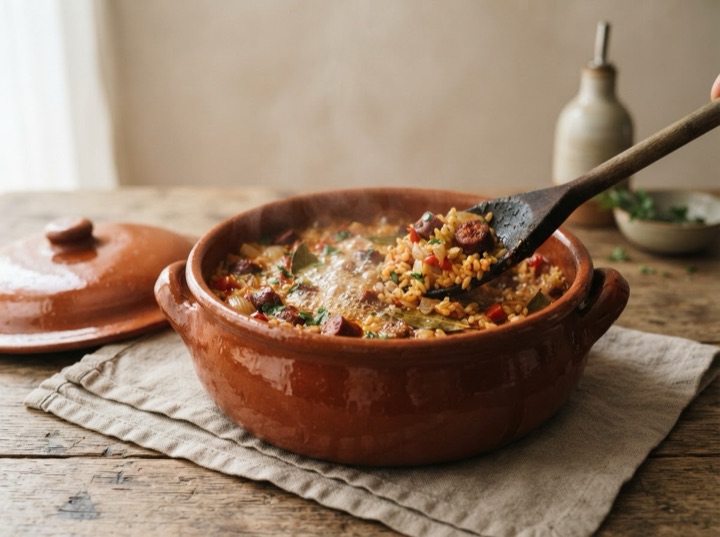
Portuguese hand-painted clay cooking pot
For rice dishes, feijoada and anything that goes from the oven straight to the table.
Tip: Check the listing for stovetop use. Many clay pots are oven-only or need a heat diffuser.
What you’ll need
Links go to Amazon, where you can check today’s price. If you buy, we earn a small commission at no extra cost to you.
Authentic Portuguese Cooking (cookbook)
Over 185 classic recipes from mainland Portugal, the Azores and Madeira. A highly rated home-cooking reference.
Tip: Good for family recipes you remember but never wrote down.

Portugal: The Cookbook (Phaidon)
A big, comprehensive book of Portuguese recipes, region by region. The one to give a serious cook.
Tip: A large hardback that looks good on the shelf as well as in the kitchen.
Portuguese hand-painted clay cooking pot
For rice dishes, feijoada and anything that goes from the oven straight to the table.
Tip: Check the listing for stovetop use. Many clay pots are oven-only or need a heat diffuser.
Frequently asked
What is the national dish of Portugal?
What is Portuguese food similar to?
Is Portuguese food healthy?
What do Portuguese people eat every day?
Recipes from this story
 Traditional
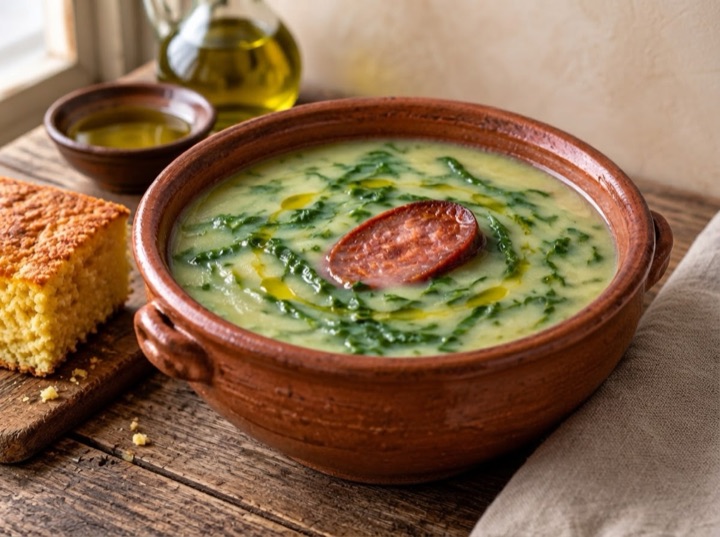
Caldo VerdePortuguese Green Soup
Portugal's national soup: a silky potato base, ribbons of finely shredded greens and a slice of chouriço on top. Simple, cheap and done in 40 minutes.
 Traditional
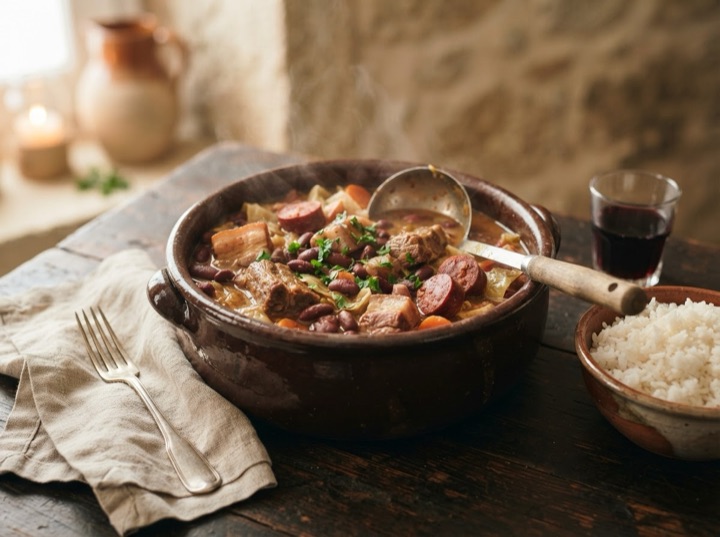
Feijoada à TransmontanaBean and Pork Stew
Red beans slow-cooked with pork, chouriço, cabbage and carrots, the hearty winter stew of Trás-os-Montes. A home version that skips the hard-to-find cuts.
 Traditional
Arroz de PatoPortuguese Duck Rice
Slow-cooked duck, rice simmered in its rich broth, chouriço and a crisp golden top from the oven. The Sunday-lunch dish of northern Portugal.