Portuguese Easter FoodFolar, Roast Kid and Sugared Almonds
Portuguese Easter food explained: sweet and savoury folar by region, roast cabrito and borrego, amêndoas, pão de ló and the Good Friday bacalhau.
 By Mesa de Portugal Kitchen · Updated · 7 min read
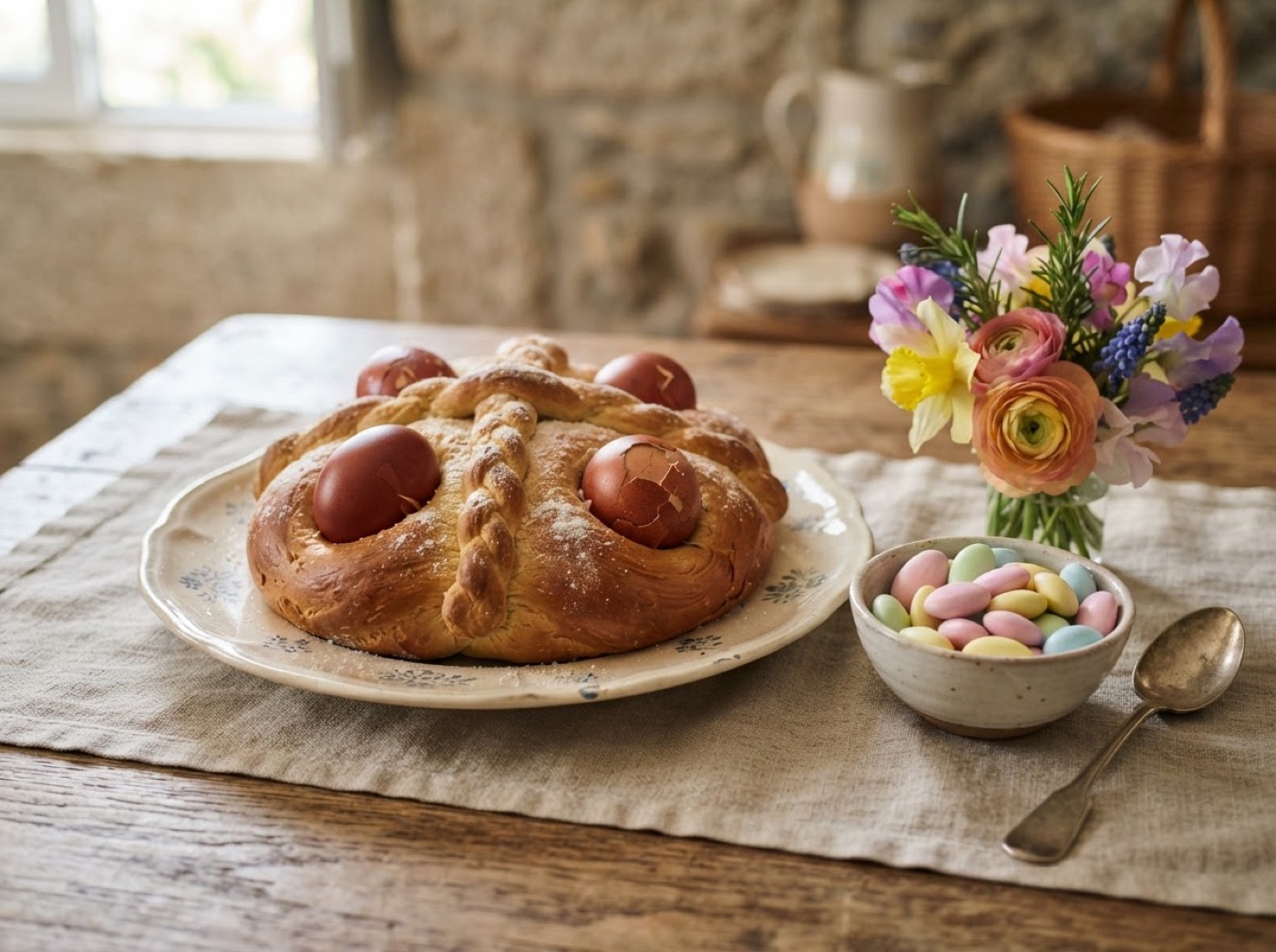
Portuguese Easter food centres on four things: folar, an Easter bread that is sweet with whole boiled eggs in much of the country and stuffed with cured meats in the north-east; roast cabrito (kid goat) or borrego (lamb) for Sunday lunch; amêndoas, sugared almonds handed out to family and friends; and pão de ló sponge cake for dessert. Good Friday is a fish day, usually bacalhau.
Páscoa (Easter) is one of the biggest family occasions in Portugal. People travel back to their home villages, godparents give presents to godchildren, and the long Sunday lunch is the main event. What's on the table depends a lot on where the family comes from.
What is folar?
Folar is the Easter bread, and the gift that goes with it. Traditionally, godchildren visit their padrinhos (godparents) around Palm Sunday, sometimes bringing flowers, and on Easter Sunday the godparents give them a folar in return.
The word covers very different breads, which is why visitors get confused.
Sweet folar with eggs
Across much of the centre and south, folar is a soft, slightly sweet enriched bread, often flavoured with fennel seed (erva-doce) or cinnamon, with one or more whole eggs baked into the top, still in their shells. The eggs are said to symbolise rebirth and the Resurrection. Strips of dough are often laid over them in a cross.
Savoury folar from Trás-os-Montes
In the north-east, around Chaves and Valpaços, folar is a rich bread dough layered with cured and smoked meats: presunto (cured ham), salpicão (smoked pork loin sausage), linguiça and sometimes chicken or veal. Sliced, it shows marbled layers of meat through the bread. It's eaten cold, as a snack or with a glass of wine, all through the Easter week. Our Portuguese sausages guide explains the meats.
Folar de Olhão
The Algarve has its own version, closer to a cake. Folar de Olhão is a soft spiral dough layered with brown sugar, cinnamon and butter, baked in a deep tin until the bottom turns into a sticky caramel. It's turned out upside down so the syrup soaks in. See what to eat in the Algarve for more from the region.
Good Friday: bacalhau and fish
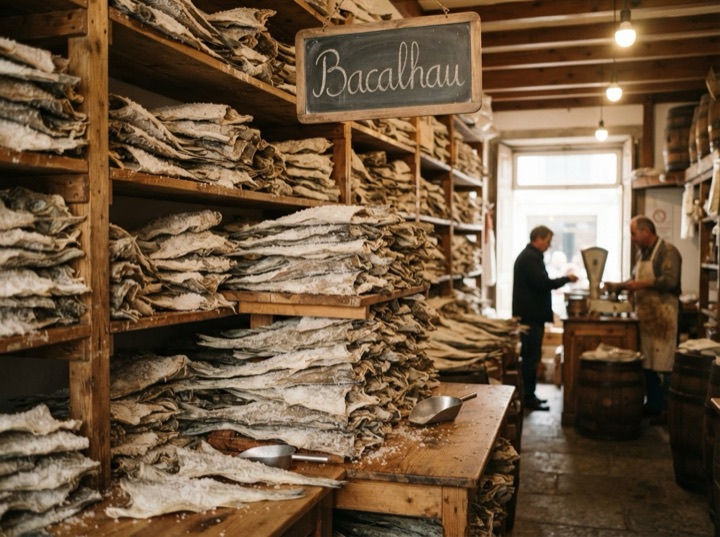
Many Portuguese Catholics still avoid meat on Sexta-feira Santa (Good Friday), which is a national holiday. Lunch is usually fish, and very often bacalhau (salt cod), cooked in the family's favourite way. Popular choices include bacalhau com grão (with chickpeas, boiled eggs and olive oil) or a baked dish such as bacalhau com natas. Plan ahead: salt cod needs 24 to 48 hours of soaking, as explained in our how to soak bacalhau guide.
Easter Sunday lunch: cabrito or borrego
The centrepiece of the Easter meal is roast young meat, a tradition linked to the lamb of the Christian Easter story.
- Cabrito assado (roast kid goat) is the classic in the north and centre, especially in the Beiras and the Minho. The meat is marinated overnight in white wine, garlic, paprika, bay leaves and olive oil, then roasted slowly with potatoes, ideally in a wood-fired oven or a clay dish.
- Borrego assado (roast lamb) is more common in the Alentejo and the south, where sheep farming dominates. It's often cooked with similar seasonings or stewed as ensopado de borrego, served over slices of bread.
The side dishes are simple: roast potatoes cooked in the meat juices, rice, and a green salad.
How to roast cabrito or lamb the Portuguese way
- Marinate overnight. For a 2 kg leg or shoulder, use half a bottle of dry white wine, a whole head of garlic crushed, 2 teaspoons of sweet paprika, 3 bay leaves, salt, pepper, a little piri-piri and a generous glug of olive oil.
- Roast low, then high. Cover and cook at 160 °C for about 2 hours, basting a few times, then uncover and raise to 200 °C for 20 to 30 minutes to brown.
- Add the potatoes for the last hour so they cook in the juices.
- Check the meat. For falling-apart shoulder, aim for an internal temperature well above 85 °C. For a juicier leg, take it out around 65 °C and rest it.
A large clay or ceramic roaster holds the heat evenly and keeps the meat moist, the way Portuguese ovens do.
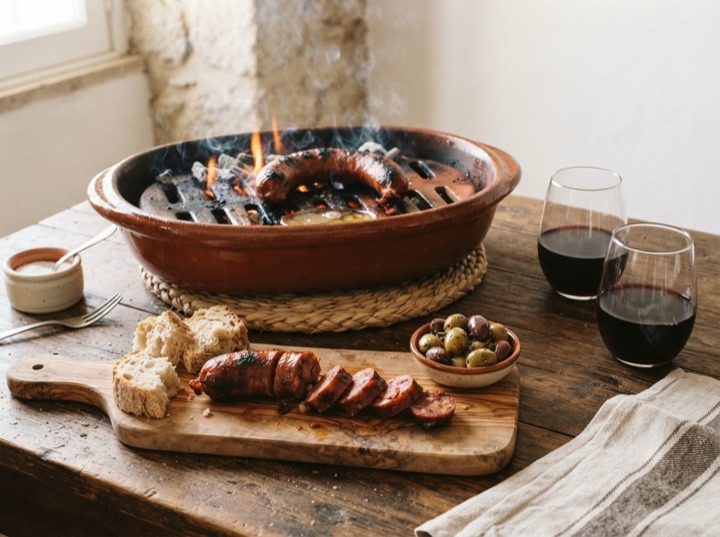
Portuguese clay chouriço roaster, large
The large size of the classic made-in-Portugal assador, for a full chouriço plus a few extra slices.
Tip: Use on a heatproof surface, away from anything flammable.
A probe thermometer takes the guesswork out of big roasts.
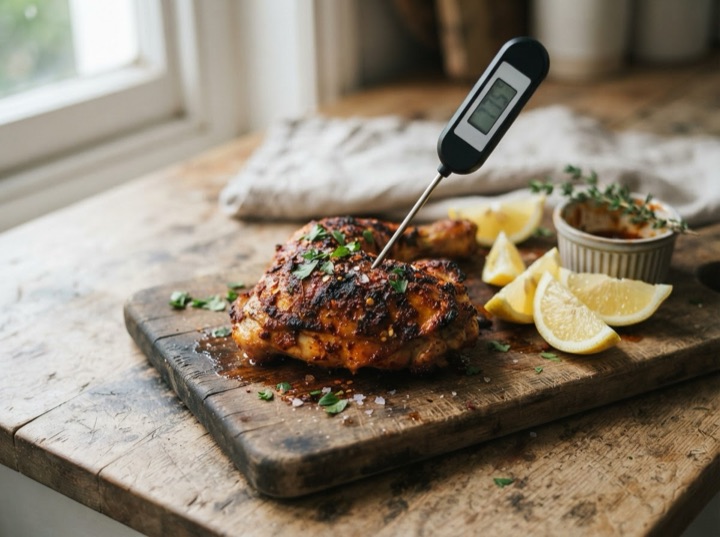
Alpha Grillers instant-read thermometer
Takes the guesswork out of piri-piri chicken and bifanas: 74 °C in the thickest part and the chicken is done.
Tip: Check the thickest piece, away from the bone.
Amêndoas: Easter sugared almonds
In the weeks before Easter, Portuguese supermarkets and sweet shops fill with amêndoas: almonds coated in sugar. They come in many styles:
- Amêndoas lisas: smooth, hard, pastel-coloured coatings.
- Amêndoas de chocolate: chocolate-coated, now the most popular with children.
- Amêndoas cobertas de Moncorvo: from Torre de Moncorvo in Trás-os-Montes, with a rough, snowy white sugar shell built up slowly by hand. Often considered the traditional ones.
- Flavoured: cinnamon, lemon, liqueur-filled and many more.
They're given by godparents to godchildren, offered to visitors, and put out in bowls on the Easter table.
Pão de ló and the sweet table
Dessert at Easter means pão de ló, the light Portuguese egg sponge, often baked in its paper lining in a clay dish. Some regions prefer a dry, fluffy version, others a soft, runny centre. It's one of the Portuguese convent sweets, and our Portuguese desserts guide covers the puddings that join it, such as arroz doce and leite creme.
The Compasso: Easter visits in the north
In the Minho and much of the north, Easter Sunday has another tradition: the Compasso or Visita Pascal. A small group from the parish carries a cross from house to house. Families open their doors, scatter flower petals at the entrance, and lay out a table with folar, pão de ló, amêndoas and a glass of port or wine for the visitors. Each home kisses the cross, and the group moves on. In some villages it takes all day.
What you’ll need
Links go to Amazon, where you can check today’s price. If you buy, we earn a small commission at no extra cost to you.
Portuguese clay chouriço roaster, large
The large size of the classic made-in-Portugal assador, for a full chouriço plus a few extra slices.
Tip: Use on a heatproof surface, away from anything flammable.
Alpha Grillers instant-read thermometer
Takes the guesswork out of piri-piri chicken and bifanas: 74 °C in the thickest part and the chicken is done.
Tip: Check the thickest piece, away from the bone.

At My Portuguese Table by Maria Lawton
The follow-up to Azorean Cooking, with more family recipes from the islands and the mainland.
Tip: Paperback, easy to cook from.
Frequently asked
What do Portuguese people eat at Easter?
What is Portuguese folar?
Why are there eggs in Portuguese Easter bread?
Do Portuguese people eat lamb or goat at Easter?
Recipes from this story
 Traditional
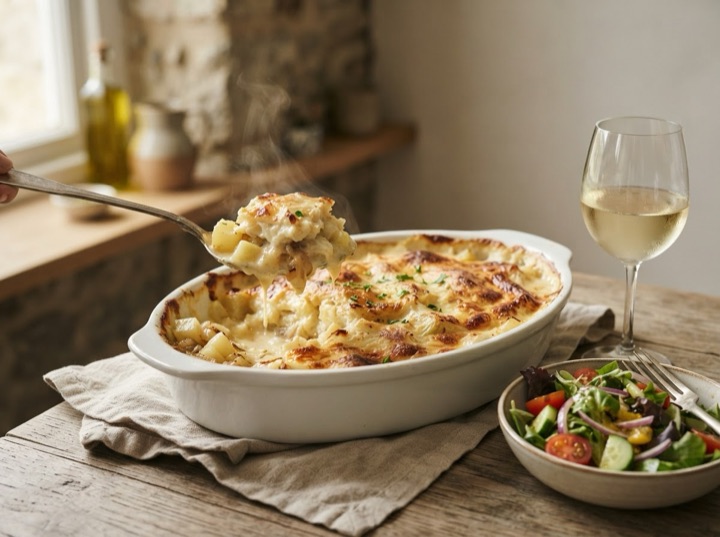
Bacalhau com NatasCreamy Baked Salt Cod
Flaked salt cod, golden potatoes and onions baked in a creamy sauce until bubbling. The comforting bacalhau dish of Portuguese family lunches.
 Food culture
Why Do Portuguese Eat BacalhauThe Story of the Faithful Friend
Why do Portuguese eat bacalhau when no cod swims off Portugal? Salt, Catholic fasting, Newfoundland fleets and the Estado Novo, explained simply.
 Eat like a local
What to Eat in SintraTravesseiros, Queijadas and the Coast
What to eat in Sintra: travesseiros and queijadas, Colares wine, and grilled fish on the nearby coast, plus tips to eat well on a Sintra day trip.