Portuguese New Year TraditionsRaisins, Bubbles and Bolo-Rei
Portuguese New Year traditions and food: 12 raisins at midnight, espumante, the chair jump, bolo-rei and what families eat on 31 December and 1 January.
 By Mesa de Portugal Kitchen · Updated · 7 min read
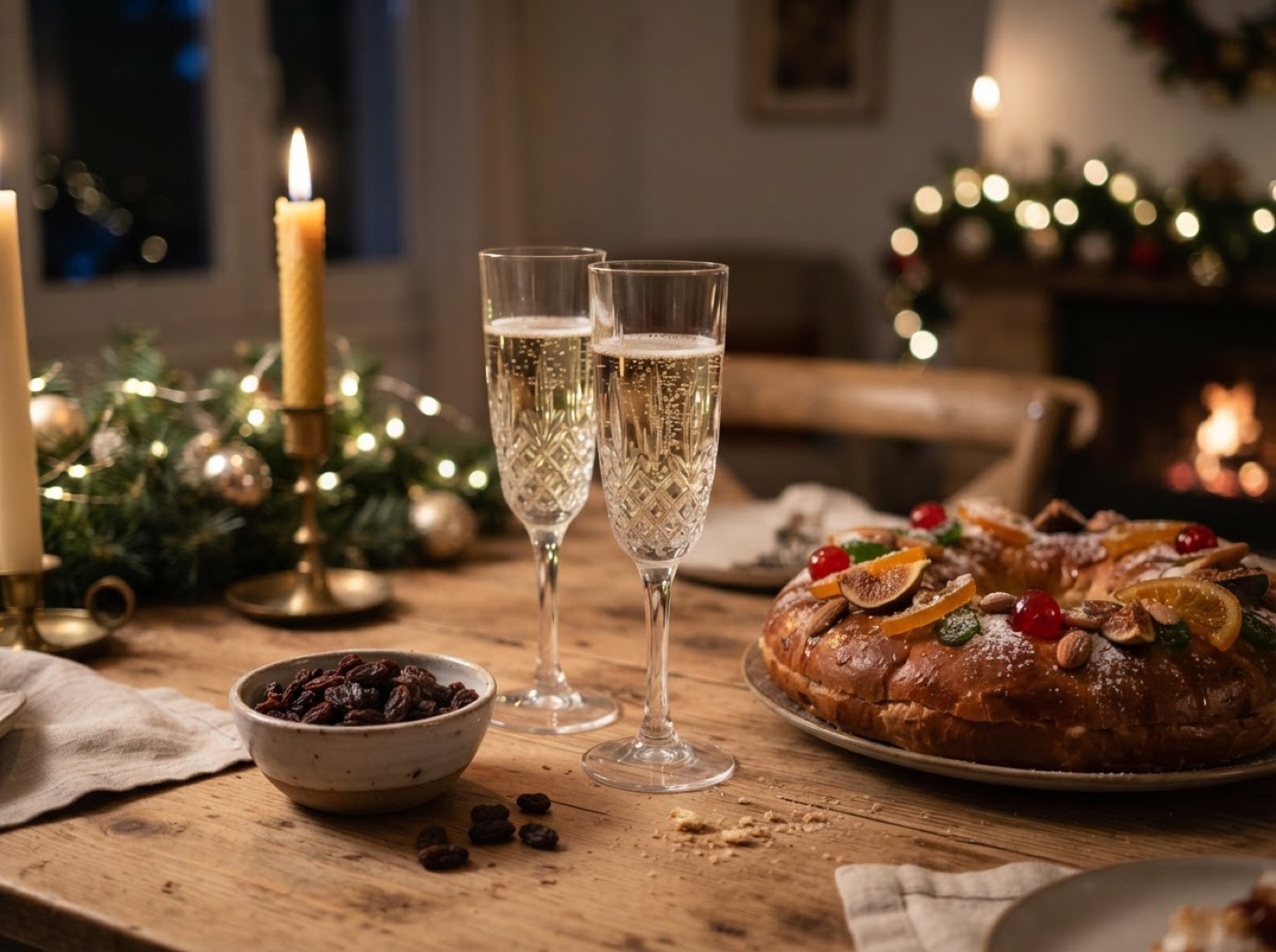
The best-known Portuguese New Year tradition is eating 12 passas (raisins) at midnight, one with each chime of the clock, making a silent wish for each month of the coming year. Then comes a toast with espumante (Portuguese sparkling wine), often standing on a chair and stepping down with the right foot for luck. Dinner itself varies by family, and bolo-rei from Christmas is still on the table.
New Year's Eve in Portugal is called passagem de ano ("the passing of the year") or réveillon. Unlike Christmas, which is spent quietly with family, it's a night for friends, restaurants, street parties and fireworks. Here's what happens, what people eat and drink, and how to bring the traditions home.
The 12 raisins at midnight
At the first chime of midnight, everyone starts eating raisins, one per chime, 12 in total. Each one is a wish, made in silence. Most people hold their raisins in one hand and a glass of espumante in the other, and the race to finish before the last chime usually ends in laughter.
The custom came to Portugal from Spain, where people eat 12 grapes. In Portugal, dried raisins became the norm instead. Supermarkets sell small packs of 12 in late December, but any raisins will do. Some hosts put 12 in a small bowl or a paper cup at each place.
Espumante and the toast
As the last chime fades, glasses go up with a cheerful "Bom Ano!" or "Feliz Ano Novo!" (Happy New Year). The usual drink is espumante, Portuguese sparkling wine. Good ones come from the Bairrada region and from Távora-Varosa near the Douro, and they cost a fraction of champagne. Some people keep the cork as a good-luck token for the year.
For more on Portuguese wine styles, see our Portuguese wine for beginners guide and the wider Portuguese drinks guide.
Vista Alegre Bicos goblets, set of 4
Vista Alegre has made porcelain and glass in Portugal since 1824. These goblets suit a Vinho Verde with your cataplana.
Tip: All-purpose goblets: wine, water or sangria.
Other midnight superstitions
Not everyone does all of these, but you'll see most of them at any Portuguese party:
- Standing on a chair at midnight, then stepping down on the right foot, to start the year "on the right foot" (com o pé direito) and on a high.
- Money in your pocket or shoe, so the year brings prosperity.
- Banging pots and pans in the street or at the window, said to scare away bad spirits. It's less common in cities now.
- Wearing something new or a particular colour of underwear, for luck in love or money.
- Saying "Ano novo, vida nova": "new year, new life".
What do Portuguese people eat on New Year's Eve?
There's no single fixed dish for 31 December, unlike Christmas Eve's bacalhau. What people eat depends on whether they're at home, at a friend's house or out.
At home or with friends
A long, relaxed dinner is common. Typical choices:
- Petiscos to start: cheese, cured ham, olives, chouriço, pastéis de bacalhau and shellfish. Our Portuguese petiscos night has a full spread.
- Seafood is popular for a celebration: prawns, clams in Bulhão Pato style, or a cataplana de marisco.
- A roast such as pork, kid goat or a whole fish, or polvo à lagareiro, octopus roasted with potatoes and garlic oil.
- Desserts left over from Christmas, plus whatever the host has made.
Out
Many restaurants and hotels sell a set jantar de passagem de ano (New Year's Eve dinner), usually several courses with a glass of espumante at midnight. Prices climb steeply on the night, so book early.
In the street
Big cities hold free outdoor parties with concerts and fireworks: Lisbon on the riverside at Praça do Comércio, Porto on the Avenida dos Aliados. In Madeira, the New Year's fireworks over Funchal bay are famous and draw cruise ships and visitors from abroad. See what to eat in Madeira if you're planning that trip.
Bolo-rei: still on the table
Bolo-rei ("king cake") is the ring-shaped Christmas cake of enriched bread, studded with crystallised fruit and nuts. It appears in bakeries from November and stays until Dia de Reis (Epiphany, 6 January), so it's very much part of New Year too. Traditionally a dried broad bean (fava) was hidden inside, and whoever found it was supposed to buy the next cake.
There's also bolo-rainha ("queen cake"), the same dough with nuts and dried fruit but no candied fruit, for people who don't like the glacé cherries.
Leftover bolo-rei goes stale fast. Portuguese households toast slices in a pan with butter, or turn them into a kind of rabanada (Portuguese French toast). Our Portuguese Christmas food guide covers the rest of the festive sweets.
What is eaten on 1 January?
New Year's Day is a quiet public holiday, with long, late family lunches. There's no fixed menu. Many families eat leftovers from the night before or a simple roast. Soups such as caldo verde are a popular choice after a long night.
In the first days of January, in villages especially in the north, groups go door to door singing the Janeiras, traditional songs wishing the household a good year. They're thanked with sweets, chouriço, a coin or a glass of something warming. The tradition runs until around Dia de Reis.
How to host a Portuguese New Year at home
- Put 12 raisins at each place, in a small bowl or twist of paper.
- Chill Portuguese espumante and set out tall glasses.
- Serve petiscos from 9 pm and a main course before 11 pm, so nobody is eating when the clock strikes.
- Keep a bolo-rei for dessert and the next morning.
- Have a sturdy chair ready for the midnight jump.
A good table makes it feel like an occasion. Portuguese cutlery and simple cork placemats are an easy way to dress it.
Cutipol GOA starter set, 6 pieces
The GOA design from Portuguese maker Cutipol: slim, elegant and instantly recognisable. A starter set to try it at home.
Tip: Handwash the coloured handles.
What you’ll need
Links go to Amazon, where you can check today’s price. If you buy, we earn a small commission at no extra cost to you.
Vista Alegre Bicos goblets, set of 4
Vista Alegre has made porcelain and glass in Portugal since 1824. These goblets suit a Vinho Verde with your cataplana.
Tip: All-purpose goblets: wine, water or sangria.
Cutipol GOA starter set, 6 pieces
The GOA design from Portuguese maker Cutipol: slim, elegant and instantly recognisable. A starter set to try it at home.
Tip: Handwash the coloured handles.
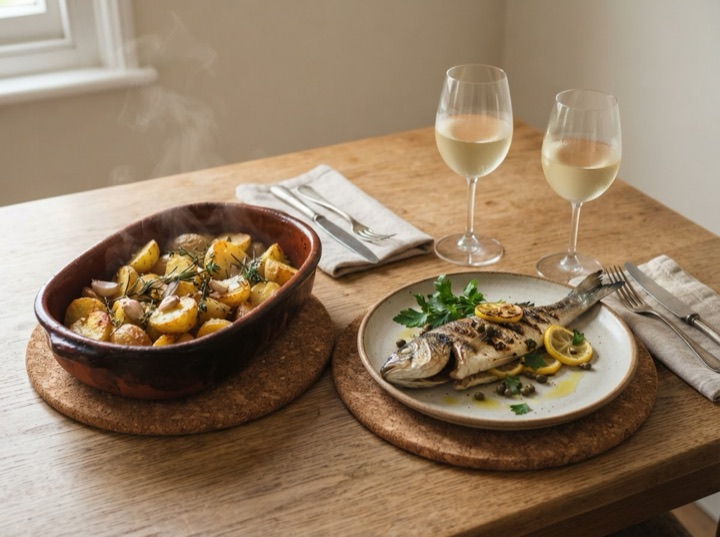
Casafina Portuguese cork placemats, set of 4
Portugal produces about half the world's cork. These heat-safe placemats take a hot cataplana or clay pot.
Tip: Wipe clean with a damp cloth. Don't soak them.
Frequently asked
Why do Portuguese people eat 12 raisins at New Year?
What do Portuguese people drink at New Year?
What do you say for Happy New Year in Portuguese?
Why do Portuguese people stand on a chair at New Year?
Is bolo-rei eaten at New Year?
Recipes from this story
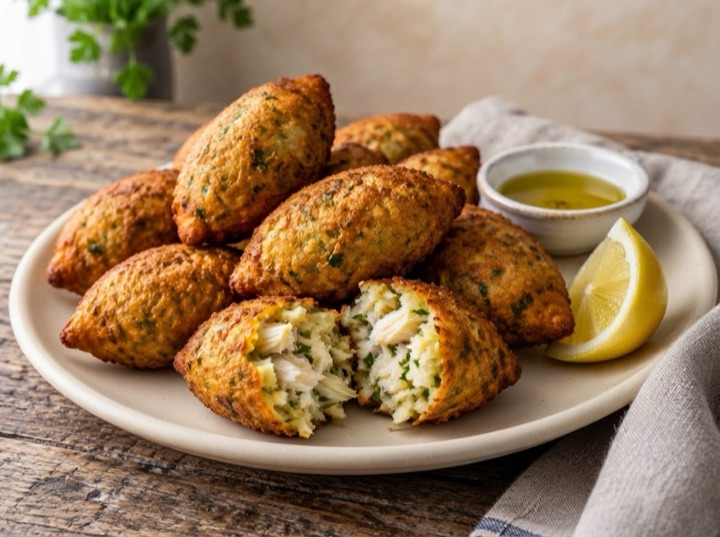 Air Fryer
Pastéis de Bacalhau in the Air Fryer
Portugal's favourite salt cod fritters made in the air fryer: crisp outside, fluffy inside, with no pot of hot oil. Includes how to soak the bacalhau.
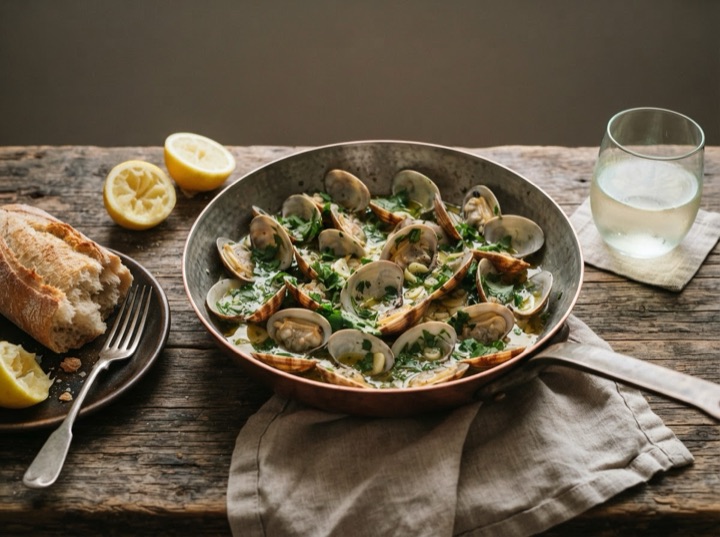 Traditional
Amêijoas à Bulhão PatoClams with Garlic and Coriander
Clams steamed open in olive oil, garlic, coriander and a squeeze of lemon. Lisbon's favourite seafood petisco, ready in 10 minutes once the clams are clean.
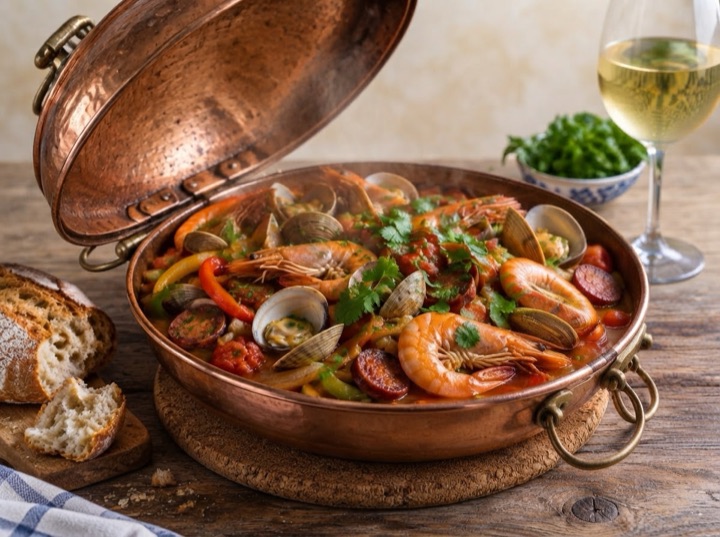 Traditional
Cataplana de MariscoAlgarve Seafood Stew
The Algarve's famous seafood stew, steamed shut in a cataplana: clams, prawns and chouriço in a tomato, wine and coriander broth. Ready in 40 minutes.