Migas AlentejanasBread Migas with Fried Pork
Migas alentejanas recipe: garlicky bread migas fried in pork fat, rolled into a golden log and served with marinated fried pork. A true Alentejo classic.
 By Mesa de Portugal Kitchen · Updated
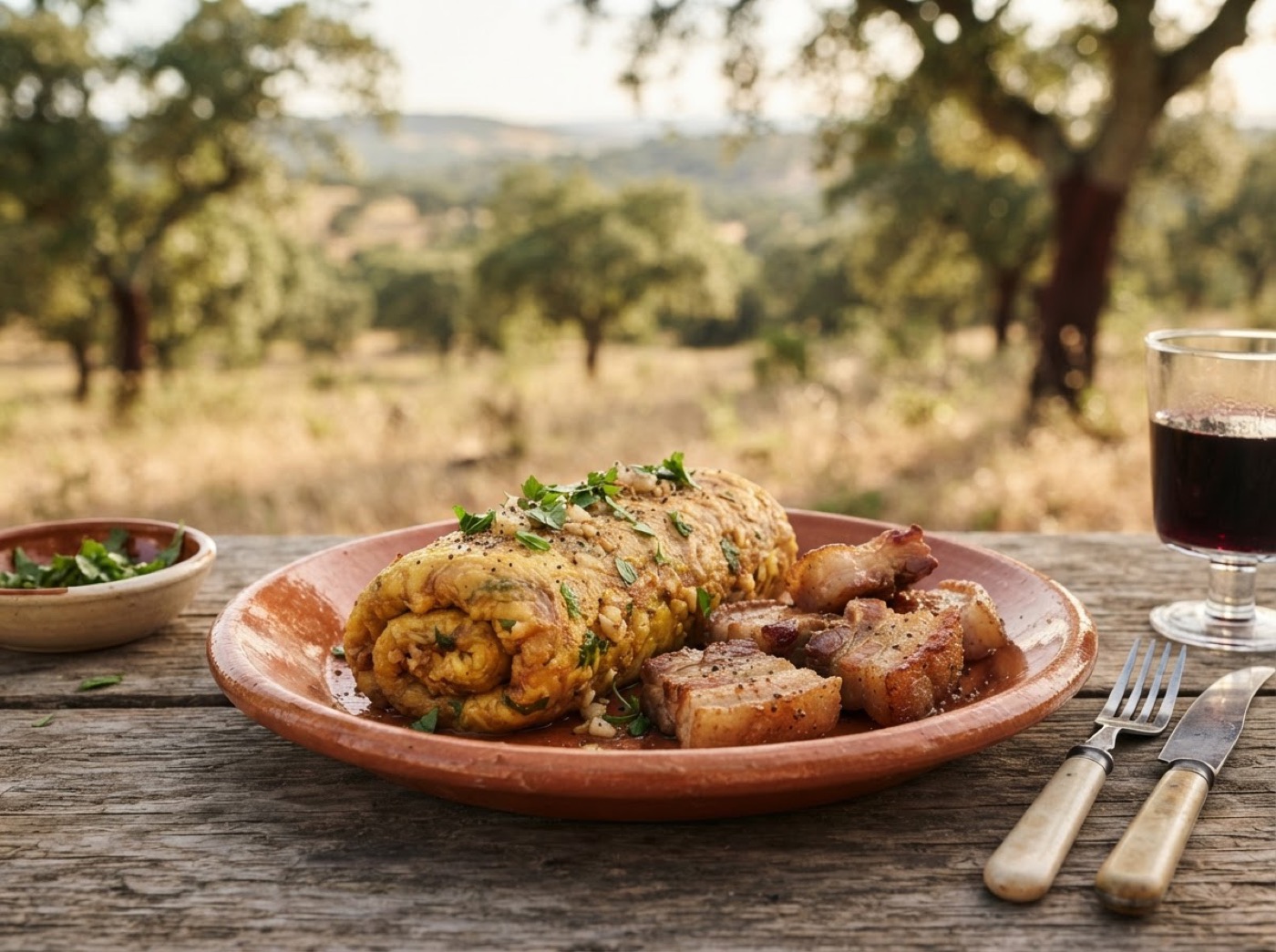
Migas alentejanas are day-old Alentejo bread soaked, then fried in pork fat with lots of garlic until they come together into a golden, soft-centred roll. They're served next to pieces of marinated fried pork, and they're loved because they turn stale bread and cheap cuts into one of the most satisfying plates in Portugal. Many Alentejo families still serve them with sliced oranges on the side.
The two things that make them work: use dense, properly stale bread, never soft sandwich bread, and use the fat the pork was fried in. That fat, full of garlic and paprika, is where the migas get their flavour.
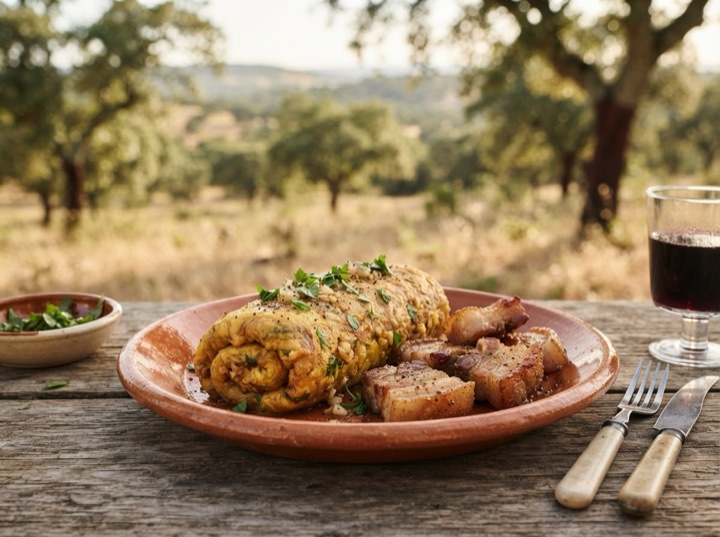
Migas AlentejanasBread Migas with Fried Pork
Migas alentejanas recipe: garlicky bread migas fried in pork fat, rolled into a golden log and served with marinated fried pork. A true Alentejo classic.
Ingredients
- 600 g pork with some fat (shoulder, entrecosto/spare ribs cut small, or entremeada/pork belly), cut into 3 cm pieces
- 6 cloves garlic (2 crushed for the marinade, 4 sliced for the migas)
- 2 tbsp massa de pimentão (red pepper paste), or 1 tbsp sweet paprika
- 2 bay leaves
- 100 ml white wine
- 500 g day-old Alentejo bread or other dense country loaf
- 500 ml boiling water
- 4 tbsp lard (banha) or olive oil
- 2 tbsp olive oil
- Salt
- 1–2 oranges, sliced, to serve (optional)
Method
- Mix the pork with the crushed garlic, massa de pimentão, bay leaves and white wine. If you used paprika instead of massa, add 1 tsp salt. Marinate in the fridge for at least 2 hours, or overnight.
- Lift the pork out of the marinade and pat dry. Heat the lard in a large heavy frying pan over medium heat. Fry the pork for 25–30 minutes, turning often, until browned and cooked through (at least 63 °C inside, ideally 70 °C for shoulder and ribs). Pour in the marinade for the last 5 minutes and let it bubble down.
- While the pork cooks, cut the bread into small pieces, crust and all. Put it in a bowl, pour over the boiling water with a pinch of salt and leave for 5 minutes. Then squeeze and mash it with a spoon into a damp paste.
- Move the pork to a warm dish. Leave about 5 tbsp of fat and juices in the pan, adding the olive oil if there isn't enough.
- Fry the sliced garlic in the fat for 1 minute over medium-low heat, without letting it brown.
- Add the bread and stir and mash constantly for 10–15 minutes. It will go from wet to a soft mass that pulls away from the pan.
- Tilt the pan and use a spatula to fold the mass over itself into a log, like rolling an omelette. Cook for 2–3 minutes more so the outside turns golden.
- Slide the migas onto a plate and serve with the pork around it and orange slices on the side.
Notes
Tap ingredients and steps to tick them off. Scaling changes the quantities at the start of each line; check the rest by eye.
Which bread to use
Pão alentejano is a dense, chewy wheat loaf with a thick crust. Outside Portugal, use a sourdough or country loaf that's two or three days old. Soft bread turns to glue. Our Portuguese bread guide explains the different loaves. Leftover bread is also the base of açorda alentejana, the Alentejo's bread soup.
Other kinds of migas
The pork version is the classic, but there are many others. Migas de espargos use wild asparagus, migas de tomate are made with tomato, and in the Beiras migas are often made with cornbread and greens. Find more regional dishes in our guide to what to eat in the Alentejo, and for the other great Alentejo pork dish, see carne de porco à alentejana.
Migas Alentejanas
MEE-gash a-len-t'-ZHAH-nash
- o pãooo POWNGbread
- a carne de porcoa KAR-n' d' POR-koopork
- o alhooo AH-lyoogarlic
- a laranjaa la-RAN-zhaorange
What you’ll need
Links go to Amazon, where you can check today’s price. If you buy, we earn a small commission at no extra cost to you.
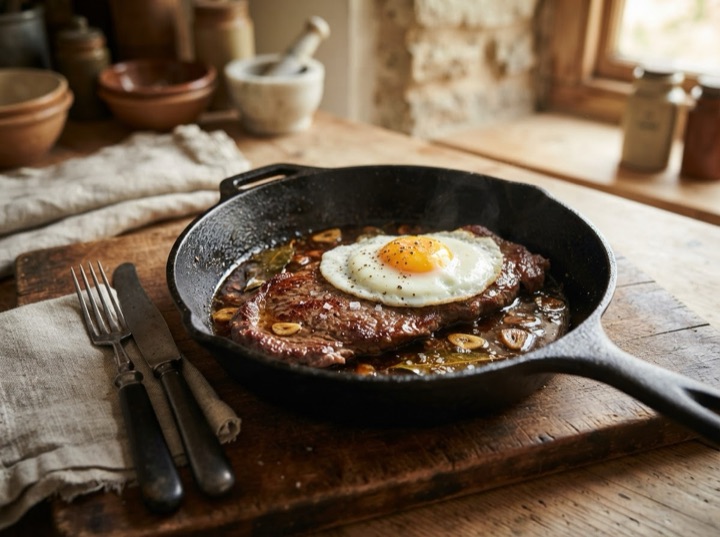
Lodge 12-inch cast iron skillet
One of Amazon's best-selling pans. Gets hot enough to sear bitoque steaks and blister sardines.
Tip: Season it and it lasts forever.
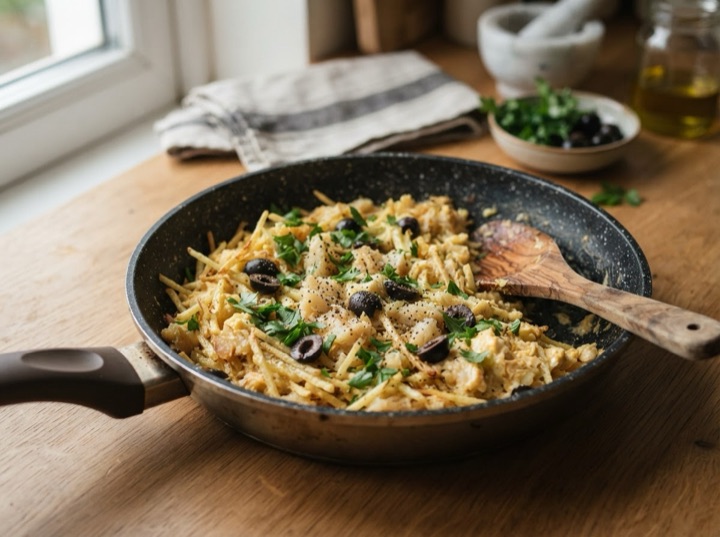
CAROTE 12-inch non-stick frying pan
A top-selling non-stick pan, ideal for bacalhau à Brás, where the eggs must slide.
Tip: Use wooden or silicone tools to protect the coating.
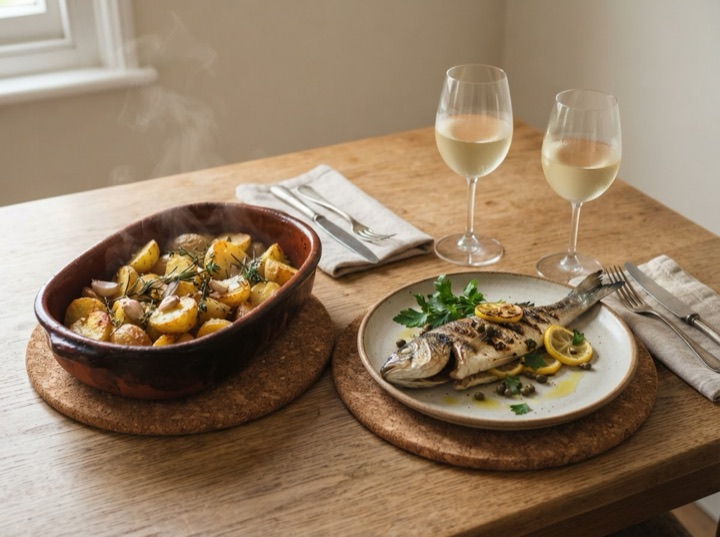
Casafina Portuguese cork placemats, set of 4
Portugal produces about half the world's cork. These heat-safe placemats take a hot cataplana or clay pot.
Tip: Wipe clean with a damp cloth. Don't soak them.
Frequently asked
What is massa de pimentão?
Can I make migas without pork?
Why do you serve migas with oranges?
Can I reheat migas?
Cook this next
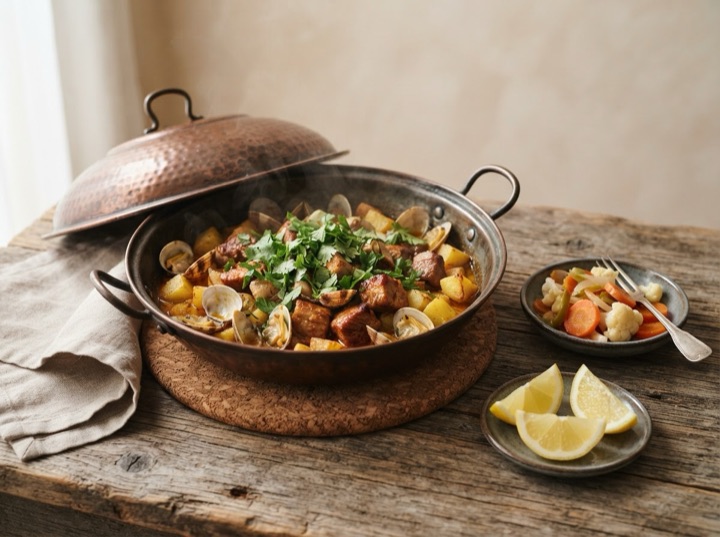 Traditional
Carne de Porco à AlentejanaPork and Clams
Pork marinated in wine, garlic and red pepper paste, tossed with clams, crisp potatoes and coriander. Portugal's great surf-and-turf, cooked in a cataplana.
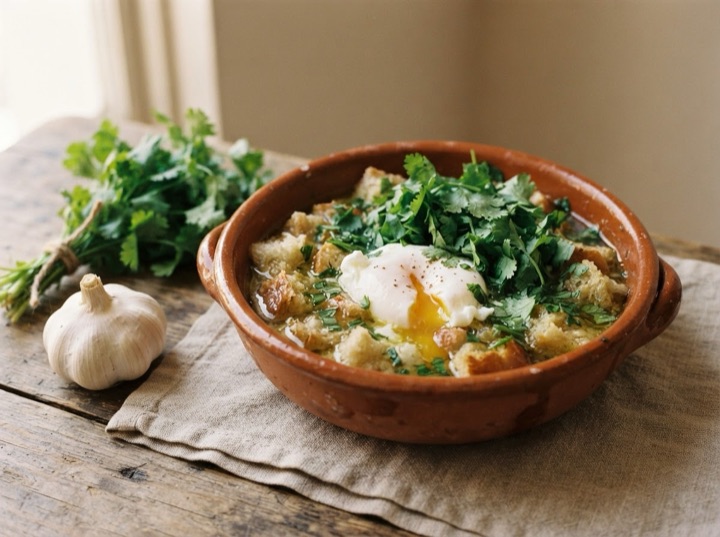 Traditional
Açorda AlentejanaGarlic and Coriander Bread Soup
The Alentejo's famous bread soup: garlic, coriander and olive oil, boiling water, stale bread and a poached egg. Ready in 20 minutes from pantry staples.
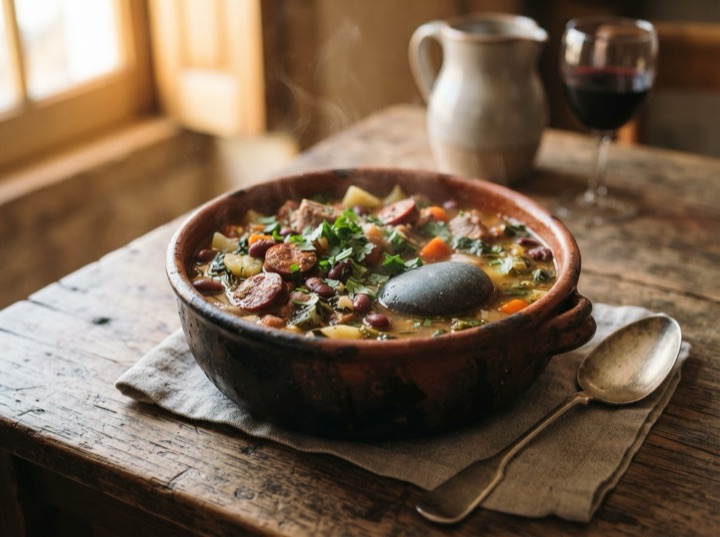 Traditional
Sopa da PedraPortuguese Stone Soup from Almeirim
Sopa da pedra recipe from Almeirim: red beans, chouriço, morcela, pork and potatoes in a thick, coriander-scented soup. A meal in a bowl for 6.