Leite-CremePortuguese Burnt Sugar Custard
Leite-creme recipe: silky lemon and cinnamon custard cooked on the hob, chilled, then topped with a crackly burnt sugar crust. No oven needed.
 By Mesa de Portugal Kitchen · Updated
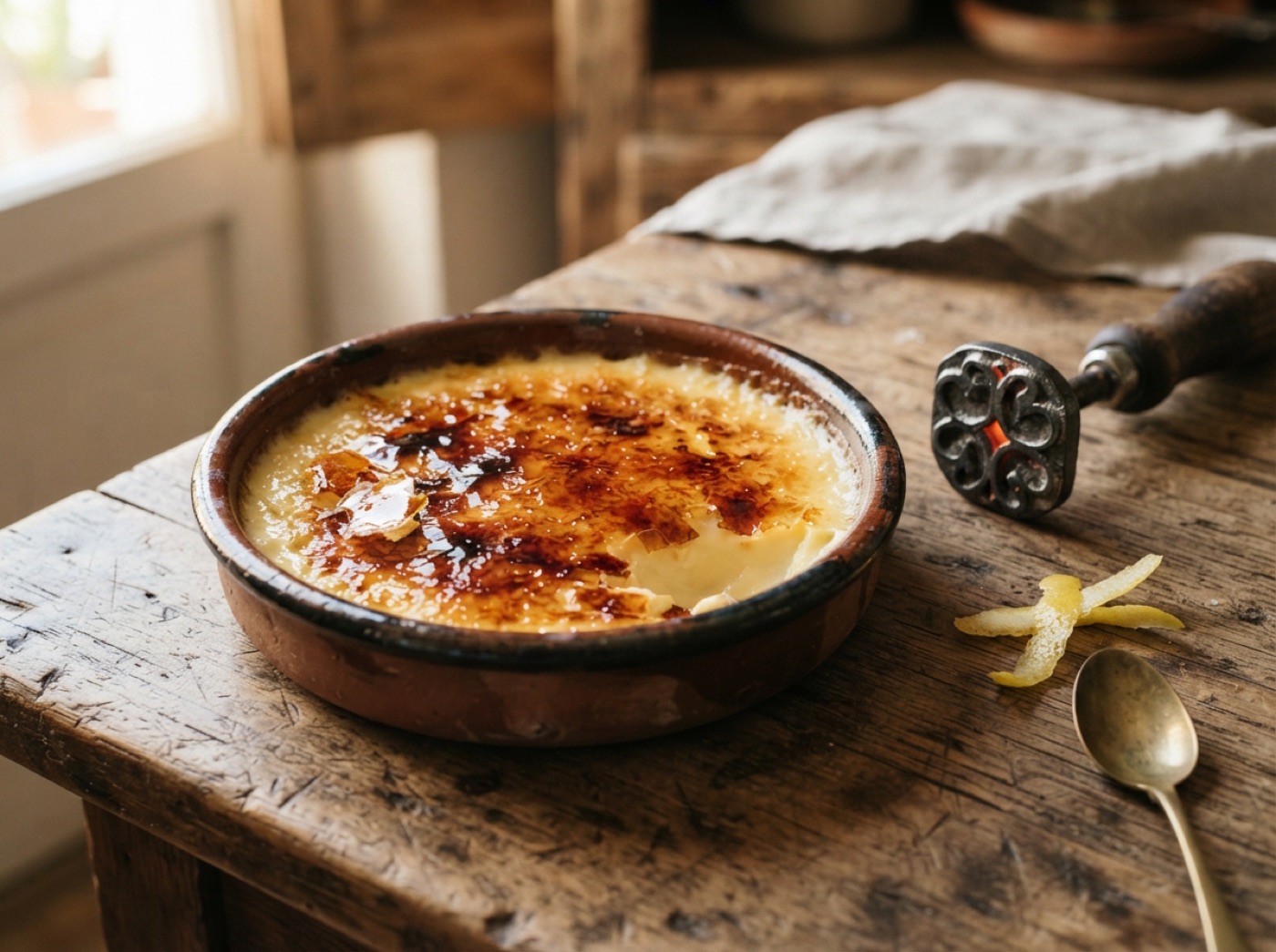
Leite-creme is a smooth Portuguese custard flavoured with lemon peel and cinnamon, chilled and finished with a layer of sugar burnt to a glassy crust. It's loved because it's simple, cheap and on the dessert menu of almost every Portuguese restaurant, and because cracking that crust with a spoon never gets old.
It looks like crème brûlée, but it's made differently. The custard is cooked on the hob and thickened with a little cornflour, so there's no oven or water bath. And the sugar is burnt just before serving, so the top stays crisp.
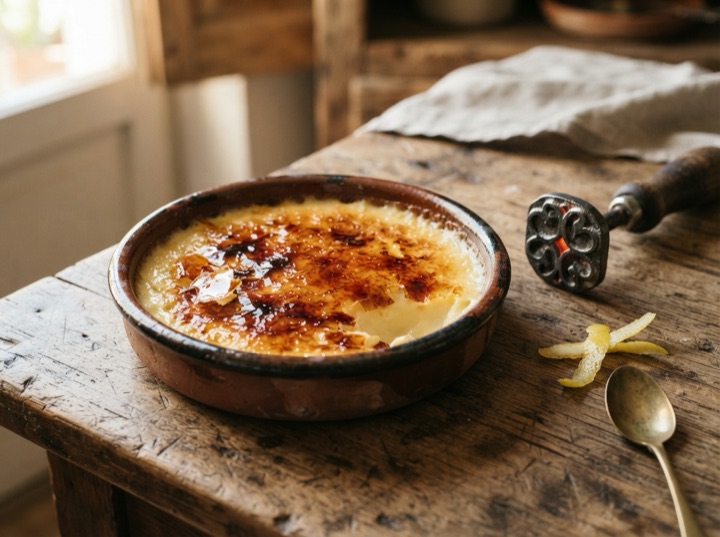
Leite-CremePortuguese Burnt Sugar Custard
Leite-creme recipe: silky lemon and cinnamon custard cooked on the hob, chilled, then topped with a crackly burnt sugar crust. No oven needed.
Ingredients
- 1 litre whole milk
- 1 strip lemon peel (no white pith)
- 1 cinnamon stick
- 6 egg yolks
- 180 g caster sugar, plus about 6 tbsp for the top
- 40 g cornflour (maizena)
- A pinch of salt
Method
- Pour 850 ml of the milk into a pan with the lemon peel and cinnamon stick. Bring it just to the boil, then take it off the heat and leave it to infuse for 10 minutes.
- In a bowl, whisk the egg yolks with the sugar and salt until pale. Whisk the cornflour into the remaining 150 ml cold milk until smooth, then whisk this into the yolks.
- Remove the lemon peel and cinnamon from the hot milk. Pour the hot milk slowly into the yolk mixture, whisking all the time.
- Pour everything back into the pan. Cook over medium-low heat, stirring constantly with a whisk or wooden spoon, for 6–8 minutes, until it thickens and coats the back of the spoon. Let it bubble gently for 1 minute to cook out the cornflour. Don't let it boil hard.
- Pour into a wide shallow dish or 6 individual ramekins. Cover the surface with cling film to stop a skin forming. Cool, then chill for at least 2 hours.
- Just before serving, sprinkle an even layer of sugar over the top, about 1 tbsp per ramekin.
- Burn the sugar with a kitchen blowtorch, moving it slowly, until it melts and turns deep amber. Leave for 1 minute to harden, then serve.
Notes
Tap ingredients and steps to tick them off. Scaling changes the quantities at the start of each line; check the rest by eye.
Burning the sugar
In Portugal, the traditional tool is a ferro de queimar, a flat iron disc you heat on the gas flame until red hot, then press onto the sugar. It burns it in seconds and gives the classic dark, slightly bitter crust. A blowtorch is easier and does the same job. A hot grill works less well: it warms the custard before the sugar melts.
Leite-creme vs crème brûlée
Crème brûlée uses cream and is baked in the oven. Leite-creme uses milk, is thickened with cornflour on the hob and is lighter. The lemon and cinnamon give it a very Portuguese flavour, the same pairing you'll find in arroz doce. It's also the base of many other sweets, from cakes to the filling of some pastries. Read more in our Portuguese desserts guide.
Make ahead
Make the custard up to 2 days ahead and keep it covered in the fridge. Only burn the sugar right before serving: after an hour or so, the crust softens and turns sticky.
Leite-Creme
LAY-t' KREH-m'
- o leiteoo LAY-t'milk
- a gemaa ZHEH-maegg yolk
- o açúcaroo a-SOO-karsugar
- o limãooo lee-MOWNGlemon
What you’ll need
Links go to Amazon, where you can check today’s price. If you buy, we earn a small commission at no extra cost to you.

Costa Nova oval baker, 30 cm
An oven-to-table baking dish, the right size for bacalhau com natas or arroz de pato for four to six.
Tip: Oven-, microwave- and dishwasher-safe stoneware.

Cutipol GOA starter set, 6 pieces
The GOA design from Portuguese maker Cutipol: slim, elegant and instantly recognisable. A starter set to try it at home.
Tip: Handwash the coloured handles.

At My Portuguese Table by Maria Lawton
The follow-up to Azorean Cooking, with more family recipes from the islands and the mainland.
Tip: Paperback, easy to cook from.
Frequently asked
Can I make leite-creme without cornflour?
Can I use the egg whites?
Can I burn the sugar without a blowtorch?
Is leite-creme the same as pudim flan?
Cook this next
 Traditional
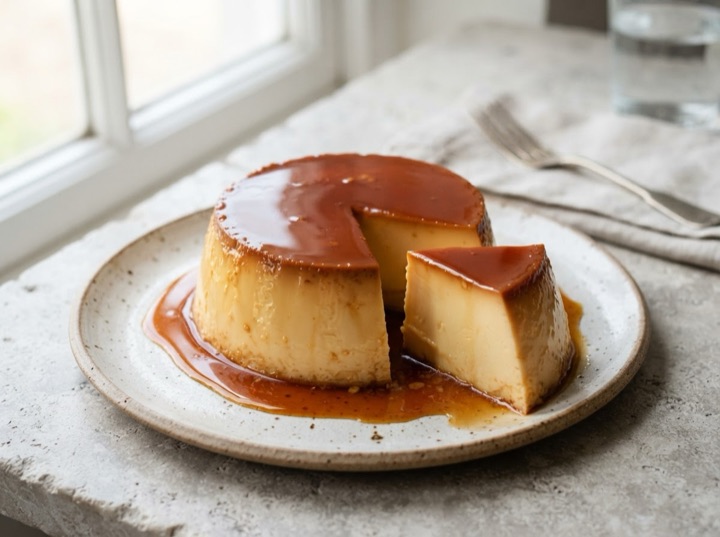
Pudim FlanPortuguese Caramel Custard
Pudim flan recipe: a smooth Portuguese caramel custard baked in a bain-marie and turned out with its amber caramel sauce. Just eggs, milk and sugar.
 Traditional
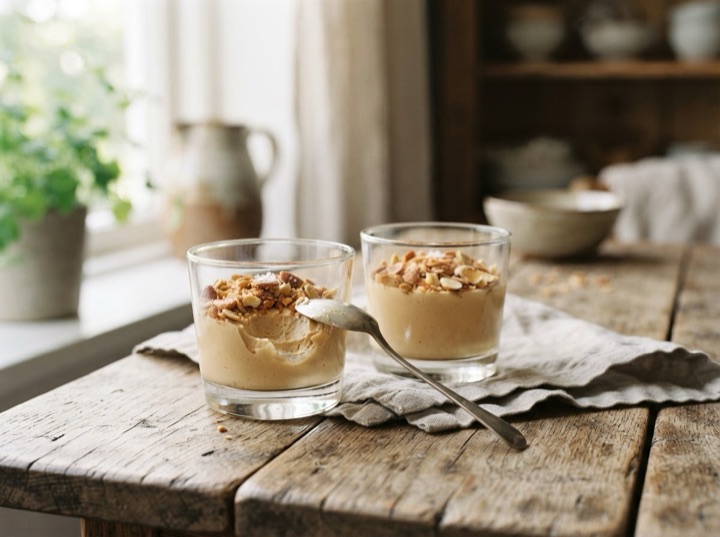
Baba de CameloPortuguese Caramel Mousse
Baba de camelo recipe: a light Portuguese caramel mousse made with just a tin of caramelised condensed milk and eggs. Includes a pasteurised egg option.
 Traditional
Arroz DocePortuguese Rice Pudding
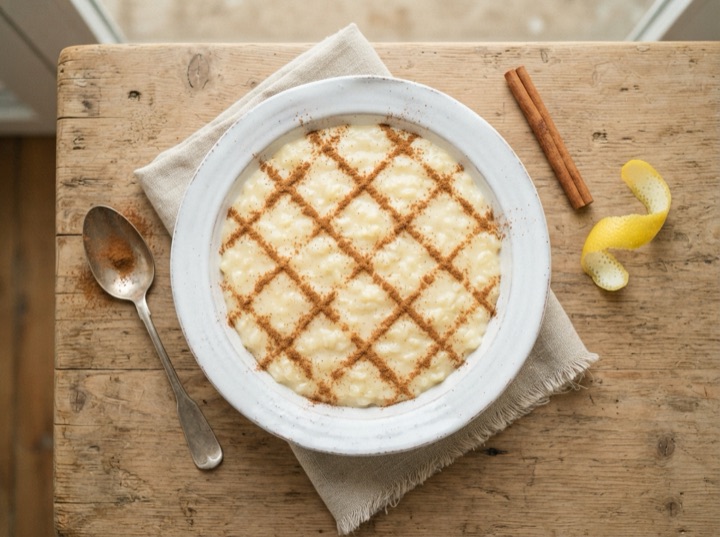
Creamy Portuguese rice pudding with lemon peel and cinnamon, finished with egg yolks and the classic cinnamon lattice on top. Served cold, at every celebration.