Bordallo PinheiroCabbage Plates, Swallows and Sardines
The story of Bordallo Pinheiro: Rafael Bordallo Pinheiro, the Caldas da Rainha factory, cabbage ware, swallows, festival sardines and how to spot fakes.
 By Mesa de Portugal Kitchen · Updated · 7 min read
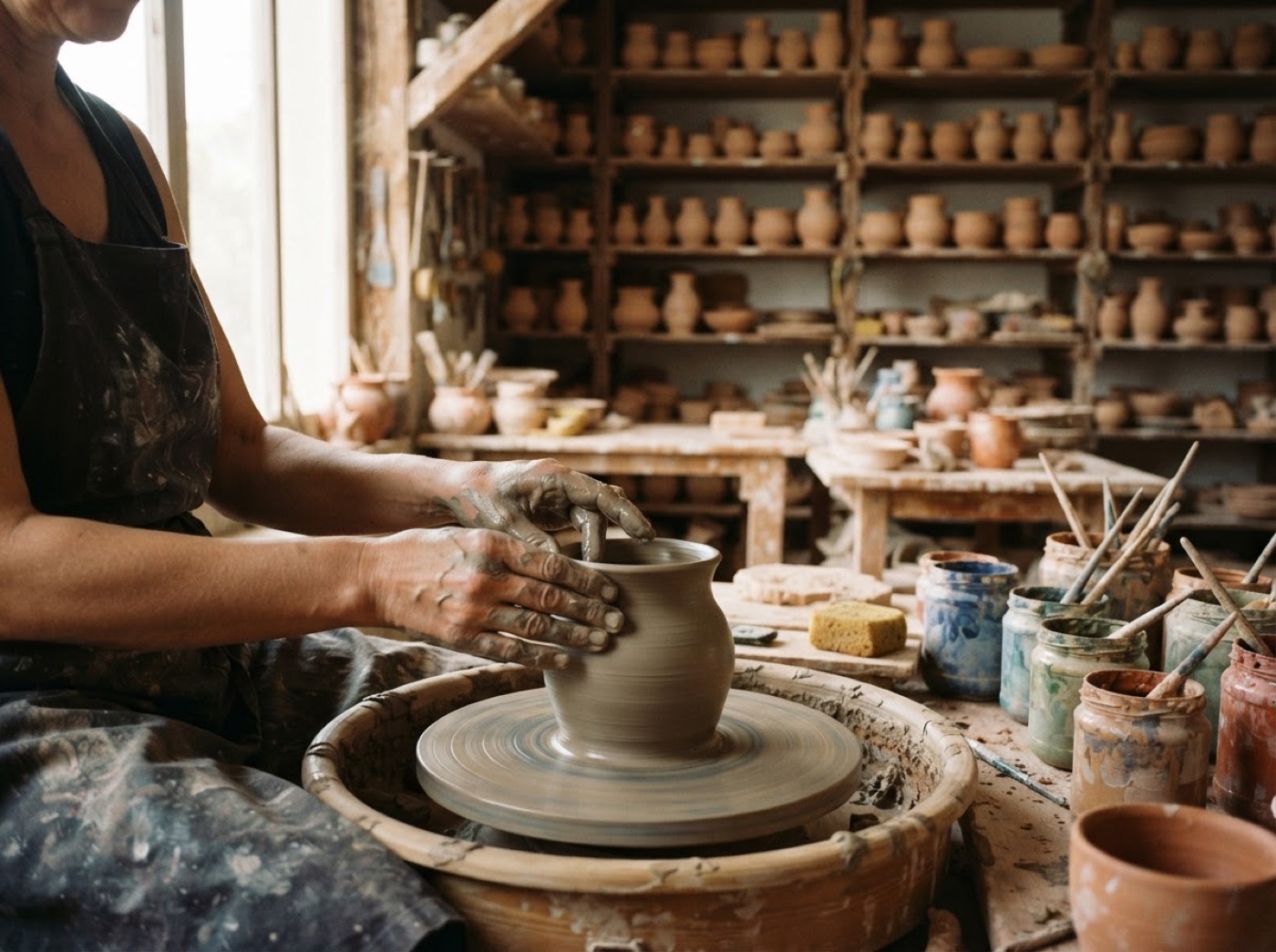
Bordallo Pinheiro is a Portuguese ceramics factory in Caldas da Rainha, founded in 1884 by the artist Rafael Bordallo Pinheiro. It's famous for earthenware shaped like nature, above all the green cabbage-leaf plates and bowls, plus ceramic swallows and the sardines designed each year for Lisbon's June festivals. Pieces are still made in Caldas da Rainha today.
If you've walked through a Portuguese home, a café or a museum shop, you've seen it, even if you didn't know the name. The cabbage bowl is to Portugal roughly what the willow pattern is to Britain: so familiar that people forget it was designed by one man.
Who was Rafael Bordallo Pinheiro?
Rafael Bordallo Pinheiro was born in Lisbon in 1846 and died there in 1905. Before he was a potter, he was a caricaturist, and one of the sharpest in Portuguese history. He drew for and ran satirical newspapers, mocking politicians, the church and the monarchy, and he spent a few years in Brazil working as an illustrator.
His most famous creation isn't a plate but a character: Zé Povinho, first drawn in 1875. Zé Povinho is the Portuguese everyman, a rough, put-upon peasant, often shown making a rude gesture at the powerful. He's still used in cartoons today and he's one of the best-loved figures in Portuguese culture.
The factory in Caldas da Rainha
Caldas da Rainha, a spa town about an hour north of Lisbon, had been making pottery for centuries. In 1884 Rafael and his brother Feliciano started work at a new faience factory there, the Fábrica de Faianças das Caldas da Rainha. Rafael brought his caricaturist's eye to clay: exaggerated, funny, full of life.
The factory went through hard times after his death, passed through several owners, and is today part of the Visabeira group, which also owns Vista Alegre. Production is still in Caldas da Rainha, and much of the work, from moulding to painting, is still done by hand.
The cabbage ware
The cabbage leaf, couve in Portuguese, is the design everyone knows. Plates, bowls, tureens, jugs and teapots are moulded as overlapping green leaves with the veins standing out in relief. It belongs to the naturalist style that Bordallo loved: lemons, artichokes, pumpkins, lettuces, fish, frogs, snails and lobsters all appear in the catalogue.
Why a cabbage? It's the vegetable of Portuguese home cooking, the base of caldo verde, and it was the kind of everyday, slightly comic subject Bordallo liked to elevate.
The cabbage bowl is a classic Portuguese wedding and housewarming present. Small cabbage plates are the usual way people start a collection.
Bordallo Pinheiro cabbage serving bowl
The famous cabbage-leaf ceramics from Caldas da Rainha, made since the 1800s. Perfect for salads and batatas a murro.
Tip: Large bowl for the table, or the set of four for individual portions.
How to use cabbage ware
It's made to be used, not just admired. A large cabbage bowl is perfect for a green salad or batatas a murro. The small plates are right for petiscos, cheese or dessert, and the lemon-leaf plate is made for sitting a pastel de nata on.
Bordallo Pinheiro cabbage salad plates, set of 2
Smaller cabbage plates for salads, petiscos and dessert. The easiest way to start a Bordallo collection.
Tip: Mix with the large bowl for a matching table.
The swallows (andorinhas)
The black ceramic swallows flying across the walls of Portuguese houses and cafés are a Bordallo design. He is said to have first made them around 1891, and he registered the design in 1896.
Swallows return to the same nest every spring, so in Portugal they stand for home, loyalty and love, and they're a common gift for new homes and couples. You'll see copies from many makers now, but the original shape is Bordallo's.
The sardines for Santos Populares
In June, Lisbon celebrates the Santos Populares (popular saints' festivals), with grilled sardines, street parties and decorations everywhere. The sardine became the symbol of the festivities, and Bordallo Pinheiro had made ceramic sardines since the 19th century.
Since 2014, the factory has worked with EGEAC, the company that organises Lisbon's festivals, on a yearly series: well-known artists, designers and personalities each reinterpret the ceramic sardine. New designs come out every year, so they've become collectable, and some people buy one every June. Read our Santos Populares food guide for what's on the grills.
Bordallo Pinheiro ceramic sardine
Every June, Bordallo Pinheiro asks artists to paint its ceramic sardine for the Lisbon festivals. A small piece of Portugal for a shelf or wall, and a great gift.
Tip: Each design is by a different artist. This one is "10 Springs" by Gonçalo Viana.
How to spot a fake Bordallo Pinheiro
The cabbage shape is easy to copy, and plenty of cheap versions are sold as "Portuguese cabbage plate". A few checks:
- The backstamp. Turn it over. Genuine pieces have a printed or impressed mark on the base with the Bordallo Pinheiro name and Portugal. No mark, a smudged mark or a different name means it isn't Bordallo.
- The leaf detail. Real cabbage ware has deep, crisp veins and layered leaf edges. Copies are often shallow and soft, with a flat green glaze.
- The colour. The original green is rich and varied, pooling darker in the veins. A uniform, plasticky green is a warning sign.
- Weight. Genuine earthenware feels solid. Very light pieces are often low-quality copies.
- The seller. On Amazon and marketplaces, check the brand is listed as Bordallo Pinheiro and the country of origin is Portugal. Wording like "Bordallo style", "cabbage-inspired" or "majolica cabbage" usually means a copy.
- Price. Big sets at very low prices are rarely genuine.
How to look after Bordallo Pinheiro
- Hand wash in warm water with mild washing-up liquid. Even pieces labelled dishwasher safe keep their glaze longer washed by hand.
- Don't use it in the oven or on the hob.
- Avoid sudden temperature changes, like boiling water into a cold bowl.
- Stack plates with a paper napkin between them to protect the raised leaves.
- Earthenware chips more easily than stoneware, so be gentle in the sink.
Where to see and buy it in Portugal
In Caldas da Rainha you can visit the factory shop and the town's ceramics museum. In Lisbon, the Museu Bordalo Pinheiro at Campo Grande is dedicated to his work as an artist and caricaturist, and you'll find the brand in design and gift shops across the city. Prices in Portugal are usually lower than abroad.
If you're outside Portugal, the pieces in our shop ship to your door. For the rest of the Portuguese table, from Costa Nova stoneware to Vista Alegre porcelain, read our Portuguese tableware guide, and for gifting ideas see gifts for someone who loves Portugal.
What you’ll need
Links go to Amazon, where you can check today’s price. If you buy, we earn a small commission at no extra cost to you.
Bordallo Pinheiro cabbage serving bowl
The famous cabbage-leaf ceramics from Caldas da Rainha, made since the 1800s. Perfect for salads and batatas a murro.
Tip: Large bowl for the table, or the set of four for individual portions.
Bordallo Pinheiro cabbage bowls, set of 4
Individual cabbage bowls for caldo verde or salads. One of the most recognisable Portuguese designs there is.
Tip: A favourite wedding and housewarming present.
Bordallo Pinheiro ceramic sardine
Every June, Bordallo Pinheiro asks artists to paint its ceramic sardine for the Lisbon festivals. A small piece of Portugal for a shelf or wall, and a great gift.
Tip: Each design is by a different artist. This one is "10 Springs" by Gonçalo Viana.
Bordallo Pinheiro cabbage salad plates, set of 2
Smaller cabbage plates for salads, petiscos and dessert. The easiest way to start a Bordallo collection.
Tip: Mix with the large bowl for a matching table.
Bordallo Pinheiro lemon dessert plate
Bright yellow lemon-leaf plate from the same Caldas da Rainha workshop. Perfect under a pastel de nata.
Tip: 20 cm across: dessert and side-plate size.
Frequently asked
What is Bordallo Pinheiro famous for?
Is Bordallo Pinheiro still made in Portugal?
Who was Rafael Bordallo Pinheiro?
How can you tell if Bordallo Pinheiro is real?
Is Bordallo Pinheiro dishwasher safe?
Recipes from this story
 Traditional
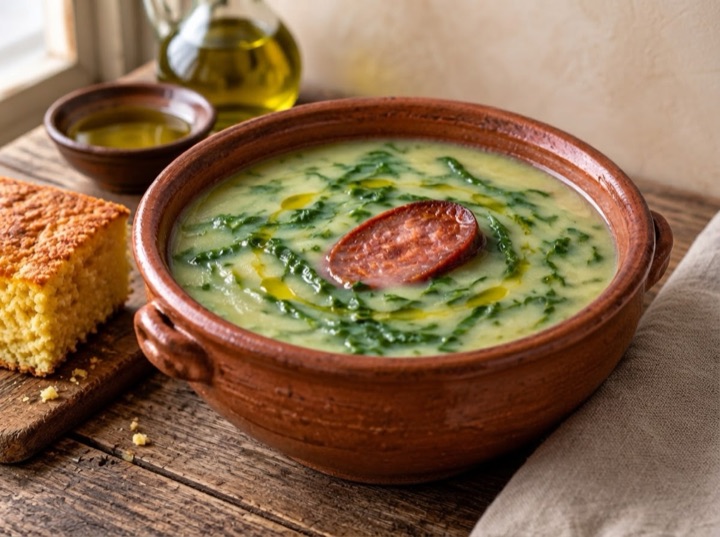
Caldo VerdePortuguese Green Soup
Portugal's national soup: a silky potato base, ribbons of finely shredded greens and a slice of chouriço on top. Simple, cheap and done in 40 minutes.
 Air Fryer
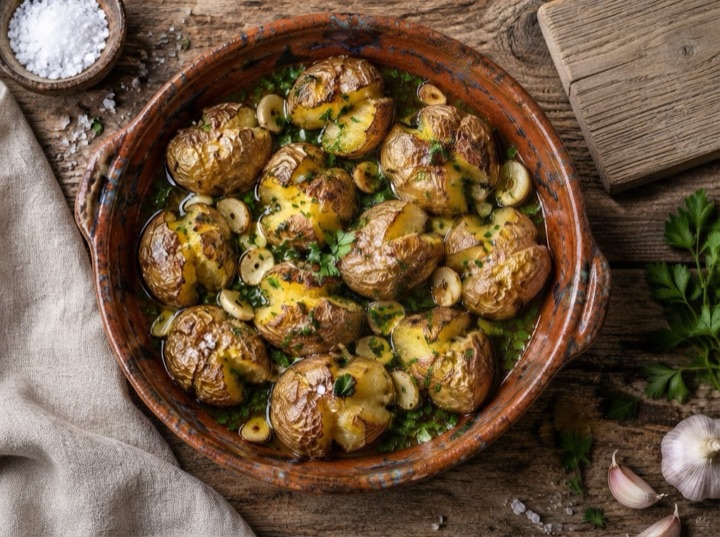
Batatas a Murro in the Air Fryer (Punched Potatoes)
Portuguese punched potatoes made in the air fryer: salt-crusted skins, a fluffy middle and plenty of garlic olive oil. The classic partner for bacalhau.
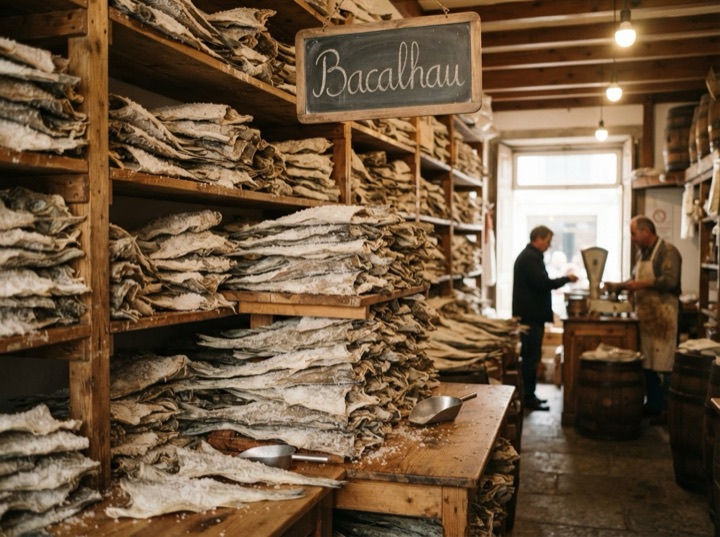 Food culture
Why Do Portuguese Eat BacalhauThe Story of the Faithful Friend
Why do Portuguese eat bacalhau when no cod swims off Portugal? Salt, Catholic fasting, Newfoundland fleets and the Estado Novo, explained simply.